Roasting Pan Weight Capacity Chart
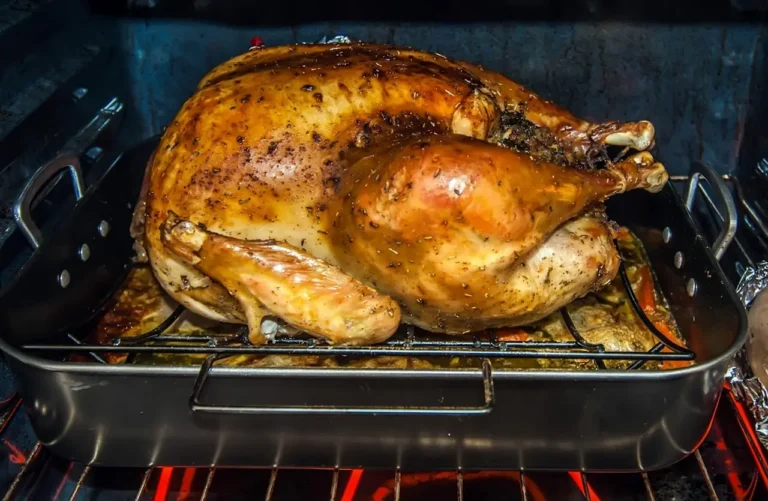
For a roasting pan, size it to the bird’s dressed weight plus at least about 2 inches of side clearance; a 20×14×4-inch pan often fits a 20- to 24-pound turkey, with depth and oven space setting the real limit. A pan that is too shallow or too crowded can spill drippings, block heat circulation, and strain the rack. This guide gives a roasting pan weight capacity chart tied to turkey weight, pan dimensions, depth, rack height, and oven fit.
Roasting pan capacity basics


Turkey weight is the starting point, but it is not the whole answer. Fit also depends on the bird’s width, the pan’s inside width, the pan depth, and whether the rack lifts the bird high enough for air to move under it.
Why weight alone is not enough
A turkey can weigh 16 pounds and still need more pan width than expected if it is broad in the breast and thighs. A long, narrow bird may fit more easily than a shorter, wider one. That is why capacity charts should pair weight with inside dimensions.
The main failure points are simple. Crowding cuts browning. Too little depth raises spill risk. Too much depth can trap steam and soften the skin. A pan that fits the bird on paper can still fail in the oven if the handles hit the door or the rack sits too high.
Inside dimensions versus outside size
Outside length is the number most shoppers see first, but it can mislead. Handles, rolled rims, and thick side walls reduce the usable area inside the pan. For load planning, the inside length and inside width matter more than the label size on the box.
That is why a 16-inch roasting pan may sound similar across brands while the usable space differs. Always check the interior measurements, especially if you are roasting a broad turkey or adding vegetables around the bird.
How depth changes usable space
Depth changes more than drippings capacity. A pan around 2 to 3 inches deep is the practical middle ground for most home roasting. Deeper pans can limit browning by sheltering the food from moving heat. Shallower pans increase the chance of overflow when juices and fat render.
A deeper pan can also make it harder to baste and harder to remove the bird. If you plan to roast a turkey with vegetables underneath, the extra contents use up the same depth that drippings need.
Roasting capacity worksheet
This worksheet turns common pan sizes into usable capacity. Use it as a planning tool, not a promise of an exact fit. The bird’s shape, the rack height, and the oven opening can all change the real limit.
| Pan length | Inside width | Depth | Estimated turkey weight range | Minimum oven cavity width | Handle clearance | Risk notes |
|---|---|---|---|---|---|---|
| 14 inches | About 10 inches | About 2.75 inches | Up to about 12 pounds | Check for at least 1 to 2 inches of clearance beyond the pan body | Handles should clear the door frame and side walls | Best for smaller birds, smaller ovens, and vegetables; crowding is likely with a broad turkey |
| 16 inches | About 12 inches to 13 inches | About 3 inches | About 12 to 16 pounds, with many home cooks using it for larger holiday birds if the oven allows | Measure the cavity and the door opening before buying | Handles and rim need room to slide in without scraping | Often the safest all-purpose size; still check side clearance for wings and rack height |
| 18 inches | About 13 inches or more | About 3 inches | About 20 to 24 pounds | Oven fit becomes the main limit | Long handles can turn a close fit into a no-fit | Best for larger crowds; risk of door interference, poor airflow, and a tight rack setup |
Risk notes for crowding and spillover
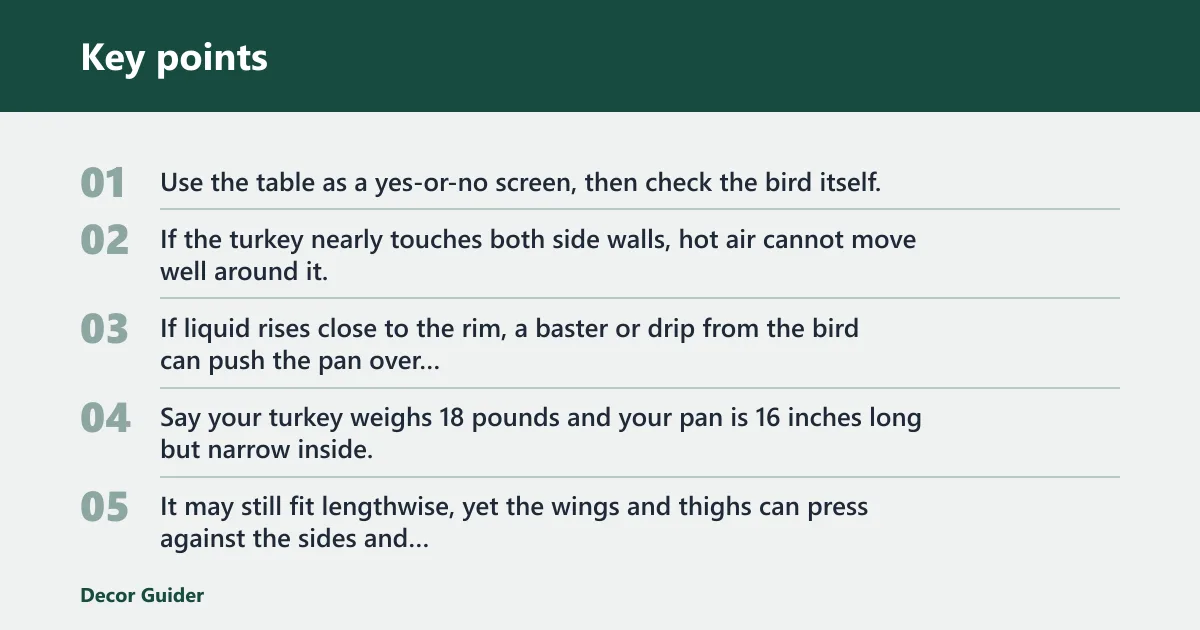
Use the table as a yes-or-no screen, then check the bird itself. If the turkey nearly touches both side walls, hot air cannot move well around it. If liquid rises close to the rim, a baster or drip from the bird can push the pan over its limit.
Say your turkey weighs 18 pounds and your pan is 16 inches long but narrow inside. It may still fit lengthwise, yet the wings and thighs can press against the sides and slow browning. That is a capacity problem, not just a length problem.
What size roasting pan do you need?
Start with the bird’s dressed weight, then check the bird’s width and the pan’s inside width. For most home cooks, the 16-inch roasting pan is the safest all-purpose holiday size. A 14-inch pan works for smaller birds and side dishes. An 18-inch pan is the right choice for larger turkeys if the oven can take it.
14-inch roasting pan for smaller birds and sides
A 14-inch roasting pan will generally fit up to a 12 lb turkey. It is the smallest common home size and a good fit for compact ovens, smaller roasts, and vegetables. It is also easier to store and easier to move when loaded.
This size becomes tight quickly once you add a rack or a bed of vegetables. If you plan to roast a bird much above 12 pounds, the usable space starts to disappear fast.
16-inch roasting pan for the common all-purpose choice
A 16-inch roasting pan fits around a 16 lb bird, and a common size listed for this class is roughly 16 x 13 x 3 inches. It is often the safest all-purpose holiday size for most home cooks because it balances fit, airflow, and drippings space.
For one-pan meals, this is the most flexible middle ground. It gives enough room for carrots, onions, and potatoes without forcing the turkey into a cramped layout.
18-inch roasting pan for larger turkeys and crowds
An 18-inch roasting pan can hold roughly 20 to 24 lb birds. Pans for 20 lb and up should be 18 inches or longer if the oven allows. This is the size to consider for larger gatherings, but it demands an oven fit check before purchase.
A common first-timer mistake is buying the biggest pan on the shelf and assuming it will fit. The pan can be right for the bird and still wrong for the oven opening.
How do you measure cooking pan size?
Measure the inside length, inside width, and depth first. Then check the handle-to-handle span and compare it with the oven door opening, not only the cavity width. Large pans can fit the cavity but still refuse to angle through the door.
Measure inside length and inside width
Use the usable interior, not the outside rim. Measure from inner wall to inner wall at the widest cooking surface, then measure the width where the bird will sit. If the pan narrows toward the bottom, use the narrowest usable point as the true capacity limit.
This matters for turkeys, but it also matters for roasts and trays of vegetables. The usable area is the part that actually holds food without crowding.
Check handle-to-handle span and oven door opening
Handles add length and can make a large pan impossible to angle through the door. Measure the full span from handle tip to handle tip, then compare it with the clear opening of the oven door. Do not assume the cavity measurement tells the whole story.
Also leave room for airflow around the pan. A snug fit against the side walls can slow heat movement and make browning less even.
Confirm rack height and clearance above the pan
Rack height matters because it changes how high the bird sits in the oven. You need enough vertical space for the pan, the rack, the bird, and a cushion of air above the skin. If the turkey sits too close to the top element or the upper rack rail, browning can turn uneven fast.
Check the rack position before buying a large pan. A pan that fits on one rack may not fit when the rack is raised to leave proper headroom.
Roasting pan depth and rack use
Depth around 2 to 3 inches is the practical middle ground for most roasting jobs. A 3-inch depth is often the sweet spot for even roasting without steaming. The rack lifts food above drippings, which helps air circulate and keeps the underside from going soggy.
Why 2 to 3 inches is the practical middle ground
A shallow pan can overflow when fat and juices build up. A deep pan can block airflow and create a wetter environment around the meat. Between those two extremes, 2 to 3 inches usually gives enough room for drippings without turning the pan into a steam trap.
That balance matters for vegetables too. A tray that is too deep can soften roasted potatoes and carrots before they brown.
How a roasting rack changes airflow and drippings
A roasting rack raises food above the bottom of the pan so hot air can move underneath it. That helps avoid soggy skin and keeps the food from sitting in rendered fat. It also makes it easier to remove the bird after roasting.
Use a rack whenever the pan design allows it. Many home pans are sold with a removable rack, and that setup is easier to clean and more flexible for different foods.
When a rack should be removable
A removable rack is useful when you switch between poultry, beef roasts, and vegetables. It also helps when the pan needs to double as a serving or prep pan. Fixed racks can make cleanup harder and limit the pan’s use for flat roasts or braises.
Will an 18-inch pan fit in my oven?
Maybe, but you have to measure more than the cavity. Check the inside width, the depth of the cavity, the door opening, and the handle span. An 18-inch pan is often limited by the door frame or handle clearance before the cavity itself becomes the problem.
Oven interior dimensions to check first
Measure the usable width between the oven walls where the pan will sit. Then measure the usable depth from the door seal to the back wall. If the pan or rack needs to sit on a raised position, include that height in the check as well.
If the pan barely fits side to side, airflow can suffer. Leave a bit of space around the pan so heat can move freely.
Handle clearance and door swing
Handle clearance can be the difference between a successful fit and a pan that will not enter the oven. Some large roasters have handles that stick out enough to hit the side trims or door frame. Test the path with a tape measure before you buy.
The door swing matters too. A pan that slides in straight may still snag as you tilt it to set it on the rack.
When a large pan becomes too tight
If the pan blocks the door, scrapes the walls, or leaves almost no airflow around the sides, it is too tight. That tightness can also make basting harder and can increase the chance of spillover when the bird shifts or when you lift the pan out.
For a large turkey, a pan that is technically “close enough” often becomes annoying in real use. Comfortable clearance is worth more than a barely legal fit.
Materials and backup pans
Material changes the pan’s weight, warp resistance, and cleanup. Stainless steel is durable and stable. Aluminum is lighter and easier to move. Cast iron holds heat well but is heavy and less convenient for lifting a full bird.
Stainless steel versus aluminum versus cast iron
Stainless steel is a solid choice when you want a sturdy pan that cleans up well. Aluminum is lighter and easier to handle, which helps when the loaded pan is heavy. Cast iron resists warping and holds heat, but its weight can make a large roaster harder to manage safely.
Material does not replace fit. A strong pan that is the wrong size still causes overcrowding or oven clearance problems.
Disposable aluminum roasting pans for backup use
A disposable aluminum roasting pan can work for roasting and transport, especially when you need a backup pan or a travel-friendly option. But it may need support for heavy loads, and size and depth vary by format. Do not assume a thin foil pan can carry a large bird without help.
For heavier turkeys, place the disposable pan on a rigid baking sheet or a second tray if the package allows that setup. The goal is to reduce flex and keep the pan level.
Commercial foil pan sizes and where they fit
Commercial full-size aluminum foil pans measure about 20 3/4 by 12 3/4 inches. Half-size pans measure about 12 3/4 by 10 3/8 inches. Third-size pans measure about 12 3/4 by 6 7/8 inches. These are common food-service formats, but their depth and rigidity vary by brand and gauge.
Full-size foil pans can work for large birds or side dishes, yet the support issue becomes more serious as the load rises. Half-size and third-size pans are better suited to smaller roasts, vegetables, or transport containers than to a heavy whole turkey.
Frequently asked questions
How many quarts in a roaster pan
Quarts describe volume, but roasting capacity depends on shape and surface area more than liquid storage alone. Two pans with the same quart rating can fit very different birds if one is wider and shallower. Use quart labels as a rough guide, not the final fit test.
What size roasting pan do I need for a turkey?
For most home kitchens, a 14-inch pan fits up to about 12 pounds, a 16-inch pan fits around 16 pounds, and an 18-inch pan handles roughly 20 to 24 pounds. Shape matters too, so broad birds need more width than narrow birds of the same weight.
Will an 18-inch roasting pan fit in my oven?
Only if the oven cavity, door opening, handle span, and rack height all allow it. Measure the interior width and depth first, then check clearance around the pan for airflow. A pan can fit the cavity and still fail at the door or on the rack rails.
Do I need a roasting rack in the pan?
A rack is strongly useful because it lifts the bird above drippings, improves airflow, and helps keep the skin from sitting in fat. Many home pans use a removable rack for that reason. If the pan is for vegetables or braises, the rack may be unnecessary.
Can I use a disposable aluminum roasting pan for a turkey?
Yes, but treat it as a backup rather than a universal heavy-duty choice. Disposable aluminum roasting pans can work for roasting and transport, yet they may flex under a large bird and deep juices. Support the pan with a rigid sheet when the load is heavy.
What size roasting pan fits a 20 pound turkey
A 20-pound turkey usually points you to an 18-inch roasting pan if the oven allows. Pans for 20 lb and up should be 18 inches or longer, and the interior width still needs to leave room around the bird. Oven clearance is often the real limit.
How do I choose between 14-inch, 16-inch, and 18-inch roasting pans?
Choose 14 inches for smaller birds and compact ovens, 16 inches for the most flexible all-purpose use, and 18 inches for larger turkeys or crowd-size meals. The safest choice is the pan that fits both the bird and the oven with room for airflow and handles.
Products related to this article
Sponsored / affiliate links. As an Amazon Associate I earn from qualifying purchases. I may earn additional commission from eligible campaigns.