Paula Deen Roaster Oven Pan Review: Is It Worth It?
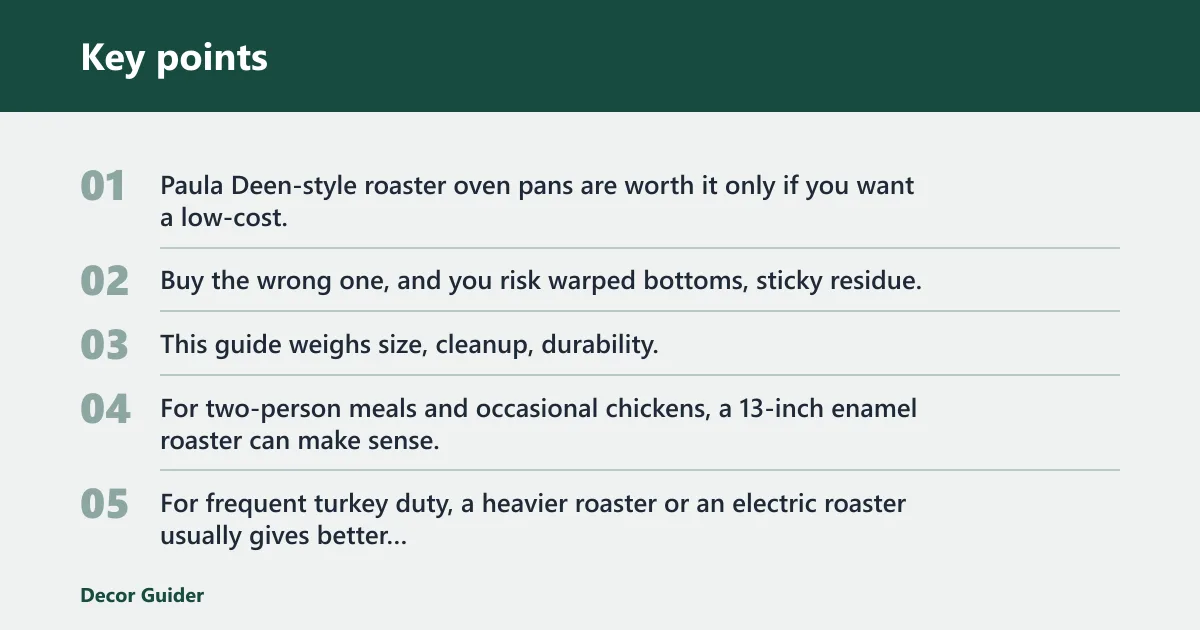
Paula Deen-style roaster oven pans are worth it only if you want a low-cost, large-capacity pan and can live with thinner metal, average heat retention, and more careful cleanup. Buy the wrong one, and you risk warped bottoms, sticky residue, and a pan that looks fine until holiday cooking exposes weak spots.
Verdict: is a Paula Deen roaster oven pan worth it?

- Fits whole chickens and small roasts easily
- Dishwasher-safe enamel resists staining and residue
- Gift-ready packaging for holiday presentations

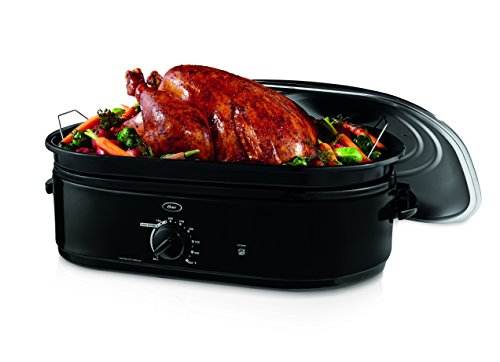
This guide weighs size, cleanup, durability, and failure risks so you can judge whether a Paula Deen Roaster Oven Pan fits your cooking needs. For two-person meals and occasional chickens, a 13-inch enamel roaster can make sense. For frequent turkey duty, a heavier roaster or an electric roaster usually gives better value.
📊 One featured Cuisinart roaster measures 16 x 12 x 3.4 inches. Source: Best Paula Deen Roaster Pan Options for Home Cooks.
Specs at a glance
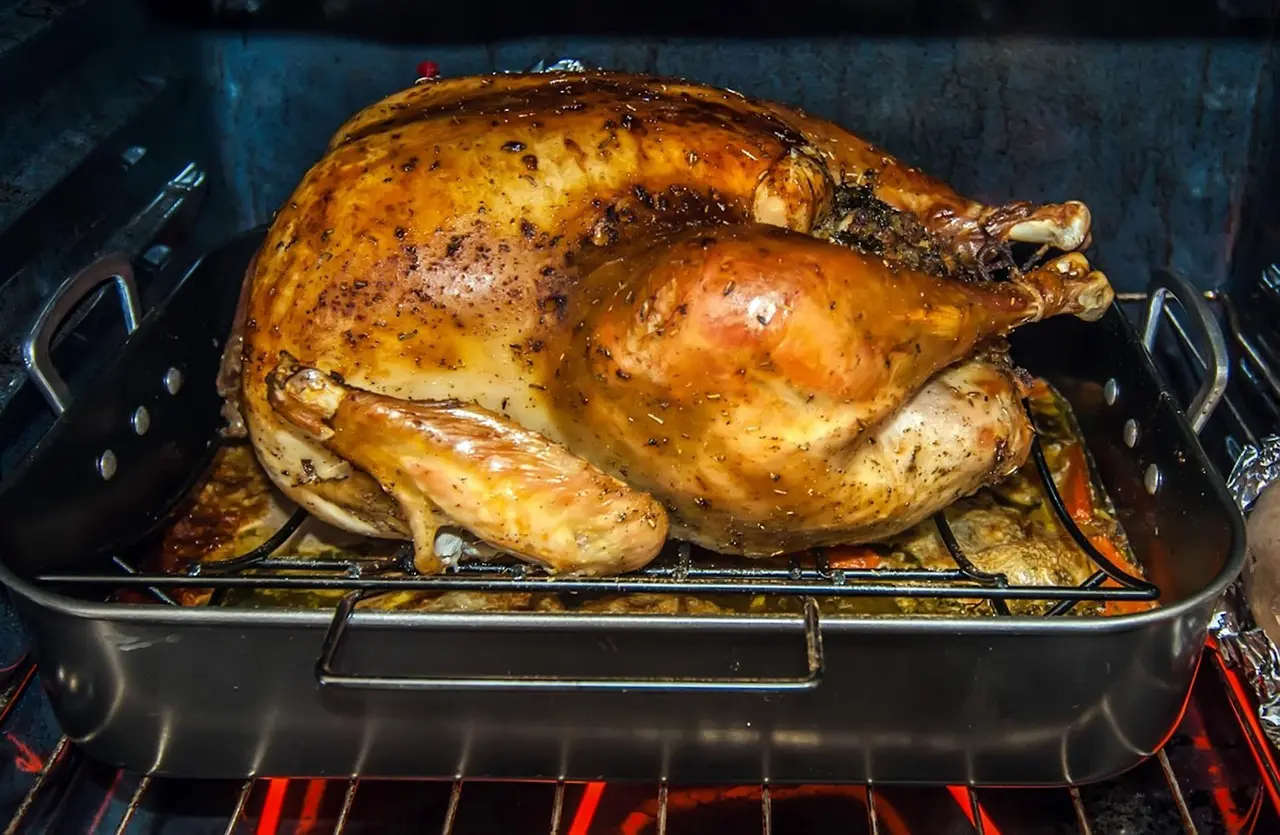
A Paula Deen-style roaster pan is usually enamel-coated carbon steel with a nonstick interior, a rack that lifts meat above drippings, and a lid that helps hold moisture. That setup can be useful, but the value depends on oven fit, heat tolerance, and how often you roast. Dishwasher-safe care helps, though enamel still needs gentle handling.
| Option | Size / capacity | Heat tolerance | Cleanup | Best use |
|---|---|---|---|---|
| Paula Deen-style enamel roaster pan | Often 13-inch to 18-inch formats | Depends on model; check before buying | Dishwasher-safe care on many models; enamel can chip or dull | Roasting in a standard oven, small meals to holiday birds |
| Generic enamel roaster | Size varies | Commonly oven-safe; verify max temperature | Easy wipe-down, but coating wear matters | Low-cost roasting with simple cleanup |
| Stainless steel roaster | Commonly mid to large sizes | High heat tolerance, usually no coating concerns | Less nonstick than enamel; browning and cleanup can be less forgiving | Frequent roasting, durability-first buyers |
| Nonstick roaster | Commonly smaller to medium sizes | Usually lower max heat than bare metal | Very easy cleanup at first; coating life depends on care | Weeknight roasting and quick cleanup |
One featured 13 x 8 x 3 inch roaster is positioned for small poultry and vegetables, while a 16 x 12 x 3.4 inch Cuisinart roaster, a 16.5 x 13.5 inch Rachael Ray roaster, and an 18-inch turkey roaster move into larger meal territory. The GoldenPlayer roaster is listed at 14.6 inches long, and the VANKUTL 16-inch roaster is described as handling up to 600 degrees.
Who is a Paula Deen roaster pan for?
A Paula Deen roaster pan makes the most sense if you cook for two to four people, roast chicken more often than whole turkey, and want easier cleanup than bare metal usually gives. It is less compelling if you roast only once or twice a year, because storage space, lid fit, and coating wear become more important than the low entry price.
2-person and 4-person meal use
For two people, a 13-inch pan is often enough for a whole chicken, vegetables, or a small roast. For four people, a 14.6-inch to 16-inch pan gives more room for air circulation and drippings without forcing food too close to the lid.
Holiday-only cooks versus frequent roasters
Holiday-only cooks should think about replacement risk. If the pan sits most of the year, enamel chips, bent racks, and lid dings can happen in storage before the next roast ever starts.
Frequent roasters get more value from better heat response and a more durable build, especially if they use high temperatures and heavier cuts often. Carbon steel heats fast, but thin construction can still warp if it sees repeated thermal stress.
Small-oven and storage-space checks before you buy
A standard oven may hold a 13-inch pan easily, but a 16-inch or 18-inch roaster can crowd side walls, racks, and the door swing. Before you buy, check three things: internal oven width, rack height with the lid on, and cabinet depth for storage.
- Measure the inside oven width at rack level.
- Check height clearance with the lid or cover in place.
- Confirm the pan fits flat on the rack without touching the oven wall.
- Make sure you have storage space for the lid and rack.
What works well?
The main strengths are plain ones: the rack lifts meat above drippings, the lid helps hold moisture, and enamel-coated carbon steel gives faster heat response than heavy cast cookware. That combination can be practical for everyday roasting, especially when you want juice retention and easier cleanup than unfinished steel.
Rack performance: airflow, browning, and fat drainage
A rack matters because it keeps meat above the pan bottom, which improves airflow and lets fat drip away. That helps browning on the underside and keeps the roast from sitting in rendered fat, which is especially useful for chicken and smaller turkeys.
Lid use: moisture retention versus reduced browning
A lid traps moisture and helps meat stay tender. It also keeps more juice in the pan, which can be helpful for basting or gravy.
The trade-off is browning. If the lid stays on too long, skin and top surfaces brown more slowly. A common approach is to roast covered for most of the cook, then uncover near the end if crisp skin matters.
Carbon steel and enamel benefits for heat response and cleanup
Carbon steel heats quickly and tends to distribute heat more evenly than very thin pans. Enamel coating adds easier cleanup and moisture resistance, and it also tolerates high oven heat when the manufacturer rating allows it. The best result comes from careful use, because enamel can dull or chip over time.
What does not work well?
The weak points are mostly ownership issues, not one-time performance issues. Enamel can chip, thin metal can warp, handles can run hot, and a lid that fits loosely can defeat the moisture benefit you paid for. Dishwasher-safe care also does not erase the need for gentle handling.
Chipping, dulling, and coating wear over time
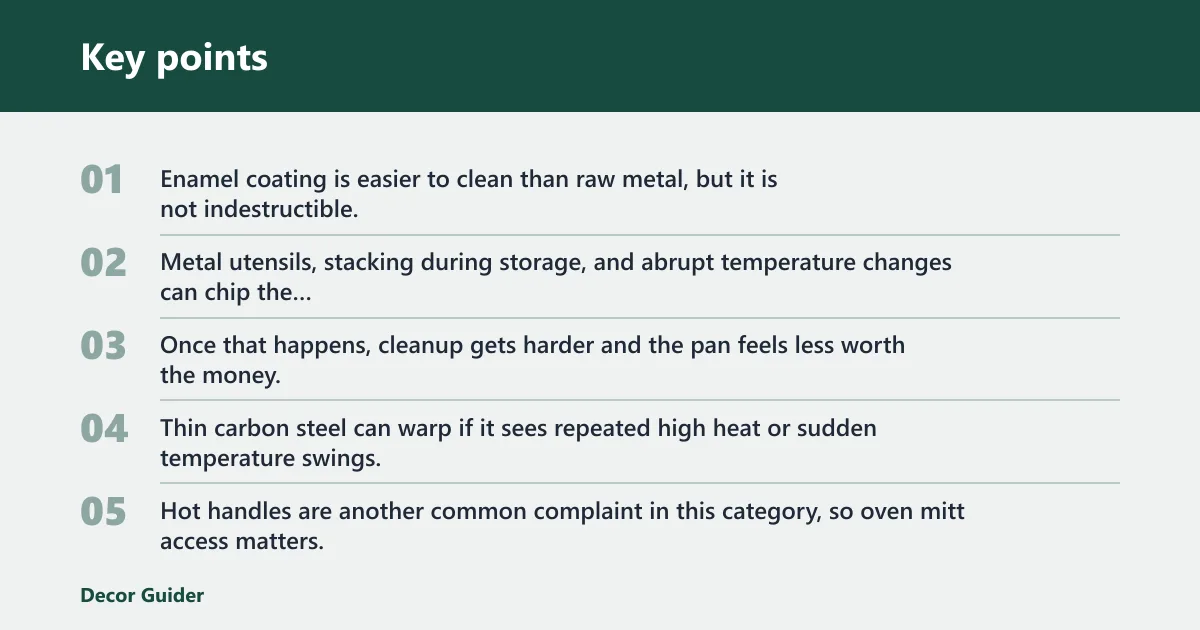
Enamel coating is easier to clean than raw metal, but it is not indestructible. Metal utensils, stacking during storage, and abrupt temperature changes can chip the surface or make it look dull. Once that happens, cleanup gets harder and the pan feels less worth the money.
Warping, hot handles, and lid-fit issues
Thin carbon steel can warp if it sees repeated high heat or sudden temperature swings. Hot handles are another common complaint in this category, so oven mitt access matters. Lid fit also matters because a loose lid can leak steam and reduce the juice-retention benefit.
Suppose a 16-inch roaster goes into a crowded oven for a holiday turkey. If the lid sits too high under the top rack, the pan may touch the rack above it, which can create uneven heating and make removal awkward.
When dishwasher-safe does not mean no-maintenance
Dishwasher-safe enamel sounds convenient, but high-heat detergent cycles can still dull the finish over time. Hand-washing with a nonabrasive sponge is usually the safer path if you want the coating to last longer. Dishwasher-safe should be read as easier care, not careless care.
Decision matrix: which size should you buy?
The right size depends on meal size, oven clearance, and whether you roast for holidays or weeknight dinners. A simple worth-it score helps because a bigger pan is not automatically better. If the pan does not fit your oven or storage space, its value drops fast.
| Use case | Best size | Worth-it score | Why it fits |
|---|---|---|---|
| 2-person chicken or vegetables | 13-inch | 4/5 | Fits small poultry and sides without wasting oven space |
| 4-person family meal | 14.6-inch | 4/5 | More room for airflow and moderate roasting volume |
| Standard family meal | 16-inch | 5/5 | Best balance of capacity, fit, and everyday usefulness |
| Holiday turkey duty | 18-inch | 3/5 | Good capacity, but storage, fit, and handling matter more |
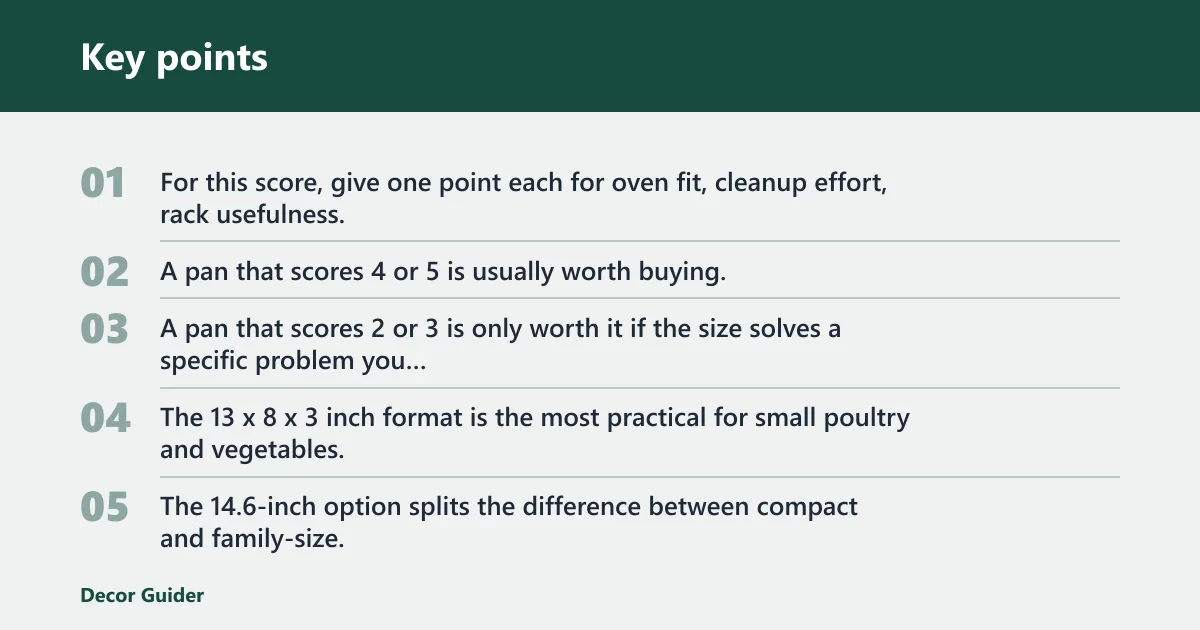
For this score, give one point each for oven fit, cleanup effort, rack usefulness, and holiday capacity. A pan that scores 4 or 5 is usually worth buying. A pan that scores 2 or 3 is only worth it if the size solves a specific problem you already have.
13-inch and 14.6-inch pans for chicken, sides, and smaller roasts
The 13 x 8 x 3 inch format is the most practical for small poultry and vegetables. The 14.6-inch option splits the difference between compact and family-size, which makes it useful for a chicken plus vegetables or a small roast with room around the edges.
16-inch pans for standard family meals
A 16-inch roaster usually hits the sweet spot for most households. The 16 x 12 x 3.4 inch Cuisinart size and the 16.5 x 13.5 inch Rachael Ray size both suggest enough capacity for common roast dinners without moving into oversized holiday territory.
Picture a 4-person Sunday dinner with a chicken, potatoes, and carrots. A 16-inch pan gives enough surface area for even heat exposure and a little margin for drippings, which makes it easier to avoid crowding.
18-inch pans for turkey and holiday capacity
An 18-inch turkey roaster is the large-capacity choice. It can be the right answer for big birds, but it also demands more oven space, more cabinet space, and better grip when full. One roaster is described as suitable for turkeys up to 12 pounds, while the Rachael Ray roaster is presented as handling turkeys up to 20 pounds, showing how capacity claims can vary widely by design.
Alternatives: Paula Deen-style roaster pan versus other materials
The main trade-off is simple: enamel-coated carbon steel gives easier cleanup and faster heating, while stainless steel usually wins on durability and heat tolerance. Nonstick is easiest to clean at first, but coating life can be shorter. A plain rack-and-pan setup can also beat a lidded roaster if browning matters more than moisture retention.
| Material | Cleanup | Browning | Durability | Best for |
|---|---|---|---|---|
| Enamel-coated carbon steel | Easy | Good, unless the lid stays on too long | Moderate; enamel can chip | Balanced everyday roasting |
| Stainless steel | Moderate | Very good | High | Frequent use and higher heat |
| Nonstick | Very easy at first | Fair | Lower if the coating is abused | Quick cleanup and gentler roasting |
| Plain rack-and-pan setup | Moderate | Very good | High | When you want browning more than moisture |
Enamel-coated carbon steel versus stainless steel
Choose enamel-coated carbon steel if cleanup matters more than long-term abuse resistance. Choose stainless steel if you roast often, use hotter ovens, or want to reduce the chance of coating wear. Stainless is less forgiving on cleanup, but it usually ages better.
Nonstick roasters for easier cleanup
Nonstick is the cleanest option on day one, but it can be the most fragile over time. High heat, metal tools, and harsh scrubbing shorten coating life. That makes nonstick a better choice for lighter roasting, not for heavy holiday use.
When a plain rack-and-pan setup beats a lidded roaster
If crisp skin is the priority, a plain pan with a rack often beats a lidded roaster because you remove one more barrier to browning. The lid is useful when moisture retention matters more than crust. That trade-off is why some cooks prefer a simple roasting pan over a covered roaster.
Choose the Paula Deen-style enamel roaster if… / choose stainless or plain rack-and-pan if…
Choose the Paula Deen-style enamel roaster if you want a low-cost pan for chicken, smaller roasts, and occasional holiday meals, and you value easier cleanup more than maximum durability. Choose stainless or a plain rack-and-pan setup if you roast often, want stronger heat tolerance, or need a pan that can take more abuse over the first year.
Choose the Paula Deen-style enamel roaster if…
- You cook for 2 to 4 people most of the time.
- You want a lid for moisture retention and a rack for drainage.
- You use a standard oven and have enough storage space for the lid.
- You are willing to avoid abrasive cleaning and rough stacking.
Choose stainless or plain rack-and-pan if…
- You roast at high heat often and want fewer coating concerns.
- You care more about crisp skin than trapping moisture.
- You need a pan that is less likely to chip or dull.
- You want the better long-term buy for frequent use.
Should you buy it?
For everyday cooking, a Paula Deen-style roaster pan is a decent buy if you want a simple enamel pan with a rack and lid and you will use it enough to justify the storage space. The value rises when you roast chicken, vegetables, and small roasts more than once in a while.
For holiday roasting, it is only worth it if the size matches your turkey and the oven fit is confirmed. The 16-inch class is the safest middle ground. The 18-inch size makes sense only if you truly need the capacity and can store it without damage.
If the pan will mostly sit unused, a generic enamel roaster or a plain stainless option usually gives better long-term value. You are paying for convenience, not indestructibility.
Frequently asked questions
What size Paula Deen style roaster pan do I need for a turkey or chicken?
For chicken or small poultry, a 13-inch pan is usually the right starting point. For a family meal, 14.6 inches to 16 inches is the safer range. For turkey duty, an 18-inch roaster is the large-capacity choice, but oven clearance and storage space should be checked first.
Are enamel-coated roaster pans easier to clean than stainless steel?
Usually yes. Enamel gives food fewer places to cling, so cleanup is often faster than with bare stainless. The trade-off is that enamel needs gentler care, because chipping, dulling, and finish wear can happen if the pan is scraped or abused.
Do I need a lid and rack for roasting meat?
You do not need both, but they solve different problems. A rack improves airflow, browning, and fat drainage. A lid traps moisture and helps keep meat juicy. If you want crisp skin, the rack matters more. If you want tender meat, the lid matters more.
How much weight can a roaster pan handle?
Capacity depends on the specific pan, its metal thickness, and its handles, so there is no universal weight limit. Manufacturer turkey claims are the best guide, such as listings for birds up to 12 pounds or up to 20 pounds. Always confirm the pan’s stated capacity before buying.
Will a Paula Deen style roaster pan fit a standard oven?
Often yes for smaller sizes, especially 13-inch pans. Larger 16-inch and 18-inch pans can crowd the oven cavity or the upper rack. Measure the oven interior at rack level and check lid height before purchase, because fit issues are one of the most common ownership problems.
Which roaster pan material is best for crispy skin and even roasting?
Stainless steel or a plain rack-and-pan setup is usually the better choice for crisp skin. Enamel-coated carbon steel offers a good middle ground and easier cleanup, but the lid can slow browning. If crisping is the priority, less coverage usually gives better results.
What is the best Paula Deen style roaster pan for small family meals?
The best size for small family meals is usually the 13-inch to 14.6-inch range. A 13 x 8 x 3 inch pan suits small poultry and vegetables, while the slightly larger 14.6-inch format gives more room for a chicken and sides without feeling oversized.
Products related to this article
Sponsored / affiliate links. As an Amazon Associate I earn from qualifying purchases. I may earn additional commission from eligible campaigns.