Le Creuset Signature Skillet Review: Is It Worth It?
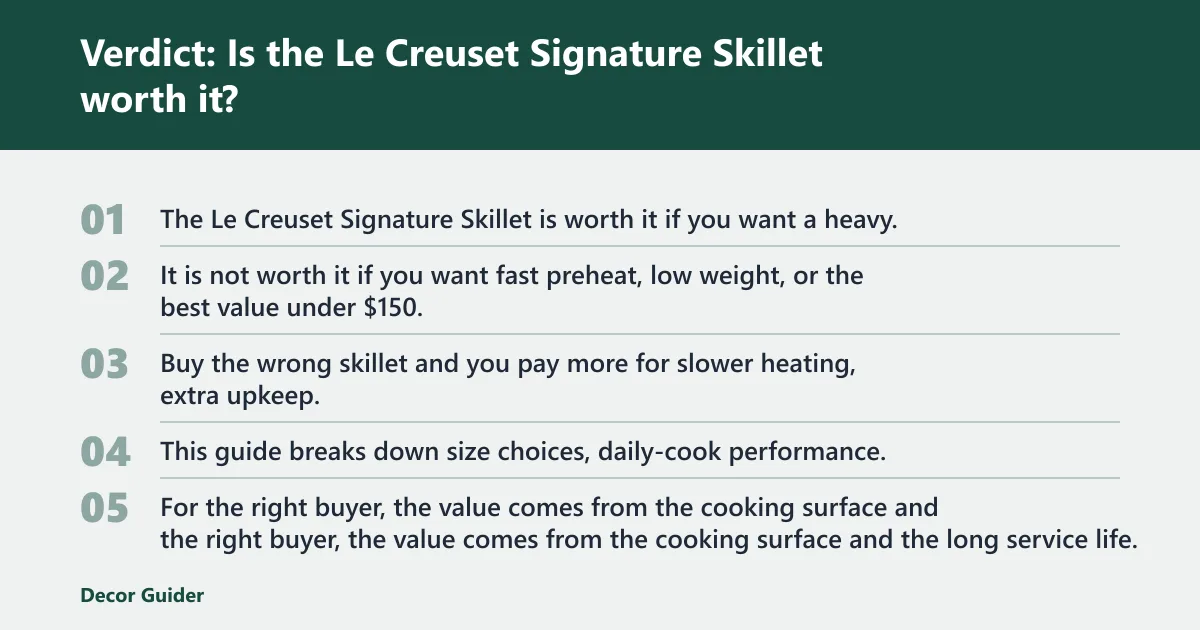
The Le Creuset Signature Skillet is worth it if you want a heavy, induction-safe skillet that can move from stovetop to oven and hold up for years. It is not worth it if you want fast preheat, low weight, or the best value under $150. Buy the wrong skillet and you pay more for slower heating, extra upkeep, or a pan you avoid using. This guide breaks down size choices, daily-cook performance, and cheaper alternatives so you can decide quickly.
This guide is part of our Cooking with skillets, griddles, and roasting pans series.
Verdict: Is the Le Creuset Signature Skillet worth it?

- Enameled cast iron resists dulling, staining, chipping
- Lightest weight cast iron by quart on the market
- Compatible with all cooktops and safe for dishwasher

For the right buyer, the value comes from the cooking surface and the long service life, not from speed or convenience. The enameled cast iron build gives strong heat holding, broad cooktop compatibility, and easy oven transfer, but it also means more weight, slower response to burner changes, and some care limits that raw cast iron or stainless steel do not share.
Specs at a glance
| Feature | Le Creuset Signature Skillet |
|---|---|
| Construction | Cast iron with an enameled cooking surface |
| Sizes commonly sold | 10.25-inch and 12-inch |
| Cooking capacity | 10.25-inch suits 1 to 3 servings; 12-inch suits about 3 to 5 servings |
| Cooktop compatibility | Works on gas, electric, glass-top, and induction when the burner and pan base make full contact |
| Oven use | Oven-safe skillet design; lid and broiler limits depend on the exact accessory and manufacturer guidance |
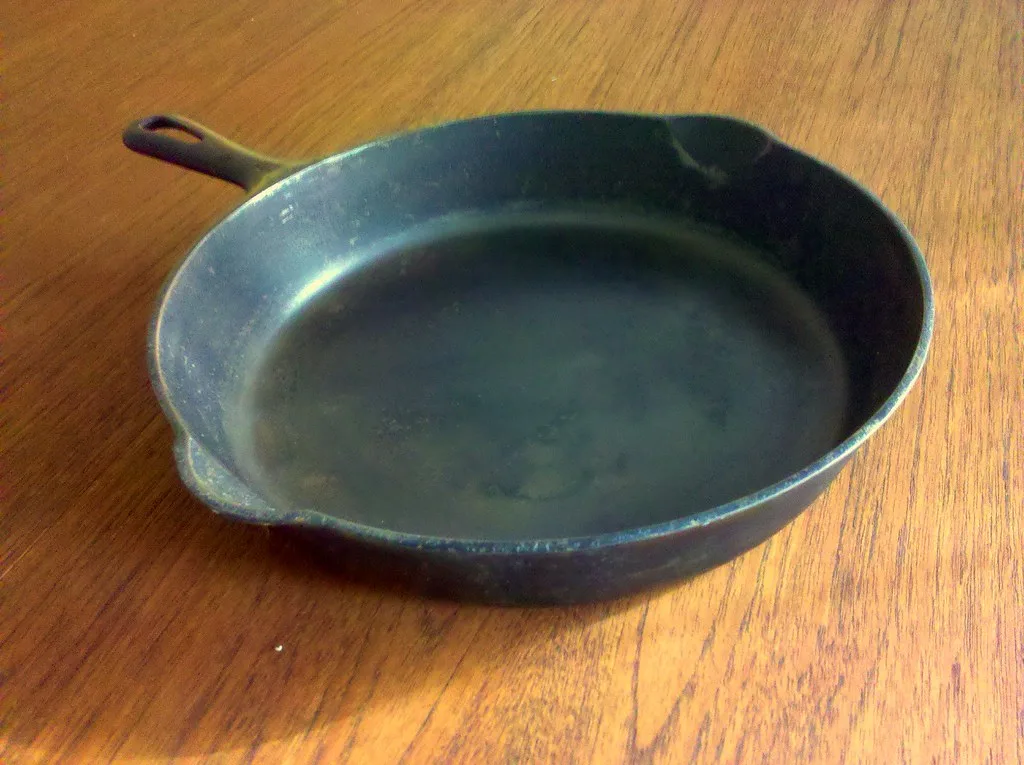
| Handle design | Long helper-style handle plus a loop helper grip for lifting and hanging |
| Cleaning | Soap-and-water cleaning is typical; avoid metal scouring that can mark enamel |
Who should buy it?

This skillet fits daily cooks who want cast iron performance with less seasoning work, plus shoppers who plan to use one pan on the stove and in the oven. It is also a strong pick for induction users and anyone who values a coated surface that does not need the same ongoing oil film as bare cast iron.
It is a weaker buy for people who lift pans one-handed often, cook only once or twice a week, or want the lowest upfront cost. If you mainly fry eggs, reheat leftovers, and move quickly between burners, a cheaper cast iron or stainless-steel skillet usually makes more sense.
Best fit for daily home cooks
Frequent home cooks get the most from the Signature Skillet because its heat holding helps steady searing, shallow braises, and oven finishing. It is most sensible if you cook multiple times per week and want one skillet to stay in service for years rather than chasing a cheap replacement.
Best fit for induction and oven use
Induction users benefit because cast iron is magnetic and the flat base works well when the burner and pan align. Oven use is another reason to pay up, since cast iron tolerates high oven heat better than many plastic- or silicone-handled skillets, though any lid or accessory should be checked for its own limit.
Who should skip it
Skip it if you need a lighter pan, live with limited storage, or want a skillet that heats up fast and cools down fast. Budget shoppers should also pass unless they are willing to pay for enamel convenience and brand support rather than the lowest price per pan.
Pros and cons
Pros
- Strong heat retention for hard searing and oven finishing.
- Enameled surface skips seasoning and repeated oiling.
- Works across gas, electric, glass-top, and induction cooktops.
- Premium build and brand support can reduce replacement churn.
Cons
- Heavy enough to make one-handed handling tiring.
- Higher price than comparable cast iron and many stainless pans.
- Enamel can chip if dropped or hit hard.
- Not truly nonstick, especially with eggs or sugar-heavy sauces.
What works well in real cooking
The Signature Skillet is strongest when you want steady heat, not quick heat swings. That makes it a sensible tool for steak, chicken thighs, cornbread, pan sauces, and other foods that benefit from a hot, even surface that holds temperature after the food hits the pan.
Searing steak and browning
Cast iron’s heat retention is the main advantage here. A steak dropped into a fully preheated skillet is less likely to cool the pan sharply, so browning stays more consistent. The enameled surface also handles oven finishing, which helps if you sear first and then transfer the pan to roast.
Frying eggs and delicate foods
Eggs can work, but this is not a slick PTFE-style pan. You still need enough fat and sensible heat control. For delicate foods, the smooth enamel helps more than raw cast iron, but it does not cancel the need for preheating and careful timing.
Heat holding on the stovetop and in the oven
Suppose you start a frittata on the stove and finish it in the oven. The skillet’s mass helps keep the temperature from dropping too fast when you move between heat sources. That same mass also means longer preheat time, so plan ahead rather than turning to this pan for a fast weeknight scramble.
What does not work as well

The biggest drawback is weight, followed by the limits of enamel. This skillet is not a good answer if you want quick handling, easy tosses, or a pan that can be abused without consequences. Enamel is durable, but it is not indestructible, and it does not behave like seasoning on bare cast iron.
Weight and handling limits
Liftability matters. A 10.25-inch cast iron skillet is already heavy enough to be awkward when full; a 12-inch version is harder still. One-handed handling, quick draining, and overhead storage all become less pleasant as size rises, especially for smaller cooks or tight kitchens.
Enamel care limits and chipping risk
Enamel cast iron needs gentler treatment than raw cast iron. Thermal shock, hard knocks, and metal tools used roughly can shorten its finish life. Staining is possible, too, especially after high-heat browning, tomato sauces, or sugar-rich cooking. Those marks are often cosmetic, but they are part of ownership.
Why it is not a true nonstick pan
Enamel is smooth, but it is not a slick nonstick coating. A common first-timer mistake is assuming eggs will slide around without oil because the pan is premium. They usually will not. If low-stick convenience is the goal, stainless steel with technique or a true nonstick pan makes more sense.
Decision matrix: Le Creuset vs cheaper options
| Factor | Le Creuset Signature Skillet | Budget cast iron | Stainless-steel skillet |
|---|---|---|---|
| Heat retention | 5/5 | 5/5 | 3/5 |
| Weight | 2/5 | 2/5 | 4/5 |
| Cleanup | 4/5 | 2/5 | 4/5 |
| Oven use | 5/5 | 5/5 | 4/5 |
| Induction compatibility | 5/5 | 5/5 | 5/5 if magnetic |
| Durability risk | 4/5 | 4/5 | 4/5 |
| Price-to-lifespan value | 3/5 | 5/5 | 4/5 |
The matrix makes the tradeoff plain. Le Creuset wins on finish, cleanup, and premium ownership feel, but budget cast iron usually wins on value if you do not need enamel. Stainless steel is the better pick if you want lighter weight, faster response, and less worry about chips.
What size should you buy?
The 10.25-inch skillet may be a better choice for smaller households, limited storage, and lighter daily meals. The 12-inch pan is better for larger batches, bigger proteins, and households that cook dinner for three to five people at once. If your stovetop is small, the footprint matters as much as capacity.
10.25-inch for smaller households
This size fits a couple, a solo cook who makes leftovers, or anyone who wants easier lifting. It is also a safer choice if your burner is narrow, because a pan that overhangs too far can heat unevenly and feel unstable on the cooktop.
12-inch for larger batches
The 12-inch version gives more searing area and more room for vegetables, fish, or a full skillet dinner. It is useful if you often cook for a family, but the extra diameter also means more storage space and more weight to move from burner to oven.
Storage and stovetop footprint
Picture a compact apartment kitchen with limited cabinet depth and a narrow induction zone. In that setting, the smaller skillet is easier to store and easier to center on the burner. The larger pan can still work, but it will ask more from the cooktop, the cabinet, and your wrist.
Alternatives to consider
Lower-cost enameled cast iron
Staub’s enameled cast iron is the closest alternate path if you want enamel benefits without paying Le Creuset pricing. The double-handle layout helps with lifting, but the price is still premium, the pan is still heavy, and enamel care rules still apply.
Bare cast iron

- Pre-seasoned with natural vegetable oil for nonstick finish
- Heavy-duty cast iron ensures superior heat distribution and even cooking
- Cost-effective everyday pan for searing, sautéing, and baking
Lodge’s 12-inch pre-seasoned skillet is the value choice if you care most about heat retention and low purchase cost. It needs seasoning upkeep, but it is far cheaper, very durable in normal use, and easier to justify if you cook often enough to keep it seasoned and in rotation.
Stainless-steel skillet alternatives
Stainless steel is the best counterpoint if you want lower weight, faster response, and simpler handling. It will not hold heat like cast iron, but it avoids enamel chip concerns and usually wins for cooks who prefer speed over thermal mass.
Should you buy it?
Buy the Le Creuset Signature Skillet if you cook often, use induction, want oven-to-stovetop flexibility, and plan to keep one skillet for a long time. It earns its price when durability, finish quality, and versatile use matter more than weight or quick heat-up time.
Skip it if you want the best budget value, if you cook lightly, or if you know you will dislike lifting a heavy pan. In that case, Lodge-style cast iron gives more cooking power per dollar, while stainless steel gives easier handling and less maintenance friction.
Frequently asked questions
Is the Le Creuset Signature Skillet worth it?
It is worth it for cooks who will use its strengths: heat retention, oven use, and induction compatibility. It is less worthwhile if you mainly want speed, low weight, or the cheapest pan that can sear and fry. The premium makes sense only when you will keep the skillet in regular rotation.
What makes the Le Creuset Signature Skillet different from cheaper skillets?
The main difference is enameled cast iron with premium finishing and brand support, not magical cooking power. Cheaper cast iron can match the heat performance for far less money, but it usually requires seasoning care and looks less refined. Stainless steel is lighter and faster, but less heat-stable.
Is Le Creuset Signature Skillet good for searing steak and frying eggs?
Yes, it is good for searing steak because cast iron holds heat well. Eggs are possible, but they need oil and heat control because enamel is not the same as a nonstick coating. If eggs are your main use, a lighter pan or true nonstick may be easier.
Does the Le Creuset Signature Skillet work on induction?
Yes, cast iron is magnetic, so it works on induction cooktops. Flat contact matters, though, and the pan’s weight means you should center it carefully for even heating. Induction users often get the most benefit because the skillet’s thermal mass pairs well with that heat source.
How heavy is the Le Creuset Signature Skillet?
It is heavy enough that handling matters in daily use, especially in the 12-inch size. Exact weight varies by size, but cast iron always asks more from your wrist than stainless steel or aluminum. If you need one-handed control or quick draining, this is not the easiest option.
How durable is a Le Creuset Signature Skillet over time?
It can last for years if you avoid thermal shock, hard drops, and harsh metal scraping. The cast iron body is durable, but the enamel finish can chip or stain with careless use. Its lifespan value is high when treated well, lower when used as a rough utility pan.
Products related to this article
Sponsored / affiliate links. As an Amazon Associate I earn from qualifying purchases. I may earn additional commission from eligible campaigns.