How to Line a Roasting Pan with Foil
Line a roasting pan with foil only if you keep it under the rack, not over the food: use a single sheet for cleanup, or two sheets for a fuller pan, and leave the rack exposed for browning. Covering the roast can trap steam and soften the crust, while a poor foil fit can block drips and make pan juices burn. This guide explains when to line, how to shape the foil, and how to protect browning, airflow, and drippings.
Factors that influence foil use


Use foil when cleanup matters more than maximum browning, especially in a deep roasting pan that will catch a lot of grease and juices. Skip it when you want drier air around the food, stronger browning, or a cleaner drippings base for gravy. The pan material matters too: stainless steel, carbon steel, and enameled metal each clean up differently.
When foil helps cleanup
Foil speeds cleanup by catching drips before they hit the pan or oven bottom. That matters with a turkey roast, fatty chicken pieces, or vegetables that shed sugary glaze into the pan. A removable liner also helps in a pan with low sides, where burned-on residue is harder to scrub from corners.
When foil can hurt browning
A foil liner can reflect heat back toward the food and alter air movement around it. If the foil rises too high at the sides, it narrows the space where hot air circulates. That can soften skin, reduce browning on vegetables, and leave a roast steaming in its own juices. Appliance makers such as GE and Whirlpool warn against blocking the oven floor or restricting airflow with foil, because doing so can affect heat circulation and cooking results.
How roast size and pan material change the choice
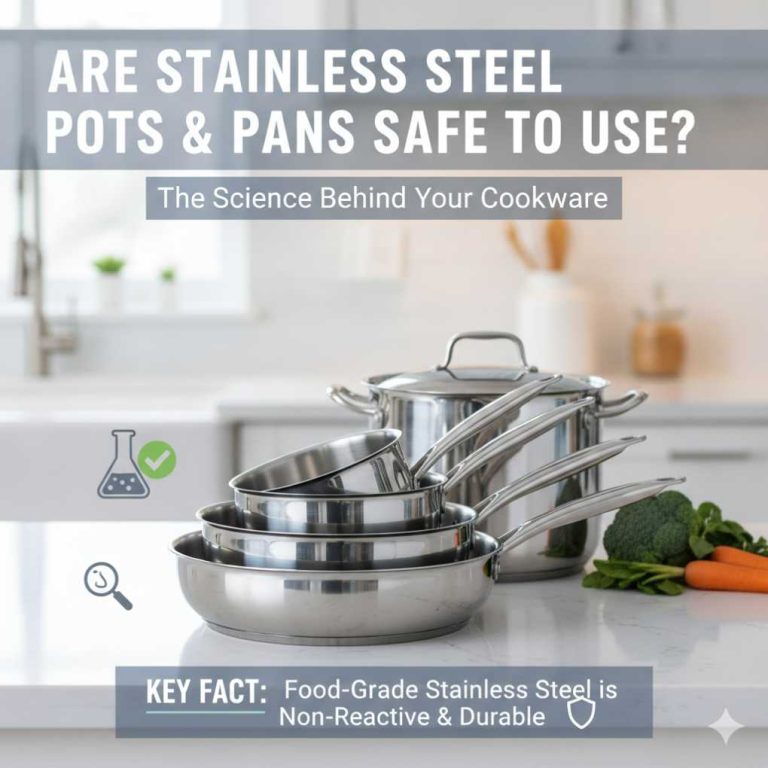
Large roasts need open airflow more than small cuts do. In a stainless steel roasting pan, a liner may save time because browned residue can cling hard to the surface. In enameled metal, cleanup is often easier already, so foil is less necessary unless the drippings are especially sticky or salty. If you are comparing cookware types for this job, see the roasting pan review best picks by use case.
Can I line a roasting pan with foil?
Yes, you can line a roasting pan with foil when you want easier cleanup and do not need every bit of surface browning. The safest setup is a bottom-only liner that stays below the food and rack. Keep the sides low, avoid sealing the pan, and leave room for hot air to move around the roast.
Can you line a roasting pan with foil for turkey?
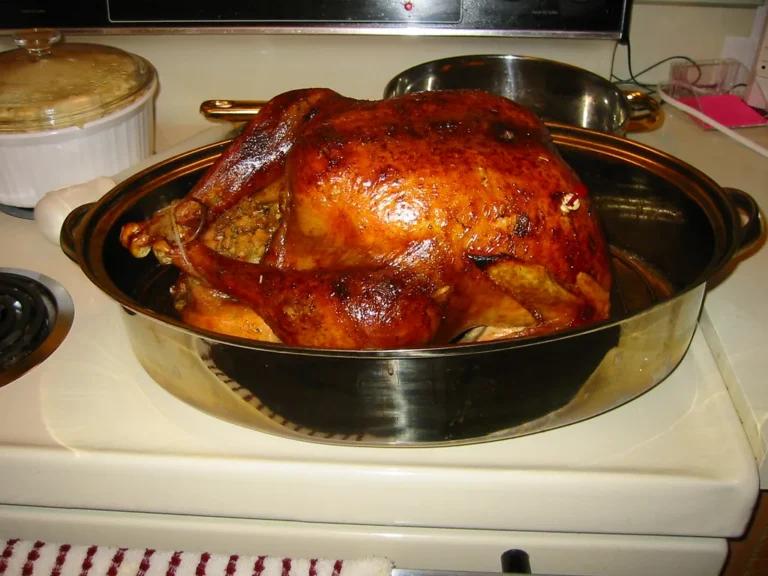
Yes. For turkey, foil works best under the rack, not wrapped around the bird or folded high on the sides. That helps catch drippings while keeping the skin exposed to dry heat for browning. Heavy-duty foil is usually better for a large turkey because it is less likely to tear under the weight of juices.
Can you line a roasting pan with parchment paper?
Yes, for some foods, but parchment is better for lower-heat, less greasy roasting than for a large bird or a very wet pan. It is useful when you want easier release on vegetables or delicate items, while foil is better when drip collection and stronger pan protection matter. Parchment also has heat limits, so it is not the best choice for high-heat roasting or broiling.
What you’ll need
- Heavy-duty aluminum foil for deeper pans or heavier roasts
- Regular aluminum foil for lighter jobs and quick cleanup
- A roasting pan with rimmed sides
- An oven rack with enough clearance around the pan
- Optional parchment paper for some vegetable or cake-like bakes
- Kitchen scissors for trimming the liner
Measure the pan and roast
Check the pan depth and rim height before you cut foil. The liner should sit flat in the bottom, with just enough overhang to lift out later. Leave room for air movement around the edges so the roast does not sit in a sealed pocket of steam.
- Measure the inside bottom of the roasting pan.
- Cut foil so it is only a few inches larger than the pan, not much more.
- Check the roast height against the pan depth so juices can pool without reaching the rim.
- Leave the rack exposed and keep the liner out of the food zone.
Say your pan is 12 5/8 by 8 5/8 inches, like a common carbon-steel roasting pan size. A liner that only slightly exceeds those dimensions is easier to set and lift than a sheet that drapes far over the sides and blocks airflow.
Shape the foil liner
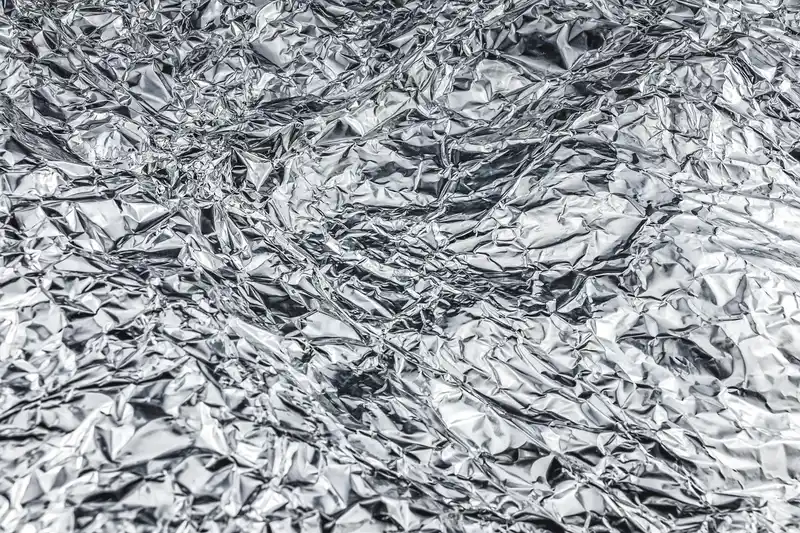
Form the foil over an upside-down pan first if you want a faster fit. That trick helps the sheet hold the right shape before it goes into the roasting pan. Use one sheet of foil for light use, or two layers when the roast is heavy and the drippings are abundant.
- Lay the foil over the outside of an upside-down pan or dish.
- Press it into the shape with your hands so the corners are defined.
- Move the formed sheet into the roasting pan.
- Crimp the edges lightly so the liner stays put, but do not seal the pan shut.
Heavy-duty foil is better when the liner needs tear resistance, especially under a turkey roast or a pan with sharp corners. Regular foil is more flexible and easier to mold, but it tears more readily if the pan is rough or the drippings are heavy.
Roasting pan decision table
Use this table to choose foil, parchment paper, or no liner based on the food, pan, and cleanup risk. The goal is not maximum convenience at any cost. It is the best balance between drippings management, browning, and air movement.
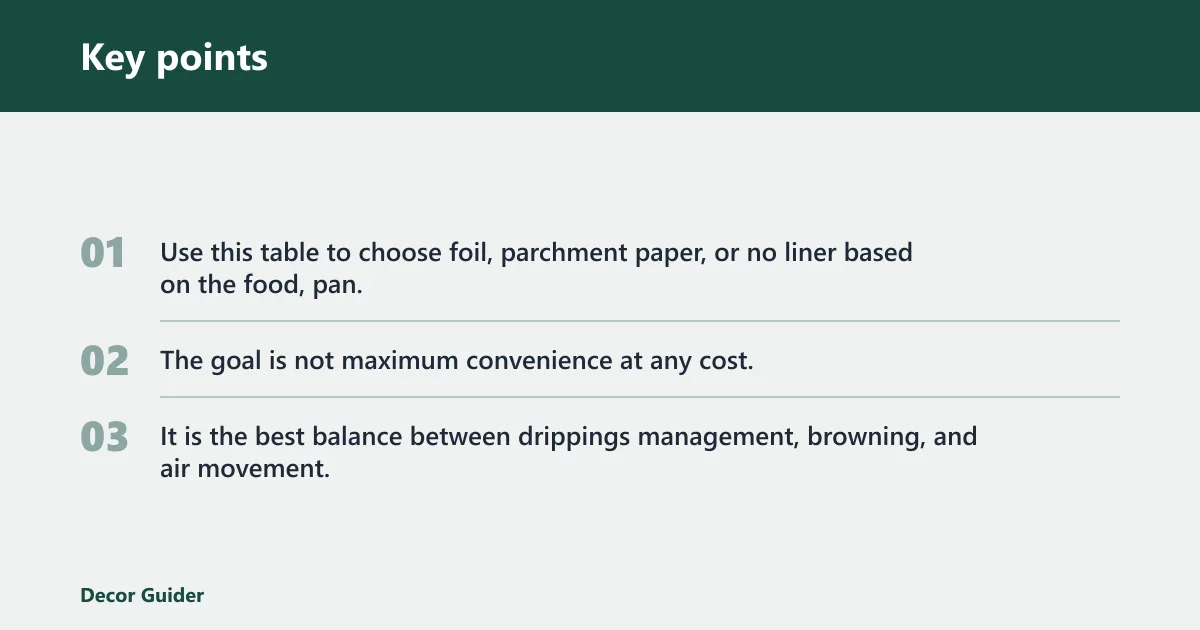
| Food type | Roast size | Pan material | Foil setup | Venting/crimping | Foil recommended? | Failure case |
|---|---|---|---|---|---|---|
| Turkey roast | Large bird | Stainless steel or carbon steel | Single heavy-duty sheet on the bottom only; rack stays exposed | Crimp edges lightly; leave the sides open for airflow | Yes, if cleanup matters more than maximum browning | Too much sealing can trap steam, pale the skin, and soften the crust |
| Root vegetables | Medium tray load | Enameled metal | No liner, or parchment if the pan is shallow | Keep edges open; do not wrap the pan walls | Usually no | Foil can dull browning and hold moisture, so vegetables steam instead of caramelizing |
| Chicken parts | Small to medium | Stainless steel | Single sheet trimmed to the base only | Do not fold up high at the sides; keep vent space around the edges | Sometimes | Grease can pool and burn, and the skin can brown unevenly if the liner cups upward |
| Acidic marinade roast | Any size | Carbon steel or stainless steel | No foil, or parchment under the food if heat allows | Open airflow | No, if the marinade is acidic | Acidic foods can react with foil and affect flavor, color, and the liner itself |
| Stuffed roast with juices | Large | Enameled metal | Foil only under the rack, not around the sides | Keep the pan edges free; do not seal the top | Yes, for drip collection | Blocked airflow can slow browning on the exterior and leave a steamed surface |
| Pan gravy base | Large-bird roasting use | Stainless steel | No liner if you want a direct fond layer | No crimping needed | No | Foil can reduce browning on the pan surface, which means less fond and weaker gravy flavor |
Set the pan on the oven rack
Keep the pan on the rack, not on the roaster oven vs roasting pan comparison point of the oven floor . Reynolds recommends foil on the rack beneath the pan instead of on the oven floor, and it says not to line the bottom of the oven with aluminum foil. Blocking the oven floor can interfere with heat circulation, and foil can reflect heat back onto heating elements. FoodSafety.gov also advises against using foil in ways that block air flow or contact heating elements.
- Place the roasting pan on the middle oven rack unless the recipe says otherwise.
- Leave space around the pan edges so hot air can move freely.
- Do not lay foil across the oven floor.
- If your oven is gas, keep foil away from the flame path.
Picture a pan that sits flush against the oven walls with foil curled high at the sides. That setup reduces air circulation and can leave the lower edge of the roast pale while the top browns faster.
Common mistakes
A full liner can be a common misstep. It can trap steam, reduce browning, and keep rendered fat from moving away from the food. The better approach is a bottom liner only, with the rack and air path left open.
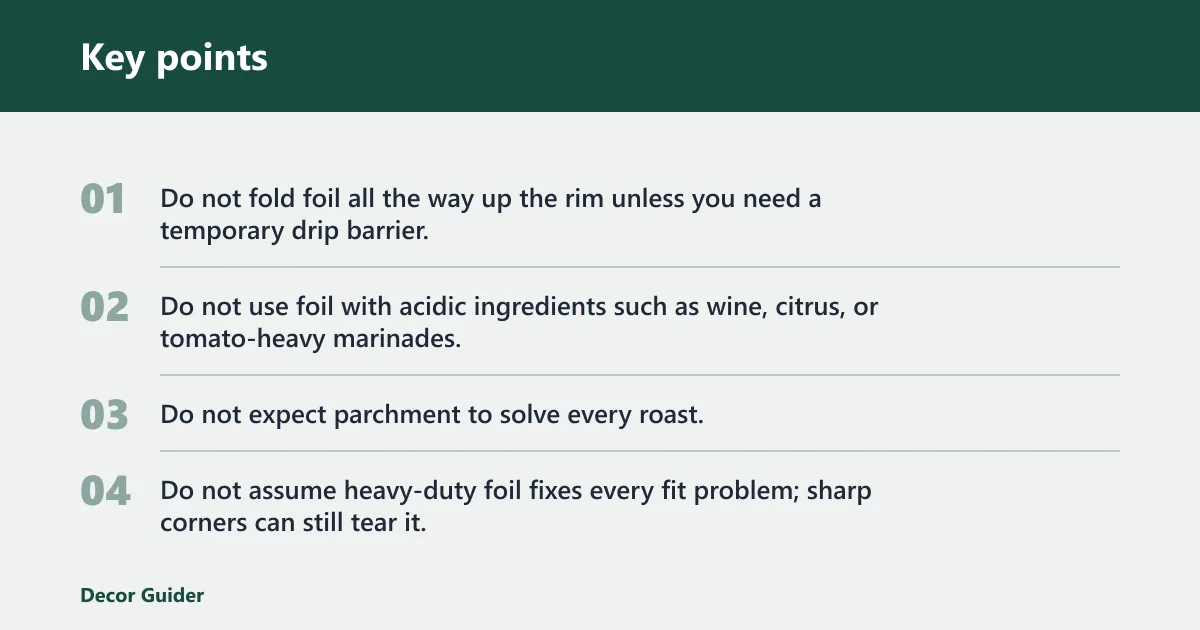
- Do not fold foil all the way up the rim unless you need a temporary drip barrier.
- Do not use foil with acidic ingredients such as wine, citrus, or tomato-heavy marinades; Reynolds notes foil is not recommended for highly acidic or salty foods because they can react with aluminum.
- Do not expect parchment to solve every roast; it has heat tolerance limits and is best for less intense jobs. Reynolds parchment guidance gives a maximum of 425°F for many uses, while some food-safety sources note parchment is not meant for direct flame or broiler-level heat.
- Do not assume heavy-duty foil fixes every fit problem; sharp corners can still tear it.
A common first-timer mistake is lining a roasting pan for vegetables and then covering the sides too. That can hold moisture under the food, so the carrots or potatoes steam instead of browning.
Frequently asked questions
Can you line a roaster pan with foil?
Yes. If the roaster pan is metal and oven-safe, foil can be used as a removable liner on the bottom. Keep it a few inches larger than the pan, crimp lightly, and leave the sides open so the rack and airflow still do their job.
Products related to this article
Sponsored / affiliate links. As an Amazon Associate I earn from qualifying purchases. I may earn additional commission from eligible campaigns.