Sheet Pan Size Chart: Dimensions and Fit
A half-sheet pan, about 18 x 13 inches, is the standard all-purpose size for most home ovens; choose a quarter-sheet for small batches or toaster ovens, and a full sheet only if your oven fits it. The wrong size can block airflow, crowd food, and waste space or batch capacity. This sheet pan size chart compares common dimensions, oven fit, storage fit, and the best uses for baking, roasting, and batch cooking.
What is a sheet pan?
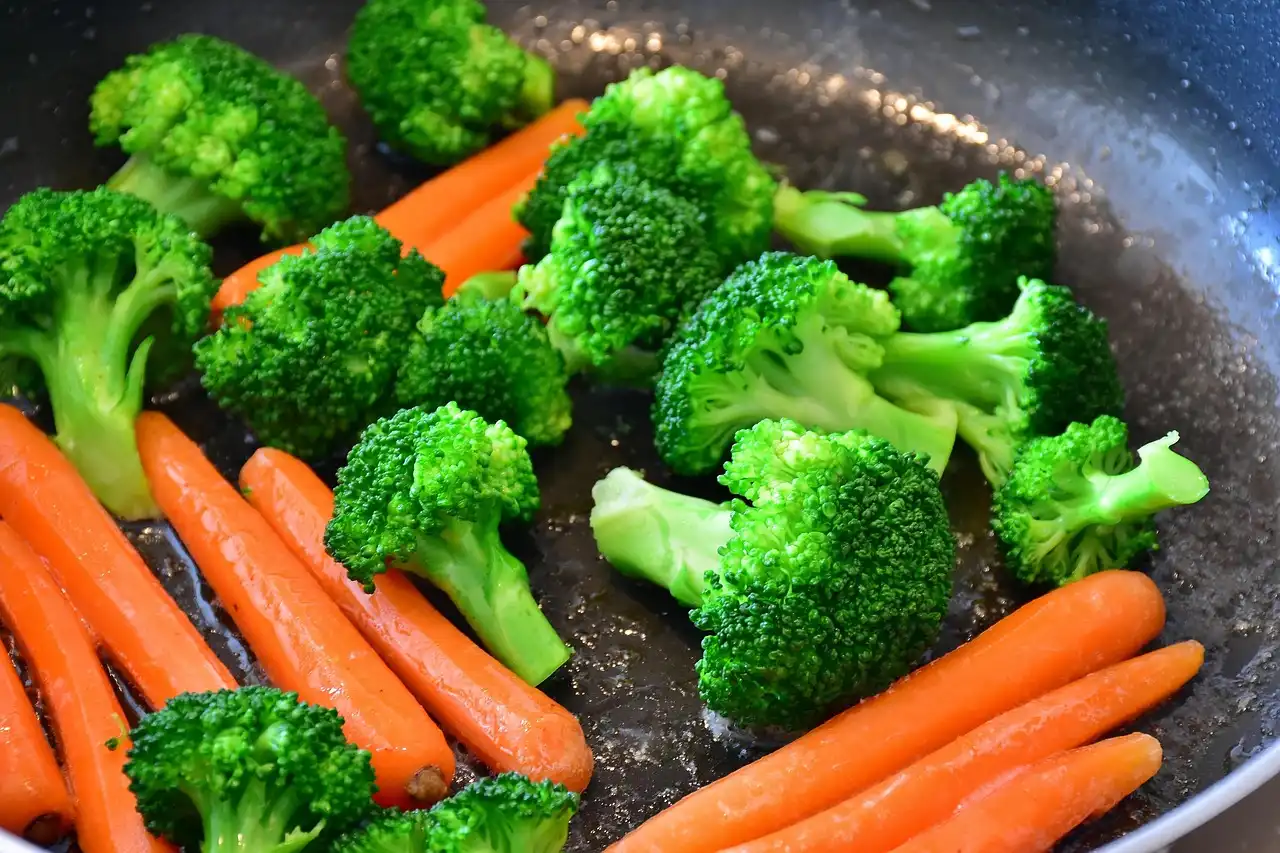


A sheet pan is a rectangular pan with raised rims and a flat baking area. That shape matters because the rim holds food and juices in place, while the flat center sets how much food you can spread in a single layer. Size affects both oven fit and recipe yield.
In practice, outer dimensions tell you whether the pan fits through the oven opening and onto a rack. Baking surface dimensions tell you how much room you have for cookies, vegetables, or a sheet-pan dinner. Those are different numbers, and both matter.
Sheet pan size chart and dimensions
This size chart compares common sheet pan dimensions, usable baking surface, outer dimensions, oven fit, storage fit, and the best use for each size. Use the outer size to check oven, cabinet, and storage fit. Use the baking surface size to judge capacity, spacing, and how much food the pan can hold in one layer.
| Sheet pan size | Approximate usable baking surface | Outer dimensions | Capacity note | Best use |
|---|---|---|---|---|
| Mini sheet pan | 9 x 6 x 1 inches | 9.4 x 6.5 x 1 inches | Small capacity for single servings | Toaster oven recipes and individual portions |
| Quarter sheet pan | 12.5 x 9 x 1 inches | 13 x 9.5 x 1 inches | Small-batch capacity | Small batches and toaster oven cooking |
| Jelly roll pan | 14.25 x 9.375 x 1 inches | 14.75 x 9.875 x 1 inches | Medium capacity for modest batches | Rolled cakes, cookies, vegetables, and appetizers |
| Half sheet pan | 17.25 x 12.25 x 1 inches | 17.75 x 12.75 x 1 inches | Large home-kitchen capacity | Most home ovens and everyday cooking |
| Extra-large sheet pan | 20.25 x 14.25 x 1 inches | 20.75 x 14.75 x 1 inches | Very large capacity | Large batches and bigger sheet-pan meals |
| Full sheet pan | Commercial-size pan | Approximately 18 x 26 inches | Very high capacity for food-service use | Commercial kitchens and high-volume baking |
Mini sheet pan dimensions and uses
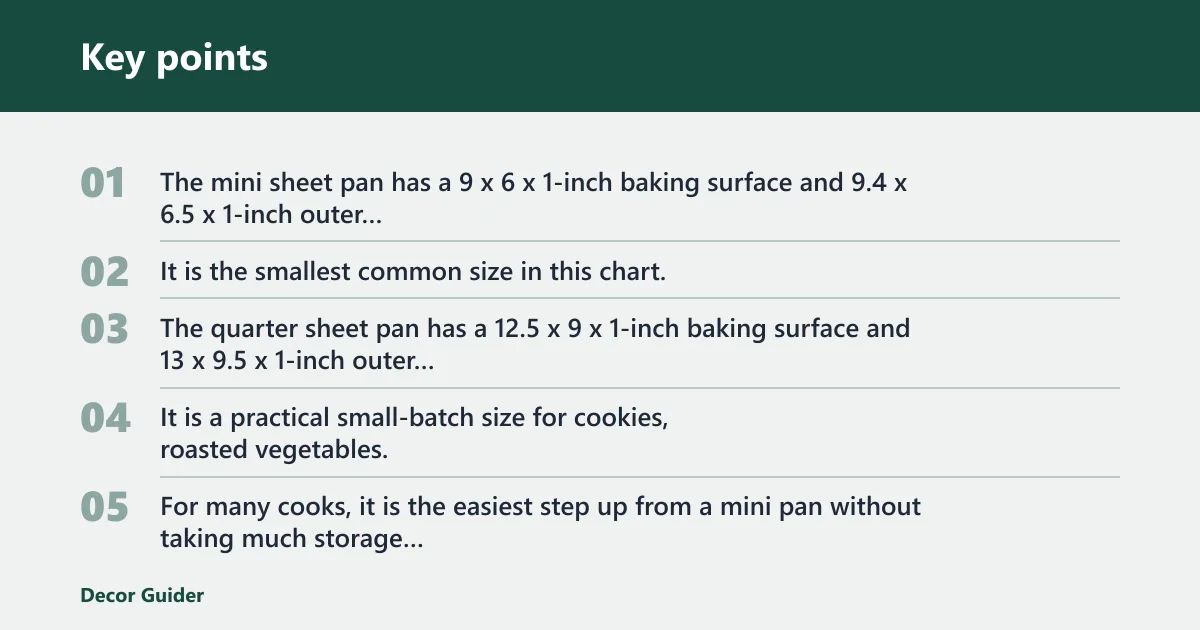
The mini sheet pan has a 9 x 6 x 1-inch baking surface and 9.4 x 6.5 x 1-inch outer dimensions. It is the smallest common size in this chart, so it works best when you want a single portion, a very small batch, or a pan that fits a toaster oven with limited interior space.
Quarter sheet pan dimensions and uses
The quarter sheet pan has a 12.5 x 9 x 1-inch baking surface and 13 x 9.5 x 1-inch outer dimensions. It is a practical small-batch size for cookies, roasted vegetables, and toaster oven cooking. For many cooks, it is the easiest step up from a mini pan without taking much storage space.
Jelly roll pan dimensions and uses
The jelly roll pan has a 14.25 x 9.375 x 1-inch baking surface and 14.75 x 9.875 x 1-inch outer dimensions. It is useful for rolled cakes, cookies, vegetables, and appetizers. The extra length compared with a quarter sheet pan gives you more spread area without moving into the larger half-sheet category.
Half sheet pan dimensions and uses
The half sheet pan has a 17.25 x 12.25 x 1-inch baking surface and 17.75 x 12.75 x 1-inch outer dimensions. This is the most versatile size for home use because it gives you enough room for batch cooking, roasting, and cookie baking while still fitting many standard home ovens.
Extra-large sheet pan dimensions and uses
The extra-large sheet pan has a 20.25 x 14.25 x 1-inch baking surface and 20.75 x 14.75 x 1-inch outer dimensions. It is built for bigger sheet-pan meals and larger batches. Many home ovens will not have enough interior clearance for this size, so check carefully before buying.
Full sheet pan dimensions and uses
A full sheet pan is approximately 18 x 26 inches and is primarily used in commercial food-service environments. It is too large for most residential ovens. If you are shopping for a home kitchen, this size usually creates a fit problem rather than a capacity gain.
How do baking surface and outer dimensions differ?
Baking surface dimensions measure the usable cooking area inside the pan. Outer dimensions measure the full outside edge to edge size. That difference matters because recipe yield depends on the inner area, while oven and storage fit depend on the outside size. Do not treat them as the same number.
Usable surface for recipe yield
The baking surface tells you how much food can sit in a single layer. A larger surface can hold more cookies, more vegetables, or a larger cake roll without crowding. If a recipe names a pan size, it usually means usable surface, not the outside footprint.
Say your recipe says “half sheet pan” and asks for 24 cookies. A pan with a smaller baking surface can force you into two batches, even if the outer dimensions look close. The recipe result changes because spacing changes.
Outer size for oven and storage fit
Outer dimensions decide whether the pan clears the oven walls, sits flat on a rack, and slides into a cabinet or drawer. A pan can have a useful interior area and still be the wrong shape for your oven. That is why fit checks should start with the outside size.
What size sheet pan fits a standard oven?
A half sheet pan is the safest standard choice for most home ovens, but “standard oven” does not mean every oven fits the same pan. Measure the oven cavity’s interior width and depth before you buy, then compare those numbers with the pan’s outer dimensions. Leave room for rack movement and easy door closure.
Measure interior width and depth
Use a tape measure inside the oven cavity, not across the door opening. Measure the rack area width from side to side and the depth from the back wall to the front edge of the rack support. Compare those figures with the pan’s outer dimensions, not the baking surface.
- Measure the interior width of the oven rack area.
- Measure the interior depth from back wall to rack front.
- Compare both numbers to the pan’s outer dimensions.
- Confirm the pan can sit flat without rubbing the walls.
- Check that the door closes without forcing the pan.
Leave clearance for racks and door closure
Plan for a little extra room beyond the pan’s outer dimensions. A pan that barely fits on paper can still be awkward in real use if the racks need to slide, the handle or lip catches the door, or hot air cannot move around the sides. Clearance matters as much as raw size.
When a full sheet pan is too large
A full sheet pan, about 18 x 26 inches, is usually too large for a residential oven. Full sheet pans are commercial size and are made for food-service environments. If your oven cannot take the outer footprint with safe clearance, choose two half sheet pans instead of forcing one oversized pan.
That swap often makes more sense for home cooks. Two half sheet pans can split a large batch across racks or let you rotate pans for even browning. A single full sheet pan only helps if the oven cavity truly supports it.
Sheet pan fit checklist
Use this checklist before you buy. It keeps the decision focused on fit, not just on the name of the pan. If any answer is no, choose a smaller size or confirm the oven opening again before ordering.
| Check | Yes or no? | What to confirm |
|---|---|---|
| Oven width check | Yes / No | Can the pan’s outer width fit the rack area with room to spare? |
| Oven depth check | Yes / No | Can the pan’s outer depth fit without hitting the back wall or door? |
| Cabinet and storage check | Yes / No | Will the outer size fit the cabinet, drawer, or shelf where you store it? |
Which sheet pan size should you buy?
Start with the food you make most often, then match that to oven size and storage space. For many home cooks, the half sheet pan is the best single buy. If your oven is small, or if you cook for one or two people, a quarter sheet pan may be the better fit.
Best size for cookies
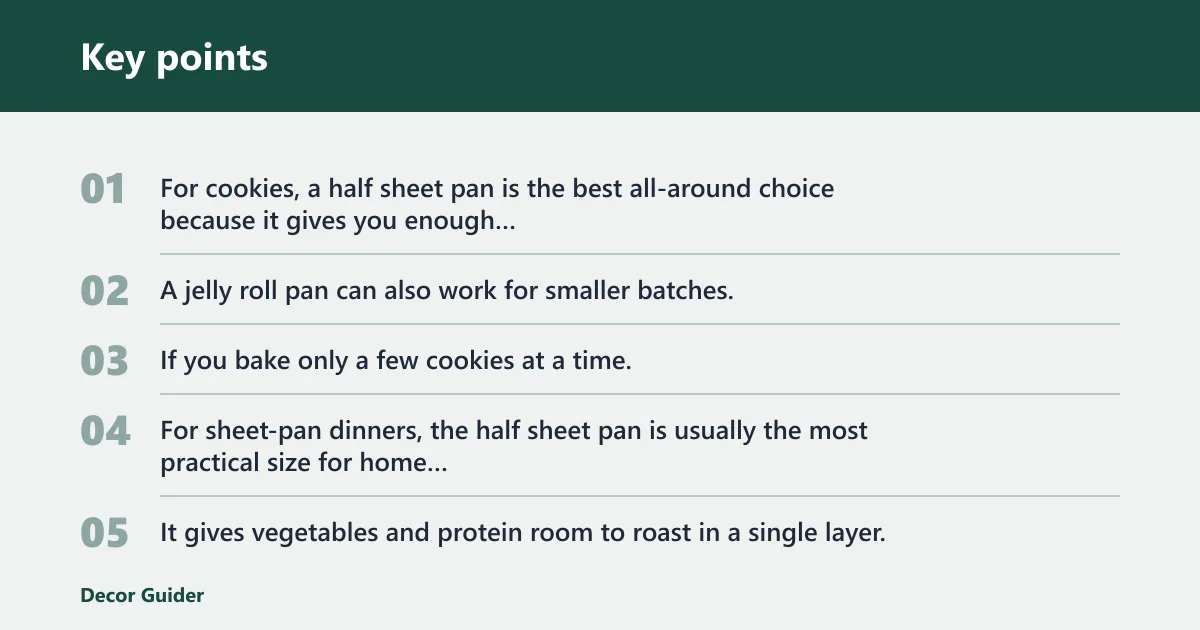
For cookies, a half sheet pan is the best all-around choice because it gives you enough usable area for standard batches and even spacing. A jelly roll pan can also work for smaller batches. If you bake only a few cookies at a time, a quarter sheet pan is easier to handle and store.
Best size for sheet-pan dinners
For sheet-pan dinners, the half sheet pan is usually the most practical size for home kitchens. It gives vegetables and protein room to roast in a single layer. If you are cooking for just one or two people, a quarter sheet pan or jelly roll pan may be enough.
Best size for toaster ovens
For toaster ovens, a mini sheet pan or quarter sheet pan is the safer choice. Their smaller outer dimensions are more likely to fit the compact cavity without blocking airflow. A full sheet pan is not a workable option, and even a half sheet pan may be too large for many toaster ovens.
Best size for small batches and apartment kitchens
For small batches and apartment kitchens, choose the smallest pan that still matches your recipe yield. A quarter sheet pan saves storage space and fits smaller ovens more easily. A jelly roll pan can be a good middle ground if you want more surface area without moving up to a half sheet pan.
A common first-timer mistake is buying the largest pan on the chart because it sounds efficient. If the oven is compact, that choice can lead to cramped airflow, uneven browning, and a pan that never really fits the way you need it to.
Frequently asked questions
What size is full sheet pan?
A full sheet pan is approximately 18 x 26 inches. It is a commercial-size pan used mainly in food-service settings. Most residential ovens are too small for it, so home cooks usually need a half sheet pan or two half sheet pans instead of one full sheet pan.
What is the size of a full size sheet pan?
A full size sheet pan is about 18 x 26 inches overall. That outer size is the key issue for home use, because the pan must fit the oven cavity, not just the rack surface. In many kitchens, the full size pan is too large to use safely or comfortably.
What are the sizes of sheet pans?
The common sheet pan sizes are mini, quarter, jelly roll, half, extra-large, and full. Mini, quarter, jelly roll, half, and extra-large are the most relevant for home kitchens. Full sheet pans are commercial size and usually too large for residential ovens.
How big are sheet pans?
Sheet pans range from compact mini sizes to commercial full sheet pans. A mini pan has a 9 x 6 x 1-inch baking surface, while a half sheet pan has a 17.25 x 12.25 x 1-inch baking surface. The outer dimensions are larger, and those outer numbers decide fit.
What size sheet pan fits in a standard oven?
A half sheet pan fits many standard home ovens and is a versatile choice for home cooking. Still, you should measure the interior width and depth first. If the oven is compact or the racks leave little clearance, a quarter sheet pan may be the better option.
What is the difference between quarter, half, and full sheet pans?
The main difference is size, which changes both yield and fit. A quarter sheet pan is best for small batches, a half sheet pan is the standard home size, and a full sheet pan is about 18 x 26 inches and usually belongs in commercial kitchens. The outer dimensions rise sharply from one step to the next.
How do I measure a sheet pan for oven fit?
Measure the oven’s interior width and depth, then compare those numbers to the pan’s outer dimensions. Do not measure only the baking surface. Leave room for the rack to slide and the door to close without contact. If the pan barely fits, choose a smaller size.
What sheet pan size is best for cookies and sheet-pan dinners?
A half sheet pan is the best single-size choice for both cookies and sheet-pan dinners in most home kitchens. It gives enough usable surface for even spacing and batch cooking. A quarter sheet pan works well for small batches, while a full sheet pan is usually too large for home ovens.
Products related to this article
Sponsored / affiliate links. As an Amazon Associate I earn from qualifying purchases. I may earn additional commission from eligible campaigns.