Grill Pan Cost: How Much to Pay for the Right One
Grill pans are often priced at about $15 to $80, with many decent nonstick and cast-iron options landing around $25 to $50. Pick poorly and you can end up with a warped base, weak searing, or a pan that costs more to replace than to buy. This guide breaks down grill pan prices by material, apartment use, searing needs, and total ownership cost before you buy.
Grill pan cost at a glance
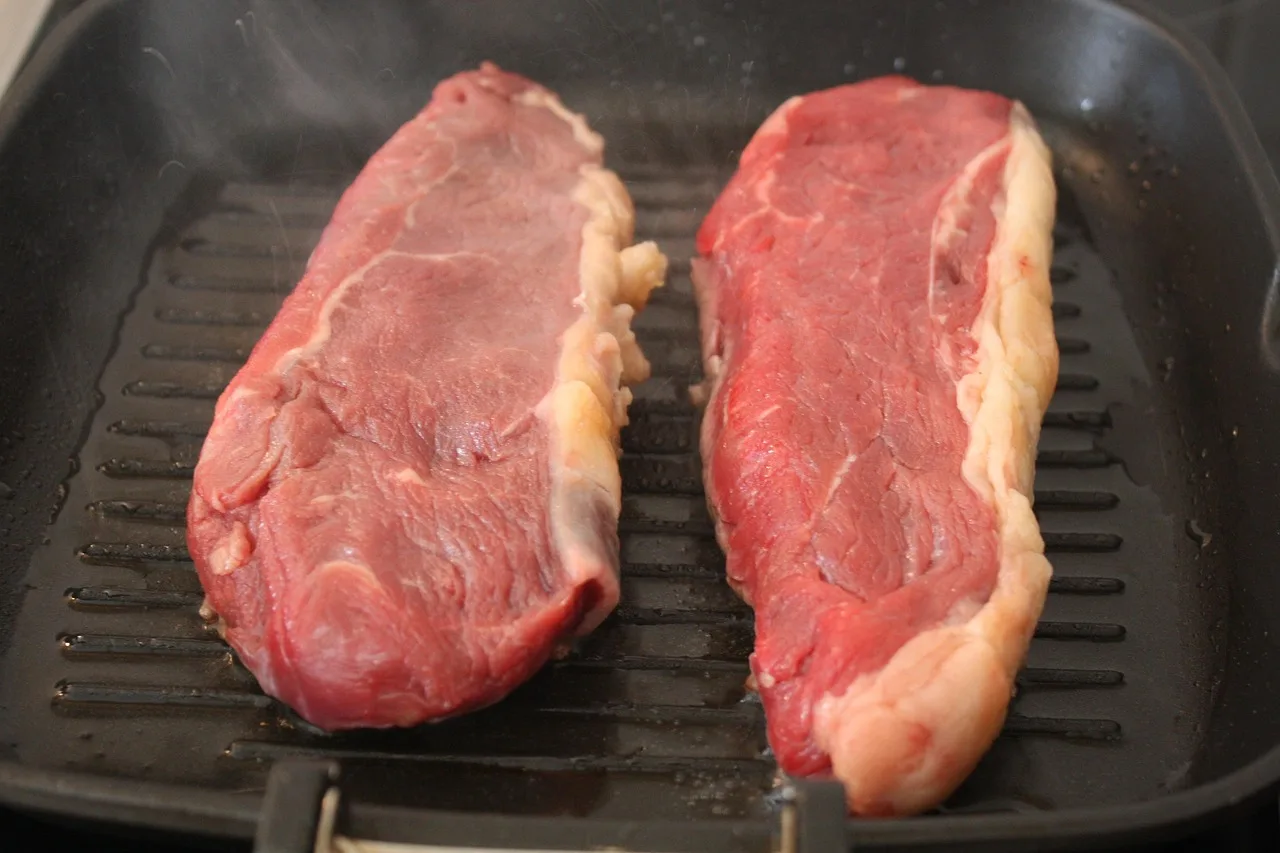


For a quick rule of thumb, start around $25 for a solid everyday grill pan and expect about $40 to $60 for better heat retention or a heavier build. Premium cast-iron or specialty pans can cost more, especially if they add a lid, enamel finish, or a shape meant for wide burners and oven use.
Price shifts with the metal, wall thickness, handle shape, and coating quality. A low sticker price can still cost more over time if the pan warps, cleans poorly, or needs replacement sooner than a heavier model.
Entry-level price band
Entry-level grill pans are often priced near $15 to $30. These are often lighter, smaller, and more likely to use thinner aluminum or basic nonstick coatings. They suit occasional apartment cooking, but they are also the band where uneven heating and short coating life show up fastest.
Midrange price band
Midrange grill pans are commonly found around $30 to $60. This is the most useful range for many shoppers because it often balances weight, heat retention, and cleanup. You usually get a sturdier base, sharper ridge definition, and a handle that feels more secure when the pan is hot.
Premium price band
Premium grill pans often start around $60 and can go above $80, especially for heavier cast iron, enamel-coated cast iron, or other specialty designs. You pay for durability, steady browning, and stronger oven performance, not for portability. If you sear often, this is where long-term value can improve.
What changes grill pan cost most?
Three drivers matter most: material, size and weight, and how well the pan holds heat. Coating quality and handle design matter too, but they usually sit behind those first three. A pan that heats evenly and resists warping often costs more up front, yet it can save money if it lasts longer.
Material and coating
Cast iron usually costs more than thin aluminum because it holds heat better and tends to sear more evenly. Nonstick can lower the entry price, but coating quality changes the value a lot. Cheaper coatings may wear faster, which raises replacement risk and can limit high-heat cooking.
Size and weight
A larger pan usually costs more because it uses more material and needs a stronger base. Weight matters because it affects both heat retention and handling. A very light pan is easier to lift, but it is also more likely to flex on a burner and leave weaker grill marks.
Heat retention and sear marks
Better searing usually comes from a pan that stays hot when food lands on it. That is why thicker cast iron often costs more than thin stamped metal. If you want clear sear marks on vegetables, burgers, or chicken, a heavier pan is usually the safer buy.
Grill pan price map
This map separates grill pan price by what you usually get, not by brand hype. It is meant to help you compare a cheap pan with a midrange or premium one before you pay for features you may not need. For a clear buy, focus on the band that matches your stove and cooking style.
| Price band | Material | Size | Weight | Heat performance | Coating | Maintenance | Replacement risk |
|---|---|---|---|---|---|---|---|
| $15 to $30 | Thin aluminum or basic cast iron | Usually smaller or standard size | Light to moderate | Fast heating, less even hold | Basic nonstick or bare metal | Hand wash often; seasoning may be needed for cast iron | Higher if the base warps or coating wears |
| $30 to $60 | Heavier aluminum, cast iron, or enamel-coated cast iron | Standard to larger home size | Moderate to heavy | Better heat retention and more even marks | Better nonstick or durable enamel | Moderate cleanup; cast iron may need routine seasoning | Medium if cared for properly |
| $60 and up | Premium cast iron or specialty construction | Often larger or purpose-built | Heavy | Strong searing and stable heat | Durable enamel or high-end surface treatment | More careful handling; usually longer service life | Lower, though chips or damage can still end the run |
What the low band usually includes
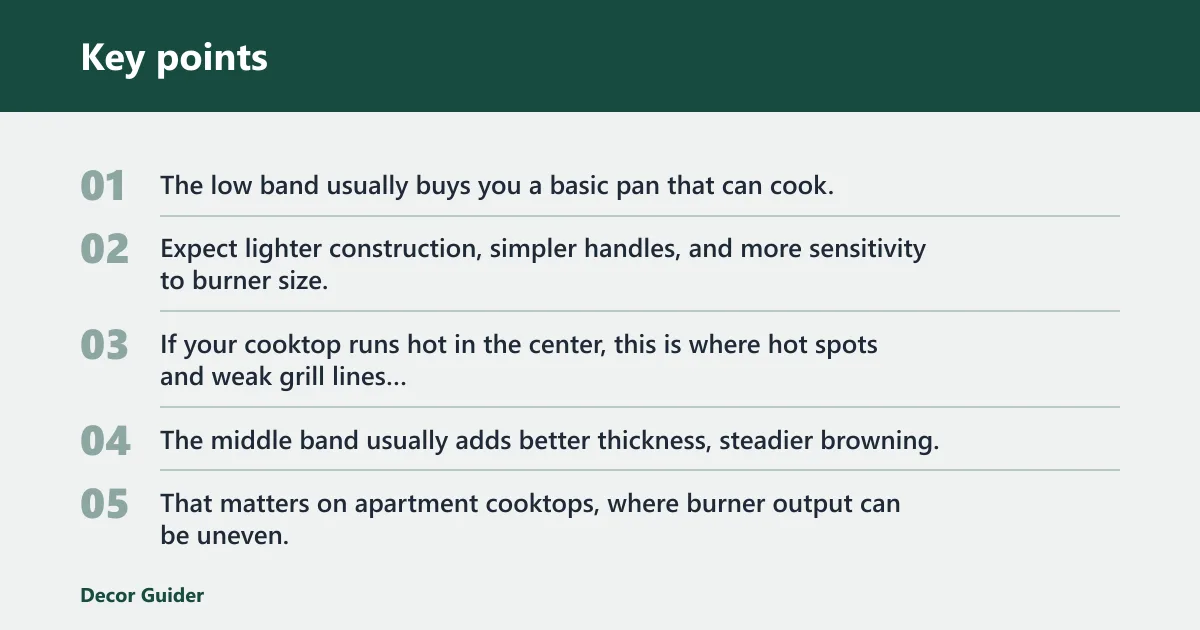
The low band usually buys you a basic pan that can cook, but not always one that cooks evenly. Expect lighter construction, simpler handles, and more sensitivity to burner size. If your cooktop runs hot in the center, this is where hot spots and weak grill lines show up first.
What the middle band usually includes
The middle band usually adds better thickness, steadier browning, and a more useful handle shape. That matters on apartment cooktops, where burner output can be uneven. For most shoppers, this is the band that gives the best mix of price and performance.
What the high band usually includes
The high band usually covers thicker cast iron, enamel finishes, or a design meant to move from stovetop to oven with less compromise. You are paying for steadier heat and longer service life. That said, a premium pan still needs the right burner and cleaning routine to earn its price.
What replacement risk looks like by band
Cheaper pans fail more often from warping, coating wear, and loose handles. Midrange pans lower that risk if you avoid very high heat on nonstick surfaces. Premium pans can still chip or crack, but their main risk is usually damage from misuse rather than normal cooking.
How much does a grill pan cost to own?
First-year ownership usually costs more than the sticker price alone. Add seasoning or oil for cast iron, a non-scratch cleaning tool or brush, and possibly a replacement pan if the first one warps or peels. A realistic first-year total can be close to the pan price itself for low-end buys, and lower over time for a durable pan.
First-year cost items
Plan for three cost buckets: the pan, cleaning supplies, and any replacement or accessory need. For cast iron, seasoning oil is part of normal care. For nonstick, a soft sponge or nylon scraper helps reduce coating damage. If the pan does not fit your burner well, the wrong size can become a hidden cost.
Seasoning and cleaning supplies
Cast iron often needs seasoning oil and regular drying after washing. Nonstick usually needs gentler tools and less aggressive scrubbing. Those items are not expensive, but they matter because poor care shortens the life of the pan and makes searing less consistent.
Replacement and accessory cost
If a cheap pan warps, the true cost rises fast because you may replace it within the year. Optional accessories include a splatter guard, a silicone handle cover, or a grill pan press, but none of those are required for basic use. Buy them only if your cooking style really needs them.
What you get for each price band
The right band depends on how often you cook and what you want from the pan. Apartment cooks who want quick browning may be fine with a midrange pan. If you want repeatable sear marks on thicker cuts or vegetables, the higher band usually buys more consistency.
Cheap grill pans
Cheap grill pans are fine for occasional use and small kitchens. They are most likely to feel light, heat unevenly, and wear faster. If you need a pan for one or two quick meals a week, this band can make sense, but it is the easiest place to overpay for weak performance.
Midrange grill pans
Midrange grill pans are the safest value for most shoppers. They often balance weight, heat retention, and coating durability better than entry-level options. If you want a pan that can handle regular steak, chicken, or vegetable cooking without constant annoyance, start here.
Premium grill pans
Premium grill pans are for people who care about repeated high-heat cooking and long service life. They cost more because thicker construction and better finishes usually last longer. If you cook often and want stronger sear marks, this is the band most likely to pay back the extra cost.
Say your stovetop is gas and you want a 10-inch pan for chicken thighs. A $20 lightweight pan may heat fast, but it can cool too much when the food hits the surface. A $45 heavier pan is more likely to hold heat and leave cleaner marks.
When a cheap grill pan costs more later
A low price is not always the lower cost. A pan that warps, scratches easily, or cooks unevenly can lead to replacement, longer cleanup, and disappointing browning. That is why the cheapest option is rarely the best if you cook often or use a high-output burner.
Warping and uneven contact
Warping keeps the pan from sitting flat, which hurts heat transfer and can leave food patchy. This is a common failure case on thin pans. If the center sits higher or the pan rocks on the burner, you may never get the sear you paid for.
Coating wear and cleanup time
Coating wear changes both cost and convenience. Once a nonstick surface starts to flake or lose release, cleanup takes longer and cooking quality drops. At that point, the cheaper pan no longer feels cheap.
Poor fit for your cooktop
A pan that is too small leaves burner energy unused, while a pan that is too large may heat unevenly. That matters most on electric and induction cooktops, where contact and pan size affect performance. Match the base to the burner instead of buying by price alone.
Suppose you buy a thin nonstick pan for a glass-ceramic cooktop and use high heat every night. If the base warps after a few months, the replacement cost plus wasted cooking time can push the total above a sturdier pan that cost more at checkout.
What should you buy for your cooktop?
Your cooktop matters as much as price. Gas often gives the most forgiving heat control, electric and ceramic need flatter contact, and induction only works with magnetic pans. Oven use also matters if you plan to finish steaks or keep food warm after searing.
Gas cooktop fit
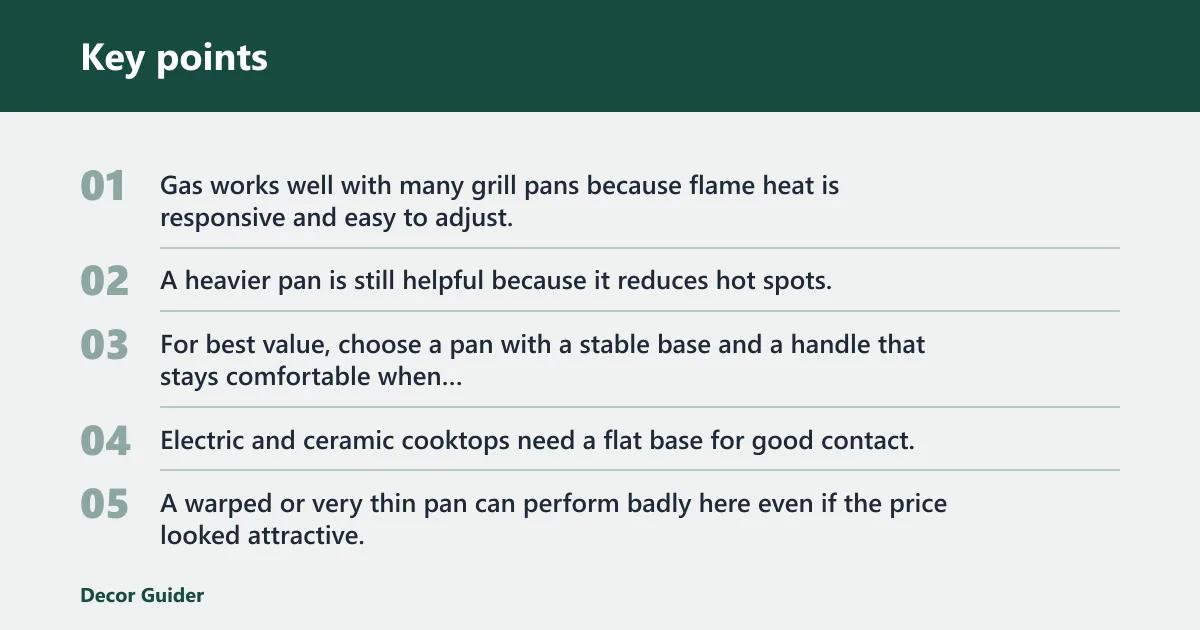
Gas works well with many grill pans because flame heat is responsive and easy to adjust. A heavier pan is still helpful because it reduces hot spots. For best value, choose a pan with a stable base and a handle that stays comfortable when the surface is hot.
Electric and ceramic fit
Electric and ceramic cooktops need a flat base for good contact. A warped or very thin pan can perform badly here even if the price looked attractive. If you cook on these surfaces, put flatness and base thickness ahead of accessory features.
Induction fit
Induction needs a magnetic pan, so not every grill pan will work. Check the manufacturer’s listing for your model before buying. If the pan is induction-ready, thicker construction often helps because it spreads heat more evenly across the cooking surface.
Oven-safe use
If you want to move from stovetop to oven, check the handle material and the manufacturer’s temperature guidance. Many pans can go into the oven, but not all can. The listing should tell you what to expect for your exact model, and that matters more than the price tag.
Prices also change over time, especially with materials and retail promotions. For outdoor grill shoppers, a different price structure applies: Green Mountain Grills can range from $350 to $1,100, the article that quotes that range is dated February 6, 2022, and it says those prices were valid as of January 2023. That same page describes a high-quality grill example that uses wood pellets made from compressed wood shavings, claims high BTU content, includes WiFi capabilities for remote control and monitoring, uses a 13.5 inches peaked lid design, and has a dual fan system. It also says the line includes Prime and Choice models and mentions a Griddle Pan accessory. That is outdoor grill pricing, not grill pan pricing, and it should not be used as a comparison for a stovetop pan.
Frequently asked questions
What is the price of a grill pan?
A grill pan usually costs about $15 to $80, with many useful options in the $25 to $50 range. Lower prices often mean lighter construction and shorter life. Higher prices usually buy better heat retention, stronger searing, or a more durable coating that lasts longer with regular use.
How much does a grill cost?
If you mean a grill pan, the cost is usually far lower than an outdoor grill and usually lands between $15 and $80. If you mean a full outdoor grill, prices can run much higher because fuel type, size, and installation change the total a lot. Always check which product category the listing uses.
How much is a good grill?
A good grill pan usually starts around $30 to $60. That range often gets you better thickness, steadier heat, and fewer problems with warping. If you want a pan for regular searing rather than occasional use, this is the range most shoppers should examine first.
What factors change grill price the most?
Material, thickness, coating quality, and size affect grill pan price the most. Heavy cast iron and better nonstick surfaces cost more because they tend to perform better and last longer. Fit for induction or oven use can also push the price up, especially on specialty models.
How much does a small grill cost?
A small grill pan often costs about $15 to $30. Small size can help in tight kitchens, but it may also mean less heat retention and fewer sear marks. If the pan is too small for your burner, the lower price may not translate into good cooking results.
How expensive are grills?
For grill pans, not very expensive compared with outdoor equipment. Most sit under $80. The more expensive ones are usually the heavier, longer-lasting choices that work better for frequent searing. Outdoor grills are a different category and can cost much more because of fuel, size, and feature set.
Products related to this article
Sponsored / affiliate links. As an Amazon Associate I earn from qualifying purchases. I may earn additional commission from eligible campaigns.