Best Grill Pans for Small Kitchens (2026): we compared
For most small kitchens, the best grill pan is the Lodge Square Cast Iron Grill Pan, PFAS-Free, 10.5 Inches because it holds heat well in a compact square footprint, and the helper grip makes it easier to move, store, and clean than many heavier cast-iron pans. Go too large or too heavy, and it eats burner space, throws off more smoke, and becomes a chore to wash and put away.
This guide is part of our Cooking with skillets, griddles, and roasting pans series.
Quick comparison
| Product | Badge | Best for | Price | ||
|---|---|---|---|---|---|
 |
Lodge Square Cast Iron Grill Pan, PFAS-Free, 10.5 InchesLodge | Our pick | 10.5 in · cast iron · PFAS-free | $24.90
Price as of 5 Oct 2026
|
View |
 |
Rachael Ray Cucina Hard-Anodized Nonstick 11-Inch DeepRachael Ray | Also great | 11 in · nonstick · oven-safe to 400°F | $54.73
Price as of 5 Oct 2026
|
View |
 |
Tramontina Signature Tri-Ply Clad Stainless Steel 11-InchTramontina | Upgrade pick | 11 in · stainless steel · induction-compatible | $39.91
Price as of 5 Oct 2026
|
View |
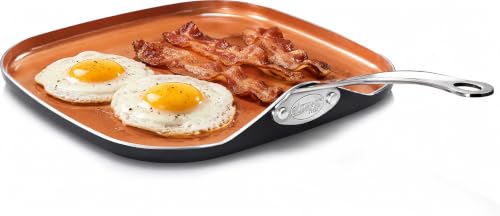 |
GOTHAM STEEL 10.5 Inch Ceramic Nonstick Square Griddle PanGOTHAM STEEL | Budget pick | 10.5 in · ceramic nonstick · lightweight | $29.95
Price as of 5 Oct 2026
|
View |
 |
Neoflam FIKA 10-Inch BBQ Grill Pan, Ceramic Nonstick,Neoflam | Pair with it | 10 in · ceramic nonstick · induction-safe | $42.99
Price as of 5 Oct 2026
|
View |
Small kitchens punish sloppy sizing. The right grill pan needs to fit the burner, clear the cabinet, and still be easy to lift with one hand when hot.
The picks below balance searing, cleanup, storage friction, and cooktop fit instead of chasing grill marks alone.
According to 8 Best Grill Pans of 2023, Tested by Experts — Good Housekeeping spent hours grilling close to 40 burgers.
How we chose
We compared pans on burner fit, footprint, weight comfort, cleanup burden, smoke control, and cooktop compatibility. We also looked for failure points that matter in tight kitchens: warped thin bases, shallow ridges, awkward handles, and pans that are too heavy to store safely after cooking.
Good Housekeeping tested over 15 grill pans and spent hours grilling close to 40 burgers, which helps separate broad marketing claims from practical cooking results. Reina’s mini grill pan guide also informed the small-format end of the market, including a 6.5-inch Lodge cast iron option, a 6.5-inch T-fal nonstick griddle option, and the ESLITE LIFE pan as a strong induction pick.
Lodge square cast iron grill pan: best for small kitchens overall
- High-heat searing with bold grill marks
- Even heat distribution reduces hot spots
- Versatile for stovetop, oven, grill, and campfire
This is the best fit for a small kitchen if you want one pan that can sear hard, move from stovetop to oven, and store without taking over the whole cabinet. Cast iron holds heat well, so the ridges recover after food hits the surface, which matters when you want marks on a compact burner.
The tradeoff is weight. Like most cast iron pans, this one is not the easiest choice for one-handed storage or for cooks who hate scrubbing and drying right after use. Bare cast iron also needs seasoning care; that upkeep is manageable, but it is still more work than nonstick or enameled cookware.
The helper grip is the practical detail that matters here. In a small kitchen, that extra hold point can make the difference between a pan that feels safe to move and one that feels clumsy above a crowded sink.
Rachael Ray Cucina hard-anodized nonstick 11-inch deep square grill pan: best for easy cleanup
- Fast, even heating for indoor grilling
- Easy cleanup with high-quality nonstick surface
- Dishwasher-safe for convenience
This is the better pick for small kitchens where cleanup speed matters more than maximum searing force. A nonstick surface releases food easily, and the dishwasher-safe claim is appealing for apartments with cramped sinks and limited drying space.
The drawback is the coating. It needs gentle utensils and more careful heat management than cast iron, especially if you want the finish to last. It is also not the first choice for cooks who want the deepest browning or the longest heat hold after cold food goes in.
For a two-person dinner or a quick batch of vegetables, though, the balance is strong. The deeper square form gives useful cooking area without forcing you into the bulk and upkeep of heavy cast iron.
Tramontina Signature Tri-Ply Clad Stainless Steel 11-inch square grill pan: best for induction-friendly even heating
- Precise, even heat distribution across entire pan
- Durable stainless steel with rapid heating core
- Oven-safe up to 500°F for versatility
This is the best fit if your small kitchen uses induction and you want a sturdy pan with a flat base and predictable heating. Tri-ply construction helps heat spread more evenly across the surface, which matters on compact burners where a hot center and cool edges can ruin grill marks.
The drawback is that stainless steel is less forgiving than nonstick on cleanup, and it does not hold heat quite like cast iron once a load of cold food goes in. It is also a bit more demanding to use well; food can stick if preheating and oiling are rushed.
Still, for induction cooktops, it is one of the cleaner answers when you want a square pan with broad compatibility and serious durability.
GOTHAM STEEL 10.5-inch ceramic nonstick square griddle pan: best for lightweight handling
- Easy food release and minimal sticking
- Fast, even heating with no cold spots
- Lightweight for easy handling
This is the easiest pan to move around in a tight kitchen because it is lightweight and simple to lift from burner to sink to cabinet. For renters and apartment cooks, that matters as much as searing performance, especially when storage space is awkward and sink space is limited.
The drawback is the usual ceramic-nonstick tradeoff: easy release now, more care needed later. It is a better fit for quick weekday cooking than for heavy, repeated high-heat grilling, and it is not the pan to choose if you want the strongest heat retention.
If the kitchen is small and the cook wants less strain, this style makes practical sense. It reduces the annoyance factor, which is a bigger deal than many buyers expect.
Neoflam FIKA 10-inch BBQ grill pan: best for induction with easy release
- Versatile for meats, veggies, and quick meals
- Smooth food release and easy cleanup
- Works on all cooktops and oven-safe
This is a strong option for small kitchens that need induction compatibility and low-friction cleanup. The spec sheet points to a smooth-release ceramic nonstick surface, and that makes weekday cooking less demanding when you do not want to spend much time scrubbing a ridged pan.
The drawback is the same one that applies to most ceramic nonstick cookware: it is easier to handle than cast iron, but it usually gives up some heat-holding power. That can matter when thick steaks or very cold food hits the pan.
It fits best as a compact utility pan for vegetables, quick chicken cutlets, and smaller portions where convenience outranks extreme searing.
Which one should you buy
If you want the best all-around small-kitchen choice, buy the Lodge square cast iron pan. If cleanup speed matters most, the Rachael Ray nonstick pan is the simpler pick. If you cook on induction and want broad compatibility, the Tramontina stainless pan is the safest bet.
Choose GOTHAM STEEL if weight is the main problem. Choose Neoflam FIKA if you want a lighter nonstick option with induction support. Reina’s 6.5-inch options are useful when you cook for one and cabinet space is extremely tight, but very small pans can feel cramped for two portions or larger proteins.
What size grill pan is best for a small kitchen?
For most small kitchens, a grill pan in the 6.5-inch to 10-inch range is the most workable. The lower end suits single servings and the smallest burners, while the upper end gives more usable cooking area without becoming awkward to store. Square pans usually use space better than round ones.
The key is fit, not maximum size. If the pan overhangs the burner badly, heat spreads unevenly and the handles are harder to manage over a crowded stovetop.
Quick picks
- Best overall: Lodge square cast iron for heat hold and oven use.
- Best easy cleanup: Rachael Ray Cucina nonstick for faster washing and lighter daily use.
- Best induction-friendly value: Tramontina tri-ply stainless for flat-base contact and broad cooktop compatibility.
- Best lightweight option: GOTHAM STEEL ceramic nonstick for easy lifting in tight storage.
- Best induction nonstick: Neoflam FIKA for convenience with induction support.
Is cast iron or nonstick better for a small grill pan?
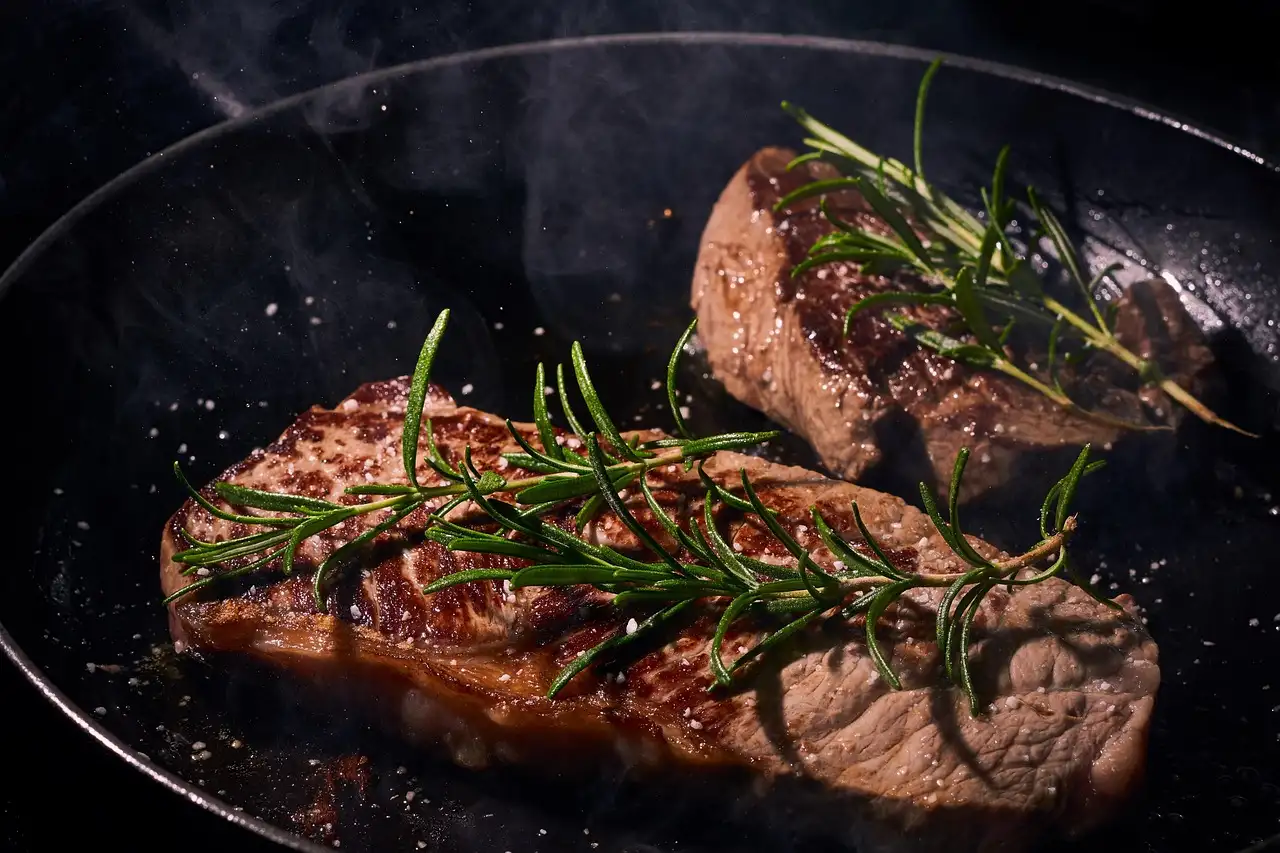
Cast iron is better when heat retention and serious grill marks matter more than weight and cleanup. Nonstick is better when you want a lighter pan, faster washing, and less fuss after dinner. Enameled cast iron sits between them: it keeps much of cast iron’s heat hold without seasoning.
For small kitchens, the practical question is how often the pan will be moved, washed, and stored. If those tasks feel annoying before you even start cooking, nonstick usually wins day to day.
Cast iron: heat hold and oven use
Cast iron keeps heat well, so the temperature drop after food lands is usually less dramatic than with thinner pans. That helps create stronger marks on compact burners. It also works on stovetop and oven, which gives it flexibility in a cramped kitchen where one pan needs to do several jobs.
The penalty is obvious: weight, seasoning care for bare cast iron, and a hotter, heavier pan to carry to the sink.
Nonstick aluminum: lighter weight and faster cleanup
Nonstick aluminum is the easier choice for quick meals because it is lighter and usually quicker to clean. It also asks less of a small cabinet, since lifting and stacking are simpler than with cast iron.
The tradeoff is gentle utensil use and less tolerance for hard preheating. It is the weaker option for deep searing, though many apartment cooks never need more than good grill marks on vegetables, chicken, or thin cuts.
Enameled cast iron: easier care with less maintenance
Enameled cast iron removes the seasoning routine, which makes care simpler in a small kitchen. It still carries the weight and heat-retention advantages of cast iron, so it is appealing for cooks who want less upkeep without giving up searing performance.
The downside is price and heft. It is often the least forgiving choice for one-handed storage or cramped sink cleanup.
Will a grill pan work on an induction cooktop?
Yes, but only if the base is magnetic and the bottom makes flat contact with the cooktop. Small pans can be especially tricky here, because some mini grill pans do not sit flat enough or do not have enough magnetic material to trigger induction properly.
If induction is your setup, check compatibility before style. A pan that heats beautifully on gas may be useless on induction if the base is wrong.
What to check first
Look for explicit induction compatibility, a flat bottom, and enough base area to stay centered on the element. The Le Creuset square grill pan is listed as usable on induction, gas, electric, or ceramic burners, which is the kind of broad compatibility small kitchens need when cooktops change.
Reina’s guide also points to the ESLITE LIFE pan as the best induction option in that mini-pan group, which lines up with the simple rule: flat, magnetic, and stable beats fancy ridges alone.
How do I store a grill pan in a tiny kitchen?
Store it where the handle shape will not snag other cookware and where the pan can be lifted without twisting your wrist. In a tiny kitchen, storage is not only about cabinet depth; it is also about whether the pan can slide in and out without scraping neighboring pans or lids.
Square pans can waste less shelf space than round ones, but longer handles and helper loops can make the overall storage footprint larger than the cooking surface suggests.
Storage rules that actually help
- Measure cabinet depth before you buy, including room for the handle.
- Check whether the pan can stand upright or must lie flat.
- Avoid heavy pans if you have to lift them overhead after every use.
- Choose helper handles or loop handles if you move the pan from stovetop to oven.
- Keep lids, trivets, and accessories off the same shelf if the pan is heavy.
Can I use a grill pan for apartments with limited ventilation?
Yes, but choose the pan carefully and keep the heat under control. Limited ventilation makes smoke and oil splatter more noticeable, so a heavy cast-iron pan that runs too hot can be less apartment-friendly than a lighter nonstick pan used at moderate heat.
Preheat only as much as needed, dry proteins well, and avoid overcrowding the ridges. When food is packed too tightly, moisture lingers and the pan smokes more without improving the sear.
How to reduce smoke in a small apartment
Use a pan with enough heat retention that you do not need maximum burner output all the time. Wipe excess oil, choose foods that are not dripping wet, and avoid very thin pans that force long, high-heat preheats to compensate for poor heat hold.
Enameled cast iron and some nonstick options can be easier to manage here than bare cast iron, mainly because they reduce cleanup friction and let you keep the process more controlled.
What should I look for so a grill pan heats evenly on a small burner?
Choose a pan with a flat base, enough mass to resist temperature drop, and a footprint that does not hang far beyond the burner edge. On a small burner, a pan that is too wide spreads heat unevenly and leaves the corners underperforming while the center runs hot.
Even heating matters because grill marks are only useful if the ridges recover heat after the food lands. Thin pans lose temperature faster, which leads to pale stripes and more sticking.
Signs of a better heat profile
Look for cast iron, tri-ply stainless, or a well-built enameled cast-iron base if searing is the goal. Be cautious with very thin aluminum grill pans that promise fast heating but may warp or cool down too fast under meat.
Ridge depth matters too. Shallow ridges do not lift the food enough, so juices pool around the surface and the food steams instead of grilling cleanly.
Are square grill pans better than round ones for small kitchens?
Usually yes, because square pans give more usable cooking surface for the cabinet space they occupy. A round pan can fit a burner neatly, but the corners of a square pan give you more room for fillets, sandwiches, or several vegetables without increasing the overall footprint as much.
Round pans still have one advantage: they can feel simpler on a round burner and may store more easily in some circular stacks. For most small kitchens, though, square wins on practical cooking area.
When round can still make sense
If your cooktop burner is very small or perfectly round and your storage is shallow, a round grill pan may be easier to center and lift. But if you want the most food surface per inch of cabinet space, square usually comes out ahead.
How do I clean a grill pan without ruining the coating or seasoning?
Clean it according to the surface. Bare cast iron should be hand washed, dried immediately, and lightly re-oiled if needed. Enameled cast iron is easier to clean but still deserves gentle handling. Nonstick and ceramic coatings should avoid abrasive scrubbers and harsh utensils that shorten the coating’s life.
Dishwashers are tempting in small kitchens, but they are not the right default for cast iron. Even on pans labeled dishwasher-safe, hand washing is usually kinder if you want the coating to last.
Cleanup by material
- Bare cast iron: hand wash, dry fully, and maintain seasoning.
- Enameled cast iron: wash gently and avoid aggressive metal tools.
- Nonstick aluminum: use soft sponges and gentle soap.
- Stainless steel: scrub as needed, but watch for stuck-on ridges after high heat.
Frequently asked questions
What size grill pan is best for a small kitchen?
A 6.5-inch to 10-inch grill pan is the most practical range for small kitchens. The lower end suits one-person meals and tiny burners, while the upper end gives enough surface for two servings without becoming hard to store. Square shapes usually make better use of cabinet space than round ones.
Is cast iron or nonstick better for a small grill pan?
Nonstick is better if you want lighter weight and faster cleanup. Cast iron is better if you want stronger heat retention, better grill marks, and oven use. For many small kitchens, the best choice comes down to which annoyance you dislike more: washing or lifting.
Will a grill pan work on an induction cooktop?
Yes, if the base is magnetic and flat enough for full contact. Not all mini grill pans are induction-friendly, so the label matters. A pan that works on gas may fail on induction if it does not trigger the magnetic field properly or if the bottom is uneven.
How do I store a grill pan in a tiny kitchen?
Pick a pan with a handle that fits your cabinet layout, then store it where it can be lifted without catching on other cookware. In tiny kitchens, a helper loop handle can make a heavy pan safer to move, but it can also make the storage footprint less tidy if the shelf is cramped.
Can I use a grill pan for apartments with limited ventilation?
Yes, but keep the heat controlled and do not overload the pan. Heavy smoke usually comes from too much oil, overly high heat, or wet food. A lighter nonstick pan is often easier to manage in apartments because it reaches a usable cooking temperature with less brute force.
How do I clean a grill pan without ruining the coating or seasoning?
Use the cleaning method that fits the surface. Bare cast iron needs hand washing, full drying, and seasoning upkeep. Nonstick and ceramic surfaces need soft sponges and gentle handling. Enameled cast iron is easier than bare cast iron, but it still benefits from careful washing rather than harsh scrubbing.
Products related to this article
Sponsored / affiliate links. As an Amazon Associate I earn from qualifying purchases. I may earn additional commission from eligible campaigns.