Home Lighting and Ceiling Fan Guide for Every Room
Choose a ceiling fan by room size first: about 36–44 inches for smaller rooms, around 52 inches for many bedrooms and living rooms, and keep blade tips roughly 18 inches from walls with about 7 feet of clearance below. Get this wrong and you get weak airflow, glare where you read, head-bumping clearances, or a fixture that looked good online and disappoints every day. This guide matches fan size, ceiling height, and light output by room, then covers controls, combo fixtures, and the buying mistakes I see most often.
Start with the room: size, ceiling height, and how the room is used

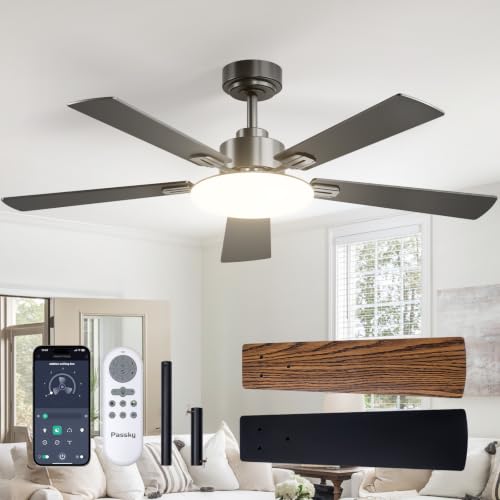


Measure square footage the fast way
Room size is the first filter because blade span is sized from floor area. Measure the room’s length and width, then multiply them to estimate the square footage.
A 10-by-12 room is 120 square feet. A 12-by-15 room is 180 square feet. For open plans, measure the zone the fan will actually serve instead of the whole connected floor.
Map square footage to blade span size bands
Blade span is the fan’s diameter, measured from blade tip to blade tip. It is the main sizing input, but it is not the only one I check.
- Rooms up to 75 square feet should use a 29-36-inch ceiling fan.
- Rooms 76-144 square feet should use a 36-42-inch ceiling fan.
- Rooms 145-225 square feet should use a 44-inch ceiling fan.
- Rooms 226 square feet and larger should use a 50-inch or larger ceiling fan, and once you get into big primary bedrooms, family rooms, or open zones, I start by checking 52-inch models and then compare CFM and placement before going even larger.
Common retail shorthand often jumps straight to 52-inch fans. That works in many bedrooms and living rooms, but it is a poor shortcut for a narrow room, low ceiling, or furniture-heavy layout.
Check ceiling height before you look at finishes
The most common fit failure is not blade span alone. It is a fan that hangs too low or sits too high for the room volume.
Low ceilings usually push the choice toward a flush mount. Typical ceiling heights often work with a standard mount. Taller ceilings may need an extension downrod so the fan sits in the part of the room people actually use instead of floating too high to matter.
Listed depth matters before purchase. IKEA lists a BRUNALGER extension downrod at 11 3/4 inches, which is a good reminder to check actual drop instead of guessing from product photos.
Factor in room use: sleep, desk work, lounging, or dining
Use changes the buying decision. Bedrooms need quiet airflow that does not churn the whole bed, plus enough centered light to dress and enough side lighting or lamp support for reading. Home offices need glare control over a desk. Living rooms can take a larger visual fixture if seating is spread out. Dining areas need care because a fan centered over a table can feel lower than it measures.
What size ceiling fan do I need for my room?
Use square footage first, then trim the choice by room shape and ceiling height. Rooms up to 75 square feet need 29-36 inches, 76-144 need 36-42 inches, 145-225 need 44 inches, and 226+ need 50 inches or larger. Then confirm clearances so the fan fits the room volume, not only the floor area.
Up to 75 square feet: 29-36-inch fans
This band fits very small rooms: compact offices, small nurseries, tight guest rooms, laundry rooms, and some breakfast nooks. In these rooms, oversized fans look heavy and can crowd doors, tall storage, or bunk beds.
If the fan visually stretches wall to wall, it is too big even if the floor area chart seems close. Small rooms punish oversizing fast.
76-144 square feet: 36-42-inch fans
This is a useful range for many small bedrooms and home offices. It also works for square guest rooms that do not need a large statement fixture.
In narrow bedrooms, a 42-inch fan often fits better than a broader model because side clearances stay comfortable. A room can have enough square footage for a bigger fan on paper yet still feel cramped because the ceiling volume is tight.
145-225 square feet: 44-inch fans
This band often covers mid-size bedrooms, sitting rooms, and some living rooms. It is a practical middle size when the room is enclosed and the ceiling height is ordinary.
Where buyers go wrong is assuming any 44-inch fan will perform the same. Blade pitch, motor strength, CFM, and top speed still matter.
226+ square feet: 50+ inch fans and when to step up further
Large bedrooms, family rooms, and open shared zones generally need 50 inches or larger. Once the room opens into another space, diameter alone stops telling the full story.
For big shared rooms, look harder at airflow data. A large fan with weak CFM can cover a wide circle visually yet move less useful air where people sit. In long open rooms, two correctly placed fans may work better than one very large model, especially when lighting needs differ between seating and dining areas.
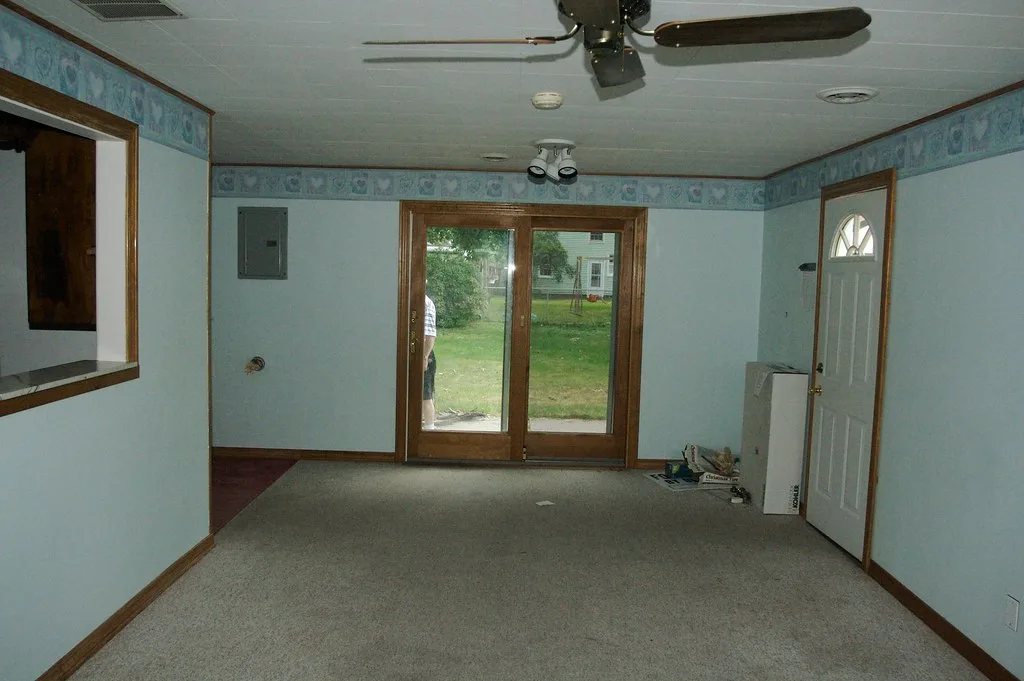
Sizing Fans and Lights for Large Open Rooms
Rooms over 400 square feet need ceiling fans in the 60- to 72-inch blade span range to move air effectively. Undersized fans create hot spots and dim corners, forcing your HVAC system to work harder while leaving the space uncomfortable. Pairing a large blade span with a high-output LED light kit ensures both airflow and illumination cover the full footprint.
Matching fan size to room dimensions, ceiling height, and mounting style prevents wasted energy and poor performance. This breakdown of large room ceiling fans compares top models by blade span, light output, and smart features to help you select the right fit for wide-open living areas, great rooms, or spaces with lower ceilings.
Matching Bajaj ceiling fan models to room size and runtime
Bajaj ceiling fans deliver reliable airflow in Indian homes when you match the sweep size and motor type to your specific room. A 1200 mm model typically covers most bedrooms and living rooms, while BLDC variants cut electricity use significantly if the fan runs for long hours each day.
Choosing the wrong variant leads to weak afternoon cooling, disruptive night noise, and unexpectedly high power bills. The Bajaj ceiling fan review breaks down popular options like the Frore, Crest Turbo BLDC, Chetak, and Elegence 1200 mm models. It compares their performance, noise levels, and energy efficiency so you can identify which unit actually fits your daily usage patterns and room dimensions.
How do I know if a fan will physically fit my ceiling?
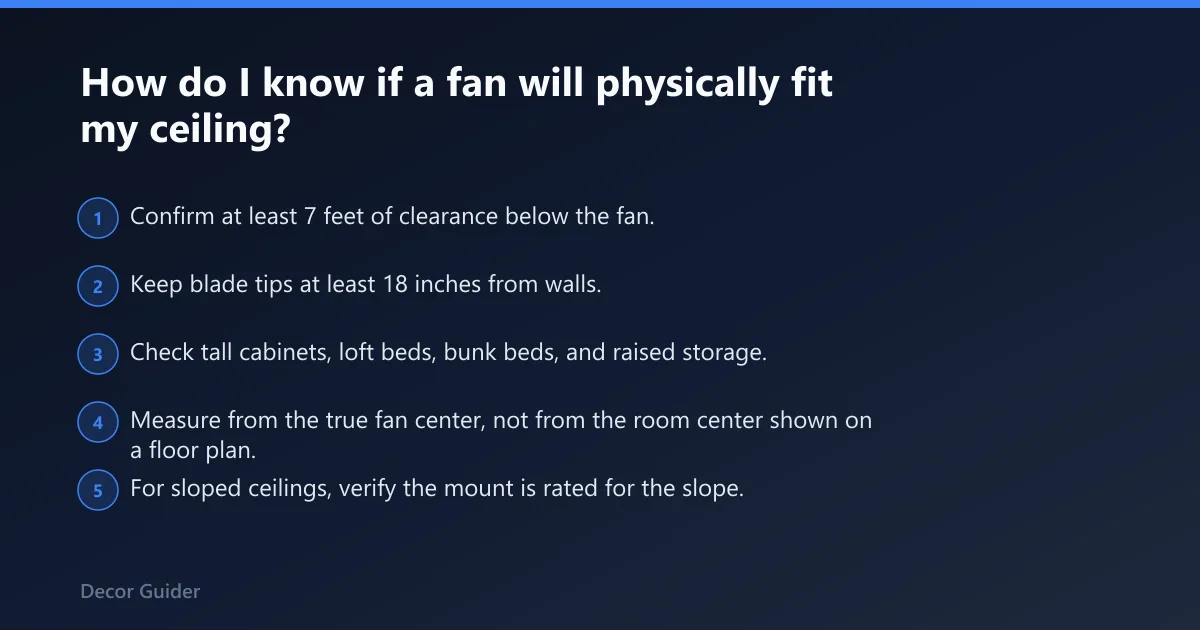
A fan physically fits when the blade span suits the room width, the motor housing and light kit suit the ceiling height, and the installed fan leaves safe clearance below and around it. Flush mount helps lower ceilings, standard mount suits many typical rooms, and an extension downrod is often the fix for ceilings that are too tall.
Flush mount for lower ceilings
Flush-mount, or hugger, fans keep the motor close to the ceiling. They are the first place I look when ceiling height is limited and a standard downrod would hang too low.
There is a tradeoff. Some flush fans move air less effectively than similar standard-mount models because the blades sit closer to the ceiling. For a very small room that may be fine. For a larger room with a low ceiling, compare airflow figures instead of assuming all huggers perform alike.
Standard mount for typical ceiling heights
Standard mount is usually the cleanest fit in a bedroom with an 8- to 9-foot ceiling or a living room where you want better blade clearance above than a hugger gives, without dropping the fan too far into the room. It gives the fan breathing room above the blades and usually offers more choices in style, controls, and light kits.
This is often the safest default when the room is neither low nor unusually tall. Still, check the full installed depth. A decorative light kit can make a standard fan hang much lower than expected.
When an extension downrod is the better choice
Fans installed too close to a tall ceiling often feel weak at seating level. That is where an extension downrod earns its keep.
The key is listed length and total installed drop. IKEA lists a BRUNALGER extension downrod at 11 3/4 inches. That kind of listed figure matters because a room can have plenty of ceiling height and still fail if the fan ends up too high to circulate air where people actually are.
Clearance checks: floor, walls, cabinets, and bunk beds
- Confirm at least 7 feet of clearance below the fan.
- Keep blade tips at least 18 inches from walls.
- Check tall cabinets, loft beds, bunk beds, and raised storage.
- Measure from the true fan center, not from the room center shown on a floor plan.
- For sloped ceilings, verify the mount is rated for the slope.
A fan that technically fits the room dimensions can still fail because a wardrobe door swings into the blade path or a bunk bed rises too high under the light kit.
Choosing pull-chain and low-profile fans for tight spaces
Rooms under 100 square feet with low ceilings demand fans that prioritize blade-to-floor clearance and straightforward controls. Remote-free models—typically operated by a pull chain or wall switch—eliminate battery clutter and reduce the chance of signal interference in compact layouts where electronics sit close together.
Selecting the right unit means matching blade span to square footage while ensuring the housing doesn’t visually overwhelm the space. Low-profile, hugger-style mounts keep blades safely above head height without sacrificing airflow. For specific sizing thresholds, control comparisons, and models suited to tight bedrooms or offices, explore this guide to small room ceiling fans.
Best 52-Inch DC Fans for Standard Bedrooms
Sofucor DC fans deliver reliable, low-profile airflow specifically designed for standard bedrooms and small-to-medium living areas. Their 52-inch blade span and energy-efficient DC motor make them ideal for spaces where ceiling height allows adequate blade clearance but where a compact footprint is preferred over industrial-sized units.
If your room meets these specific dimensional requirements, this detailed fan evaluation outlines exactly why the model performs well in controlled indoor environments, while clearly defining the limitations when applied to large open plans, low ceilings, or harsh weather conditions.
Evaluating Minka-Aire for Quiet Operation and Modern Design
Minka-Aire ceiling fans deliver quiet DC-motor performance, clean aesthetics, and advanced controls, but they prioritize style and technology over raw airflow per dollar. Prices typically range from $200 to over $600, meaning you are paying for refined engineering rather than maximum wind output.
Choosing the wrong model can result in overspending on unused features or selecting a fan too small for your room, which causes noise, wobble, and weak circulation. Our detailed Minka-Aire ceiling fan review breaks down value, smart-home compatibility, sizing guidelines, and operational quietness so you can determine whether this brand fits your space or if a more budget-friendly option makes better sense.
Quiet ceiling fans for video‑call productivity
When your home office doubles as a virtual meeting room, fan noise can become a distracting background. The guide on home office fans breaks down the ideal 44‑ to 52‑inch DC models that stay whisper‑quiet while delivering steady airflow, and shows how to match fan size, speed settings, and control type to your work pattern and room dimensions. By following its selection criteria—room size, airflow needs, and low‑noise performance—you can avoid fans that buzz through calls or blow papers off your desk, ensuring a comfortable, focused workspace.
Should I buy a ceiling fan with a light or keep lighting separate?
A ceiling fan with a light works best when the room needs central ambient light and the fan sits near the visual center of the space. Separate lighting is usually better when the room is large, task-heavy, or split into zones. The mistake to avoid is expecting a small light kit to fully light a broad room.
Rooms where a fan light usually works well
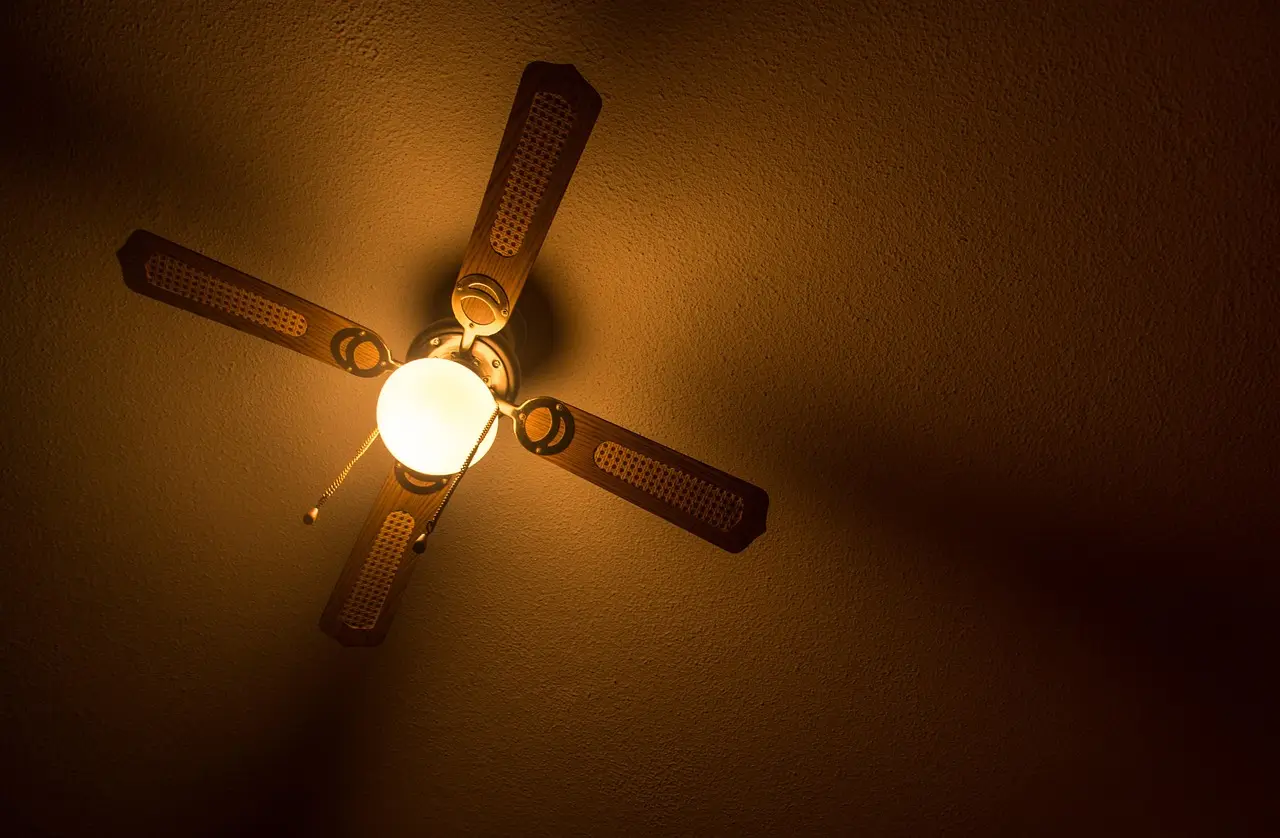
IKEA says ceiling fans with lights are especially useful in bedrooms and living rooms. That matches what I see in real rooms: one centered fixture can often cover both airflow and general light.
In a small bedroom, a fan light may replace a separate ceiling fixture if bedside lamps handle reading. In a compact office, the fan light can work if the desk also has a task lamp to control shadows.
Rooms where the light kit often falls short
Large living rooms, open-concept dining areas, and rooms with dark finishes often need more than a fan light can provide. The fan may still be right for airflow, but the light kit alone can leave corners dim.
This is one of the most common buying misses. Shoppers size the fan correctly and then under-light the room because the included light feels like a bonus rather than a real lighting plan.
Built-in LED versus replaceable bulbs
IKEA says ceiling fans have an LED light built in or an LED bulb included. In practice, built-in LED means the light engine is part of the fixture. Included-bulb setups use a socket and ship ready to install with a lamp already in the box.
Built-in LED usually gives a cleaner look and a shallower profile. Replaceable bulbs can be easier to swap if the room needs a different color tone or output later.
How to judge if the light output is enough
Judge light by room use, shade design, and spread, not by the phrase “with light” on the carton. Bedrooms are forgiving if lamps fill the gaps. Larger shared rooms are less forgiving.
Look at whether the lens throws light down only or outward as well. A narrow frosted disk can leave the room flat and dim. If the room is wide, has a dark rug, or doubles as a play space, plan extra lighting from recessed, floor, or table fixtures.
Quiet Light‑Integrated Ceiling Fans for Bedroom Comfort
Choosing a quiet, light‑integrated ceiling fan is crucial for a restful bedroom. The supporting guide walks you through a quick comparison of top models, explains how the reviewers judged quiet DC motors, stepless dimming, and blade span, and highlights the DREO 52‑inch smart fan as the best all‑round pick and the Chunnwin 20‑inch low‑profile unit for smaller spaces. It also answers common questions about the quietest and most suitable fans for compact rooms, helping you balance airflow, illumination, and noise without over‑engineering the design. For detailed specs and buying tips, see the best light fan guide.
Room-by-room selection matrix
| Room type | Typical room size band | Ceiling height situation | Recommended blade span | Light needed? | Best mount type | Common installation mistake to avoid |
|---|---|---|---|---|---|---|
| Small home office | Up to 75 sq ft or 76-144 sq ft | Low to typical | 29-36 inches for the smallest rooms; 36-42 inches for larger offices | Usually yes, plus a desk lamp | Flush mount for low ceilings; standard mount for typical ceilings | Choosing a fan so wide that it crowds shelving or causes desk glare |
| Bedroom | 76-144 sq ft or 145-225 sq ft | Typical to tall | 36-42 inches for smaller rooms; 44 inches for mid-size rooms; 50+ inches only if the room is large enough | Usually yes | Standard mount; extension downrod if the ceiling is tall | Buying a small light kit and expecting it to light the whole room without bedside lamps |
| Living room | 145-225 sq ft or 226+ sq ft | Typical to tall | 44 inches for enclosed mid-size rooms; 50+ inches for larger rooms | Often yes, but separate lighting is common | Standard mount or extension downrod | Centering one fan in a large room and ending up with dim edges and weak airflow at seating |
| Open-concept dining room | 226+ sq ft zone-based measurement | Typical to tall | 50+ inches if one fan serves the zone; sometimes smaller multiple fans fit better | Usually no as the only light over the table | Standard mount or extension downrod | Using the fan light as the dining light and leaving the table poorly lit |
| Bathroom | Often up to 75 sq ft | Low to typical | 29-36 inches in larger bathrooms where a fan is appropriate | Maybe | Often flush mount | Ignoring damp rating in a humid room |
| Covered patio or porch | Varies by seating zone | Typical to tall | Match blade span to the usable zone, often 44 inches or 50+ inches | Sometimes | Standard mount or downrod as needed | Installing a dry-rated fan outdoors |
How do I choose airflow, speed settings, and fan direction?
Choose airflow by looking beyond blade span. Diameter gets the fan into the right size class, but CFM, airspeed, blade shape, motor strength, and speed settings decide how the room feels. Summer calls for counterclockwise airflow for a cooling effect, while winter calls for clockwise airflow at low speed.
Why blade span is only part of airflow
Two fans with the same diameter can feel very different. One may move broad, gentle air. Another may feel stronger directly below the fan but weaker at the edges.
That is why CFM and airspeed matter. CFM gives a sense of how much air the fan moves. Airspeed gives a sense of how that movement is felt in the room. Neither number should be read alone, but both are useful when comparing fans of similar size.
CFM, airspeed, and what speed settings change
More speed settings give better control over comfort, noise, and light use. Bedrooms benefit from a low setting that keeps air moving without feeling drafty. Living rooms often need a stronger middle range because people sit farther from the fan center.
Higher CFM is not always better if the fan is too large for the room. In a tight office, a smaller fan with decent airflow and a usable low speed is often the better call.
Counterclockwise in summer and clockwise on low in winter
IKEA says changing seasons make it easy to reverse fan direction. In summer, IKEA recommends counterclockwise airflow for a cooling effect. In winter, IKEA recommends clockwise airflow at low speed.
That switch changes how the room feels. Summer rotation pushes air where people feel it. Winter low-speed reverse helps circulate warm air without a direct breeze on people below.
When a bigger fan is quieter and when it is simply too much
A larger fan running at a lower speed can feel calmer than a smaller fan working hard. That can work well in a bedroom.
But there is a limit. Once the fan crowds the room visually or physically, the gain disappears. In small rooms, the better answer is usually proper sizing and decent low-speed control, not brute diameter.
Choosing the right non-remote control type
Selecting between pull-chain and wall-control ceiling fans depends on your ceiling height, existing wiring, and daily usage patterns. Pull-chain models work best for standard or low ceilings in rooms where simple operation suffices, while wall controls offer faster, more convenient access when proper wiring is already installed.
Choosing incorrectly leads to inconvenient reach, unnecessary electrical costs, or abandoned fans. This comparison evaluates both options by installation requirements and practical convenience to help you avoid common mistakes. Review the detailed breakdown of ceiling fans without remote to match the right control mechanism to your specific room setup and ensure long-term usability.
What should I check before buying a ceiling fan for my home?
Check support, wiring, controls, clearance, location rating, and mount depth before buying. A good fan can still become the wrong purchase if the ceiling box is not fan-rated, the switch layout cannot support the preferred control, or the fixture is dry-rated for a damp room. Most returns happen because these checks happen too late.
Ceiling box support and wiring setup
The ceiling box must be rated to support a ceiling fan. A standard light box is not always enough.
Also check how many wall switches feed the location. One switch may push the decision toward remote control. Two switched legs can make separate fan and light control easier if the fan supports it.
Control type: wall, remote, or pull chain
Pull chains are simple and work well in guest rooms or secondary spaces where settings do not change much. Wall controls suit primary rooms where daily use matters. Remotes are useful when wiring is limited or the fan hangs high.
For bedrooms, a remote often makes sense because lights and speeds are changed from bed. For a home office, a wall control near the door may be less annoying than hunting for a remote under paperwork.
Dry, damp, and wet location ratings
Dry-rated fans belong in standard indoor rooms. Damp-rated fans suit bathrooms and covered outdoor areas where humidity is present but direct weather is limited. Wet-rated fans are the safer choice for fully exposed patios and outdoor rooms that may see wind-driven rain.
Ignoring location rating is an expensive mistake. The fan may look perfect and fail early because the environment was wrong for it.
Slope compatibility, mount depth, and return-risk details
Check whether the fan can mount on a sloped ceiling without a separate adapter. Then check full installed depth, especially if the light kit hangs low.
Return risk climbs fast when the listing omits these details. If the downrod length, canopy depth, and total drop are vague, pause. Those missing measurements cause many of the “looked fine online” failures.
Evaluating Hunter Ceiling Fans for Long-Term Value
Hunter ceiling fans deliver quieter operation and more reliable controls than most budget alternatives, but only their midrange and premium lines justify the higher price. Choosing the wrong model often means dealing with weak remotes, dim lighting, or a frustrating installation process.
Before committing to the brand, compare specific series against your room requirements. A detailed Hunter ceiling fan review breaks down noise levels, installation effort, control options, and lighting quality across different tiers. It also highlights which models earn their premium and where competing brands offer better airflow per dollar, helping you avoid overpaying for features that underperform in daily use.
When a Premium Smart Fan Justifies the Upgrade
Modern Forms ceiling fans deliver quiet airflow, integrated smart-home control, and minimalist styling suited for premium living spaces. They work best when you match the blade span to your square footage and select the correct mounting hardware for your ceiling height and electrical box rating.
These fans are not the right fit for low ceilings with weak junction boxes or rooms where a basic pull-chain model is sufficient. The installation requirements and higher price point only pay off in spaces that benefit from app-based speed adjustments and near-silent operation. Our Modern Forms fan review breaks down exact sizing recommendations, mount types, and smart-home compatibility so you can decide whether this tier matches your room’s needs.
How do I match a ceiling fan to my decor without making a bad functional choice?
Choose the look only after blade span, ceiling fit, airflow, and lighting are settled. The safest approach is to pick a silhouette that suits the room scale, then match finish and blade tone to nearby hardware and lights. Style should confirm a good fit, not rescue a bad one.
Pick the silhouette after the size is right
IKEA describes modern ceiling fans as streamlined shapes and finishes. That general direction suits many rooms because the fixture reads cleaner overhead.
Still, size first. A sleek fan that is too deep for the ceiling or too wide for the room is still a bad buy. A modest design with proper fit nearly always looks better in daily use.
Match metal finish to nearby hardware and lighting
Look at the door hardware, nearby sconces, cabinet pulls, and curtain rods. Matching every finish is unnecessary, but the fan should not look isolated.
Black, white, brushed metal, and wood tones are easier to place than highly decorative finishes. In open plans, the fan may be visible from several zones, so quieter finishes are often safer.
Choose blade shape and color based on room scale
Blade color affects visual weight. Dark blades read larger. Light blades recede into pale ceilings.
In a small bedroom or office, a simpler blade shape usually looks calmer. In a larger living room with taller ceilings, a broader motor housing and more visible blade profile can hold the room better.
Keep the light kit visually quiet in smaller rooms
Bulky shades and deep glass bowls make low ceilings feel lower. Smaller rooms usually benefit from flatter integrated lights or compact shades.
This is another place where function and appearance meet. A lower-profile light kit often helps both sightlines and headroom.
When a budget ceiling fan brand is worth the trade-offs
Harbor Breeze fans deliver acceptable airflow and basic styling for plain rooms where you do not need heavy remote use or long-term parts availability. They fall short in large bedrooms or spaces where wobble, weak circulation, or irreplaceable remotes become dealbreakers.
Matching the right model to your room size prevents wasted money on a fan that struggles to move air or breaks down without easy repair options. This Harbor Breeze fan review breaks down which specific models hold up, ideal room pairings, and realistic budget expectations so you can decide whether the savings justify the compromises.
Home Decorators Collection Ceiling Fans: Who They’re For
Home Decorators Collection ceiling fans are a solid budget-to-midrange option for standard bedrooms, living rooms, or covered patios. However, they aren’t the right pick if you need the quietest motor on the market, maximum airflow, or a solution for tricky sloped-ceiling installations. A mismatch can lead to wobble, weak circulation, underwhelming lighting, or a fan that simply doesn’t suit your space.
The Home Decorators Collection review breaks down which models fit which rooms, compares noise and airflow performance, evaluates lighting options, and explains the installation tradeoffs so you can avoid costly mistakes.
Cost versus value: where to spend and where to keep it simple
Basic fan versus fan with light
Spend for the light kit when the room truly needs a central fixture. If the room already has good recessed or lamp lighting, a plain fan can be the cleaner buy.
The value question is simple: will this light replace another fixture, or will it become backup light that is rarely used? If it is backup only, paying extra for a fancy integrated light may add little.
When premium controls are worth paying for
Premium controls earn their keep in bedrooms, tall rooms, and daily-use living spaces. They matter less in a guest room where the fan stays on one speed most of the time.
Remote plus wall backup is often worth the added cost when wiring is limited but convenience matters. Cheap control systems tend to irritate people every day, which makes them a poor place to save.
What larger rooms usually cost to solve well
Larger rooms often need more than a bigger fan. They may need stronger airflow, better light spread, or more than one fixture. That means the cheapest “big fan with light” option can be false economy.
If the room is open concept, budget for layered lighting elsewhere. Solving airflow without solving light leaves half the job undone.
Cheap mistakes that cost more later
- Oversizing a fan in a tight room, then paying for a swap.
- Choosing the wrong mount for the ceiling height.
- Under-lighting a large room and adding more fixtures later.
- Ignoring damp or wet rating in humid or outdoor areas.
- Skipping control planning and ending up with awkward daily use.
Frequently asked questions
How do I choose the right home lighting and ceiling fan for each room?
Start with square footage and ceiling height, then choose blade span and mount type. After that, decide whether the room needs a fan light, separate lighting, or both. Finally, pick controls and location rating. This order avoids the two common failures: poor physical fit and weak room lighting.
How do I tell if a ceiling fan is too big for a small room?
A fan is too big when blades sit too close to walls, the fixture crowds doors or tall furniture, or the room feels visually top-heavy. In small rooms, oversizing often causes more trouble than undersizing because clearances tighten fast and the fan can dominate the ceiling.
What ceiling fan size works best for a home office or bedroom?
For a small home office, 29-36 inches or 36-42 inches usually fits best depending on square footage. Bedrooms often land in the 36-42-inch or 44-inch range, with 50-inch or larger fans reserved for larger rooms that can physically support them and still keep comfortable clearances.
Which direction should a ceiling fan spin in summer and winter?
In summer, IKEA recommends counterclockwise airflow for a cooling effect. In winter, IKEA recommends clockwise airflow at low speed. The change is simple but useful: summer rotation pushes air downward where people feel it, while winter low-speed reverse helps circulate warmer air more gently.
Do ceiling fans with lights provide enough light for a bedroom?
Often yes, especially in a small or mid-size bedroom where bedside lamps cover reading and accent light. In larger bedrooms, the fan light may handle only general light. The deciding factor is room size, surface color, and whether the fan light is expected to replace all other lighting.
Products related to this article
Sponsored / affiliate links. As an Amazon Associate I earn from qualifying purchases. I may earn additional commission from eligible campaigns.