Best Small Space Ceiling Fans for Apartments (2026): We Compared
For most apartments, the best small-space ceiling fan is the Amico 42-inch low-profile model because it fits smaller rooms, uses a flush-mount profile, and includes six speeds with a reversible motor. Pick the wrong size or profile, and you get poor airflow, wobble, low-clearance risk, or a fan that breaks lease rules. This guide uses a bounded comparison of manufacturer-listed dimensions, airflow, wattage, light output, and installation guidance from the brands themselves, plus ENERGY STAR room-sizing guidance and code-adjacent mounting instructions to keep the recommendations practical and safe.
Quick comparison
| Product | Badge | Best for | Price | ||
|---|---|---|---|---|---|
 |
Amico 42 Inch White Low Profile Ceiling Fans with LightsAmico | Our pick | 42-inch · low profile · white | $49.99
Price as of 31 Oct 2026
|
View |
 |
Hunter Fan 44 inch Contemporary Low Profile Ceiling FanHunter | Upgrade pick | 44-inch · low profile · bronze | $122.99
Price as of 31 Oct 2026
|
View |
 |
Minka-Aire F845-WH Light Wave 44" Low Profile Ceiling FanMINKA-AIRE | Pair with it | 44-inch · low profile · white | $299.00
Price as of 31 Oct 2026
|
View |
 |
ocioc 44 inch Ceiling Fans with Lights and Remoteocioc | Budget pick | 44-inch · black · remote | $39.99
Price as of 31 Oct 2026
|
View |
Start with the table, then narrow by light needs and control type. In a small room, the right fan clears the ceiling safely and moves air without becoming the loudest object in the space. ENERGY STAR notes that room size should drive fan size and airflow selection, while manufacturer install guides generally require a fan-rated electrical box for any ceiling fan installation.
How we chose
The picks below come from manufacturer specs, installation documents, and published buyer feedback, but the comparison is bounded: only models with clear size, control, and lighting details were considered. For safety and fit, the review favors low-profile mounting, room-size matching, published airflow or performance claims, wattage where provided, and manufacturer installation instructions that distinguish between a light-duty box and a fan-rated box.
- Ceiling height: flush-mount and low-profile designs get priority for low ceilings and tighter headroom.
- Room size: the fan has to match a studio, bedroom, office, or larger living room without over- or under-spinning the space.
- Airflow and motor type: DC motors, reversible motors, and listed airflow matter more than style alone.
- Light and control: dimmable LED, remote control, app control, timer, and memory functions matter in apartment use.
- Install difficulty: rental-friendly socket options are separated from hardwired models that may need landlord approval or an electrician.
Top pick for small apartments
The Amico 42-inch low-profile ceiling fan is the best all-around apartment pick because it combines a flush-mount profile, six speeds, a quiet reversible DC motor, and a size that fits many small rooms without feeling undersized. ENERGY STAR’s room-size guidance generally places fans in the 29- to 36-inch range for small rooms and larger diameters for bigger rooms, so a 42-inch fan is a good ceiling-to-room compromise when the space is compact but not tiny. It is not the best choice for very low ceilings with tight clearance, where a smaller fandelier or socket fan may be safer.
Apartment fan decision table
| Room type | Ceiling height | Rental-friendly install | Ideal fan diameter | Preferred motor type | Light need | Common failure risk | Best if / avoid if |
|---|---|---|---|---|---|---|---|
| Studio | 8 ft or lower | Best with socket fan light; hardwired only with approval | 20-36 inches, or a compact enclosed model | DC motor | Dimmable integrated LED helps replace a room light | Airflow can be too concentrated or too weak across the whole room | Best if: you need one fixture for sleep and seating zones. Avoid if: the blade sweep would sit too close to the floor or loft bed. |
| Small bedroom | 8-9 ft | Hardwired is common; check lease first | 29-42 inches | Quiet DC motor with reversible airflow | Yes, preferably dimmable and color-adjustable | Noisy mounts or poor balance can bother sleep | Best if: you want sleep-friendly airflow. Avoid if: the light is harsh or not dimmable. |
| Home office | 8-9 ft | Socket fan light can reduce install friction | 20-44 inches | DC motor | Useful, but glare control matters more than brightness alone | Light glare on screens and distracting hum | Best if: you work long hours and need steady airflow. Avoid if: the light sits directly over a monitor. |
| Kitchenette | 8 ft or lower | Socket fan light may be the simplest rental option | 19-24 inches or a compact enclosed fan | Quiet DC motor | Often yes, because the fan may replace a weak ceiling light | Grease, wobble, or poor light spread in a narrow space | Best if: you need airflow without a bulky fixture. Avoid if: the fan sits where cabinet doors or steam will interfere. |
| Low-ceiling living room | Under 8.5 ft | Hardwired flush-mount usually best; landlord sign-off may be needed | 42 inches, sometimes larger if the room is open-plan | DC motor or quiet reversible motor | Yes, if the fan is the main room light | Low clearance and weak circulation at the room edges | Best if: you need broad coverage with safe headroom. Avoid if: the room has beams, sloped edges, or a ceiling fixture already crowding the space. |
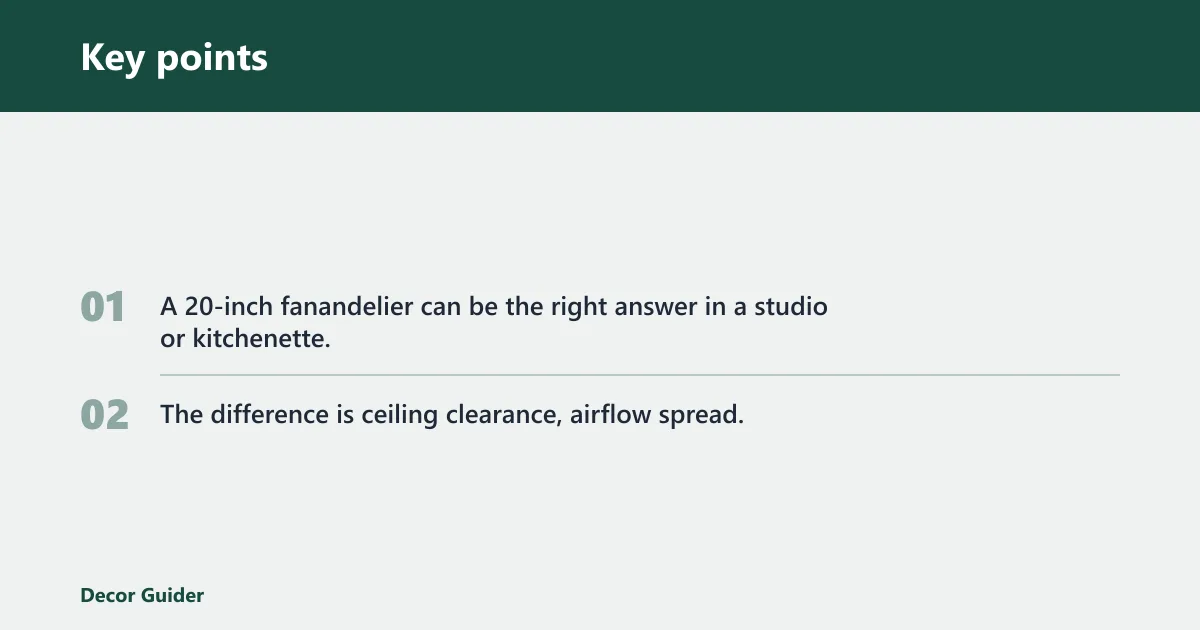
A 20-inch fanandelier can be the right answer in a studio or kitchenette, while a 42-inch flush-mount fan often fits a small bedroom better. The difference is ceiling clearance, airflow spread, and how much floor area the fan has to cover without creating a wobble or a cramped feel.
Studio fan
For a studio, the fan has to do more than move air. It may also be the main light, and it must avoid taking usable headroom away from sleeping or seating areas. ENERGY STAR’s sizing guidance is useful here because it links airflow needs to room area instead of treating every small room the same.
Best if / avoid if notes
- Best if: your studio has one main ceiling point and you need a compact fixture with integrated light.
- Best if: you want a low-profile fan that does not crowd a loft bed or narrow walking path.
- Best if: the room needs a quiet fan for sleep and daytime work.
- Avoid if: the fixture would leave blades or housing too close to the floor.
- Avoid if: the light would land directly over a TV or laptop and cause glare.
Many first-time buyers choose a large decorative fan for a studio because the room feels open. Open rooms still need safe clearance. A compact low-profile fan, or a socket fan light where hardwiring is not practical, usually works better than a bigger model with a stronger sweep.
Small bedroom: best for sleep
For a small bedroom, a quiet DC motor, dimmable LED light, and remote control matter more than a dramatic look. A flush-mount fan is usually the safer choice when the ceiling is low, while a compact fandelier can work if the room is very tight and the listing supports the clearance it needs. Manufacturer install guidance should still win over aesthetics if the ceiling box or clearance is marginal.
What to look
- Quiet operation: look for a DC motor and a low-noise listing, especially near the bed.
- Six speeds: finer control helps you keep air moving without overcooling the room.
- Reversible airflow: useful for summer and winter comfort.
- Dimmable LED: better if the fan replaces a ceiling light.
- Remote memory: helpful when you want the same setting every night.
If the bedroom ceiling is low, a flush-mount fan is usually better than a compact fandelier because the mount sits closer to the ceiling and reduces headroom loss. Choose a fandelier only when the room is truly tight, the blades are enclosed, and the listing gives enough clearance for safe placement.
Can you install one in a rental?
Yes, but the safest path depends on the fixture type. Socket fan lights screw into a standard E26 light socket and avoid hardwiring, which makes them the most rental-friendly option in many apartments when the existing socket and enclosure are actually approved for that kind of adapter and fixture. Hardwired fans may still be allowed, but they often need landlord approval or an electrician.
Rental-friendly options
- Check the lease first. Some leases restrict electrical changes, even if the fan is small.
- Use a socket fan light when possible.
- Ask about hardwired replacements. A flush-mount fan may still be permitted, but the building may require approved installation.
- Keep the original fixture. Many renters need to reinstall it before moving out.
If your apartment has a simple ceiling socket in the kitchen and the lease forbids electrical work, a socket fan light can solve airflow and lighting without opening the ceiling box. If the room needs a hardwired flush mount, get written approval before buying the fan. Electrical-code-adjacent manufacturer guidance is clear on one critical point: the ceiling box must be fan-rated, not just light-fixture-rated, before a ceiling fan is installed.
Low ceiling fan options
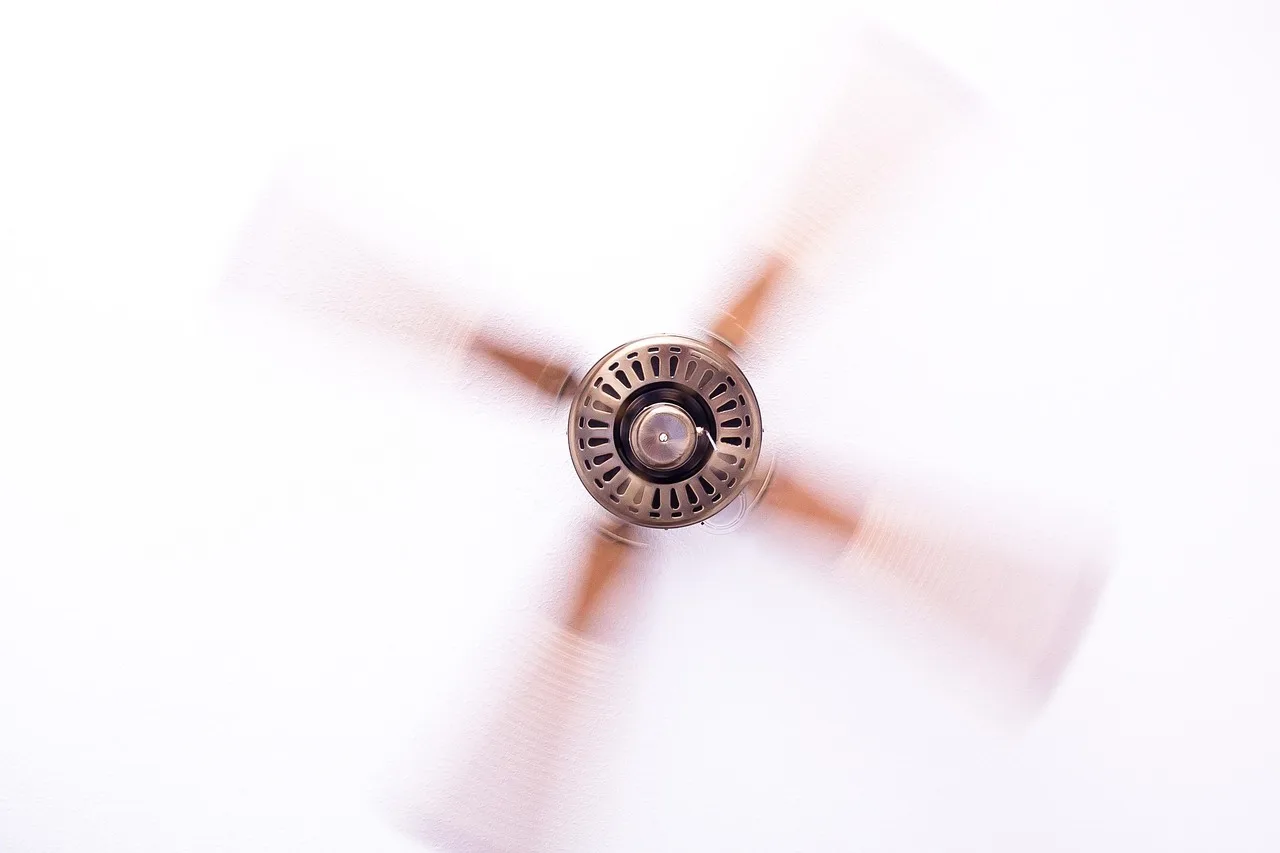
For low ceilings, the mount matters more than the style. Flush-mount and low-profile fans save vertical space and are usually the first place to start when the ceiling is under 9 feet or when furniture crowds the room. Blades should leave safe headroom, and the installed fan should keep the lowest point well above walking height.
Clearance matters
A common rule of thumb is that fan blades should be about 7 feet above the floor. That 7-foot clearance is a practical minimum because it protects normal walking paths and reduces the chance of head contact in bedrooms, hallways, and lofted rooms. ENERGY STAR and manufacturer install docs both emphasize matching the fan to the room and the ceiling height; when the ceiling is too low for that clearance, choose a different mounting approach or a smaller fixture.
For quick math, measure floor-to-ceiling height, subtract the fan’s installed drop, and confirm that the lowest blade point still clears 7 feet. Hunter and Monte Carlo installation guidance both stress using a fan-rated electrical box and following the included mounting hardware, because the mount determines whether the clearance calculation is real or just theoretical.
Flush-mount ceiling fans are better for apartments when headroom is tight because they sit close to the ceiling and reduce the chance of a low-hanging blade path. That is why apartment-friendly picks often use low-profile mounting first and style second.
Amico 42-inch low-profile fan: best for small bedrooms
The Amico 42-inch low-profile ceiling fan is a strong fit for small bedrooms and other compact apartment rooms. Based on the listing details, it uses a flush-mount design that helps with low ceilings, offers six speeds, and includes a quiet reversible DC motor. The remote adds everyday convenience without extra wall switches. Manufacturer-style details like this matter because the practical filters for apartments are installation depth, room size, and low-noise operation, not just blade count.
Its drawback is scale. At 42 inches, it may feel larger than necessary in a very tight studio or kitchenette, especially if the room already has a lot of furniture or a low light point. It is best when you want a balanced apartment-size fan rather than the smallest possible fixture.
Hunter 44-inch low-profile fan: best for a polished look
The Hunter 44-inch contemporary low-profile fan suits apartments that need a more finished look with simple controls. The listing details say it fits ceilings under 9 feet, includes a remote for speed and light dimming, and comes with dimmable LED bulbs. That makes it useful in bedrooms or living rooms where the fan also has to replace the main light. Hunter installation guidance also tends to be clear about fan-rated boxes and standard mounting steps, which helps with apartment installations.
The main drawback is price. It is the most expensive option in this group, and renewed units can be harder to compare than new listings. If budget matters more than finish, the cheaper low-profile options may be easier to justify.
Minka-Aire 44-inch low-profile fan: best for light control
The Minka-Aire F845-WH Light Wave is a low-profile 44-inch fan for rooms that need broader coverage and fuller light control. The listing details point to a handheld remote with full-range light dimming, a quiet reversible motor, and a contemporary profile that can work well in small rooms that still need a stronger visual presence. Where app control matters, this type of fan is worth considering only if the connected-home workflow is important enough to justify the extra cost and any hub requirement.
The drawback is cost. It sits far above the budget picks, so it makes more sense when design and control flexibility matter more than price. It is not the first choice if you mainly want a straightforward apartment fan that disappears into the room.
Ocioc 44-inch fan: best for budget airflow
The ocioc 44-inch ceiling fan is the budget option for bedrooms and apartments that need basic convenience. Its listing details include a quiet reversible DC motor, six speeds, adjustable color temperature, remote control, and a timer. That mix makes it practical when you want features without spending much.
The downside is that the black finish and 44-inch size may dominate very small rooms. It can also feel like more fan than a tiny bedroom needs. If the ceiling is low and the room is cramped, a smaller low-profile model may fit better.
Quick picks
| Need | Best pick | Why it fits |
|---|---|---|
| Best overall for small apartments | Amico 42-inch low-profile | Flush-mount profile, six speeds, quiet reversible DC motor |
| Best for a tight bedroom | Amico 42-inch low-profile | Balanced size for small rooms and low ceilings |
| Best for a polished upgrade | Hunter 44-inch low-profile | Remote dimming and included LED bulbs |
| Best for light control | Minka-Aire 44-inch low-profile | Full-range dimming and quiet reversible motor |
| Best budget pick | ocioc 44-inch fan | Remote, timer, six speeds, reversible DC motor |
Which one should you buy?
Choose by constraint, not by finish. If the apartment has low ceilings and a standard small bedroom, start with the Amico 42-inch low-profile fan. If you want the most polished control package and are willing to spend more, the Hunter or Minka-Aire makes sense. If budget is the main concern, the ocioc is the easiest low-cost buy.
Decision rules
- Choose the Amico if you want the safest all-around fit for a small bedroom or low-profile living room.
- Choose the Hunter if you want dimming, included bulbs, and a more refined finish.
- Choose the Minka-Aire if light control and a premium look matter more than price.
- Choose the ocioc if you want the lowest-cost feature set with a remote and six speeds.
- Choose a socket fan light if your rental limits hardwired changes and you need a no-hardwire path.
- Choose an enclosed compact fan if the room is tight and you want fewer exposed blade concerns around children or pets.
Quick comparison at a glance
For most small apartments, the decision starts with ceiling height. Then comes noise, then light quality. A 19- to 24-inch fandelier can fit a studio or kitchenette, but a 42-inch flush-mount fan is usually the better fit for a bedroom or living room with enough clearance. DC motor models are usually the better efficiency choice, and manufacturer literature commonly positions them as quieter and more energy efficient than many AC motor fans, especially at lower speeds.
Do small space ceiling fans need lights and remotes?
Not always, but they help in most apartments. An integrated LED light can replace a room light when the ceiling fixture is the main source of illumination, and a remote makes speed, light, timer, and memory control easier when wall switches are awkwardly placed or shared with other fixtures. In small spaces, the practical question is not whether a fan can have these features, but whether the room actually needs them to reduce clutter and improve daily use.
Look for dimmable LEDs with three color temperatures when the fan doubles as the room light. Published product details often list outputs in the 1000-3000 lumen range for room-light replacement, but you should confirm the listing for your exact model if brightness is critical.
Control features that matter
- Remote control: useful for speed adjustment, light control, timer, and memory function.
- App control: useful when you want speed and light changes from a phone, plus timer scheduling.
- Timer: helpful in bedrooms and home offices.
- Memory function: useful if you want the same light and speed after each restart.
What size ceiling fan is best for a small apartment room?
For most small apartment rooms, 29 to 42 inches is the practical range, and 36 inches is a safe default for rooms under about 144 square feet when the ceiling is especially tight or the room layout leaves little clearance. ENERGY STAR’s sizing guidance supports matching fan diameter to room area rather than buying purely by appearance, while manufacturer install docs make clear that low ceilings and room layout can push you toward a smaller diameter even if the room is technically large enough for a bigger fan.
CFM is the airflow comparison metric to watch. For small rooms, a fan with roughly 1,500 to 3,000 CFM is often enough for everyday comfort, while higher-output models move into larger-room territory. Do not buy by diameter alone. Clearance, room layout, and how the air has to travel around furniture matter too.
Are flush mount ceiling fans better for apartments?
Often, yes. Flush-mount ceiling fans are usually better for apartments with low ceilings because they save headroom and reduce the chance of a blade sitting too low. They are especially useful in bedrooms, hallways, and compact living rooms where walking space matters as much as airflow.
That said, flush-mount is not a cure-all. A fan still has to fit the room size, and an overly large flush-mount model can create noise or weak circulation near the edges of a studio. Pick the mount first, then the diameter, then the features.
Are bladeless ceiling fans good for apartments?
Enclosed or compact fandelier-style fans can be good for apartments, especially when you want a smaller profile and less exposed blade area around children or pets. The better term is enclosed, not bladeless, because many of these units still move air with hidden blades inside the housing.
Choose one when the room is tight, the ceiling is low, or you want a softer visual footprint. Avoid one if the enclosed design would sacrifice airflow for the room size or if the lighting is too concentrated for the space.
Can I install a ceiling fan in a rental apartment?
Yes, but the safest answer depends on the ceiling box, the lease, and whether the building allows electrical changes. Socket fan lights are the most rental-friendly because they screw into a standard E26 socket and do not require hardwiring. Hardwired fans may still be allowed, but landlord approval or an electrician may be needed.
Before installing any ceiling fan, follow the product manual and never work under a fixture that is not properly supported. For ceiling work, verify the mounting box is rated for a fan, not only a light fixture. This is the key code-adjacent requirement from manufacturer install guidance and the reason some rentals need an electrician even when the fan itself is compact.
What ceiling fan works best for low ceilings?
A flush-mount or low-profile ceiling fan is usually best for low ceilings because it keeps the fixture close to the ceiling and preserves headroom. In apartments, that matters more than style. If the room is very tight, a compact enclosed fan or socket fan light may be the safer fit.
The key is clearance. Fan blades should generally be at least 7 feet above the floor, and any room with sloped ceilings, beams, or a lofted bed needs extra attention. If the fan cannot meet that clearance comfortably, choose a smaller or lower-profile option.
Frequently asked questions
Do apartment ceiling fans save energy compared with AC?
Usually yes, because fans use far less power than air conditioning and can make a room feel cooler by moving air across the skin. They do not lower room temperature, though. In apartments, a fan often reduces the time you need AC, especially in bedrooms and small living spaces.
What is the quietest ceiling fan for an apartment bedroom?
A quiet DC motor is the best starting point for a bedroom fan because it typically runs more quietly and offers fine speed control, often with six speeds and reversible airflow.
How many CFM do I need for a small room ceiling fan?
For a small room, aim for roughly 1,500 to 3,000 CFM, depending on the room’s square footage, ceiling height, and how open the layout is. A smaller bedroom near 100 to 144 square feet often does fine near the lower end of that range, while a bigger small room or studio may benefit from more airflow. ENERGY STAR’s room-sizing guidance is the best way to keep the CFM target aligned with the room rather than chasing the biggest number.
What is the best ceiling fan for a small bedroom apartment?
The Amico 42-inch low-profile fan is the best overall fit for a small bedroom apartment because it balances size, a flush-mount profile, six speeds, and a quiet reversible DC motor. If the room is tighter or the ceiling lower, a smaller enclosed fan or socket fan light may fit better.
App control, socket fan lights, and enclosed tradeoffs
App control is best for renters who want scheduled cooling, dimming, and bedtime automation without adding a wall control. It is most useful when the fan is in a shared living area or high-mounted room where the remote gets misplaced. By contrast, socket fan lights are the simplest path when a lease limits electrical changes, because they convert a standard socket into a light-plus-airflow solution without opening the ceiling box. If you want the least visual bulk and the fewest exposed blades, an enclosed fan can help, but that tradeoff often means more attention to room size and airflow because the decorative housing can reduce the sense of openness in a small room.
Why ceiling clearance math matters
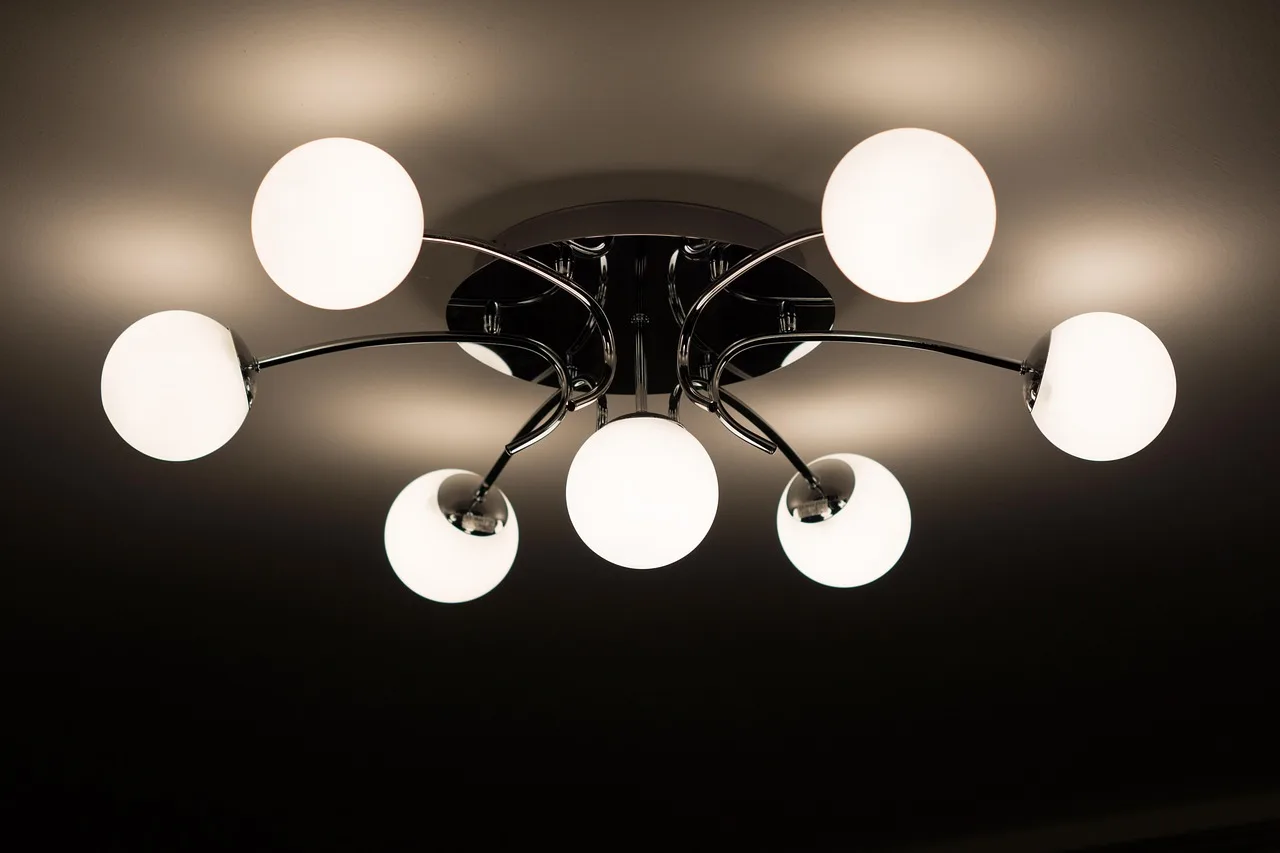
Use a simple formula before buying: ceiling height minus the fan’s installed drop should leave at least 7 feet from the floor to the lowest blade point. That check matters more than total fan size in apartments, because a low-profile fan with the wrong downrod or canopy can still fail the clearance test. For rentals, this also determines whether the original fan-rated box can stay in place or whether the building needs an electrician to make the installation compliant.
Sources
- ENERGY STAR ceiling fan sizing and room guidance, including room-area-to-fan-size recommendations and airflow considerations.
- Hunter installation guidance on fan-rated electrical boxes and low-profile mounting requirements.
- Monte Carlo installation guidance on fan-rated boxes, support hardware, and ceiling-clearance setup.
- Manufacturer product listings and installation documents for Amico, Hunter, Minka-Aire, and ocioc fan dimensions, controls, and lighting details.
Products related to this article
Sponsored / affiliate links. As an Amazon Associate I earn from qualifying purchases. I may earn additional commission from eligible campaigns.