Kitchen Island Pendant Size Chart: Measure It Right
For many kitchen islands, pendants about 10 to 15 inches in diameter are a common choice. A common rule of thumb is to hang them about 30 to 36 inches above the countertop and space multiple fixtures about 24 to 30 inches apart, or roughly one pendant per 24 to 30 inches of island length. Wrong sizing leaves glare, shadows, awkward clearance, or a crowded look that makes the island harder to use. Start by measuring the island, then choose the fixture. This guide gives a kitchen island pendant size chart for diameter, count, spacing, and hanging height by island size and use.
Match pendant size and count to your island’s dimensions
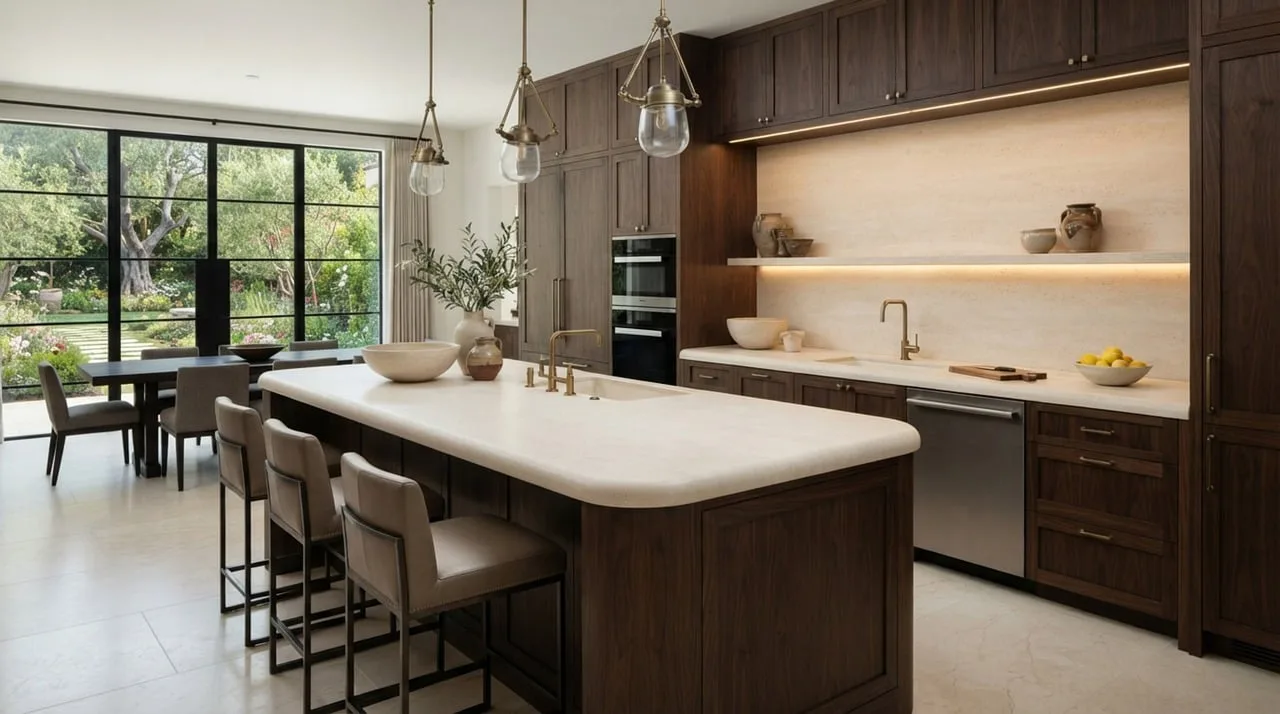


Island length sets pendant count first. Width comes next, especially for a single pendant, because the fixture has to fit the island footprint and still leave usable counter on both sides. A wider island can support a larger shade, while a long island usually needs multiple fixtures or one linear pendant.
| Island length | Island width band | Pendant count | Recommended diameter range | Exact starting center spacing formula | Minimum end clearance | Switch to a linear pendant when |
|---|---|---|---|---|---|---|
| Under 5 feet | Narrow to medium | 1 large pendant or 2 small pendants | 10 to 15 inches | For 2 pendants: island length ÷ 3 | At least 6 to 12 inches | You want a cleaner single line over a short rectangular island |
| 5 to 7 feet | Medium | 2 pendants | 12 to 16 inches each | For 2 pendants: island length ÷ 3 | About 12 inches at each end | The island reads long and straight, or repeated shades feel busy |
| 7 to 9 feet | Medium to wide | 2 larger pendants or 3 smaller pendants | 10 to 15 inches each, often smaller if using 3 | For 3 pendants: island length ÷ 4 | 12 to 18 inches depending on fixture size | You need one continuous form across the island’s main work zone |
| Over 9 feet | Wide or extra wide | 3 pendants or 1 linear fixture | 10 to 12 inches each for 3 pendants, or a linear body sized to the island | For 3 pendants: island length ÷ 4 | Keep outer fixtures inside the island ends | The counter is long enough for a continuous fixture without visual clutter |
| Linear pendant | Any rectangular island | 1 fixture | Match the fixture length to the island length | Not applicable | Leave balanced space at both ends | You want fewer visual breaks and simpler alignment |
For a 7-foot island example, reserve 12 inches at each end before placing fixtures. Two 16-inch pendants then leave a 28-inch physical gap, which is why the island still reads open rather than crowded. That kind of layout is easier to judge than count alone.
What size pendant works for a 5-foot kitchen island?
A 5-foot kitchen island usually works best with one 10- to 15-inch pendant or two smaller pendants if you want a more balanced look. Keep the fixtures visually light and leave enough end clearance so the island does not feel crowded. If the shade is large, a single centered pendant is usually the safer choice.
What size pendant works for a 7-foot kitchen island?
A 7-foot kitchen island usually fits two 12- to 16-inch pendants with center spacing based on the island length. A common starting point is about 12 inches of clearance at each end, which helps the layout feel open. If the island is long and narrow, a linear pendant can also work well.
Do I need two or three pendants over my kitchen island?
Two pendants suit many medium islands because they give even light without crowding the ends. Three pendants are better when the island is longer and two fixtures would leave the middle too empty or underlit. If the island is wide, long, and rectangular, a linear pendant may replace either choice.
Common island length ranges
Kitchen islands are often grouped into four practical length bands: under 5 feet, 5 to 7 feet, 7 to 9 feet, and over 9 feet. That breakdown matters because pendant count changes faster than diameter as the island gets longer. A short island can be overloaded by too many shades, while a long one can make a single pendant feel lost.
- Under 5 feet: one pendant or two small pendants.
- 5 to 7 feet: two pendants is often the cleanest starting point.
- 7 to 9 feet: two larger pendants or three smaller pendants.
- Over 9 feet: three pendants or one linear fixture.
One rule of thumb for two kitchen island hanging lights is about 25% of the island length. One larger pendant suits compact islands, two pendants suit many medium islands, and three smaller pendants suit longer islands. Those rules point to the same result: length sets the rhythm.
Pendant count by island length
Under 5 feet usually suits one fixture or two small pendants. Islands from 5 to 9 feet may suit two or three pendants or one linear fixture. Over 9 feet usually needs either three individual pendants or a linear body that matches the island’s length.
- Use one pendant when the island is short, narrow, or meant to feature a single statement light.
- Use two pendants when the island is medium-length and needs balanced light without visual crowding.
- Use three pendants when the island is long enough to support repeated fixtures without leaving the center thin.
Do not match pendant count to stool count. Seating can be tighter or looser than the light layout, and the fixture still needs to respect task zones, end clearance, and sightlines. A row of stools does not tell you where light should land.
Starting diameter and spacing ranges
Start with 10- to 15-inch pendants for most islands, then adjust by width, material, and shade style. A 5-foot island example suggests a pendant no larger than 15 inches in diameter or square. For three pendant lights, the fixture diameter would be cut in half to between 10 and 12 inches.
A common starting spacing is about 24 to 30 inches between pendant centers. Read that as center-to-center spacing first, then check the edge-to-edge gap after you know the fixture diameter. With pendants about 12 inches wide spaced 24 inches center to center, the gap between edges is about 12 inches; with pendants about 16 inches wide at the same spacing, the gap is about 8 inches.
Linear pendant versus multiple pendants
A linear pendant works best on rectangular islands when you want one continuous form and fewer repeated shades. A single linear fixture should be compared with the island’s length. That fits long islands, straight seating runs, and layouts that need fewer visual breaks across the counter.
Multiple pendants fit better when the island needs more even points of light or when the island is wide enough to support repeated fixtures without crowding. Two pendants often suit medium islands. Three pendants suit longer islands, especially when the fixture body would otherwise feel too short for the counter below.
How to measure your island before choosing pendants
Measure the island first, then buy the fixture. Length tells you how many pendants the island can support. Width tells you how large a single pendant can be before it feels oversized or blocks the working area.
-
Measure the finished top. Record the island length and width in inches from the finished edges, not the cabinet box alone. Use the actual countertop footprint because overhangs change how the fixture reads from above and from the room.
-
Mark the working zones. Note where the sink, cooktop, prep area, and seating start and end. This helps keep the fixture out of the most active task zone and prevents a pendant from hanging directly over a faucet or tripping sightline.
-
Measure ceiling height. Check whether the room has an 8-foot ceiling or more. Taller ceilings can accept longer stems or cords, while low ceilings may need a tighter hanging length to preserve head clearance.
-
Check sightlines from seats. Sit at the island and note where your eye line hits the fixture zone. If the shade blocks the view across the room or the upper cabinets, the pendants may need to hang higher or move slightly.
Say your island is 8 feet long and 5 feet wide. A pair of 24-inch diameter pendants can still work if the spacing and end clearance are controlled, because the width supports the scale and the length can carry two larger forms. The same diameters would feel too heavy on a short island.
How many pendant lights should you use?
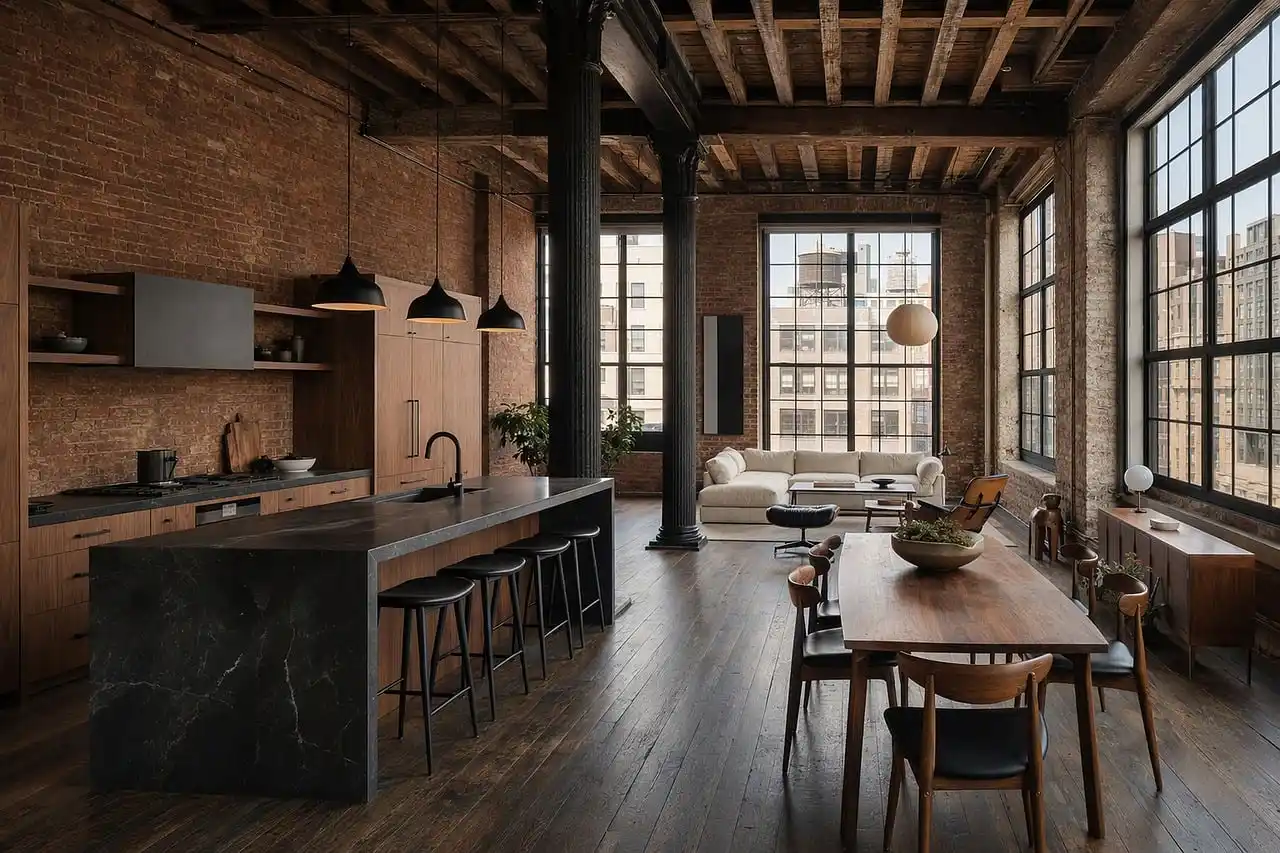
Use one pendant for a compact island, two pendants for many medium islands, and three smaller pendants for longer islands. The right count depends on island length, width, and how much open counter you need to keep at each end. A linear fixture can replace that count when the island shape is long and rectangular.
One pendant
One pendant works best on shorter islands and on islands where the pendant is meant to be a statement piece. It also fits better when the island is narrow, since a single shade can stay centered without crowding the ends. For a single pendant, width matters as much as length.
Keep the fixture size in scale with the island top. A 15-inch pendant may be suitable on a 5-foot island, but a much larger shade can overwhelm the counter and reduce the sense of space around the work surface.
Two pendants
Two pendants often suit islands from 5 to 9 feet. They give more even light than one central fixture and usually leave the counter visually open. For two pendants, the layout should feel balanced from end to end, not forced to match every stool.
The 24 to 30 inch center spacing range is a strong starting point. After that, check the end clearance so the outer edges do not press too close to the island ends.
Three pendants
Three pendants suit longer islands when two fixtures would leave the middle feeling underlit or the ends feeling empty. Smaller pendants are usually the better choice here. A common starting point is 10 to 12 inches per pendant when the layout uses three fixtures.
Three pendants can also help when the island has multiple jobs, such as prep on one side and seating on the other. The challenge is keeping the count from feeling busy. If the island is long enough for three but narrow enough to feel crowded, a linear fixture may read better.
When a linear fixture fits better
A linear fixture is often the cleaner choice for a long rectangular island, especially when the goal is one continuous line of light instead of repeated shades. It can reduce visual clutter and work well over a straight seating run. It also simplifies alignment when a sink sits off center.
Choose a linear fixture when the island length supports a single body that can span the usable work zone. If the island is irregular, curved, or broken by a sink offset, individual pendants may give you more control over placement.
How big should kitchen island pendants be?
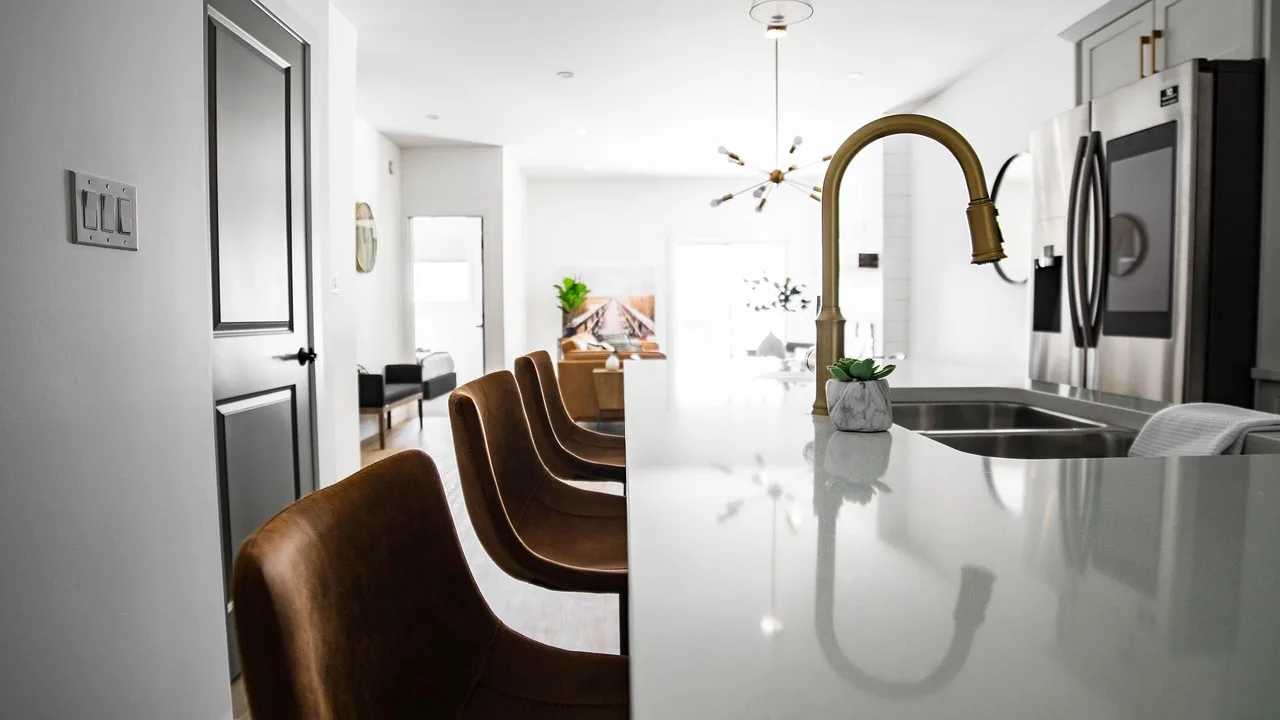
For a single pendant, use the island width as a sizing check, not just the length. A pendant that fits the length but ignores width can feel bulky, especially over a narrow island. Glass shades often read lighter than metal shades at the same diameter, while wood shades tend to feel warmer and more solid.
Using island width for a single pendant
A useful starting point for individual pendants is roughly one-third of the island’s width. That keeps the fixture proportional without letting it dominate the counter. The width rule matters most for single pendants and for large statement shades, where the visual weight can make the island feel smaller than it is.
For a narrow island, a 12-inch pendant may feel right even when the length could accept more. For a wider island, a 16-inch pendant can fit without looking undersized. The material changes that reading further.
Diameter examples by island scale
Use 10-inch pendants when you need a lighter grouped look, 12-inch pendants for a versatile middle ground, and 15- or 16-inch pendants when the island needs more presence. A 24-inch pendant can work as a larger statement over a wide island, but it needs enough surrounding space to avoid crowding the worktop.
Suppose a 6-foot island needs two pendants. Two 12-inch shades can feel open and orderly. If the same island uses two 16-inch shades, the fixtures read heavier and the gaps shrink, so the layout depends on whether you want a lighter or stronger visual line.
How material and shade opacity change visual size
Glass shades usually feel lighter because the eye reads through them. Metal shades block more view and can appear larger than the same diameter in glass. Wood adds warmth and can make a pendant feel more substantial, even when the measurement stays the same.
Shade opacity also changes brightness. A clear or open shade spreads light more freely, while a closed or opaque shade directs light downward and can create stronger shadows if the fixture hangs too low. The diameter may be correct, but the light can still feel too hard or too dim if the material choice is wrong.
How far apart should pendants be?
Start with 24 to 30 inches between pendant centers, then check the edges and the island ends. Center spacing controls rhythm. Edge-to-edge gap controls how crowded the shades feel. End clearance keeps the outer pendants from landing too close to the corners.
Center-to-center spacing
Center-to-center spacing is the simplest way to set the layout because it uses the middle of each fixture. Start around 24 to 30 inches apart for many layouts. That range works well on medium islands and keeps the fixtures from bunching up.
On a 7-foot island, two 16-inch pendants leave a 28-inch physical gap. That is a useful check because it shows how the same center spacing can still produce a different edge gap depending on fixture diameter.
Edge-to-edge spacing
Edge-to-edge spacing tells you the real visual break between fixtures. Subtract the pendant diameter from the center-to-center measurement, then divide by two if you need the gap from each shade edge to the other. That makes the layout easier to judge when the pendants are larger than 12 inches.
- Small edge gaps can work with small pendants.
- Large pendants need more breathing room.
- Prep areas benefit from a little extra open space between shades.
End clearance at the island edges
Keep the outer pendants inside the island ends. A common starting point is about 12 inches of clearance at each end on a 7-foot island, though the exact amount depends on fixture size and the island footprint. The goal is to avoid a visual crowd at the edges.
A common first-timer mistake is placing the outer pendant where the island ends instead of where the usable counter begins. That can push the fixture too close to a stool, a corner, or a sink offset.
How high should kitchen island pendants hang?
Start with the bottom of the pendant about 30 to 36 inches above the countertop, measured from the finished countertop to the lowest point of the fixture. That range works for many islands, but ceiling height, glare, and sightlines can move the final height up or down.
Starting height above the countertop
The bottom of the pendant should sit about 30 to 36 inches above the countertop. This is a widely used starting point, and it keeps the fixture high enough for head clearance while still leaving the light close enough to the work surface.
If the shade is large or opaque, the lower end of that range can feel heavy. If the shade is small and open, the higher end can preserve a lighter view across the island.
Adjustments for ceiling height
Standard guidance often assumes an 8-foot ceiling. Taller ceilings usually need more suspension length, while lower ceilings may need a tighter drop to keep the island from feeling compressed. The goal is not a fixed number. It is a balanced relationship between the countertop, the shade, and the room height.
- Taller ceilings usually allow a longer suspension.
- Lower ceilings usually need a shorter drop.
- The final height should still preserve useful task light and clear sightlines.
Clearance for seating, glare, and open sightlines
Seating needs a clear view across the island, especially in a mixed-use layout. If the shades sit too low, they block conversation and can cast glare into seated eye lines. If they sit too high, task light may spread too broadly and feel weak on the counter.
Try the hanging height with paper templates or tape before final installation. That makes it easier to spot the line of sight from the opposite side of the island and from any nearby dining area.
Linear and multiple pendant choices
A linear pendant is the simpler choice for long rectangular islands, off-center sinks, and layouts that need one continuous line of light. Multiple pendants are better when the island length benefits from repeated fixtures or when the width calls for more than one light source.
Best cases for a linear pendant
Choose a linear pendant when the island is long, straight, and used as a single work zone. It can align with the island’s length, reduce repeated shade shapes, and keep the sightline clean above the counter. It also helps when the sink sits off center, because the fixture can still stay visually balanced.
Best cases for two or three individual pendants
Use two pendants when the island is medium in length and you want a balanced pair of lights without crowding the ends. Use three smaller pendants when the island is longer and the layout needs more even coverage across the full run. In both cases, keep the spacing within the 24 to 30 inch starting range and adjust for the fixture diameter.
Picture an island that is 6 feet long with seating on one side and prep space on the other. Two pendants can keep the middle open and leave room for conversation. If the same island were 8 feet long, three smaller pendants would usually read more natural than two oversized ones.
Layout issues with off-center sinks and mixed-use islands
Off-center sinks should change the lighting plan. Centering the pendant group on the island may leave the sink poorly lit or place a shade directly over the basin. Shift the group toward the task zone when the sink dominates the work area, then check that the outer fixtures still stay inside the ends.
Mixed-use islands need extra care because prep, cooking, and seating often compete for the same overhead space. In that case, keep the fixture height in the 30 to 36 inch starting range, but let sightlines and task use decide the final position. A long linear fixture can be cleaner when the island is divided into clear zones.
Frequently asked questions
What are standard kitchen island sizes?
Common kitchen islands are often grouped by length: under 5 feet, 5 to 7 feet, 7 to 9 feet, and over 9 feet. Those ranges matter because length usually decides whether you need one pendant, two pendants, three smaller pendants, or a linear fixture.
How big should kitchen island pendants be: most islands work?
Most islands work with 10- to 15-inch pendants, while larger islands may support 16-inch shades or a linear fixture. A single pendant should also respect island width, since a size that fits the length can still feel too heavy across a narrow top.
How many pendant lights should go over a kitchen island?
One pendant suits compact islands, two often suit medium islands, and three smaller pendants suit longer islands. Islands under 5 feet usually take one fixture or two small pendants, while islands from 5 to 9 feet may suit two or three pendants or one linear fixture.
How high should pendant lights hang above a kitchen island?
Start with the bottom of the pendant 30 to 36 inches above the countertop, measured to the lowest point. That range usually keeps the fixture high enough for clear sightlines and low enough for useful task light, with small adjustments for ceiling height and shade style.
How far apart should kitchen island pendant lights be?
Start around 24 to 30 inches between pendant centers. Then check the edge-to-edge gap and the end clearance, because a fixture can be correctly spaced by center and still feel crowded if the shades are too large or too close to the island ends.
Should pendant size be based on island length or width?
Use both, but for different decisions. Length mostly sets pendant count and spacing, while width is the better check for a single pendant or a large statement shade. A pendant that fits the island length can still feel oversized if the width is narrow.
Products related to this article
Sponsored / affiliate links. As an Amazon Associate I earn from qualifying purchases. I may earn additional commission from eligible campaigns.