Hunter Dempsey Ceiling Fan Review: Which Model Fits
Choose the 44-inch Hunter Dempsey if you need a low-profile fan for small bedrooms or rooms up to about 144 square feet; move up only if the room is larger or needs more airflow. Pick the wrong mount or size, and you can end up with weak circulation, light that feels too dim, or a fan that hangs too low. This guide compares Dempsey variants by room size, ceiling height, mounting type, light kit, and remote setup.
This guide is part of our Home lighting and ceiling fan guide series.
Verdict

- Includes energy-efficient LED lighting for reliable illumination
- Low-profile design fits ceilings under 9 feet high
- Reversible blades and modern white finish for contemporary styling

The Hunter Dempsey line works best as a group of specific models, not one catch-all fan. Based on specs and reviews, the strongest fit is a bedroom or secondary living space where you want a low-profile mount, a handheld remote, and a plain four-blade look. Skip it if you want a very bright light source, if you need a true standard-mount fan, or if you are sizing up for a large open room.
Pros and cons
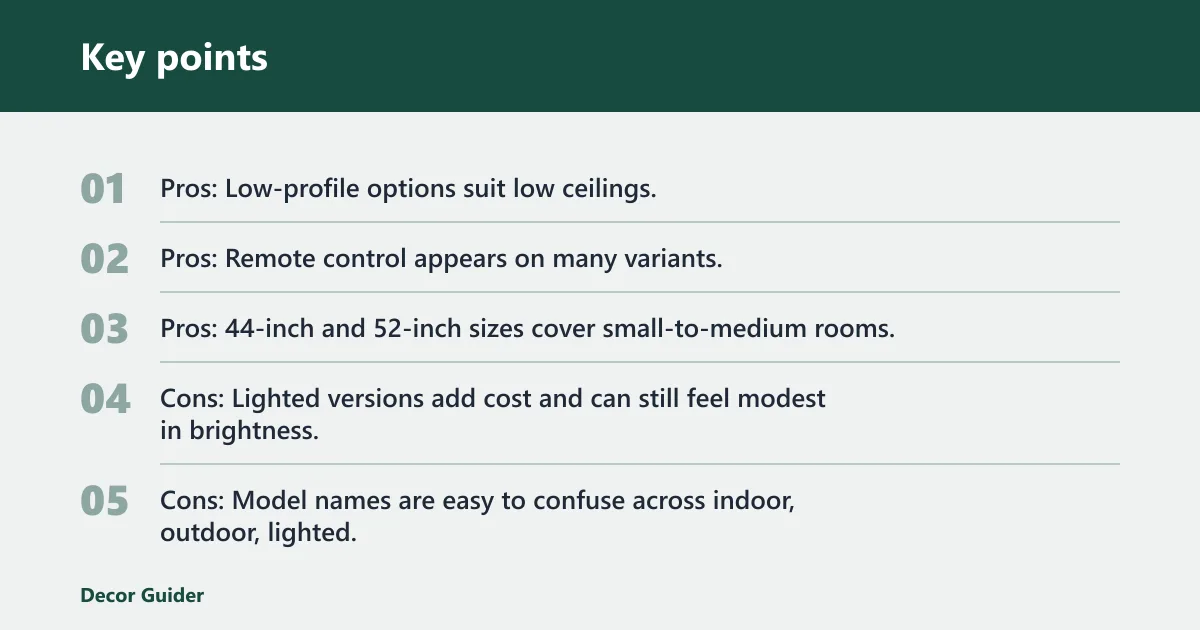
- Pros: Low-profile options suit low ceilings.
- Pros: Remote control appears on many variants.
- Pros: 44-inch and 52-inch sizes cover small-to-medium rooms.
- Cons: Lighted versions add cost and can still feel modest in brightness.
- Cons: Model names are easy to confuse across indoor, outdoor, lighted, and no-light listings.
- Cons: The wrong diameter can leave a room under- or over-served.
Who it’s for
This line suits buyers who want a low-profile fan for bedrooms, compact living rooms, or other small-to-medium spaces, and who value a remote more than extra fan styling. It is a weaker match for tall ceilings, large great rooms, or shoppers who want a bright integrated light as a main fixture.
Say your bedroom is 11 by 12 feet and the ceiling is under 9 feet. A 44-inch low-profile Dempsey is usually the cleaner fit. Say the room is larger and you want the fan to move air across a wider seating area; the 52-inch version starts to make more sense.
📊 One listed Dempsey model is priced from $179.99. Source: Hunter Dempsey.
Specs at a glance
| Spec | What the Hunter Dempsey line offers | Why it matters |
|---|---|---|
| Sizes | 44-inch and 52-inch variants | Diameter drives room fit and airflow reach. |
| Blade count | 4 blades | Four blades are a common quiet-oriented design choice. |
| Motor | WhisperWind motor on listed models | Designed for quieter operation and three-speed control. |
| Mounting | Low-profile mount on selected models | Better for ceilings with limited clearance. |
| Light | With-light and no-light variants | Changes brightness, cost, and use as a room light. |
| Remote | Handheld remote on many listings | Useful in bedrooms and living rooms. |
| Indoor/outdoor | Indoor and outdoor-or-indoor versions | Lets you match the fan to the setting. |
Model-selection matrix
| Variant | Best room size | Ceiling height fit | Light / remote | Tradeoffs to know |
|---|---|---|---|---|
| 44-inch, low-profile, handheld remote, no light | Up to about 144 square feet | Low ceilings; under 9 feet is the safest fit | Remote yes, light no | Best for airflow and clearance, but you give up integrated illumination. |
| 44-inch, low-profile, LED light, remote | Small bedrooms and compact offices | Low ceilings | Light yes, remote yes | Good two-in-one choice, but the light may not replace a primary ceiling fixture. |
| 52-inch indoor, low-profile, no light, remote | Small-to-medium rooms | Low ceilings or rooms that still need a close-to-ceiling mount | Remote yes, light no | Moves more air than 44 inches, but can be too much for very small rooms. |
| 52-inch indoor, low-profile, LED light, remote | Medium bedrooms and living rooms | Low ceilings | Light yes, remote yes | Useful if you want one fixture to do both jobs, though brightness depends on the kit. |
| 44-inch outdoor-or-indoor, low-profile, LED light, remote | Covered porches and smaller indoor rooms | Low ceilings | Light yes, remote yes | Flexible placement, but outdoor-or-indoor labeling does not fix undersized airflow in bigger rooms. |
| 52-inch outdoor-or-indoor, LED light, remote | Large bedrooms, porches, and bigger sitting areas | Ceilings with enough clearance for the chosen mount | Light yes, remote yes | More versatile on size, but check clearance carefully before buying. |
Who is the Hunter Dempsey for?
The Hunter Dempsey is for buyers who want a ceiling fan line with multiple size and feature combinations, not a one-size-fits-all model. It makes the most sense in bedrooms, compact living rooms, and other small-to-medium spaces where a low-profile mount and remote are useful. It is less compelling for buyers who need high-output light or a very large-room fan.
Best for bedrooms
A bedroom is one of the clearest matches for this line, especially if you want remote control and a close-to-ceiling profile. The 44-inch version is the safer default in smaller sleeping rooms, while the 52-inch model is better if the room is larger or has more open floor area.
Best for low ceilings
The Dempsey line is a strong candidate for low ceilings because selected models use a low-profile mount. That matters more than blade count alone. A close-to-ceiling fan reduces headroom concerns and usually looks more proportional in rooms where a downrod fan would hang too low.
Best for small-to-medium rooms
Small-to-medium rooms are the practical center of this line. The 44-inch fan is the better fit for compact spaces, while the 52-inch option is the better step up when you want broader airflow and the room does not feel cramped.
Best for porches or outdoor-rated spaces
Outdoor-or-indoor variants are the right starting point for covered porches or similar sheltered spaces. Do not confuse that with full weather exposure. Outdoor-rated placement still needs proper ceiling clearance and the right mount style.
Which Hunter Dempsey model should you buy?
Pick the model by three checks: room size, ceiling height, and whether you need light. The 44-inch Dempsey is the better small-room choice, while the 52-inch Dempsey is for larger bedrooms and living rooms. If your ceiling is low, prioritize low-profile mounting over extra features you may not use.
44-inch versus 52-inch
The 44-inch size is the safer buy for small bedrooms, nurseries, and compact offices. The 52-inch size is better when the room is long, square footage is higher, or you want the fan to feel less decorative and more functional. A common first-timer mistake is buying 52 inches for a tight room and ending up with more fan than the space needs.
Low-profile versus standard mount
Low-profile means the fan sits closer to the ceiling, which is the right move for low-clearance rooms. Standard mounting needs more vertical space and can create install friction if you have an 8-foot ceiling or a room with low hanging fixtures. If clearance is tight, treat mount type as a first filter, not a last detail.
With light versus no light
Choose the lighted version if the fan will replace a basic room light or if the room lacks another bright source. Choose the no-light version if you already have strong overhead lighting and want the cleanest fan-only setup. The tradeoff is simple: lighted models add usefulness, but the light kit can raise price without solving every brightness need.
Indoor versus outdoor-or-indoor
Indoor versions belong in bedrooms, living rooms, and finished interiors. Outdoor-or-indoor versions are better for covered porches or sheltered transitional spaces. If you only need the fan inside, do not pay extra for the more flexible listing unless the finish or feature set is exactly what you want.
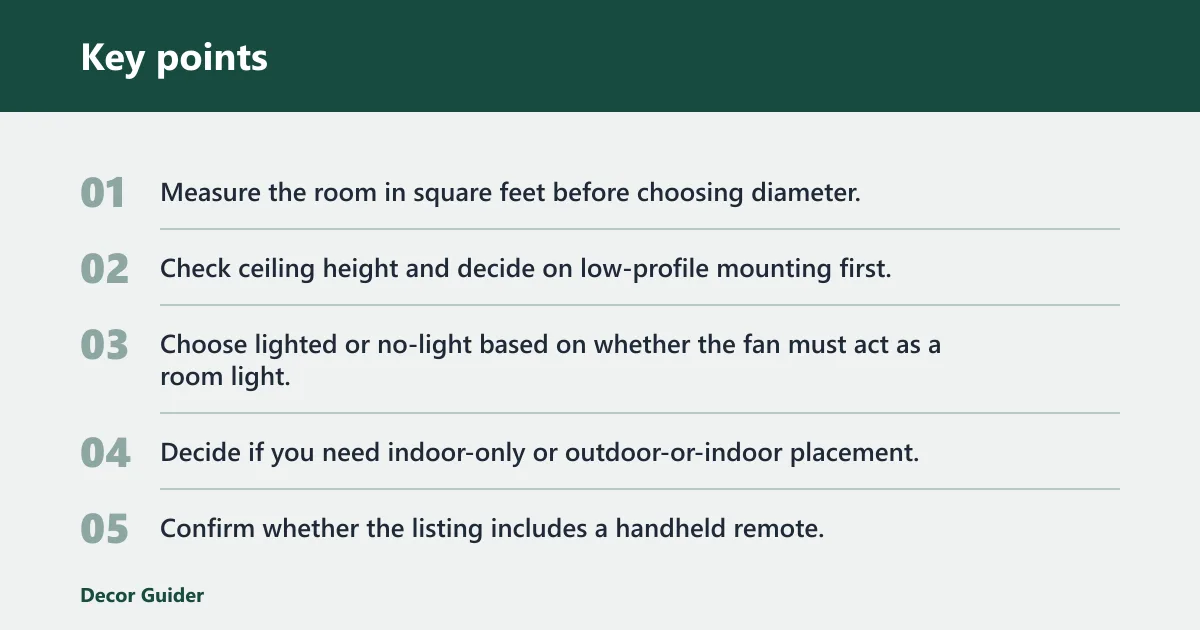
- Measure the room in square feet before choosing diameter.
- Check ceiling height and decide on low-profile mounting first.
- Choose lighted or no-light based on whether the fan must act as a room light.
- Decide if you need indoor-only or outdoor-or-indoor placement.
- Confirm whether the listing includes a handheld remote.
What works well
The Dempsey line works best when the room, ceiling height, and feature set line up. Based on the spec sheet and review patterns, the WhisperWind motor is the named feature to look for if quiet operation matters, and the three-speed setup gives you basic control without adding complexity.
Quiet operation expectations
“Quiet” here should mean suitable for bedrooms and conversation spaces, not silent. A 3-speed WhisperWind motor points to a fan designed for low-noise day-to-day use, but blade size and installation quality still matter. Loose mounting, an undersized room, or a poor ceiling fit can defeat the advantage.
Remote convenience
Handheld remote control is a real plus in bedrooms and living rooms. It matters most when the wall switch is inconvenient or when the fan is above a bed or sofa. If a listing omits the remote, that is not a minor difference; it changes how easy the fan is to use every day.
Four-blade airflow
The four-blade design should be read as a balanced choice rather than a special claim. In practical terms, the blade count supports a cleaner look and a familiar airflow pattern. The main performance variable is still size, followed by mounting height and room shape.
Picture a 12-by-12 guest room with a single overhead light. A 44-inch lighted Dempsey can solve both tasks if the ceiling is low. Picture a long living room with seating spread across the space. The 52-inch model is the safer fit because the smaller fan may feel underpowered.
What does not work as well
The biggest drawback is not one flaw; it is the number of model combinations. The line spreads across 44-inch and 52-inch sizes, lighted and no-light versions, and indoor or outdoor-or-indoor listings. That makes it easy to order the wrong fan if you skip the mount and ceiling-height check.
Lighted variants can be a mixed value
Integrated LED light kits are useful when you need a single fixture, but they are not always the answer for a room that already has overhead lighting. They also add cost and can leave shoppers expecting more brightness than a compact ceiling fan light usually provides.
Room-size mismatch is easy
The 52-inch Dempsey is not automatically better. In a small bedroom, a larger fan can feel oversized and visually heavy. On the other side, a 44-inch fan can be too modest in a larger living room and leave dead spots in the airflow pattern.
Low ceilings still require planning
Low-profile mounting helps, but it does not remove the need to check clearances around the blades, light kit, and pull space if a remote is not the primary control. If you are near the ceiling-height limit, one wrong choice can make the room feel crowded.
How does the Hunter Dempsey compare with alternatives?
Compared with basic builder-grade fans, the Dempsey line is more specific about size, mount type, and control options. That makes it a better fit when you need a fan for a bedroom or low ceiling and do not want to guess at compatibility. It is less useful if you only want the simplest possible fan.
Compared with basic builder-grade fans
Builder-grade fans often rely on a plain pull chain and a generic look. The Dempsey line usually gives you more choice in low-profile mounting, remote use, and lighted versus no-light setups. If you care about those details, Dempsey is easier to tailor to the room.
Compared with a larger or simpler fan
A larger fan can be the better pick in open-plan spaces, and a simpler fan can be smarter if you already have room lighting and only need airflow. The Dempsey is strongest when you want a compact, configurable fan rather than maximum coverage.
Compared with another low-profile fan
Another low-profile fan may be the better buy if you want a more straightforward installation or a brighter integrated light. The Dempsey stands out more for its range of variants than for one standout feature. That range is helpful, but it also demands more careful shopping.
Should you buy it?
Buy the Hunter Dempsey if you want a low-profile ceiling fan for a bedroom, small living room, or covered outdoor space and you are willing to match the exact variant to the room. The 44-inch version is the safer small-room choice. The 52-inch version is better for bigger rooms and better airflow.
Best-buy scenarios
Choose it when the ceiling is low, the room is small to medium, and remote control matters. The 44-inch low-profile models are the cleanest fit for tighter bedrooms. The 52-inch indoor model makes more sense when you want the same low-profile idea but need more airflow.
Skip-it scenarios
Skip it if you need a fan for a large open room, if you want a very bright light source, or if you do not want to sort through near-identical listings. It is also a weaker pick if your ceiling height leaves little room for a low-profile mount and the room needs a more traditional drop.
Frequently asked questions
is hunter the best ceiling fan
Hunter is a strong mainstream option, but “best” depends on the room and the exact model. The Dempsey line is appealing because it covers low-profile mounting, multiple sizes, and remote-equipped variants. It is not automatically the top pick for every ceiling height, room size, or lighting need.
how to install hunter dempsey ceiling fan
Installation starts with matching the mount type to your ceiling height and confirming the room box can support a fan. Then you follow the model-specific instructions for wiring, blade attachment, and remote setup. If the ceiling is low, check clearances carefully before tightening the final mount.
are hunter ceiling fans any good
Hunter ceiling fans are generally well known, but this line should be judged by variant, not brand name alone. The Dempsey family offers practical features like low-profile mounting, remote control, and WhisperWind motor listings. The best choice still depends on whether you need light, size, and clearance to match the room.
what size Hunter Dempsey ceiling fan should I buy
Choose 44 inches for smaller rooms and about up to 144 square feet, especially bedrooms and compact offices. Choose 52 inches when the room is larger, more open, or needs more airflow. The wrong size can make a fan feel weak in a big room or oversized in a small one.
does the Hunter Dempsey ceiling fan come with a light
Some Dempsey models include LED light kits and others do not. That is one of the main differences across the line, so you should check the exact listing before buying. If the fan has to replace a room light, the lighted version is the safer choice.
is the Hunter Dempsey good for low ceilings
Yes, selected Dempsey models are a good fit for low ceilings because they use low-profile mounting. That keeps the fan closer to the ceiling and reduces clearance problems. The key is to choose the low-profile version, not assume every Dempsey listing uses that mount.
is the Hunter Dempsey ceiling fan quiet
The WhisperWind motor suggests a quiet-leaning design, and that is one reason the line is often used in bedrooms. Quiet does not mean silent, though. Room size, ceiling height, and installation quality all affect how audible the fan feels once it is running.
which Hunter Dempsey model is best for a bedroom
The best bedroom choice is usually the 44-inch low-profile Dempsey, especially if the room is small or the ceiling is low. If the bedroom is larger, the 52-inch model can work better. Add the light kit only if the room needs it, and keep the remote if convenience matters.
Products related to this article
Sponsored / affiliate links. As an Amazon Associate I earn from qualifying purchases. I may earn additional commission from eligible campaigns.