Hunter Ceiling Fan Review: Is It Worth It for Buyers?
Hunter ceiling fans are worth it if you want quieter operation, solid controls, and better long-term value than budget fans, but only the better midrange and premium lines justify the price. Pick the wrong model and you can end up paying more for weak remotes, dim lights, or an install that takes longer than expected. This guide covers noise, install effort, control options, lighting, and which Hunter lines earn the premium.
Verdict



Hunter Fan Company is a reasonable buy when the model matches the room. The brand says it has 140 years of experience, offers a limited lifetime warranty, free shipping over $199, and hassle-free returns. Those signals matter, but model choice still matters more than logo history.
Pros and cons
- Pros: Quiet-operation positioning, broad category coverage, and a limited lifetime warranty.
- Pros: Good fit for buyers who want remotes, low-profile mounting, or smart control from the same brand family.
- Cons: Some Hunter fans cost more than comparable mass-market fans with similar basic function.
- Cons: Lights, remotes, and downrod choices can add friction if you pick the wrong configuration for the room.
Who it’s for
Hunter is for shoppers who want a ceiling fan from a long-running brand and care about the details that affect ownership: motor noise, control type, ceiling height, and whether the fan has integrated light or not. It is less compelling if you only want the lowest sticker price and do not care about warranty terms, fit, or control options.
📊 Hunter Fan offers free shipping over $199. Source: Hunter Fan Company.
Specs at a glance
| Buyer signal | Hunter detail | What it means for you |
|---|---|---|
| Brand age | 140 years of experience | Useful as a trust signal, not proof that every model is the best value. |
| Warranty | Limited lifetime warranty | Helpful for long-term confidence, especially if you expect to keep the fan for years. |
| Shipping | Free shipping over $199 | Can narrow the gap between Hunter and cheaper options. |
| Returns | Hassle-free returns | Reduces risk if the size, style, or control setup is wrong. |
| Product categories | Ceiling fans, ceiling fans with lights, outdoor ceiling fans, ceiling fans with remotes | Makes it easier to shop by room and control preference. |
| Performance line | SureSpeed | Hunter’s higher-airflow positioning for buyers who want more performance. |
| Smart line | HunterSMART | For connected control and app-based convenience. |
| Quiet motor family | WhisperWind | Hunter’s quiet-operation positioning; still depends on the specific model and install quality. |
Who it is for
Hunter fits buyers who want a fan that solves a real room problem, not just a decorative piece. That usually means a bedroom that needs quieter operation, a den that needs a remote, a low ceiling that needs a flush-mount design, or a room that needs integrated lighting.
Best room sizes and ceiling heights
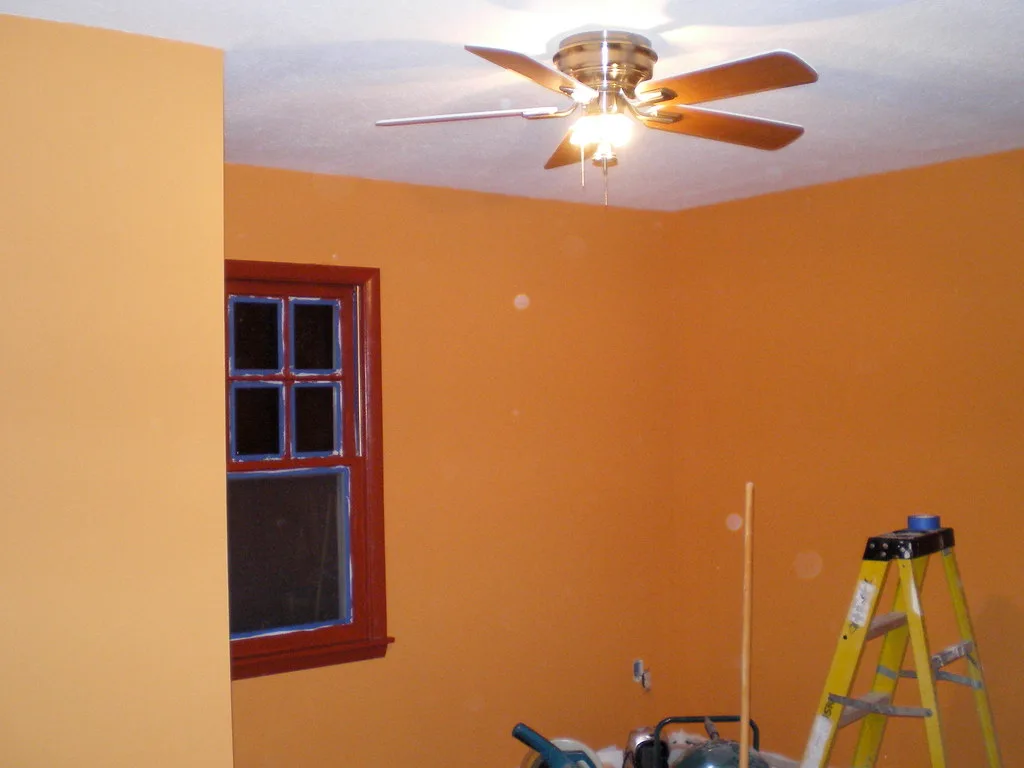
Hunter works best when you match blade span and mounting style to the room. Smaller rooms need smaller fans, while larger rooms need wider blades or stronger airflow. Low profile ceiling fans are the clearest fit for shorter ceiling clearance, because they reduce the drop and help keep blade clearance workable.
Best fit for quietness-sensitive buyers
Buyers who sleep near the fan, read under it, or sit under it for long periods should look closely at WhisperWind positioning and then read model feedback, because quiet branding alone does not eliminate install wobble or control noise. The quieter the room needs to feel, the more the mount quality and balance matter.
Best fit for buyers who want lights or remotes
Hunter’s ceiling fans with lights and ceiling fans with remotes are practical categories, not automatic upgrades. Lights help when a room lacks overhead illumination, while remotes help when the fan is mounted high, on an angled ceiling, or above a bed where pull-chain use is annoying.
What works with Hunter ceiling fans
Hunter’s biggest value is that it separates product lines by need. That makes it easier to choose a fan for a specific ceiling height, room size, and control style instead of paying for features you will never use.
WhisperWind quietness positioning
WhisperWind is Hunter’s quiet-operation motor positioning. That matters if you are comparing against cheap fans that hum, click, or rattle after installation. Still, quietness depends on the whole setup: ceiling box strength, blade balance, and whether the fan is mounted with the right hardware.
SureSpeed for higher airflow needs
SureSpeed is the line to watch if you want Hunter’s performance-oriented side. It is the better fit for larger rooms, warm spaces, or anyone who cares more about moving air than about decorative style alone. That said, performance lines can cost more, so the room should justify the premium.
HunterSMART for connected control
HunterSMART is the smart-fan option for buyers who want app or connected control. It is useful in rooms where a wall switch is inconvenient or where you want to change speed without a remote on the nightstand. It is not worth paying for if you only plan to use a pull chain.
Low profile and lighted options solve specific problems
Low profile ceiling fans are the right answer for shorter ceilings. Ceiling fans with lights work best when the room needs one fixture to do two jobs, but brightness and glare matter. A light kit can be helpful in a bedroom or office, yet a poorly diffused lens can feel harsher than a separate lamp.
Ceiling fans with remotes reduce friction
Ceiling fans with remotes are often worth the extra cost when the fan is mounted high or when speed changes are frequent. They are less compelling in simple rooms where a wall switch and pull chain already do the job. Remote convenience is real, but it adds another part that can fail or get misplaced.
What does not work as well
Hunter is not always the best value, especially when the room does not need the features you are paying for. A plain fan from a cheaper brand can be enough for a guest room, garage, or basic den if noise, lighting, and control convenience are low priorities.
Cost can outrun the benefit
Some Hunter fans cost enough that the total ownership value depends on how well the model fits the room. If you need only a basic fan, Hunter’s warranty and brand support may not be worth a large premium over a simpler alternative.
Lighting glare and dimming tradeoffs
Ceiling fans with lights can solve one problem and create another. Brightness, bulb type, and lens design affect how useful the light feels. A fan with two 60W bulbs, for example, may sound flexible on paper, but that output can be too much for some bedrooms and not enough for a large family room if the diffuser is weak.
Remote, wobble, and install complaints to watch for
Hunter is not immune to the issues that affect most ceiling fans: remote pairing confusion, wobble from uneven blades, and installs that take longer than expected. A common first-timer mistake is choosing a fan with a long downrod for a low-ceiling room, then finding it does not suit the space and hangs too low.
Checks before you buy
- Measure ceiling height and confirm whether you need flush mount or downrod installation.
- Match room size to blade span and performance level.
- Decide whether you want lights, a remote, or both before comparing models.
- Check whether the room needs a dimmer-compatible light kit or brighter room illumination.
- Read recent owner feedback for wobble, remote reliability, and noise complaints.
Which Hunter models are worth the money?
Hunter’s best value depends on fit, not just price. The right model for a low-ceiling bedroom is not the same as the right model for a large kitchen or a room where you want app control. The matrix below scores common Hunter fan types by practical ownership needs and gives a clear worth-it verdict.
| Hunter fan type | Ceiling height fit | Room size fit | Control method | Noise sensitivity | Lighting need | Worth it? |
|---|---|---|---|---|---|---|
| Low profile ceiling fan | Best for short ceilings | Small to medium rooms | Remote or wall switch | Good if properly mounted | Best with a light kit if the room lacks fixtures | Yes, if clearance is the problem |
| WhisperWind model | Standard ceilings | Bedrooms, offices, quiet living spaces | Pull-chain, remote, or wall control | Strong fit | Depends on model | Yes, for quiet-first buyers |
| SureSpeed model | Standard to higher ceilings | Medium to larger rooms | Remote or wall control | Good, but performance focus may matter more than silence | Optional | Yes, if airflow matters more than price |
| HunterSMART model | Standard ceilings | Rooms where app control helps | Smart control | Good if install is clean | Optional | Yes, for connected-control buyers |
| Ceiling fan with lights | Any ceiling that can handle the fixture | Bedrooms, kitchens, multipurpose rooms | Remote or wall control is best | Depends on motor and mount | Best when one fixture must do both jobs | Yes, if you need room light from the fan |
| Fan without lights | Any suitable ceiling height | Rooms with separate lighting | Pull-chain, remote, or wall control | Often the cleanest choice for quiet rooms | Not needed | Yes, if you already have enough light |
How to read the matrix
Choose the shortest path to solving the room’s real problem. If the ceiling is low, start with low profile. If the room is large, look at SureSpeed. If the main complaint is fan noise, start with WhisperWind and then check mount reviews. If the user wants app control, HunterSMART is the reason to pay up.
Hunter versus other ceiling fan brands
Hunter is strongest when you judge it on total cost of ownership instead of sticker price alone. The warranty, shipping threshold, return policy, and category breadth can matter if you expect to keep the fan for years or want a better chance of buying the right model the first time.
How Hunter compares on total cost of ownership
A cheaper mass-market fan may win on purchase price, but it can lose if the remote is unreliable, the light kit is harsh, or the motor noise becomes a daily annoyance. Hunter’s premium is easier to justify when the fan will run often and the room is sensitive to noise or light quality.
Where cheaper mass-market fans can win
Cheaper fans can make sense for spare rooms, short-term rentals, or spaces where you do not need special controls. If you only need air movement and you already have separate lighting, Hunter’s added features may not return enough value.
What Hunter adds beyond sticker price
Hunter’s advantage is not one magic feature. It is the combination of brand support, limited lifetime warranty, structured product categories, and specific lines for quiet, performance, smart, or low-clearance use. That only pays off if you buy the right line for the room.
Should you buy a Hunter ceiling fan with lights or without lights?
Buy with lights when the fan needs to replace a room fixture, especially in bedrooms, kitchens, and multipurpose rooms. Buy without lights when the room already has enough overhead lighting and you want the cleaner look, lower complexity, and fewer brightness or glare tradeoffs.
Buy with lights if…
The room lacks ceiling light, the fan will be used in a bedroom, or you want one fixture to do two jobs. In that case, pay attention to dimmer range, lens design, and bulb compatibility so the light does not feel too harsh or too dim.
Buy without lights if…
The room already has good ambient lighting or you care more about a simple fan than a combined fixture. Fans without lights are often easier to live with in quiet rooms because there is one less feature to misfit, miswire, or maintain.
Frequently asked questions
Is Hunter ceiling fan worth it?
Hunter ceiling fans are worth it when you need a better-than-budget mix of quietness, warranty support, and control options. They are less compelling if you only want the lowest price. The best value usually sits in the midrange and premium lines that match your ceiling height and room size.
Are Hunter ceiling fans good quality?
Hunter fans are generally a good-quality buy in the sense that the brand backs them with a limited lifetime warranty and organizes the line by use case. Quality still varies by model, so a smart or performance line can make more sense than a basic fan with extra features you do not need.
How long do Hunter ceiling fans last?
Hunter does not publish a universal lifespan number here, and no honest review should invent one. In practice, ceiling fan life depends on motor quality, install quality, run time, and maintenance. A properly installed fan in a dry indoor room usually has a better chance of lasting than one that wobbles from day one.
Are Hunter ceiling fans quiet?
Hunter positions WhisperWind as a quiet-operation motor family, and that is a strong signal for bedrooms or offices. Quietness still depends on the full install. A loose canopy, unbalanced blades, or the wrong downrod can create more noise than the motor itself.
Do Hunter ceiling fans come with a lifetime warranty?
Hunter offers a limited lifetime warranty, which is a strong buyer-confidence signal. The word limited matters, though, because coverage terms still apply. That warranty is one reason Hunter can be worth paying more for, especially if you expect to keep the fan for many years.
What is the difference between Hunter, Hunter Douglas, and Hunter Engineering?
Hunter Fan Company is the ceiling fan brand. Hunter Douglas is a separate company known for window coverings, and Hunter Engineering is another separate company focused on automotive alignment and service equipment. The names overlap, but the businesses do not.
Are Hunter ceiling fans easy to install?
Some are straightforward, but easy installation is not guaranteed. Ceiling height, ceiling type, downrod length, and control wiring all matter. Low profile fans simplify shorter ceilings, while remotes and light kits can add steps. If the room is awkward, installation effort can rise quickly.
Products related to this article
Sponsored / affiliate links. As an Amazon Associate I earn from qualifying purchases. I may earn additional commission from eligible campaigns.
 Tighall Ceiling Lighting Plate Lamp Base Ceiling Light Cover Pendant Light Plate with Embossed Pattern Chandelier Accessories with Screw (Antique Brass)
 Yarssihha 10 Inch Decorative Shelf Brackets, 2 Pack Wall Mounted Metal Shelving Brackets, Heavy Duty Shelf Supports, Rustic L Shape Brackets for Floating Shelves DIY Home Kitchen, with Screws