Best Under-$100 Vanity Lights for Bathrooms: We Compared
A good under-$100 vanity light should match your mirror width, deliver the right amount of usable face light, and carry a damp or wet location rating for bathroom use. In practice, that usually means about 1,500 to 3,000 lumens for a small to medium bath, with color temperature chosen for the room’s task level rather than decor alone. If the fixture is too wide, too dim, or not rated for moisture, the result is shadowy makeup lighting, glare, or a fixture that is simply out of its depth in a humid room. Bathroom lighting guidance from the U.S. Department of Energy and the Lighting Research Center also supports choosing a lower glare, task-appropriate source over a purely decorative one. Energy Saver lighting guidance and Lighting Research Center color guidance are useful benchmarks when you compare fixtures.
Opening verdict
The strongest value pick is the Unicozin 2-Light Vanity Light because it is inexpensive, flexible with bulb choice, and easy to size for a standard single sink. For a cleaner modern look, the ASD 36-inch LED Linear Vanity Light is the best upgrade because it brings dimming, three color temperatures, and a slim profile. If you need brighter, fixed-output lighting on a tighter budget, the Donrao LED Bathroom Vanity Light Fixtures is the most straightforward LED bar in the set. For a wider mirror with a more decorative frame, the Ralbay Matte Black Vanity Light Fixtures gives you a classic 3-light layout with replaceable bulbs.
In other words: choose Unicozin for budget flexibility, Donrao for plug-and-play LED brightness, Ralbay for a more traditional 3-light look, and ASD for the cleanest all-around bar-style upgrade.
Comparison table
| Product | Badge | Best for | Price | ||
|---|---|---|---|---|---|
 |
Unicozin 2 Light Vanity LightsUnicozin | Our pick | 2-light · E26 · brushed nickel | $23.93
Price as of 3 Nov 2026
|
View |
 |
Donrao LED Bathroom Vanity Light FixturesDonrao | Also great | 24-inch 3-light · LED · matte black | $39.99
Price as of 3 Nov 2026
|
View |
 |
Ralbay Matte Black Vanity Light Fixtures 3-Lights IndustrialRalbay | Pair with it | 3-light · E26 · matte black | $79.99
Price as of 3 Nov 2026
|
View |
 |
ASD 36" LED Linear Vanity Light FixtureASD | Upgrade pick | 36-inch · LED · nickel | $47.99
Price as of 3 Nov 2026
|
View |
Sizing checklist
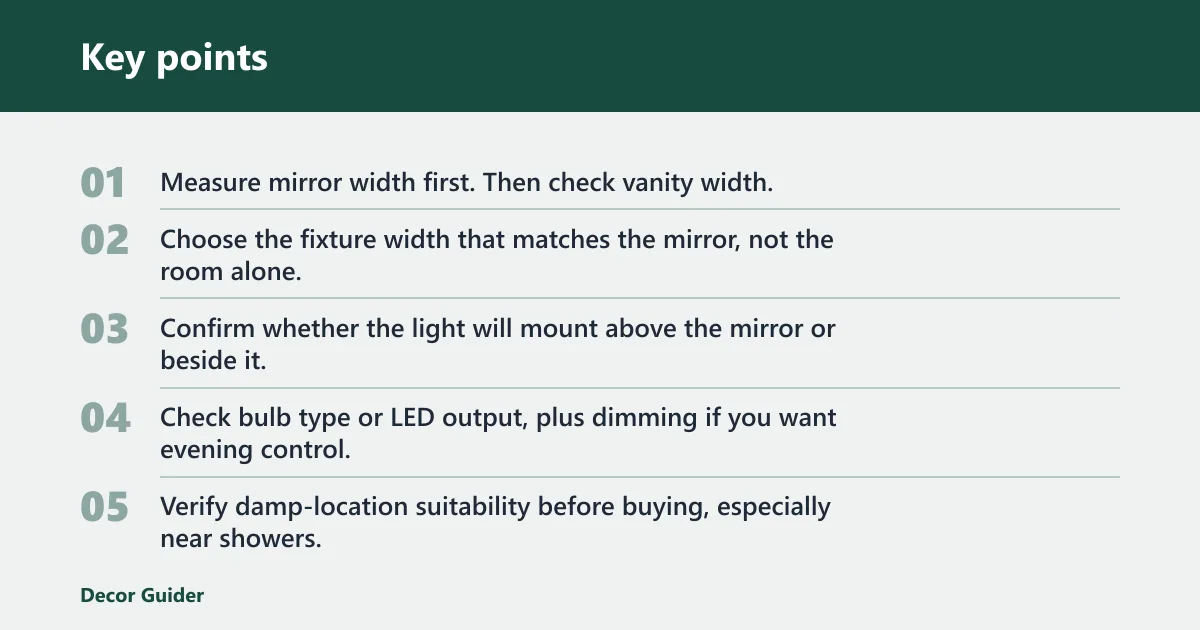
This checklist is the fastest way to avoid a bad buy. Start with mirror width, then confirm the fixture’s width band, lumen target, color temperature, bulb count, and moisture rating before you add anything to cart. The vanity light sizing guide linked here is useful if you want a second pass on proportional fit and layout choices.
| Decision path | Recommended fixture width | Bulb count | Ideal finish | Safer light source | Common mistakes to avoid |
|---|---|---|---|---|---|
| Single sink | About 23 to 27 inches for a standard vanity | 2 or 3 | Brushed nickel or matte black | Replaceable E26 bulbs if you want easier long-term service | Choosing a fixture wider than the mirror, or too narrow to spread light across the face |
| Double sink | Wider linear fixture, often 30 inches or more; a 38.75-inch example fits wide mirrors better | 3 or more | Polished chrome, brushed nickel, or satin brass | Integrated LED if you want even output and a slimmer profile | Using a short 2-light bar that leaves the outer edges dim or creates strong center glare |
| Powder room | Compact fixture sized close to the mirror width | 1 or 2 | Polished chrome or brushed brass for a lighter visual feel | Replaceable E12 bulbs for low-load rooms and easier replacements | Overlighting a small room, choosing clear glass without checking glare, or using a fixture that feels bulky |
- Measure mirror width first. Then check vanity width.
- Choose the fixture width that matches the mirror, not the room alone.
- Confirm whether the light will mount above the mirror or beside it.
- Check bulb type or LED output, plus dimming if you want evening control.
- Verify damp-location suitability before buying, especially near showers.
A common first-timer mistake is buying a 3-light bar because it looks balanced online, then finding the mirror is too narrow. The result is visible overhang, extra glare at the edges, and a fixture that looks oversized even before it is wired in. A second failure case is the opposite: a compact 2-light fixture on a wide double vanity can leave the outer sink area dim even if the center seems bright enough.
| Bathroom size | Width target | Light target | Installation note |
|---|---|---|---|
| Powder room | Near mirror width | Lower output is usually enough if the room is small | Keep the profile shallow and avoid bulky shades |
| Single sink | 23 to 27 inches is a common fit | Around 1,500 to 3,000 lumens | Above-mirror mounting is simplest when the junction box is centered |
| Double sink | Longer linear fixtures fit better | Higher output or a wide spread helps cover both basins | Check wall extension and mirror height before choosing an up-lighting style |
Decision paths by bathroom type
Single sink vanity lights: best for standard bathrooms
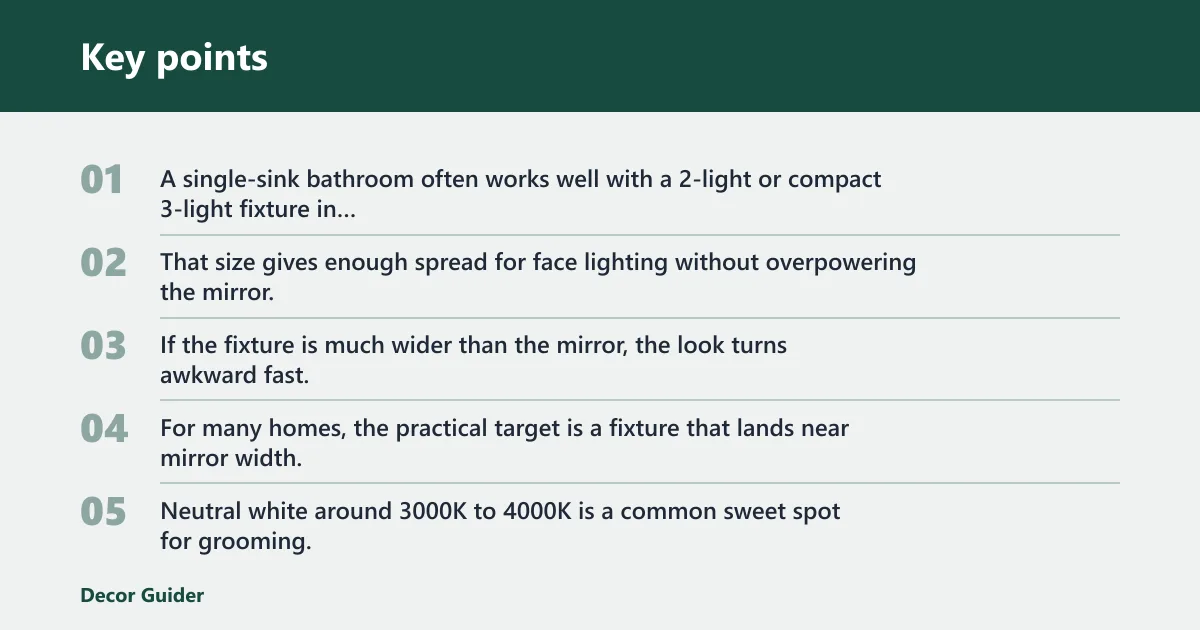
A single-sink bathroom often works well with a 2-light or compact 3-light fixture in roughly the 23-inch to 27-inch range. That size gives enough spread for face lighting without overpowering the mirror. If the fixture is much wider than the mirror, the look turns awkward fast. For many homes, the practical target is a fixture that lands near mirror width, with about 1,500 to 2,000 lumens if the room is modest and more if the bathroom lacks natural light. Neutral white around 3000K to 4000K is a common sweet spot for grooming, while 5000K and above can feel harsher in smaller rooms.
For most standard baths, brushed nickel and matte black are the safest finishes. Both hide fingerprints better than polished chrome, and both coordinate with common faucet finishes.
Replaceable E26 bulbs are often the safer budget choice here. They let you change brightness, beam spread, and color temperature later without replacing the full fixture. If you want the room to feel calmer at night, choose bulbs in a warmer range; if the bath is used mainly for task lighting, a neutral white option is easier to live with.
Best picks for single sinks
Unicozin 2-Light Vanity Light is the simplest budget fit for a standard single sink. It uses 2 x E26 bulbs, has clear glass, and includes reversible mounting for more placement options. The drawback is the clear glass: it can create glare if you choose very bright or exposed bulbs. A frosted or lower-lumen bulb would be the safer way to soften the output if the mirror is close to eye level.
ASD 36-inch LED Linear Vanity Light works when the mirror is wider and you want a cleaner bar-style look. It is a 36-inch LED fixture with three color temperatures, dimming from 100% to 10%, and ETL listing. The tradeoff is that a fixed LED unit gives you less future flexibility than replaceable bulbs, so it makes the most sense when you already know the room’s preferred color tone.
Say your single-sink vanity is narrow but the mirror is tall. A 2-light fixture with E26 bulbs is usually a better match than a long linear bar, because it keeps the light centered and avoids wasted width on the wall. If the bathroom is especially dark, the safer move is to increase usable lumens before you increase fixture size.
Double sink vanity lights: best for wider mirrors
Double sinks need wider, more even coverage. A linear fixture usually works better than a short 2-light bar because it spreads light across both basins and reduces the center hotspot that can happen with smaller fixtures. A 38.75-inch-wide light is a strong example of the size class that fits wide mirrors better than a compact unit. In practical terms, this is where a fixture that tracks the mirror width more closely can outperform a decorative cluster even when the cluster looks nicer in product photos.
Beam spread matters here. If the shade throws all the light straight down, the middle of the counter gets bright while the outer sink edge stays dim. If the fixture uses clear glass and exposed bulbs, glare can become the bigger problem. Wider mirrors also tend to benefit from a more even source with a neutral white tone, since overly warm light can make grooming tasks harder to judge.
Look closely at wall depth too. A thicker profile can push the fixture into the mirror area, especially when the junction box is high or the wall is tight. That is why a slimmer linear body often works better over a double vanity. Moisture rating matters here as well: bathroom fixtures should be suitable for damp locations at minimum, and wet-rated products are the safer choice when the fixture is exposed to direct spray. See the CPSC bathroom electrical safety guidance and the damp vs. wet rating explanation for a plain-language overview of placement risk.
Best picks for double sinks
Ralbay Matte Black Vanity Light Fixtures 3-Lights is a useful middle ground for a wide single mirror or a modest double vanity. Its matte black frame and clear glass give a familiar transitional look, and the E26 socket format makes bulb choice flexible. The drawback is the clear glass again: bulb shape and brightness have a bigger effect on glare than with frosted shades. For wider vanities, pairing it with softer bulbs is usually the better-looking route than using very bright exposed filaments.
Donrao LED Bathroom Vanity Light Fixtures is the budget choice when you want a brighter, more modern look and do not want to buy bulbs separately. It is a 24-inch 3-light matte black LED fixture with 6000K cool white output, and the heads rotate for aiming. The tradeoff is simple: fixed cool-white light will feel too stark in some bathrooms, especially if you want a softer evening tone. This kind of fixture is most useful when you need a compact footprint and do not mind a high-output, task-first feel.
Picture a double vanity with one large mirror and a centered junction box. A linear fixture usually gives the cleanest result. If the mirror is split or the wall space is broken up by medicine cabinets, two side-mounted lights may work better than a long bar.
LED vs bulb-based
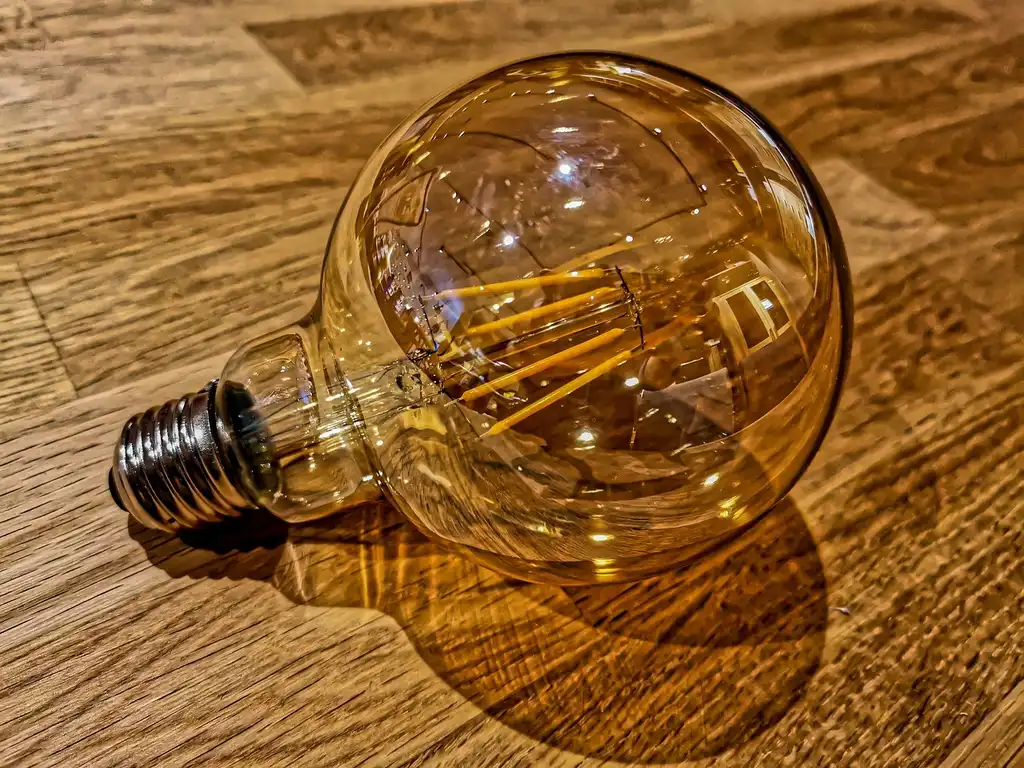
LED vanity lights are better when you want a slim profile, efficient output, and fixed color quality. Bulb-based fixtures are better when you want easier replacement, more control over warmth, and lower risk if one bulb fails. Under $100, replaceable bulbs often win on long-term flexibility, while integrated LED usually wins on streamlined appearance and lower maintenance. For bathroom use, the safer light-source choice is the one that matches both the space and the way you actually use the room.
Integrated LED is the cleaner pick for a modern look and a narrow wall space. Replaceable E26 or E12 bulbs are the safer choice when you want to change light color later or avoid replacing the whole fixture if a lamp fails. If you are trying to avoid a harsh feel, a 3000K to 4000K bulb or LED setting is usually easier to live with than very cool output.
Finishes
Choose the finish by both hardware match and cleanup. Matte black hides visual clutter well, brushed nickel is the safest all-around match for many faucets, polished chrome reads brighter but shows spots more easily, and brushed brass or satin brass adds warmth without the mirror-like glare of polished metal. If you already have chrome faucets, chrome or nickel keeps the room consistent. If you want the fixture to recede visually, matte black or brushed nickel is usually easier to live with day to day.
Finish should not override function. A fixture that matches the faucet but produces bad glare or poor spread is still the wrong call, especially above a mirror where reflections are already part of the job.
Mounting orientation
Yes, many vanity lights can face up or down, but the fixture body and shade shape have to allow it. Up-lighting can soften the wall wash, while down-lighting can give more direct task light. The junction box position and wall profile decide whether the install is practical.
Check the manufacturer notes for reversible mounting and wall clearance. A deeper fixture may hit the mirror or feel too close to the wall when mounted in the opposite direction. If the room is small, the safer orientation is usually the one that keeps glare out of the mirror and leaves the bulb source less exposed.
FAQ
What size vanity light works for a single sink bathroom?
A single sink usually works best with a fixture in the 23-inch to 27-inch range, though the mirror width is the real guide. A 2-light or compact 3-light layout usually gives enough spread for the face without making the wall feel crowded or heavy.
Do bathroom vanity lights need to be damp rated?
Yes, damp rating is the safer baseline for bathroom vanity lighting, especially near sinks and showers where moisture collects. It matters even more if the fixture is mounted close to a shower opening or above a sink that gets frequent splashing. For bathrooms with direct water exposure, wet-rated lighting is the safer specification.
How many lights do I need above a bathroom vanity?
Most single sinks do well with 2 or 3 lights, while wider double vanities often need a longer linear fixture rather than more small bulbs. The right number depends on spread, not just count, so a single bright linear bar can outperform a short 3-light cluster.
What are the best vanity lights for a bathroom under $100?
The best options are the ones that match your vanity size and bathroom type first. A linear fixture is often best for a wide mirror, a 2-light E26 fixture works well for a standard single sink, and a compact bulb-based light is often the safest bet for a powder room.
How do I choose the right size vanity light for my mirror?
Keep the fixture proportional to the mirror, not just the wall. For a single sink, aim near the mirror width; for a wider vanity, choose a longer bar that covers the visual span without hanging far beyond the edges. Too wide and the fixture dominates; too narrow and the lighting feels pinched.
Are LED vanity lights better than bulb-based vanity lights?
LED is better if you want a slim fixture, fixed brightness, and lower maintenance. Bulb-based lighting is better if you want a warmer look, easier future replacement, or a cheaper repair path. Under $100, bulb-based fixtures often give you more control over the final result.
Products related to this article
Sponsored / affiliate links. As an Amazon Associate I earn from qualifying purchases. I may earn additional commission from eligible campaigns.