How Much Does a Bathroom Light Fixture Cost?
Bathroom light fixture pricing usually falls into four buckets: about $150 to $350 for a simple swap, about $250 to $650 for a new fixture in an existing box, about $400 to $1,100 when wiring or the junction box needs work, and about $500 to $1,500 or more for relocation. Those ranges reflect how electricians price scope, not just the fixture.
Estimator’s note: the ranges below combine national labor references, fixture-price benchmarks, and bathroom-specific code realities. A straight swap is a different job from a new box, rewiring, or moving the light location, so the quote should always separate fixture cost, labor, and any repair work.
Fixture price vs labor costs and installed total range


A plain replacement can stay near the low end, but bathroom projects climb when the electrician needs to open walls, replace a box, or work around moisture-sensitive locations. National labor references show why: Angi puts electrician labor around $50 to $100 per hour, HomeGuide puts typical project work at about $162 to $535, and HomeAdvisor’s broader light fixture installation range is about $155 to $959 depending on scope.
Fixture price and installed price are not the same thing. A bathroom light may cost very little online, but the real bill includes mounting hardware, electrical connections, testing, and sometimes drywall repair. For context, fixture-only prices can range widely, while installation labor tends to rise when the job goes beyond a simple swap.
Typical installed cost range and what it includes
Installed pricing usually covers the light, mounting hardware, wiring connections, labor, and basic testing. If the electrician discovers a damaged box, hidden wiring issue, or patch needed after opening the wall or ceiling, the total increases. That’s why a quote based only on the fixture listing often underestimates the real bathroom cost.
Fixture cost versus labor cost
Labor is the most variable part of the bill. A direct replacement can stay relatively modest, but labor rises when the electrician has to troubleshoot a switch, change a box, or route cable in a cramped bathroom. Access matters too, especially over a mirror, near tile, or above a tub or shower area.
Source context: labor and project benchmarks in this article are cross-checked against Angi’s electrician labor rate guidance, HomeGuide’s electrical project averages, and HomeAdvisor’s light fixture installation estimates. Those sources help reconcile mixed price ranges into one bathroom-specific methodology.
What changes the price?
The main cost drivers are fixture type, labor complexity, wiring condition, and location. In a bathroom, the installation point matters more than many homeowners expect. A ceiling fixture on an existing box is a different job from a damp-rated vanity light, recessed lighting, or a relocated fixture that needs new wiring.
Fixture type and finish
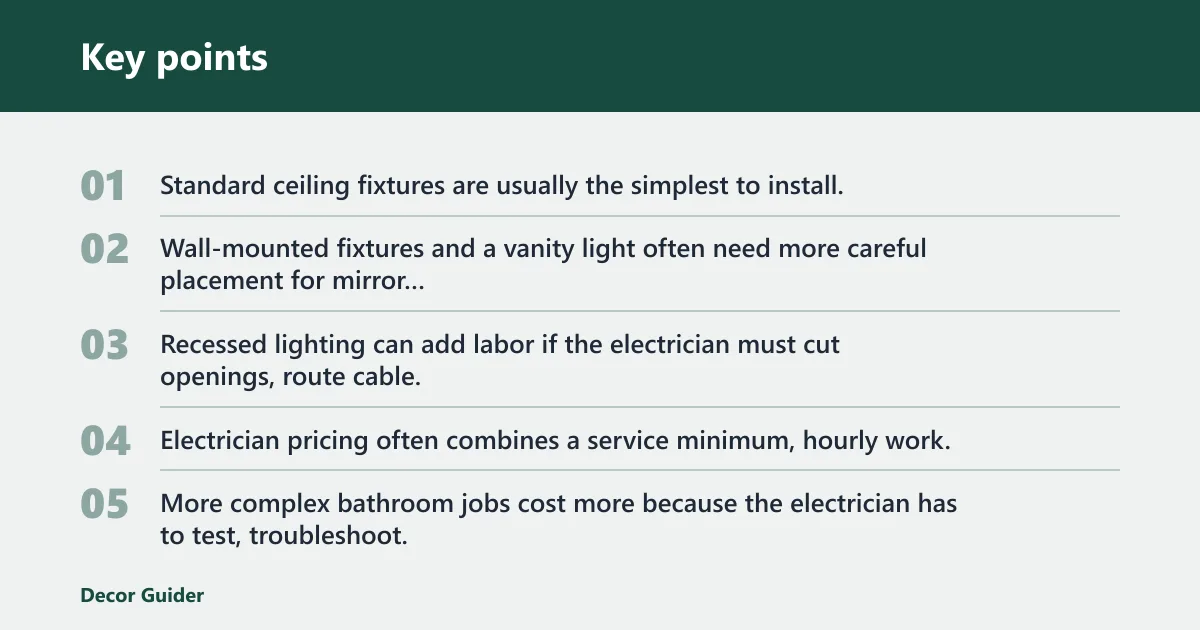
Standard ceiling fixtures are usually the simplest to install. Wall-mounted fixtures and a vanity light often need more careful placement for mirror height and face lighting. Recessed lighting can add labor if the electrician must cut openings, route cable, or adjust the switch layout.
Labor complexity
Electrician pricing often combines a service minimum, hourly work, and project-based labor. A simple swap may be flat-rate work. More complex bathroom jobs cost more because the electrician has to test, troubleshoot, and adjust the installation instead of just replacing one fixture with another.
If a bathroom vanity bar flickers only when a dimmer is used, the light itself may not be the full problem. The quote can change once the electrician checks the switch, box, or wiring, because the job becomes a safety repair rather than a cosmetic replacement.
Wiring condition
Old or damaged wiring is one of the fastest ways to increase cost. If the electrician finds brittle insulation, loose splices, or a box that cannot safely support the new fixture, the job moves from replacement into repair. That raises both labor time and parts cost, even if the light itself is inexpensive.
Bathroom location and access
Bathroom ceilings and walls are tight work areas. A fixture near the mirror may need careful spacing to reduce glare. A ceiling light centered over a tub or shower area may need a damp-rated unit, and limited attic or crawlspace access can push labor higher when cable routing is difficult.
Bathroom cost scenario table
| Project scenario | Estimated fixture cost | Estimated labor cost | Likely add-ons | Budget-to-high-end range |
|---|---|---|---|---|
| Simple like-for-like swap | $15 to $150 | $100 to $200 | Minor mounting hardware, disposal | $150 to $350 |
| New fixture in existing box | $40 to $300 | $150 to $350 | Damp-rated unit, box adjustment, bulb match | $250 to $650 |
| Fixture plus wiring repair | $50 to $400 | $250 to $700 | Added wiring, junction box replacement, drywall patching | $400 to $1,100 |
| Fixture relocation | $50 to $500 | $300 to $900 | New wiring run, drywall repair, possible permit work | $500 to $1,500 or more |
Source note: This table blends national labor references with bathroom-specific scope. For planning, use the low end for a direct swap and the high end when the electrician must add wiring, replace a box, patch drywall, or relocate the fixture.
This table helps separate product cost from installed cost. A vanity light can look inexpensive online, but the labor side can dominate the bill once wiring changes enter the job. Moving a light fixture can cost between $100 and $900, and bathroom relocation often sits toward the higher end because the wall or ceiling has to be opened and repaired.
What fixture types cost the most?
Fixture type is one of the biggest price drivers. Standard ceiling fixtures are usually the simplest. Wall-mounted fixtures and vanity lights need better placement. Pendants and chandeliers cost more to install because they need secure support and more careful height planning. Recessed lights can add cutting, wiring, and finish work.
Standard ceiling fixtures
These are usually the least complicated bathroom option when the box already exists. The cost stays lower if the new light matches the old mount and weight. If the bathroom uses a simple flush mount, the electrician may only need to shut off power, swap the fixture, and test the circuit.
Wall-mounted fixtures and vanity lights
These are common around mirrors. Price can rise when the fixture has to land at a specific height for face lighting or line up with mirror edges. Bathrooms also need enough clearance from cabinets, medicine cabinets, and tile edges, which makes the labor more careful than a ceiling-only job.
Pendants and chandeliers
Pendants and chandeliers tend to cost more because of weight, chain or stem setup, and placement. Chandelier-type projects can reach $5,500 or more in broader residential work. In a bathroom, that kind of fixture is usually part of a more complex project, not a basic replacement.
Recessed bath lighting
Recessed lights may look simple from below, but the work behind the ceiling can be more involved. If the electrician has to add a new can light, route cable, or update the switch layout, labor rises. Wet-area placement also makes fixture selection and code compliance more important.
Do older bathroom wiring issues increase cost?
Yes. Old bathroom wiring can raise the total quickly because the electrician may need to repair, replace, or reroute conductors before the new fixture is safe. Wiring condition is one of the main cost factors, and it can turn a routine replacement into a larger electrical project.
Old or damaged wiring
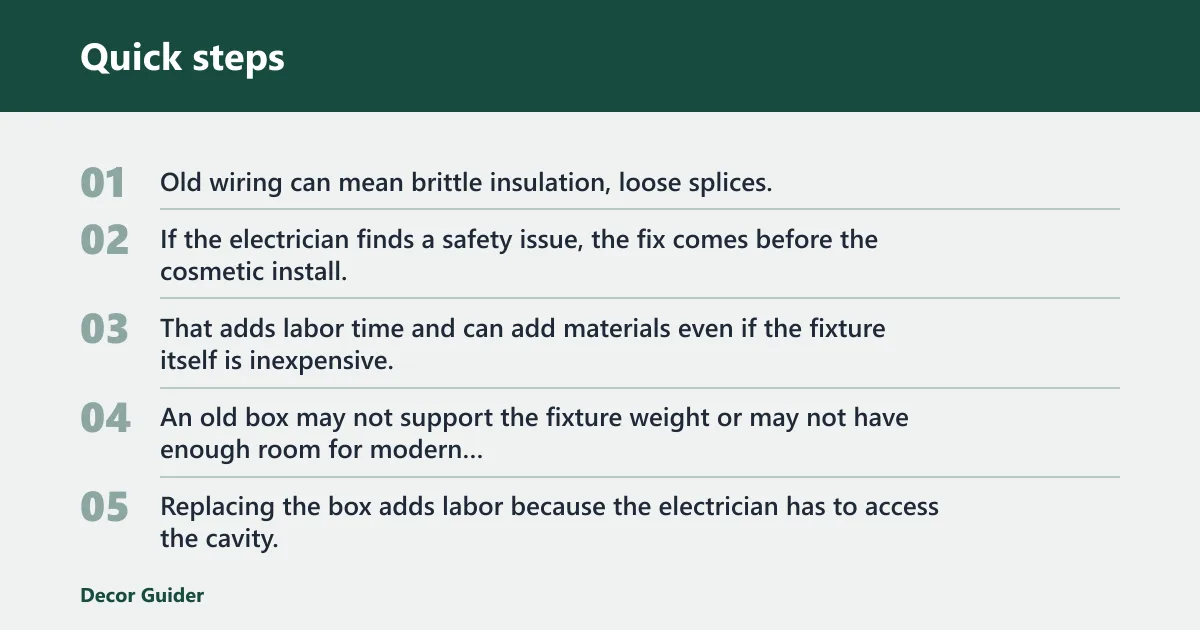
Old wiring can mean brittle insulation, loose splices, or conductors that do not match the demands of a new fixture. If the electrician finds a safety issue, the fix comes before the cosmetic install. That adds labor time and can add materials even if the fixture itself is inexpensive.
Junction box replacement
An old box may not support the fixture weight or may not have enough room for modern connections. Replacing the box adds labor because the electrician has to access the cavity, disconnect the old part, install the new box, and reconnect the light safely.
Drywall patching after wiring work
If the wiring route changes, the wall or ceiling may need a patch. This is common when the electrician has to move a fixture, widen an opening, or repair damaged access around the box. Drywall repair is often a separate trade cost and should not be assumed to be part of the lighting quote.
Picture a bathroom with a vanity light that hums loudly and gets warm near the switch. If the electrician opens the box and finds heat damage, the job is no longer a simple replacement. The quote may add wiring repair, box replacement, and patching before the new fixture goes up.
When permits may matter
Permit needs vary by location and scope. A straight fixture swap may not need one, while new wiring or a relocation often can. The National Electrical Code requires luminaires in tub and shower zones to be listed for damp or wet locations as applicable, and many jurisdictions also require permits or inspections when circuits are changed or wiring is moved.
Should you replace or repair the fixture?
Replacement is often the better choice when the fixture shows electrical warning signs or the housing is outdated. Flickering lights, humming or buzzing noises, a burning smell, excessive heat, and electric shocks are all signs that the problem may be more than cosmetic. A repair is enough only when the issue is limited to a loose part or bulb-related problem.
Warning signs that call for replacement
Flicker, buzz, smell, heat, and shocks all point to risk. If the fixture trips a breaker, has discoloration, or reacts when you touch the switch, stop using it and get it checked. Bathroom lights sit in a moisture-prone room, so small faults are worth taking seriously.
When a repair is enough
Some issues stay small. A loose mounting screw, a worn bulb, or a faulty dimmer may not require a full fixture change. Even then, a bathroom setup deserves caution because moisture and cramped access can hide problems in the box or wiring that are easy to miss from the outside.
When to hire an electrician
Hire a licensed electrician when the fixture is hardwired, the box is outdated, the wiring looks old, or the job involves the bathroom ceiling or wall near a mirror or shower zone. If the plan includes moving the fixture, professional help is the safer call because the labor and repair scope can spread beyond the visible light.
Can you save money with DIY?
Yes, a simple swap can be cheaper if the wiring is sound and the new fixture matches the old setup. But bathroom electrical work carries more risk than many homeowners expect. A parts-only DIY total can look low at first, yet labor, safety gear, and possible correction work can erase the savings quickly.
What a simple swap can involve
A basic replacement usually means turning off power, removing the old fixture, matching wire connections, mounting the new unit, and testing it. That may be manageable for a straightforward ceiling light with easy access. It is less realistic when the fixture is over a mirror, near a shower zone, or attached to aged wiring.
Where bathroom work gets risky
Bathroom lighting is not the best place for guesswork. Damp locations, tight clearances, and code-sensitive placement can complicate the job. If the fixture is damp-rated, recessed, or tied to an old box, a small mistake can create a safety issue instead of a savings opportunity.
When a pro is the safer call
Call a pro when the fixture flickers, buzzes, runs hot, or shocks you. Also call one if the project needs new wiring, a relocated location, or a box replacement. Those are the cases where the quote may be higher, but the result is more likely to be safe and code-aware.
- Check the fixture type: ceiling, vanity, pendant, chandelier, or recessed.
- Look for warning signs such as flicker, burning smell, heat, buzzing, or shocks.
- Ask whether the existing box and wiring can stay in place.
- Confirm whether drywall patching, box replacement, or a permit is possible.
- Get a labor quote that separates the fixture from the installation.
Frequently asked questions
How much does it cost to replace a bathroom light fixture?
A typical replacement costs $112 to $287, with a national average of $199. That figure includes labor and materials. Bathroom projects can cost more when the fixture is damp-rated, the box is outdated, or the electrician finds wiring that needs repair before the new light can go in.
How much does it cost to install a bathroom light fixture?
Installation often lands in the $250 to $900 range for a new fixture in an existing bathroom box, depending on labor complexity and fixture type. A simple ceiling light is usually cheaper than a vanity light, pendant, or recessed setup, especially if the install needs careful placement or access work.
How much does a light fixture installation cost?
For residential projects, electrician work averages $162 to $535, but bathroom work can run higher when wiring, box replacement, or drywall repair is involved. The final number depends on whether you are swapping a fixture, adding one, or moving it to a different spot.
What drives the price of a bathroom light fixture replacement?
Fixture type, wiring condition, and labor are the main cost drivers. A standard ceiling light is usually less expensive than a chandelier or recessed project. Old wiring, a bad junction box, or limited access around a mirror or shower area can push the price up quickly.
Do older bathroom wiring issues increase light fixture costs?
Yes. Older wiring often means more labor, more testing, and sometimes new parts. If the electrician has to replace a junction box, repair wiring, or patch drywall after opening the wall or ceiling, the project stops being a simple fixture swap and becomes a broader electrical repair.
Is it cheaper to replace a bathroom light fixture yourself?
Sometimes, but only for a simple swap with sound wiring and easy access. A DIY parts-only total can be low, but bathroom work can become risky fast if the fixture flickers, runs hot, or is tied to old wiring. In those cases, a licensed electrician is the safer choice.
Products related to this article
Sponsored / affiliate links. As an Amazon Associate I earn from qualifying purchases. I may earn additional commission from eligible campaigns.
 CONGARTENO Heat-Resistant Square Ceiling Light Shade Soft Diffuser Covers for Ceiling Lights Filters DIY Lampshade Fabric Lamp Shade Modern Diffuser
 RISOON Solar Strobe Warning Safety Flashing Light:Ceiling Strobe Lamp with Strong Magnetic Base Waterproof for Construction, Traffic, Factory, Crane Tower, Boat Navigation (Red+Blue Light)