Bathroom Remodel Cost: What Drives the Budget Breakdown
Bathroom remodel costs can vary a lot, from a simple refresh to a more involved remodel or a full gut. The biggest jump comes when plumbing moves, a tub becomes a tiled shower, or the layout changes. Miss those triggers, and a “simple” update can stall with change orders and a blown budget. This guide maps refresh, midrange, and high-end scopes so you can spot the cost jump before requesting bids.
This guide is part of our Bathroom cleaning and maintenance series.
How much should a bathroom remodel cost?

A realistic bathroom remodel budget starts with scope, then size, then local labor. National averages help as a first check: Today’s Homeowner puts the average bathroom remodel cost at $5,000-$12,000 and says luxury upgrades can reach $40,000 or more, while This Old House reports an average of $15,586 and a typical range of $6,456-$24,715.
The gap is easy to explain. A cosmetic refresh keeps the layout and most fixtures. A midrange remodel changes finishes and some fixtures. A full gut rebuild can replace plumbing runs, waterproofing, tile assembly, lighting, and sometimes damaged subfloors or framing. That is where bids split fast.
Basic refresh, midrange remodel, and full gut rebuild
A basic refresh usually means paint, a new vanity, a toilet swap, updated lighting, and maybe a mirror or faucet. A partial remodel often keeps the tub or shower but replaces tile, vanity, lighting, and some plumbing trim. A full gut and rebuild tears out walls, floor finishes, fixtures, and sometimes the layout itself.
Layout changes create the sharpest jump. Once drains, vents, and supply lines move, the job stops being finish-only work. That is why two bathrooms with the same square footage can land in very different price bands.
Why broad averages miss the real budget
Broad averages hide the choices that change the bill. A homeowner asking for “a new bathroom” can mean a painted powder room, a tiled primary shower, or an accessible bath with wider clearances and upgraded supports. Those are different scopes, different trades, and different risk levels.
This Old House says about 1 in 3 homeowners spent more than expected, which fits the pattern: the first bid covers visible work, then hidden damage, plumbing surprises, and permit requirements appear. Nearly 95% were satisfied with the results, but satisfaction usually came after the budget was reset correctly.
According to How Much Does a Bathroom Remodel Cost? (2026) – Today’s Homeowner — Average national bathroom remodel cost is $5,000-$12,000 on Today’s Homeowner.
What changes the price the fastest?
Plumbing moves, layout changes, and hidden repair work push cost up faster than almost anything else. Demo, disposal, permit fees, and inspection calls are the next tier of budget growth. If the plan keeps the toilet, sink, and shower in place, the number stays far lower than a project that shifts all three.
Layout changes and plumbing moves
Moving a toilet or shower drain means opening floors, changing venting, and paying for licensed plumbing work. Cost to Renovate says moving plumbing fixtures can add $3,000 per project option, and that is before tile patching or subfloor repairs.
When a contractor mentions a “simple reconfiguration,” ask what gets moved. If the answer includes the drain, the valve, or the vent stack, the budget should be treated as a remodel, not a refresh.
Demo, disposal, and hidden damage
Demo is cheap only when the materials come out cleanly. Old tile over cement board, a cast-iron tub, or plaster walls add labor and hauling time. Once walls open, hidden water damage and mold remediation can appear. That is why a 15% to 20% contingency is safer than a token cushion.
Water damage around showers often reaches the subfloor before anyone sees staining. If the bid has no allowance for rot repair, expect a change order later.
Bathroom remodel cost by size
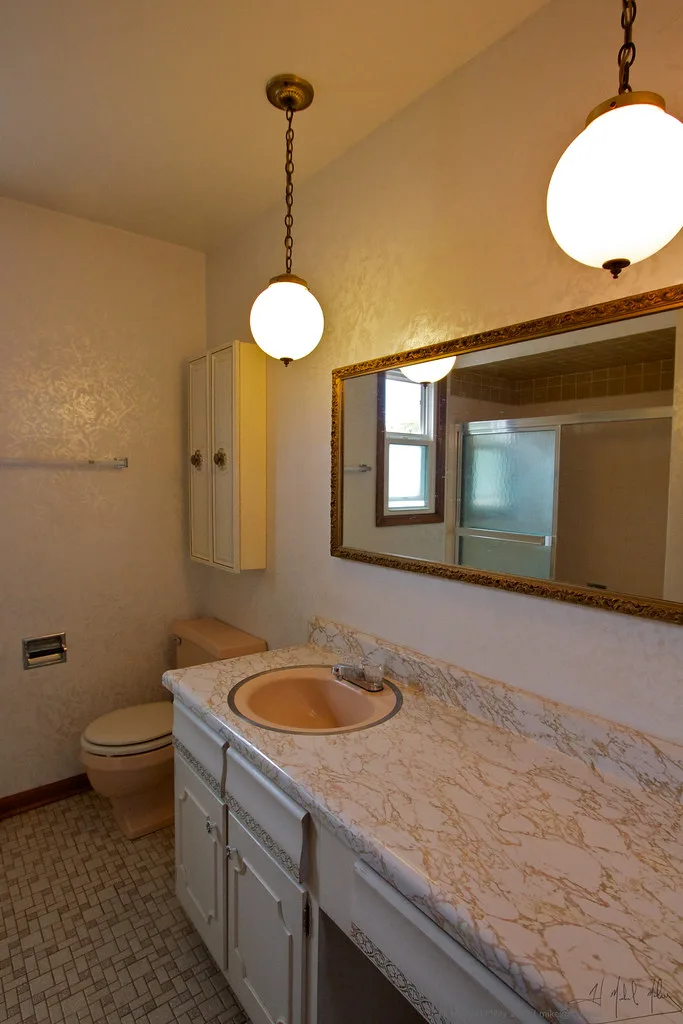
Size affects labor hours, tile area, fixture count, and permit exposure. A half bath is usually the cheapest room in the house to remodel because it has fewer fixtures and no shower waterproofing. A primary bath is the most expensive because it often includes larger tile areas, more lighting, and a higher-end shower or tub package.
Half bath and powder room
BuildCost shows half-bath refreshes at $5,000-$18,000 depending on tier. These rooms are usually driven by vanity, toilet, paint, flooring, and lighting. No shower means no shower pan, membrane system, or tile waterproofing complexity.
Full bath
Today’s Homeowner says full bathrooms can cost $7,000-$30,000, while BuildCost shows full bath remodels at $12,000-$40,000 depending on tier. The spread comes from whether the project keeps the layout, replaces the tub or shower, and uses standard finishes or upgraded materials.
Primary or master bath
Primary baths cost more because they tend to have larger square footage, more fixture choices, and more labor-intensive tile work. A larger shower, a freestanding tub, dual vanities, and extra lighting all add line items. Cost to Renovate says bathroom cost per square foot generally ranges from $75 to $275, which makes size a real multiplier, not just a label.
Trade-by-trade budget guardrail table
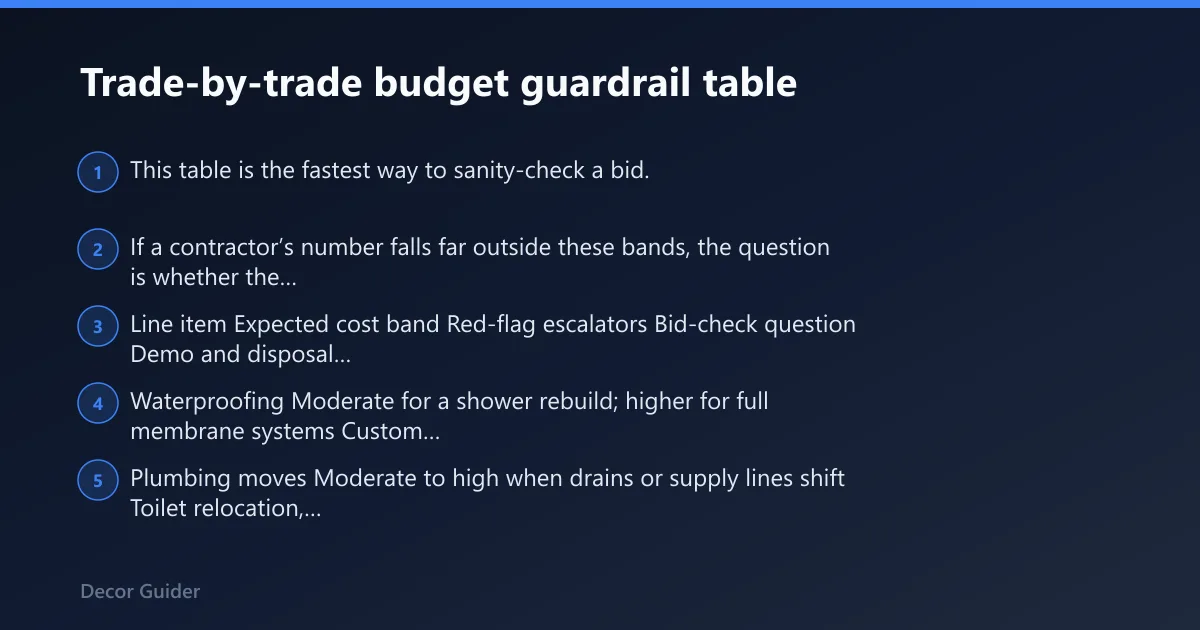
This table is the fastest way to sanity-check a bid. If a contractor’s number falls far outside these bands, the question is whether the scope changed, whether allowances are thin, or whether key labor is missing.
| Line item | Expected cost band | Red-flag escalators | Bid-check question |
|---|---|---|---|
| Demo and disposal | Low to moderate on a clear tear-out; higher with plaster, heavy tile, or cast-iron tub removal | Multiple layers of flooring, hidden mold, dumpster overage, wall repair after demo | What is included in hauling, dump fees, and patching after demolition? |
| Waterproofing | Moderate for a shower rebuild; higher for full membrane systems | Custom shower, curbless entry, full-tile walls, niche details, failed old substrate | Are you using backer board, membrane, or a full shower system such as RedGard, Schluter Kerdi, or Wedi? |
| Plumbing moves | Moderate to high when drains or supply lines shift | Toilet relocation, shower valve relocation, vent changes, new shutoffs | Which fixtures stay in place, and what is the allowance for pipe relocation? |
| Tile | Material and labor vary widely; BuildCost shows tile materials from $2/sq ft to $50+/sq ft | Large-format tile, natural stone, complex patterns, shower niches, tight cuts | Does the price include prep, setting materials, grout, and layout labor? |
| Vanity | Low for stock units; higher for custom or stone-top pieces | Double vanity, drawer changes, plumbing alignment, custom top | Is the top, sink, faucet, and install all included? |
| Lighting | Low to moderate unless circuits change | New recessed lights, fan upgrade, moving switches, GFCI additions | Does the bid include wiring, fixtures, and trim install? |
| Permits | Usually modest, but varies by scope and jurisdiction | Electrical or plumbing permit triggers, plan review, inspection delays | Which permits and inspections are included in the number? |
| Contingency | 15%-20% of the working budget | Hidden water damage, mold remediation, subfloor repair, framing issues | What happens if rot or mold appears after demo? |
How much should I budget for labor in a bathroom remodel?
Labor usually makes up a large share of the total because bathrooms are trade-heavy rooms. Licensed pros charge differently based on skill, risk, and scheduling. A plumber, tile setter, and electrician do different work, carry different licensing requirements, and spend different amounts of time on site.
Licensed pro rates by trade
Tile setters often cost more than general carpentry because the finish quality is visible in every cut and grout line. Plumbers charge for code compliance and pressure-tested work. Electricians price for safe circuit changes, GFCI outlets, fans, and lighting. Regional labor variation can shift all three by a meaningful amount.
Why labor changes with region
A metro with a tight contractor market usually prices higher than a rural market with lower overhead. Labor can also rise when a project needs permits, inspections, or coordinated scheduling among multiple trades. If a contractor is booking months out, that delay often shows up in the bid.
Which fixtures and finishes move the budget most?
Fixture class changes the price quickly. A stock vanity and standard toilet keep the budget controlled. A custom vanity, upgraded toilet, and premium shower package can move the number far enough to change the project tier. The same is true for tile and bath hardware.
Vanity, toilet, and tub or shower combo
A simple vanity replacement is usually cheaper than a full cabinet and top upgrade. A toilet swap is modest until the flange, flooring, or rough-in needs repair. A tub/shower combo is often less expensive than converting to a walk-in shower with full waterproofing, but the remodel goal matters too.
Walk-in shower versus freestanding tub
A walk-in shower can cost more than a standard tub area because it adds waterproofing, slope, tile, glass, and often custom framing. A freestanding tub can also raise cost because of floor reinforcement, filler placement, and the visual expectation of higher-end finishes. The “simple” option is usually the one that keeps the existing plumbing layout.
Ceramic, porcelain, natural stone, and large-format tile
Ceramic tile usually keeps both material and install costs lower. Porcelain is harder and often more labor-intensive. Natural stone raises both material cost and maintenance requirements. Large-format tile reduces grout lines, but it can increase labor because flatness and layout become less forgiving.
How do location and ROI affect bathroom remodel cost?
Local market matters because the same scope can price very differently by zip code. State-level rules, inspection fees, and labor rates change the number, and high-cost metros often carry a regional multiplier above rural markets. A contractor’s overhead and travel time also feed into the bid.
How much does a bathroom remodel cost in my state?
Start by asking for bids from local licensed contractors, then compare them against a regional adjustment. A practical method is to treat national averages as a baseline and then adjust up or down based on local labor, permit costs, and material delivery. If the area has high demand or strict inspection rules, bids will usually run higher.
For a quick check, compare zip code pricing from at least three contractors on the same scope sheet. If one bid is far below the others, the missing piece is often labor, waterproofing, or allowance quality.
Resale return and home value impact
This Old House cites an 80% return on investment for mid-range remodels. Upscale projects often recover less percentage-wise because luxury finishes do not always translate into full resale value. For sellers, midrange tends to be the safer value play; for long-term owners, the return comes partly from daily use and fewer repair surprises.
Frequently asked questions
What is the average price of a bathroom remodel?
There is no single average that fits every project, but national references vary from $5,000-$12,000 to an average of $15,586. That spread is why the better question is what scope is being priced. A powder room and a primary bath are not the same job.
How do you estimate bathroom remodel cost?
Estimate it by listing every trade and fixture, then assigning a realistic allowance for each. Start with demo, plumbing, electrical, waterproofing, tile, vanity, lighting, permits, and contingency. Then adjust for size, layout changes, and your local labor market before asking for bids.
Why do bathroom renovations cost so much?
Bathrooms cost more than many rooms because many trades overlap in a tight space. Plumbing, electrical, waterproofing, tile setting, and finish carpentry often happen in sequence. Hidden damage also shows up more often once walls and floors are opened, which is why the final bill grows.
How much contingency should I add for hidden water damage?
Plan on 15%-20% if the bathroom has an older shower, signs of leaks, or an unknown subfloor condition. Hidden rot, mold, and framing issues are common enough to plan for, especially in full gut projects. A smaller reserve can leave the project short once demo begins.
Products related to this article
Sponsored / affiliate links. As an Amazon Associate I earn from qualifying purchases. I may earn additional commission from eligible campaigns.