Storage Cabinet vs Open Shelving for Bathroom Guide
Choose a storage cabinet for hidden inventory, cleaning supplies, and backups; choose open shelving for daily-use towels, toilet paper, and products you replace often. Pick the wrong setup, and a small bathroom gets crowded, damp items linger wet, and rentals can run into damage or rule problems. This guide compares both by use case, humidity, traffic flow, and rental limits so you can choose the right setup.
Storage cabinet vs open shelving for bathroom: the core trade-off


The trade-off is plain: a bathroom storage cabinet keeps more out of sight and shields contents better, while open shelving keeps items visible and easy to grab. Cabinets usually win when the room needs privacy, moisture protection, or a place for backups. Open shelving usually wins when speed matters and the storage can stay light.
| Decision factor | Storage Cabinet | Open Shelving for Bathroom | Winner |
|---|---|---|---|
| Privacy for storage | Hides loose items, backups, and cleaners behind enclosed doors | Everything stays visible and can look busy fast | Storage Cabinet |
| Access for daily use | Good, especially with drawer options and adjustable shelves | Fastest for towels, toilet paper, and grab-and-go toiletries | Open Shelving for Bathroom |
| Moisture exposure | Better for humidity-prone zones when made from humidity-resistant materials | More exposed to dust and moisture | Storage Cabinet |
| Small-space fit | Works if depth and clearance are controlled | Works well where wall space is narrow or drilling is limited | Open Shelving for Bathroom |
| Installation flexibility | Freestanding or wall-mounted; anchoring often needed | Often simpler, with more no-drill options | Open Shelving for Bathroom |
Privacy for storage
Cabinets win here because they separate what needs to stay out of sight from what can live on display. In bathrooms, backup inventory, cleaners, and extra paper goods can make a room look messy quickly. Open shelving works only when the contents stay neat and limited.
Access for daily use
Open shelving can be quicker for items you use several times a day. A towel, hand soap refill, or spare roll is easier to reach when it is not behind a door. Cabinets still work well, but they slow access a little and can get annoying if the shelves run deep.
Moisture exposure
Bathrooms often deal with humidity, so enclosed storage may be better near showers or in poorly vented rooms. A cabinet with a durable finish and closed sides shields contents from splash and air exposure better than an open shelf. Open shelves can work, but every item sits in the open and picks up moisture and dust faster.
Small-space fit
Open shelving can work well in tighter bathrooms because it takes up less visual mass and can fit narrow wall sections. Cabinets need more careful planning around vanity clearance, toilet space, and door swing. In a cramped bath, a cabinet that sticks out too far becomes a daily bump point.
Installation flexibility
Open shelves can suit temporary setups well, especially in rentals. Cabinets may need stud location, wall anchoring, or anti-tip safety if they stand on the floor. A wall-mounted cabinet can work well, but only when the wall and hardware are right.
According to ccstorageplusllc.com — Climate Control Storage Plus has served Fairmont since 1993.
What each option does best in real bathrooms
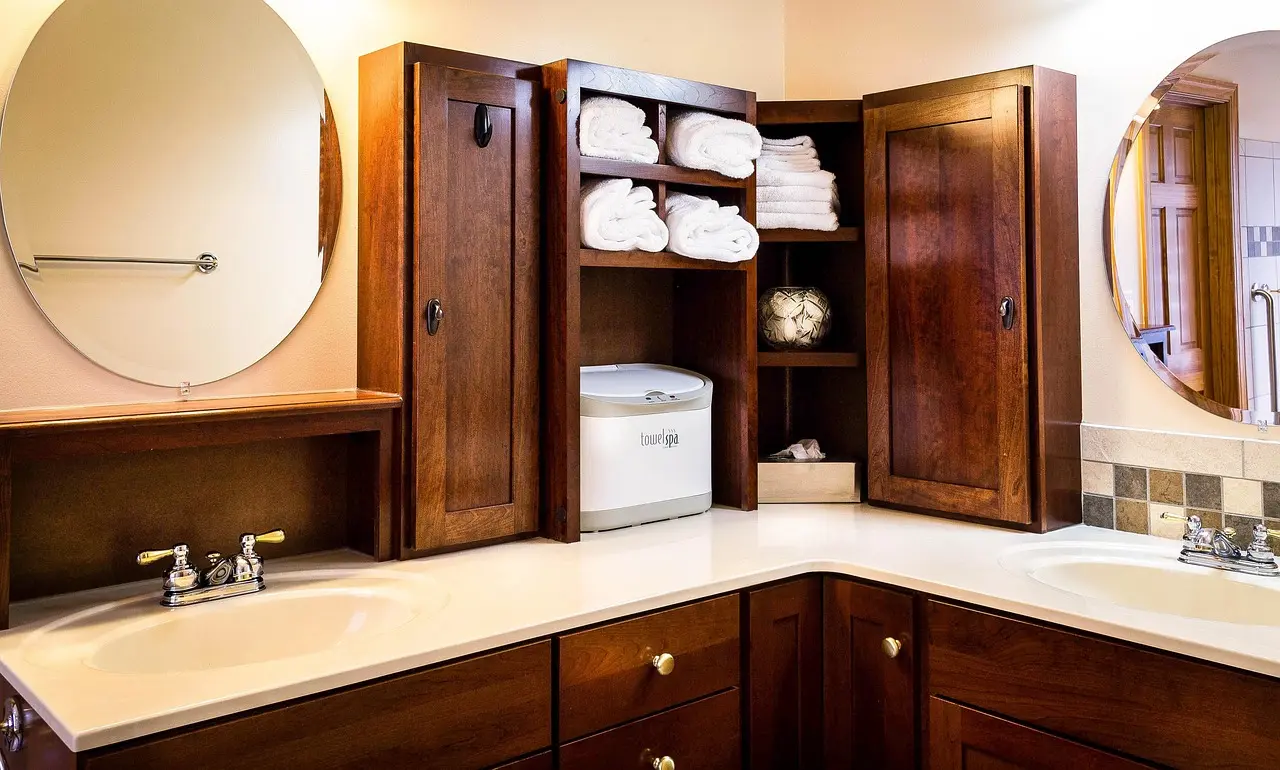
Use a cabinet for hidden inventory, cleaning supplies, and anything that should stay dry and out of view. Use open shelving for high-turnover items such as towels, toilet paper, and the products people reach for every day. That split keeps the room working instead of turning every surface into a catchall.
Bathroom organization categories that belong in each
Daily-use toiletries can go either place, but the deciding factor is how often they are touched. Extra toilet paper and backup soaps fit well on open shelves if they are stacked neatly. Cleaning supplies, medicine you do not want exposed, and bulky refills are often better kept in a cabinet.
Decorative items that should stay light
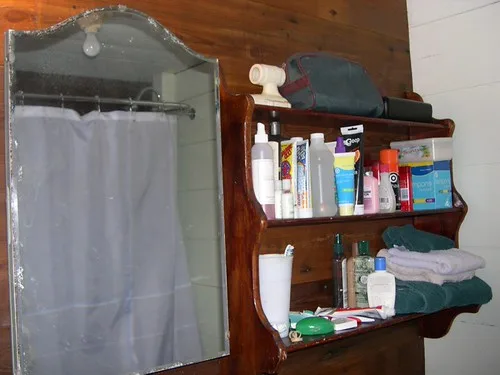
Open shelves can hold a few decorative items, but it is usually best to keep the load light. One basket, a folded hand towel, or a small plant works better than filling every edge. The shelf starts to fail when decor takes over the storage job.
Where each option fails first
Cabinets fail first when shelves are too deep, too tall, or packed without a plan. Open shelving fails first when the room is humid, the contents are mismatched, or the wall location creates constant visual clutter. Both can work, and both can also feel awkward in the wrong zone.
Common cabinet failure cases
Deep cabinet shelves collect forgotten items and turn backup storage into dead space. Cabinet doors can also hide a messy stack, which looks fine until someone cannot find a needed product. In a bathroom with poor airflow, even enclosed storage can trap moisture if wet items get shoved inside.
Common open-shelf failure cases
Open shelves can collect dust and make mismatched bottles more noticeable. They can also look crowded within days if the household uses many products or buys large refill containers. Near a shower or window with frequent condensation, open storage is often the first choice to show wear.
What should go in a bathroom cabinet vs open shelves?
Put backup inventory, cleaning supplies, and anything messy in a bathroom cabinet. Put daily-use towels, toilet paper, and a small set of toiletries on open shelves. The rule is straightforward: if you want it hidden or protected, it belongs in the cabinet; if you want it reached fast, it can sit on the shelf.
Daily-use toiletries versus backup inventory
Daily-use toiletries are the bottles and tools people touch every day. Those can sit on open shelves if the shelf is easy to reach and not overloaded. Backup inventory is different; it is the extra soap, spare razors, and untouched product that should stay inside a cabinet until needed.
Cleaning supplies, toilet paper, and towel storage
Cleaning supplies belong in a cabinet with a door, ideally away from children and splash zones. Toilet paper can live on open shelves if it is kept in a basket or short stack. Towels work on either option, but open shelving usually makes the most sense for items in active rotation.
Decorative items that can stay visible
Keep visible decor limited to items that do not need daily handling. A folded towel, labeled jar, or one small accessory can soften the room without adding clutter. When decorative items start competing with the practical ones, the shelf has crossed from useful to crowded.
Are bathroom storage cabinets better for humid rooms?
Bathroom storage cabinets can be a good choice for humid rooms because enclosed doors reduce direct exposure to moisture and airborne dust. They are especially useful near showers, on walls that catch splash, or in rooms with weak ventilation. Open shelving can work, but it asks more from materials, placement, and upkeep.
Enclosed doors and drawer options in moisture-prone spaces
Enclosed doors help protect contents from damp air and splashing. Drawer options are useful for smaller items because they keep them flat and organized instead of stacked in a humid corner. In a bathroom that often stays steamy, that added protection matters more than looks alone.
Humidity-resistant materials and finish durability
Look for humidity-resistant materials and finishes that tolerate repeated moisture exposure better than untreated wood or flimsy laminate. The finish matters because bathroom humidity works on edges, seams, and cut surfaces first. If the finish breaks down, swelling, peeling, or warping usually follows.
Ventilation gaps, mildew risk, and what to avoid near showers
Leave room for air movement around the cabinet whenever possible. Avoid placing a cabinet where shower spray hits it directly or where a wet towel is draped over the door every day. In poorly vented rooms, enclosed storage should stay away from the wettest wall whenever layout allows.
Do open shelves work in a small bathroom?
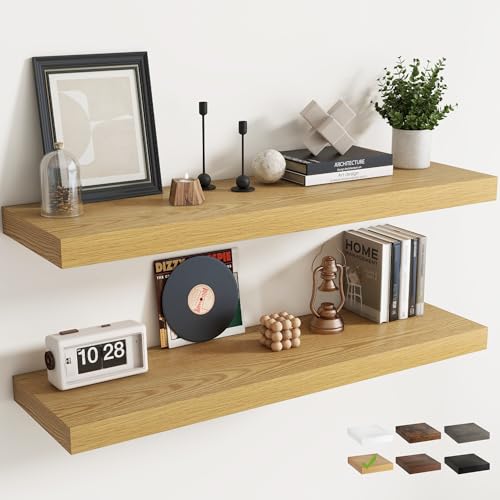
Yes, open shelves can work in a small bathroom if the shelf depth is modest and the placement avoids traffic paths. They are useful when wall space is limited, drilling is restricted, or the room needs a lighter look. They fail when they block movement or hold too many items at once.
Shelf depth and clearance around the toilet and vanity
Shallow shelving can be safer in tight baths because it leaves more clearance around the toilet and vanity. Deep shelves can crowd elbows, knees, and door swings. A shelf that fits the wall but steals walkway space will feel worse than no shelf at all.
How open shelving affects traffic flow
Traffic flow matters more than shelf count. A small bath needs a clear path from the door to the vanity, toilet, and shower. Open shelves should not pull the body sideways or create a snag point where towels, knees, or bags keep hitting the corner.
Best wall locations for towels, toiletries, and light decor
Place open shelves where they can be reached without stepping into a wet zone. Good spots are often above a towel bar, beside a vanity, or on a wall that does not catch the shower spray. Use them for towels, a few toiletries, and restrained decor, not for everything at once.
Where does over-the-toilet storage fit in the decision?
Over-the-toilet storage is a practical middle ground when floor space is tight, but it has limits. It can work as a cabinet or open shelf setup, depending on what needs to be stored. The key checks are height clearance, toilet tank fit, and whether the unit will feel stable in daily use.
Height clearance and toilet tank fit
Measure the clearance above the tank before buying. The unit should not crowd the toilet lid or make cleaning awkward. If the cabinet or shelf lands too low, it becomes a head hazard and a maintenance headache instead of useful storage.
Freestanding versus anchored designs
Freestanding over-the-toilet units are easier to place, but they must fit the tank shape and floor footprint. Anchored versions are steadier and better for tall or top-heavy units. Either way, anti-tip safety matters if the cabinet rises high or carries heavier items.
When over-the-toilet cabinets or shelves become awkward or unsafe
They become awkward when the toilet area is already tight, when the wall is weak, or when the unit blocks access for cleaning. They become unsafe when they are too deep, not secured, or placed where people brush against them constantly. In those cases, a different wall or a lower unit is better.
How should renters choose bathroom storage without drilling?
Renters should prioritize no-drill shelving and temporary cabinet options that do not damage tile, grout, or paint. Freestanding units are often the safest path, but they still need anti-tip protection if they are tall. Weak walls, tight floor plans, and landlord rules should shape the choice before style does.
No-drill shelving and temporary cabinet options
No-drill bathroom storage includes freestanding shelving, tension-style systems, and cabinets that sit on the floor instead of hanging on the wall. These setups work well when walls are off-limits. They are especially useful for renters who need reversible changes.
Anti-tip safety for freestanding units
Freestanding units should still be stable, especially in narrow bathrooms where they may get bumped. Use anti-tip safety methods if the unit is tall or carries heavier items on the upper shelves. A stable cabinet is better than one that saves drilling but feels wobbly every time the door opens.
What to avoid on weak walls, tile, and tight floor plans
Avoid forcing wall-mounted storage onto weak surfaces or into tile without the right hardware and permission. In tight floor plans, a unit that blocks the toilet or vanity is a poor trade. If a rental wall cannot support the plan, a smaller freestanding piece is usually the cleaner solution.
Decision matrix: cabinet vs open shelving in 8 bathroom scenarios
This matrix scores each option by real bathroom use case, not by style. A cabinet tends to win when the contents must stay hidden, protected, or contained. Open shelving tends to win when speed, visibility, and light storage matter more than concealment.
| Scenario | Storage Cabinet | Open Shelving for Bathroom | Winner |
|---|---|---|---|
| Family bathroom | Better for backups, mixed routines, and supplies that need sorting | Useful for towels and daily items, but clutter grows fast | Storage Cabinet |
| Guest bath | Keeps extras and cleaners out of sight | Good for a few towels and a spare tissue stack | Storage Cabinet |
| Rental | Works if freestanding and stable, but may be bulky | Often easier with no-drill setups and less wall damage risk | Open Shelving for Bathroom |
| Tiny powder room | Can crowd the space if too deep | Best when wall space is narrow and storage needs are light | Open Shelving for Bathroom |
| High-humidity bath | Better protection for contents and finishes | More exposed to moisture and dust | Storage Cabinet |
| Low-storage bath | Useful if it can hold backups and supplies in one place | Good only if the room needs a simple grab-and-go surface | Storage Cabinet |
| Decorative bath | Hides the clutter that decor does not solve | Better when the goal is light visual storage | Open Shelving for Bathroom |
| Cleaning-supply zone | Best for closed storage and safer separation | Poor fit for cleaners and bulky products | Storage Cabinet |
Choose Storage Cabinet if… / Choose Open Shelving for Bathroom if…
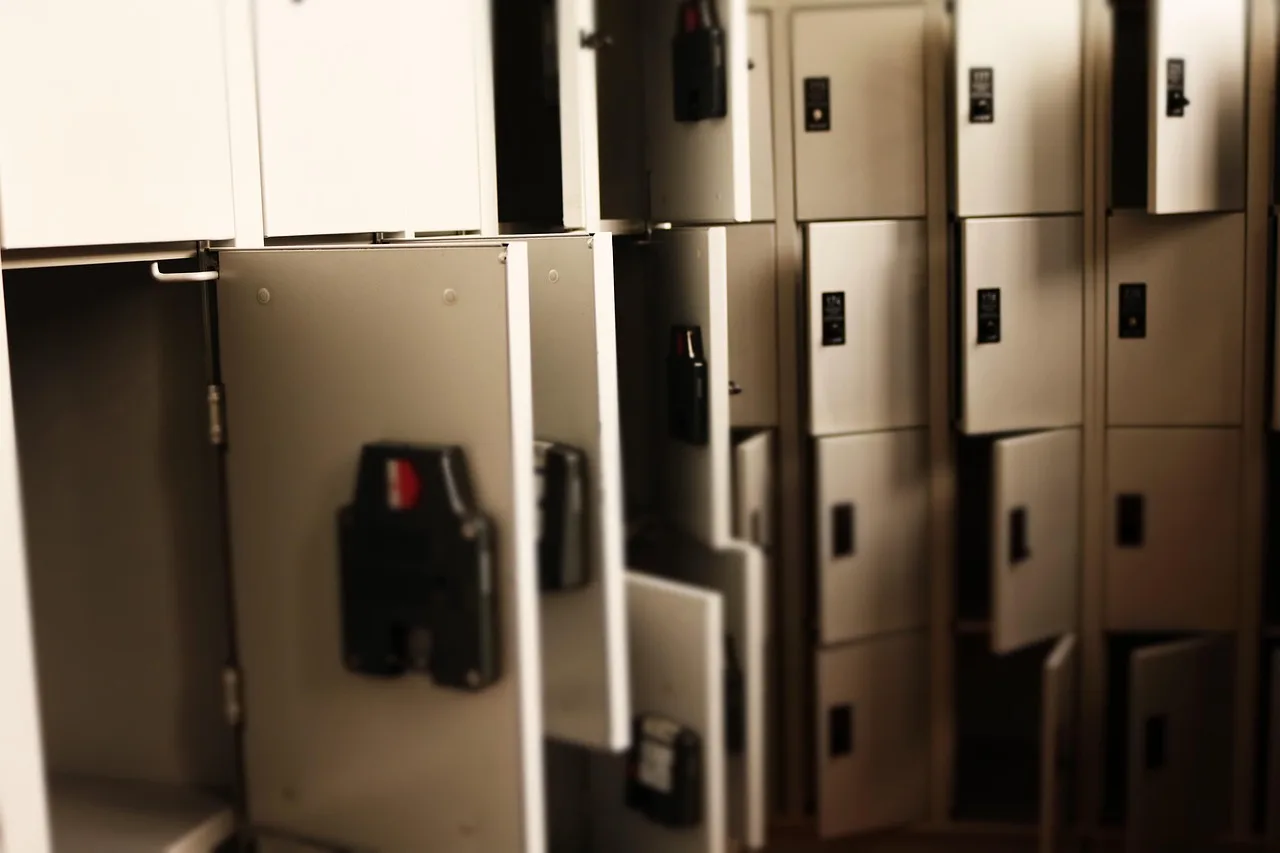
Choose a storage cabinet if you need hidden inventory, cleaning supply storage, backup toilet paper, or protection in a humid room. Choose open shelving if you need quick access to towels and daily-use items, have limited wall space, or need a rental-friendly setup without drilling. A hybrid setup works best when one wall must do both jobs.
Choose Storage Cabinet if…
Pick a cabinet when the bathroom holds more than a few product types, when moisture is a problem, or when you need to keep cleaners and backups out of sight. Cabinets with adjustable shelves, drawer options, or wall-mounted support are especially useful for organizing mixed-size items without leaving them exposed.
Choose Open Shelving for Bathroom if…
Pick open shelving when the room is small, the wall area is narrow, or the items on display get used constantly. It works best for towels, toilet paper, and a small number of toiletries. If the shelf begins to hold too many bottles, the visual clutter shows quickly.
When a hybrid setup makes more sense
A hybrid setup works well in most real bathrooms: cabinet below for backups and cleaners, open shelf above for towels and daily-use products. That split matches the actual organizing problem in small spaces. It also helps keep the room tidy without slowing access more than needed.
Frequently asked questions
Is a bathroom storage cabinet better than open shelving?
A bathroom storage cabinet is better when you need to hide backups, protect items from humidity, or store cleaners and mixed supplies. Open shelving is better when the contents are used daily and should stay easy to reach. The right answer depends on what the shelf or cabinet must hold.
What should you store in a bathroom cabinet vs open shelves?
Use a cabinet for backup toilet paper, cleaning supplies, spare toiletries, and anything you do not want exposed to moisture or dust. Use open shelves for towels, a small amount of toilet paper, and daily-use products that benefit from fast access. That split keeps the room organized.
How do you keep open bathroom shelves from looking cluttered?
Keep the number of products low and group items by use. Use baskets or short stacks, and leave empty space on at least part of the shelf. If every bottle gets displayed, the shelf starts to look crowded even when the room is clean.
Are bathroom cabinets better for humid rooms?
Yes, cabinets are usually better for humid rooms because enclosed doors help shield items from moisture and dust. Humidity-resistant materials and a durable finish matter a lot in these spaces. Open shelves can work, but they need better ventilation and more frequent cleaning.
How do I choose storage for a rental bathroom without drilling?
Start with freestanding storage, no-drill shelving, or a temporary cabinet that does not need wall anchors. Check for anti-tip safety if the unit is tall. Avoid heavy wall-mounted pieces on weak walls or tile unless the landlord permits proper installation.
Products related to this article
Sponsored / affiliate links. As an Amazon Associate I earn from qualifying purchases. I may earn additional commission from eligible campaigns.