Shower Curtain Size Chart: Pick the Right Fit
Choose curtain size from three measurements: opening width, rod height, and ring drop. For most tub showers, the decision lands on 72 x 72 inches; stalls often need 54 x 72 or 54 x 78; taller mounts usually move to 72 x 84 or 72 x 96. Width should cover the opening plus overlap, and length should be based on rod height minus ring drop and floor clearance.
Shower curtain size chart
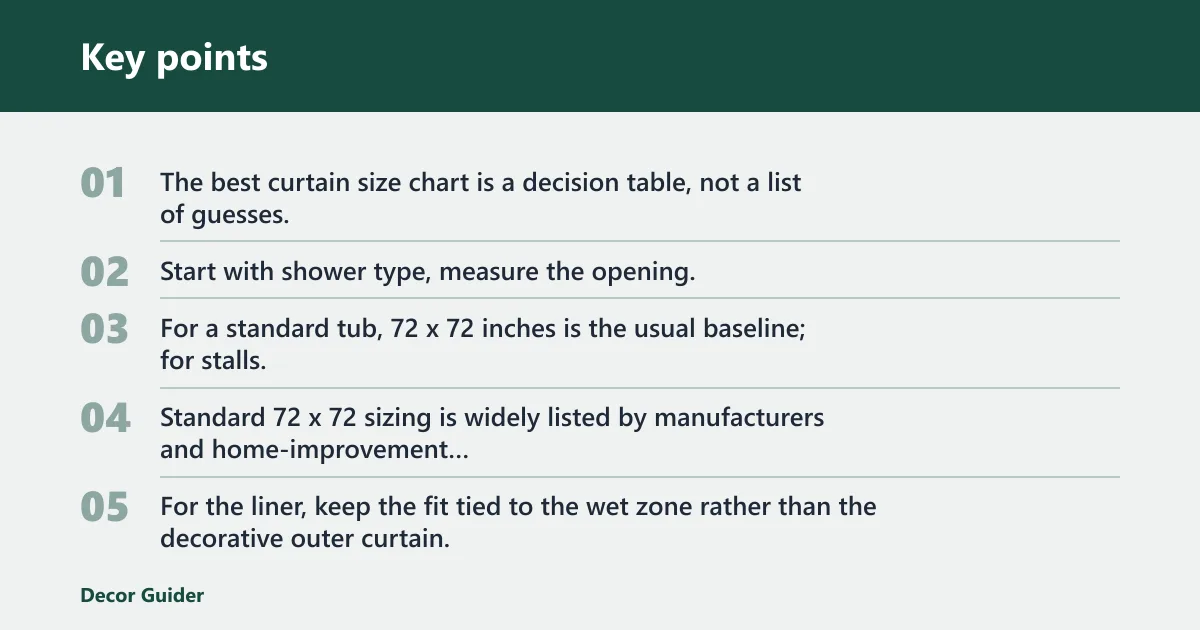
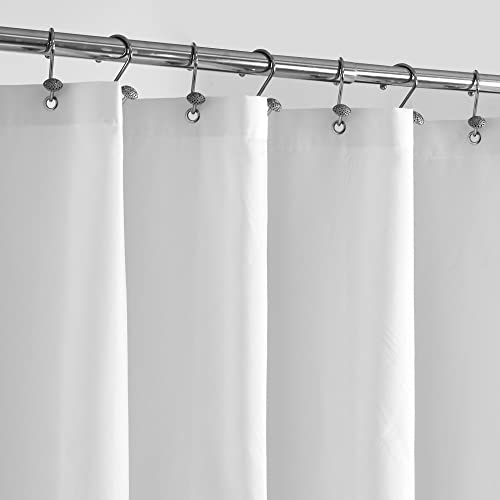


The best curtain size chart is a decision table, not a list of guesses. Start with shower type, measure the opening, then use the formulas: curtain width = opening width + 8 to 12 inches, and curtain length = rod height – ring drop – desired floor clearance. For a standard tub, 72 x 72 inches is the usual baseline; for stalls, 54-inch widths are common; for taller rods, 72 x 84 or 72 x 96 often fits better. Standard 72 x 72 sizing is widely listed by manufacturers and home-improvement references, and common rod height references place a tub rod around 75 to 77 inches from the floor (Bean Products; My Kitchen and Bath; The Lasting Home; Designing Idea).
| Shower type | Opening width measured | Target finished hem point | Rod height | Ring drop | Calculated curtain length | Recommended curtain size | Recommended liner size | Minimum overlap |
|---|---|---|---|---|---|---|---|---|
| Standard tub | About 60 inches | 1 to 3 inches above floor | 75 to 77 inches from floor is typical | 0 to 2 inches | Rod height – ring drop – 1 to 3 inches | 72 x 72 inches | 70 x 72 or 72 x 72 inches | 8 to 12 inches total |
| Tall tub | About 60 inches | 1 to 3 inches above floor | 78 to 84 inches or higher | 1 to 3 inches | Rod height – ring drop – 1 to 3 inches | 72 x 84 inches or 72 x 96 inches | 72 x 84 or 72 x 96 inches | 8 to 12 inches total |
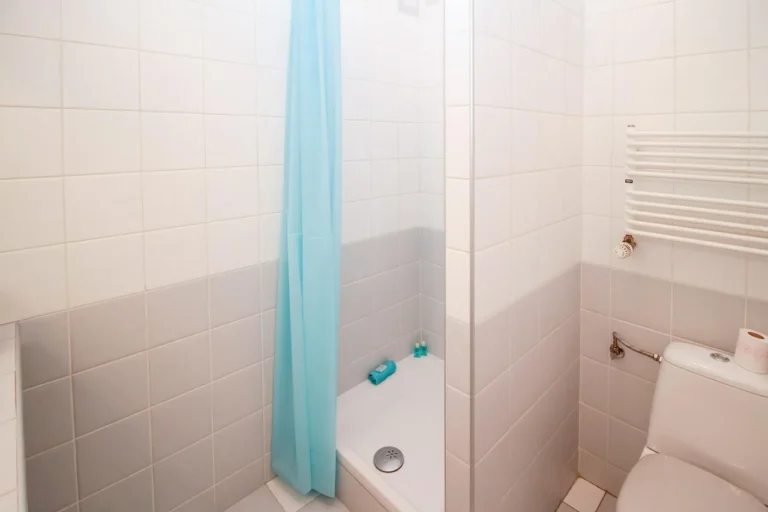
| Shower stall | 36 to 54 inches | 1 to 3 inches above floor or base edge | Varies by enclosure | 0 to 2 inches | Rod height – ring drop – 1 to 3 inches | 54 x 72 inches or 54 x 78 inches | 54 x 72 or 54 x 78 inches | 8 to 12 inches total |
| Walk-in shower | Broader opening, often wider than a tub | 1 to 3 inches above floor or threshold | Often taller than a tub mount | 1 to 3 inches | Rod height – ring drop – 1 to 3 inches | 108 x 72 inches or wider coverage | Size to stay inside wet zone | 8 to 12 inches total, more if needed for splash control |
| Curved rod | Measure the usable span along the curve | 1 to 3 inches above floor or tub rim | Rod sits on a bow | Use the curved path as the reference | Rod height – ring drop – desired floor clearance | 72 x 84 inches, 72 x 96 inches, or wider depending on the bow | Same general sizing family as curtain | 8 to 12 inches total; setup-dependent |
| Clawfoot tub | Wraparound coverage, often about 180 inches around | 1 to 3 inches above floor or tub edge | Often ceiling-mounted or oval rod | 0 to 2 inches | Rod height – ring drop – desired floor clearance | Round or extra-wide wraparound curtain | Separate liner that stays inside the wet zone | Continuous wrap coverage around the tub; setup-dependent |
For the liner, keep the fit tied to the wet zone rather than the decorative outer curtain. A liner commonly matches the shower opening family, but it should stay inside the tub or shower base, not hang outside it. Liner-inside-tub guidance is standard across home-improvement references because the liner blocks spray where water actually lands, while the outer curtain handles room-facing coverage.
What size shower curtain do you need?
The answer is usually straightforward: match the curtain to the shower type first, then verify width, rod height, and ring drop. Most standard tub-shower combos land on 72 x 72 inches, while stalls often need 54-inch widths and tall mounts usually need 72 x 84 or 72 x 96. If the opening is broad, width matters before length; if the rod is high, length matters before style.
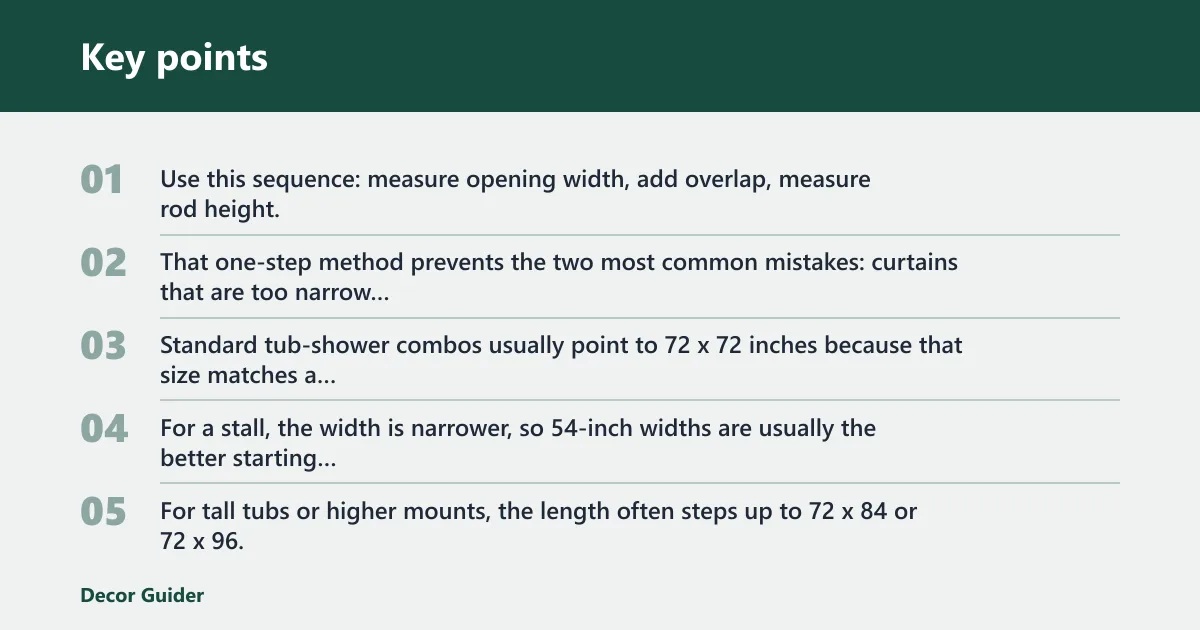
Use this sequence: measure opening width, add overlap, measure rod height, then subtract ring drop and the floor-clearance target. That one-step method prevents the two most common mistakes: curtains that are too narrow to close properly and curtains that are long enough to drag.
Match size to shower type
Standard tub-shower combos usually point to 72 x 72 inches because that size matches a common 60-inch opening with enough side coverage to close comfortably. For a stall, the width is narrower, so 54-inch widths are usually the better starting point. For tall tubs or higher mounts, the length often steps up to 72 x 84 or 72 x 96.
Use opening width, rod height, and ring drop
Width controls side coverage. Height controls the finished hem. Ring drop changes the actual hanging result, so the label length is not the same as the visible length. A simple rule works well: curtain width = opening width + 8 to 12 inches, and curtain length = rod height – ring drop – desired floor clearance.
For example, a rod at 76 inches with 1 inch of ring drop and a 2-inch floor clearance target calls for a finished curtain length of about 73 inches. That points toward a 72-inch curtain for a standard tub setup, but a higher rod would shift the choice to 84 inches or longer.
Choose curtain length without floor drag
Leave about 1 to 3 inches between the hem and the floor or tub edge. That gap helps the curtain move freely, keeps it from soaking up water, and reduces dragging. The liner is different: it should sit inside the tub or shower base so it can block spray without hanging into the room.
If the opening is already covered well, do not fix a width problem by buying extra length. Longer length does not close side gaps. For splash control, the curtain needs enough width to overlap the opening, not just enough length to reach lower.
Measure from the rod to the finished hem point, then subtract the ring drop if hooks are used. The hem should usually finish 1 to 3 inches above the floor or tub edge, which is the most practical clearance range in home-improvement guidance. For a stall or walk-in, the same measurement method applies, but the liner must still stay inside the wet zone.
Measure from rod to finished hem point
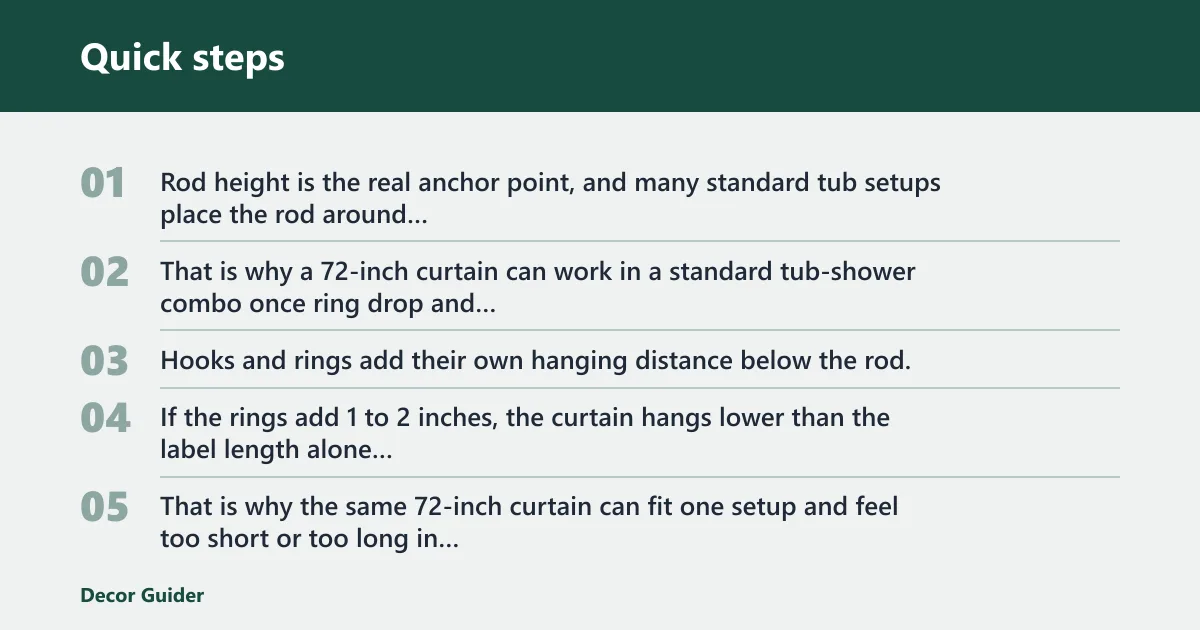
Start with the rod height, not the ceiling. Rod height is the real anchor point, and many standard tub setups place the rod around 75 to 77 inches from the floor. That is why a 72-inch curtain can work in a standard tub-shower combo once ring drop and hem clearance are accounted for.
Account for ring drop
Hooks and rings add their own hanging distance below the rod, so ring drop changes the finished look. If the rings add 1 to 2 inches, the curtain hangs lower than the label length alone suggests. That is why the same 72-inch curtain can fit one setup and feel too short or too long in another.
Check floor clearance and tub height
Keep the outer curtain off the floor. A 1 to 3 inch gap usually works well and helps prevent dragging. The liner should hang inside the tub or shower base and should not trail onto the floor outside the wet area.
On a tall tub with a high-mounted rod, a 72-inch curtain may sit too high once rings are added, while 84 inches can place the hem in a better range. The deeper the tub rim or threshold, the more important it is to recalculate the finished length rather than guessing from the package label alone.
How to measure shower width
Measure the opening width, then add side overlap so the curtain closes with folds instead of pulling tight. A practical rule is curtain width = opening width + 8 to 12 inches. For curved rods and broad openings, measure the usable span carefully because the curve changes how the curtain hangs and how much side coverage you really get.
Add side overlap to the opening
Overlap helps keep spray inside the shower. For a 60-inch tub opening, a 72-inch curtain gives about 12 inches of total extra width, which is a strong baseline for side coverage. For a stall, the opening is smaller, so a 54-inch width often fits better than a full tub-width curtain.
Measure curved rods along the bow
Curved rods should be measured along the path the curtain actually follows, not only wall to wall. The curve increases usable hanging space and changes how the fabric falls at the sides. Because of that, the width allowance matters more than a generic “extra-long” label.
Set width for walk-ins and broad openings
Walk-in showers often need more width than a standard tub curtain can provide. A 108-inch wide curtain is a common solution for broad openings because it gives enough side coverage to manage splash without pulling the fabric tight. In these layouts, width usually matters before length does.
Standard tub and stall sizes
The standard tub answer is usually 72 x 72 inches, while stall openings usually shift to 54-inch widths and extra-long options if the rod is high. The most dependable sizing references keep the standard tub curtain centered on 72 x 72, with tall versions moving to 72 x 84 or 72 x 96 when the mounting height rises.
72 x 72 for standard tub-shower combos
Several manufacturers and buying guides list 72 x 72 inches as the standard tub size, including Bean Products, My Kitchen and Bath, The Lasting Home, and Designing Idea. That consistency matters because it gives you a stable reference point when the rod height is in the common 75 to 77 inch range.
54 x 72 and 54 x 78 for stalls
Shower stall curtains are narrower than standard tub curtains. Stall widths may run from 36 to 54 inches, and common stall sizes include 54 x 72 or 54 x 78 inches. Those sizes are a better fit for compact enclosures than a full-width tub curtain.
When to choose extra-long lengths
Choose extra-long lengths when the rod sits higher, the ceiling is taller, or ring drop lowers the hem too much. Common extra-long lengths are 78, 84, and 96 inches. The width may stay at 72 inches for many tub setups, but the length changes to keep the hem off the floor and the liner inside the wet zone.
Walk-in and curved rod setups
Walk-in showers and curved rods usually need more width than a standard tub setup. Extra-wide curtains, especially 108 inches wide, fit these layouts better because they allow side coverage without pulling the curtain tight across a broad opening. The exact length still depends on rod height and ring drop, but width is the first decision in these setups.
Use extra-wide 108-inch options
A common extra-wide size is 108 by 72 inches. That width suits broader openings, many walk-ins, and some curved rods. If the opening is wide but the rod height is still moderate, width should come first and length second.
How curved rods change drop and width
A curved rod can make the curtain hang lower at the center and wider at the sides. That means both width allowance and finished drop need checking. Measure the rod along the curve, then confirm the liner still stays inside the wet zone with enough side overlap to reduce splash.
When wider coverage beats longer length
If the opening is broad, a longer curtain alone will not solve the problem. Wider coverage closes side gaps better than extra length. A 108-inch curtain can be a better fix than moving from 72 to 84 inches when the main issue is width, not height.
Clawfoot and freestanding tub setups
Clawfoot and freestanding tubs need wraparound coverage rather than a simple straight curtain. Many setups use an oval rod or a ceiling-mounted rod, and the coverage target is often about 180 inches around the tub. The right setup depends on the tub shape, rod path, and whether the liner can stay fully inside the wet zone.
Plan wraparound width
Measure the full wrap path, not just one side of the tub. A clawfoot or freestanding tub often needs continuous coverage around the bathing area, so the curtain length around the perimeter matters more than the front opening alone. That is why standard tub widths rarely solve this setup.
Use oval or ceiling-mounted rods
Oval and ceiling-mounted rods help hold the curtain around the tub without forcing it into a straight line. That setup supports better splash control and gives the curtain room to clear the tub edge. A liner can hang inside the wrap while the outer curtain stays decorative.
Approximate 180-inch coverage needs
For clawfoot tubs, the practical target is often about 180 inches of wraparound coverage. That figure is setup-dependent, not a universal curtain label size. The final choice depends on tub size, rod shape, and whether the curtain needs to close around all exposed sides.
Frequently asked questions
What size should a shower curtain be?
The right size depends on the shower type, but most standard tub-shower combos use 72 x 72 inches. Stall showers usually need narrower widths, often 54 inches wide, and tall rods may call for 72 x 84 or 72 x 96 inches. Start with the opening width, then confirm rod height and ring drop.
How do I measure for shower curtain length?
Measure from the rod to the point where the hem should finish, then subtract the ring drop if you use hooks. For a tub, leave about 1 to 3 inches above the floor or tub edge. If the rod is mounted higher, move up to an extra-long length rather than letting the curtain drag.
What is a normal size for a shower curtain?
The most common standard shower curtain size is about 72 inches wide by 72 inches long. That size fits many 60-inch tub-shower combinations and is the default reference in most buying guides. If the rod is mounted higher than usual, the next step is usually an extra-long length.
Do I need a different size for a shower stall?
Yes. Shower stalls are usually narrower than standard tub curtains, with widths from 36 to 54 inches. Common stall sizes include 54 x 72 and 54 x 78 inches. A full 72-inch tub curtain can be too wide for a compact stall and may bunch awkwardly.
Should a shower curtain touch the floor?
No. The curtain should not drag or pool on the floor. Leave about 1 to 3 inches of clearance so the hem stays clean and moves well. The liner is different: it should stay inside the tub or shower base and should not trail outside the wet area.
Products related to this article
Sponsored / affiliate links. As an Amazon Associate I earn from qualifying purchases. I may earn additional commission from eligible campaigns.