Pedestal Sink vs Vanity
For bathrooms under roughly 40 square feet, a pedestal sink often wins on floor space; if daily storage or a wider counter matters, a vanity may be the better fit. Pick the wrong one, and you can end up with tight movement, visible clutter, or a remodel that costs more than the room can justify. This comparison breaks down space, storage, plumbing, and renovation effort for small baths, powder rooms, and full baths.
| Decision factor | Pedestal Sink | Vanity | Winner |
|---|---|---|---|
| Floor-space impact | Open base leaves more visible floor area and suits tight rooms. | Cabinet and countertop take more wall and floor space. | Pedestal Sink |
| Storage | No storage underneath or around the fixture. | Countertop plus lower cabinet storage for towels and toiletries. | Vanity |
| Plumbing concealment | Exposed plumbing is common and must be planned for. | Plumbing is hidden inside the cabinet. | Vanity |
| Installation effort | Harder to install because plumbing is exposed; average install time is about 4 hours. | Can be dropped into a pre-cut hole, sealed, and finished; average install time is about 2 hours. | Vanity |
| Best fit by room type | Best for powder rooms and half baths with light storage needs. | Better for full baths, primary baths, and homes that need storage. | Depends on use case |
| Design flexibility | Limited range because of the freestanding form. | Many design options and more customization. | Vanity |
Floor space versus storage: where each option fits
The real trade-off is how much floor you keep open versus how much storage and hidden plumbing you gain. A pedestal sink keeps the footprint light and can make a tight room feel less crowded, while a vanity gives you a counter, cabinet storage, and a cleaner way to hide lines and traps. In a small bath, the right choice comes down to daily use.
Floor space versus usable function
Pedestal sinks work best when the room is mostly for handwashing and quick use. Vanities win when the sink area must also hold toiletries, spare tissue, cleaning supplies, or a hair dryer.
That difference matters more in a small bathroom than in a larger one. A room can technically fit a vanity and still feel awkward if the door swing, toilet clearance, or entry path gets tight.
Where each option usually fits
Pedestal sinks are best for powder rooms and half baths because they take up little space and do not crowd a small layout. Vanities are the practical pick for full baths and primary baths where storage needs keep growing.
Floating vanities sit between the two. They keep the floor visually open while still giving you some cabinet space, which makes them a strong option when a full vanity feels bulky.
Sink decision table
Use this table as a planning check before you pick a fixture. The same bathroom can land in a different column depending on storage needs, plumbing location, and how much work you want the remodel to require.
| Bathroom scenario | Minimum practical footprint | Storage need | Plumbing visibility | Installation difficulty | Recommended sink type |
|---|---|---|---|---|---|
| Powder room | Very small; preserve open circulation and door swing | Low, since use is occasional | Acceptable if lines can be finished neatly | Moderate | Pedestal Sink |
| Small full bath | Small, but enough room for a cabinet without crowding traffic | Medium to high for toiletries and towels | Prefer hidden plumbing | Moderate to high | Vanity |
| Primary bath | Room for a larger footprint or a double-sink layout | High, especially for daily items | Prefer concealed plumbing | Moderate | Vanity |
| Rental or quick refresh | Small, with minimal wall or floor changes | Low to medium | Better if existing rough-in already aligns | Low to moderate | Pedestal Sink |
If a powder room is about 5 by 6 feet and the main goal is to keep the entry clear, a pedestal sink can be a practical choice. A pedestal sink gives you the least visual bulk and avoids a cabinet that can overpower the wall opposite the door.
In a small full bath with limited towel storage, two adults, and no linen closet, a vanity may be the more practical choice. A vanity becomes the more practical fix because the room needs storage every day, not just a light footprint.
Does a pedestal sink fit a small bathroom?
Yes, if the room is tight and storage needs are modest. A pedestal sink is often the better fit when clearance around the toilet, door, or shower entry needs to be protected, and when the sink is mainly for quick use rather than daily storage.
Minimum clearance and traffic flow
A vanity can crowd a small bathroom when its depth cuts into the walkway or blocks the door. That risk grows in narrow rooms where the sink sits near the entry, because the cabinet edge can become the first thing you hit.
An open base helps the room feel less boxed in. That does not create more usable storage, but it can improve movement in a bathroom where every inch matters.
When an open base helps
Pedestal sinks are often the better choice when the room already has another storage solution, such as a nearby linen closet or wall cabinet. They also work well when you want the floor to stay as visible as possible, which can reduce the cramped feeling in a narrow bath.
A wall-mounted sink is another space-saving option. It removes the pedestal base entirely, but it still leaves plumbing visible, so it works best when the rough-in is clean and the room can accept that look.
Do you need storage or a cleaner floor plan?
If you need everyday storage, choose a vanity. If you mainly need a clear floor and a simple handwashing station, a pedestal sink can do the job. Floating vanities split the difference by freeing some floor view while still giving you a cabinet.
Pedestal sink limits
Pedestal sinks offer no storage space underneath or around them. That means towels, toiletries, and cleaning supplies need a different home, such as wall shelving, a nearby cabinet, or baskets elsewhere in the room.
This setup works only if the bathroom already has another storage plan. Without one, clutter moves to the counter, the floor, or nearby rooms.
Vanity and floating vanity trade-offs
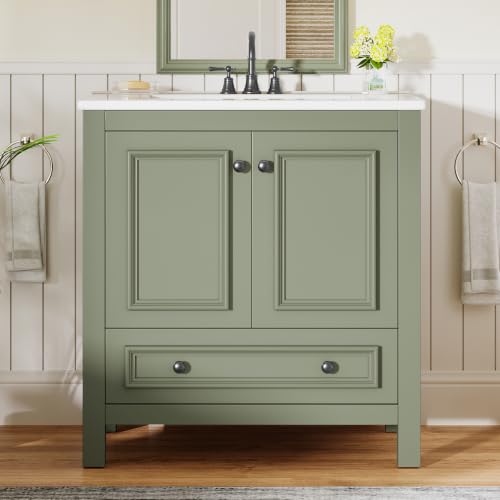
Vanity sinks provide more usable space because they include countertop and lower storage. They also hide plumbing, which makes the room look more finished and makes the sink area easier to organize.
A floating vanity gives up some cabinet volume, but it can be a useful middle ground in a small bathroom. Because it mounts to the wall, the floor stays more open, though the cabinet still needs solid support and proper rough-in placement.
What changes in plumbing and installation?
Plumbing rough-in matters more than many homeowners expect. A pedestal sink exposes the supply lines and drain, while a vanity can hide them, but only if the water line location, drain alignment, and wall structure work with the new cabinet.
Rough-in, support, and adjustment points
Pedestal sinks are harder to install because plumbing is exposed. They often demand careful placement so the finished lines look intentional, and the basin must be secured without relying on a cabinet for support.
Floating vanities and wall-mounted sinks add another condition: the wall must support the load. Older homes can need blocking or bracing before the new fixture goes up, especially if the wall was never built for a cabinet that carries weight.
Hidden costs that show up during replacement
Converting from a pedestal sink to a vanity can sometimes require drywall repair, flooring patching, and plumber adjustments. If the old fixture sat in a different footprint, the new cabinet may expose unfinished paint, old screw holes, or flooring that was never meant to be visible.
A common first-timer mistake is assuming the cabinet will simply cover the old plumbing. If the drain exits too high, too low, or off center, the rough-in may need work before the vanity can sit flush and function properly.
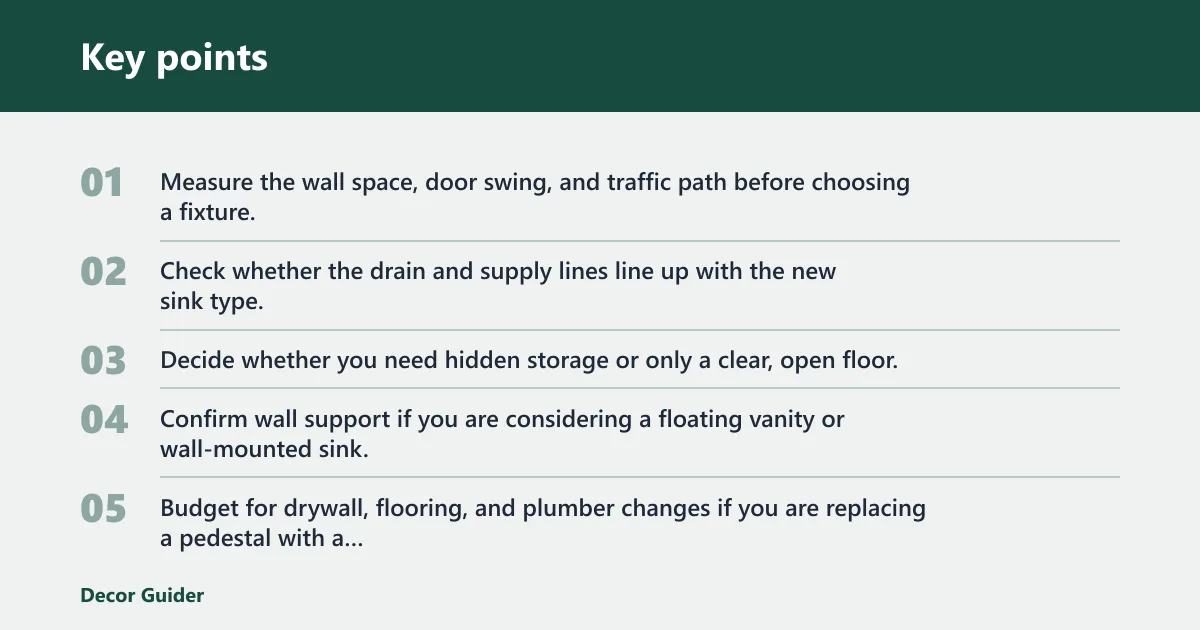
- Measure the wall space, door swing, and traffic path before choosing a fixture.
- Check whether the drain and supply lines line up with the new sink type.
- Decide whether you need hidden storage or only a clear, open floor.
- Confirm wall support if you are considering a floating vanity or wall-mounted sink.
- Budget for drywall, flooring, and plumber changes if you are replacing a pedestal with a cabinet.
Can you replace a pedestal sink with a vanity?
Yes, but the swap is not always simple. You may need plumbing changes, wall repair, and possibly flooring patching if the new vanity is wider, deeper, or set at a different height than the old pedestal sink.
What usually must move or be rebuilt
The water supply and drain often need adjustment to fit inside the vanity cabinet. If the rough-in was built for a pedestal sink, the new cabinet may cover old openings or leave new ones exposed, which means extra finish work after the fixture goes in.
Wall-mounted or floating vanities can be easier than a deep cabinet in some tight rooms because they preserve more floor visibility. They still need proper anchoring, so the wall has to be ready before installation starts.
When another space-saving option fits better
If the room is too small for a standard vanity but still needs more function than a pedestal sink, a floating vanity or wall-mounted sink can be the better compromise. That path keeps the room open while adding at least some storage or counter space.
Vanities with a narrow profile can also work in awkward rooms where the plumbing is already centered. The key is whether the cabinet can fit without forcing traffic to squeeze around it.
Choose Pedestal Sink if… / Choose Vanity if…
Choose Pedestal Sink if the room is a powder room, half bath, rental, or quick refresh, and the goal is to keep the floor open. It also makes sense when storage needs are low and the plumbing layout is already suitable for an exposed installation.
Choose Vanity if the bathroom is a full bath or primary bath, or if you need daily storage for towels, toiletries, and cleaning supplies. It is also the safer choice when you want concealed plumbing and a cabinet that can absorb the visual weight of the sink area.
Choose a floating vanity if you want a middle path: some storage, a lighter floor view, and less visual bulk than a full cabinet. Choose a wall-mounted sink if the room is extremely tight and you can live with exposed plumbing and little or no storage.

Frequently asked questions
Pedestal sink vs vanity in powder room
In a powder room, a pedestal sink usually makes the most sense because guest use is brief and storage demand is low. A vanity only wins if you need hidden storage for extra tissue, hand towels, or cleaning supplies and the room has enough wall depth to handle the cabinet.
Pedestal sink vs small vanity
A small vanity is the better pick when you need even a little storage and the room can spare the cabinet depth. A pedestal sink is better when the room is so tight that a vanity would interfere with the door, toilet clearance, or movement in front of the sink.
Pedestal sink vs floating vanity
A floating vanity sits between a pedestal sink and a standard vanity. It keeps the floor visually open like a pedestal sink, but it gives you more storage and a counter. Choose it when you want a smaller visual footprint without giving up all cabinet space.
Are pedestal sinks outdated?
No. They are still practical in powder rooms, guest baths, and other spaces where storage needs are light. They do have a limited role, though, because many households need more countertop and concealed storage than a pedestal can provide.
Pedestal sink vs wall mount sink
A wall-mounted sink saves space without a pedestal base, so it can free the floor even more than a pedestal sink. The trade-off is that the plumbing is still visible, and the wall must support the sink securely. It is best for tight rooms where cleaning under the sink matters.
Products related to this article
Sponsored / affiliate links. As an Amazon Associate I earn from qualifying purchases. I may earn additional commission from eligible campaigns.