Toilet Seat Size Chart
Use a toilet seat size chart by measuring bowl length and width first: round bowls are usually about 16.5 inches long, and elongated bowls are about 18.5 inches long. A poor fit can shift, leave gaps, and loosen fasteners. This guide gives a fit-first chart, borderline cases, specialty shapes, and replacement red flags so you can classify your toilet in under 5 minutes.
Toilet seat sizing chart


| Measurement taken | Typical range | Likely seat type | What to do next |
|---|---|---|---|
| Mounting-hole center line to front edge | About 16.5 inches; round-front seats are 16 3/4 inches or less in one reference guide | Round | Choose a round replacement, then confirm bolt spread and hinge style. |
| Mounting-hole center line to front edge | About 18.5 inches; elongated seats are 18 5/8 inches or more in one reference guide | Elongated | Choose an elongated replacement, then verify the bowl profile and bolt spread. |
| Mounting-hole center line to front edge | Between about 17 and 18 inches | Borderline or compact elongated | Compare the bowl outline to product photos and measure width before buying. |
| Bowl width at the widest point | About 14 to 14.5 inches; standard width is around 14 inches | Supporting fit check | Use this as a check, not the main sizing method. |
| Bolt spread between mounting holes | 5.5 inches in the U.S.; a common mounting-hole distance is 5 1/2 inches | Standard U.S. fit, but not universal | Confirm the spread before ordering; specialty and European toilets can differ. |
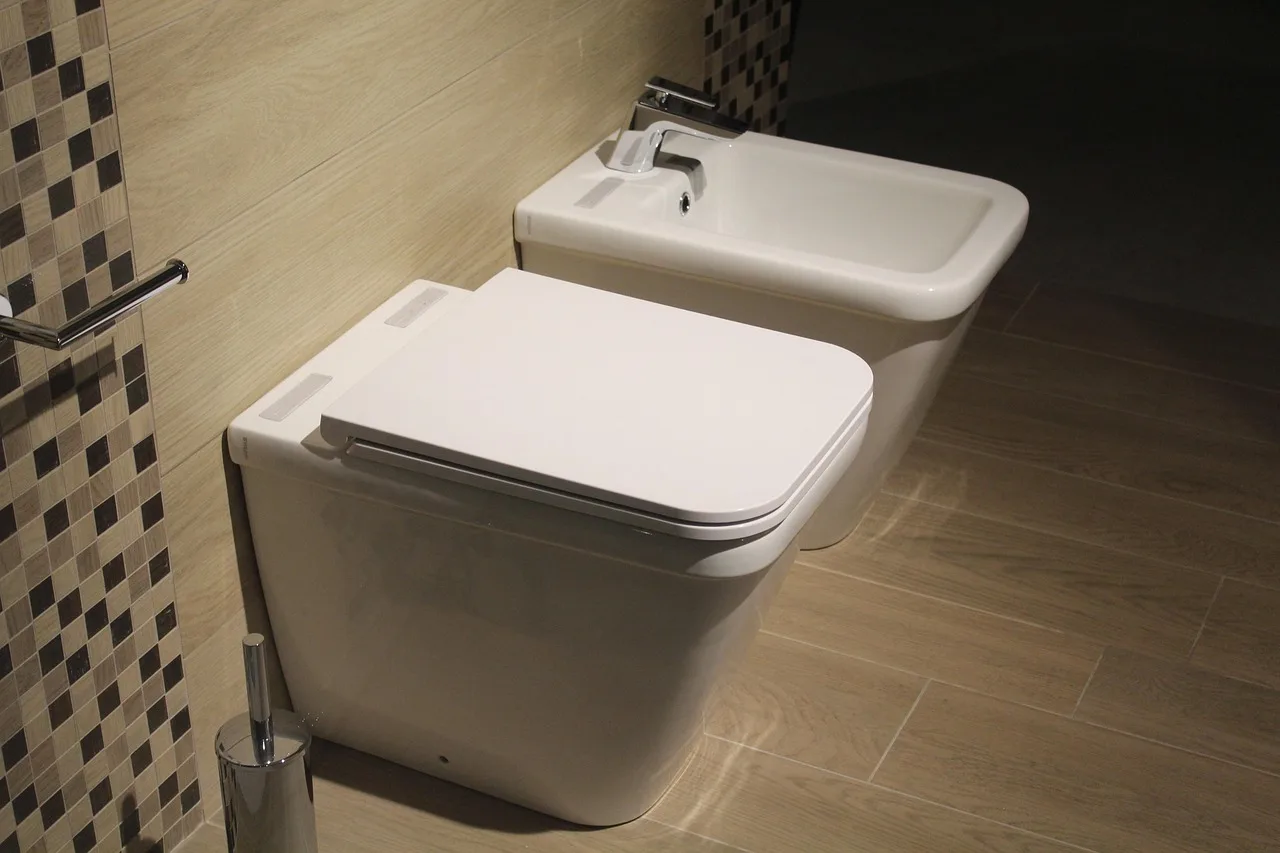
| Shape looks square, D-shaped, or custom | Non-standard | Specialty seat | Look for brand-specific parts and the manufacturer model number. |
The quickest method is plain. Measure from the center line of the mounting holes to the front edge, then check the bolt spread. If the toilet has a square, D-shaped, or custom profile, the size label alone is not enough.
What size toilet seat do you need?
Round and elongated are the two common seat shapes, but the label only helps if the bowl matches that shape. Round toilets are about 16.5 inches from the mounting holes to the front edge, while elongated toilets are about 18.5 inches. If the number falls between those two sizes, do not guess.
Round vs. elongated at a glance
Round seats fit a shorter bowl and are common in older homes and smaller bathrooms. Elongated seats have a longer oval front and are common in newer homes and comfort-focused bathrooms. The bowl outline matters because a seat that is too short or too long can sit poorly on the rim.
Say your measurement is 16 7/8 inches from the bolt-hole center line to the front edge. That sits between the common round and elongated ranges, so the bowl shape and product drawings matter more than the label on the package. A borderline fit can look close and still be wrong.
Why the label matters before you order
Packaging often lists only round or elongated. That helps after you measure the bowl correctly. A seat described as elongated will not fit a round bowl cleanly, and a round seat on an elongated bowl can leave the front edge short.
Most product listings also assume a standard U.S. bolt spread. If your toilet uses a different spread, the right length still will not solve the fit problem.
How do you measure for a toilet seat?
Measure from the center line of the mounting holes to the front edge of the bowl. That is the main number for deciding round versus elongated. Then check the bowl width and bolt spread. Those two checks help confirm the fit and flag toilets that are not standard.
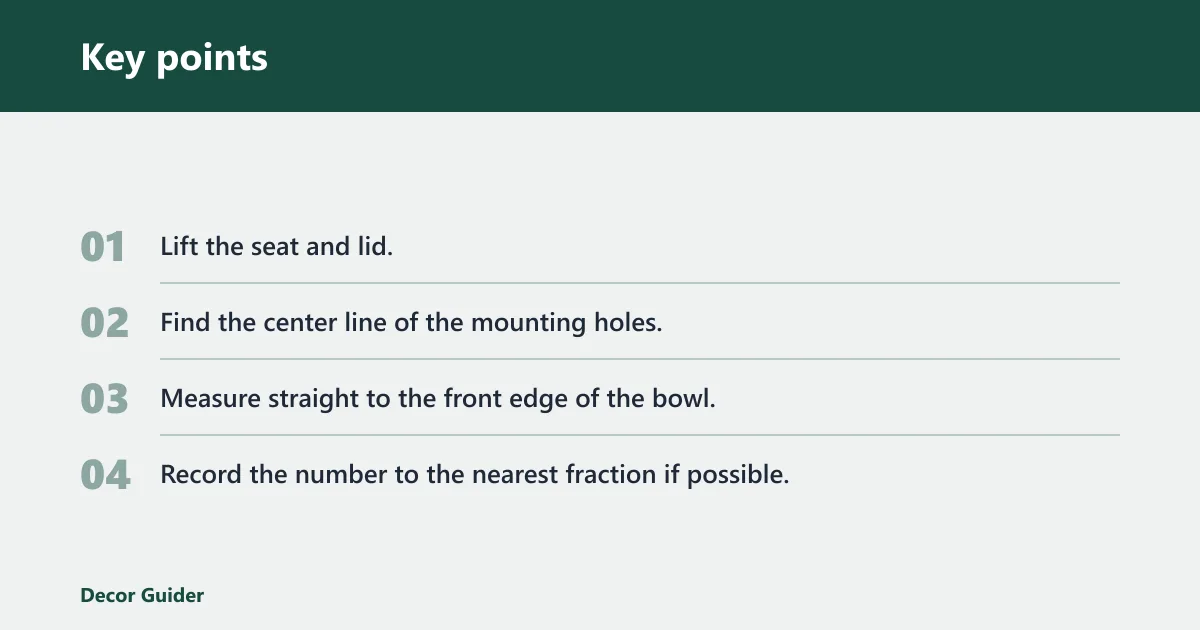
Step 1: Measure the length
- Lift the seat and lid.
- Find the center line of the mounting holes.
- Measure straight to the front edge of the bowl.
- Record the number to the nearest fraction if possible.
Round toilets are described as 16.5 inches from the mounting holes to the front edge. Elongated toilets are described as 18.5 inches from the mounting holes to the front edge. Those figures generally match the usual ranges for round bowls and elongated bowls.
Step 2: Check the bowl width
Measure the widest point across the bowl. Most toilet bowls are around 14 to 14.5 inches wide, and the standard width of a toilet seat is around 14 inches. This is a supporting check, not the main sizing method, but it helps when the bowl profile looks unusual.
Step 3: Measure bolt spread
Measure the distance between the mounting holes. In the U.S., the standard spread is 5.5 inches, and a common mounting-hole distance is 5 1/2 inches. Specialty and European toilets can differ, so a seat that matches length but not spread will still fail at installation.
A common first-timer mistake is to measure only the front-to-back length and stop there. Picture a bowl that measures like a standard elongated toilet, yet the hidden hinge base does not line up with the mounting holes. The seat may arrive, but the hardware will not seat correctly.
How do you handle borderline sizes?
Borderline measurements need a second look. If the length falls between round and elongated, do not choose by feel alone. Use the bowl outline, the product drawing, and the bolt spread. Compact elongated bowls and specialty profiles often sit near the middle and can fool a quick glance.
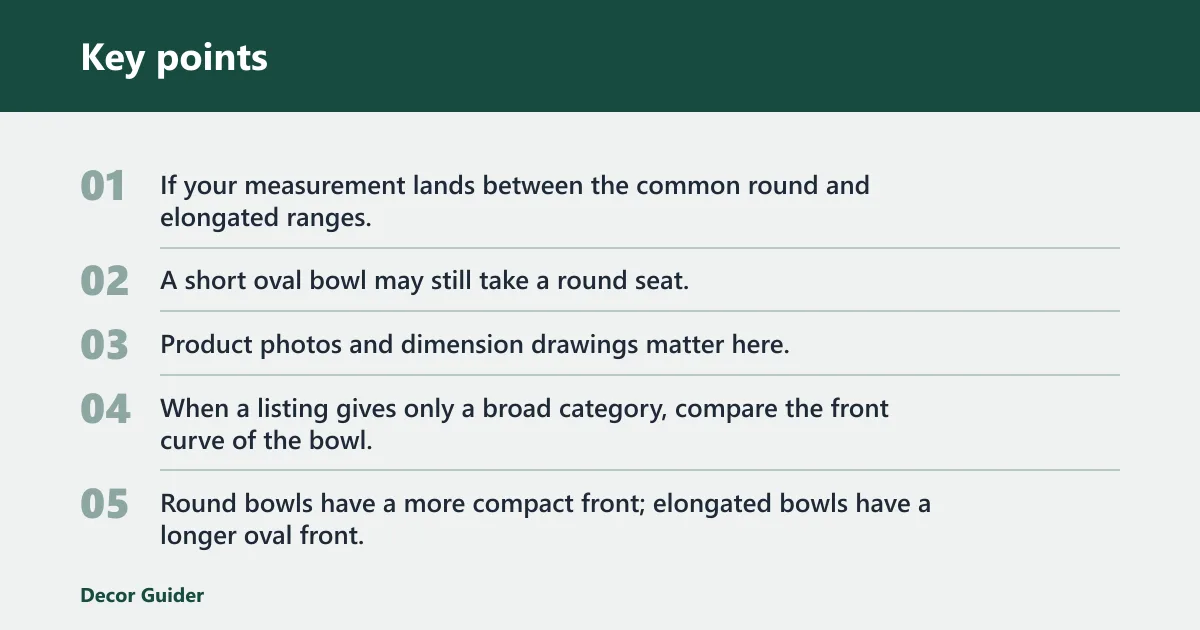
When the length falls between round and elongated
If your measurement lands between the common round and elongated ranges, start with the bowl shape rather than the label. A short oval bowl may still take a round seat, while a long compact bowl may need an elongated seat with a shorter front profile than expected. Product photos and dimension drawings matter here.
When a listing gives only a broad category, compare the front curve of the bowl. Round bowls have a more compact front; elongated bowls have a longer oval front. If the front arc extends farther than a standard round bowl, round seating will often look cramped.
When compact elongated bowls need a closer check
Some elongated bowls are not visibly large, which is why the length check matters more than the bathroom size. A compact elongated bowl can be close to the round range yet still require an elongated seat. The mounting-hole to front-edge number settles the question better than the room size does.
When the shape looks close but is not standard
D-shaped toilet seats are a non-standard modern shape and often need a separate shape check. Square, custom, and luxury seats can also require brand-specific replacement parts. In those cases, the label alone is not a safe guide because the bowl profile may be tied to one line or one manufacturer.
What should you check before buying?
Before you buy, confirm bolt spread, hinge style, bowl shape, and the manufacturer model number if the toilet is unusual. A match on length does not guarantee a fit. Hidden hinge systems and proprietary bowls are the main reasons a seat that “should” fit does not.
Bolt spread and hinge style
Start with the bolt spread. Standard U.S. spread is 5.5 inches, but specialty toilets can differ. Then check the hinge style and mounting hardware. Some seats use hidden hinges, side mounts, or special fastener shapes that are not interchangeable with basic replacement kits.
Bowl shape and seat profile
Match the seat profile to the bowl profile. Round bowls need a round seat, elongated bowls need an elongated seat, and D-shaped bowls often need a dedicated replacement. Do not rely on a quick label if the front edge, side taper, or rear hinge area looks unusual.
Manufacturer model number and tank label
For proprietary toilets, find the manufacturer model number on the tank. That number helps confirm compatibility when the toilet uses a special shape or a nonstandard hinge layout. It is the safest route when the bowl looks custom, the spread differs, or the seat line is tied to one brand family.
Return policy if the fit is uncertain
If the bowl shape is unclear, choose a seller with a clear return policy. That matters when the toilet is new, the seat line is proprietary, or the product photos are vague. It is far better to pause and verify than to force a near-match onto the bowl.
Specialty toilet seats and red flags
Specialty toilet seats include square, custom, and luxury shapes, and those are often not universal. D-shaped seats are a common example. They may look close to elongated at a glance, but the front edge, side lines, and hinge placement can differ enough to require brand-specific replacement parts.
Signs the seat is not universal
- The bowl is square, sharply angled, or D-shaped.
- The hinge hardware is hidden or uses a nonstandard mount.
- The toilet brand lists a model-specific seat.
- The bolt spread is not 5.5 inches.
- The length seems close, but the bowl outline does not match round or elongated.
Suppose a toilet bowl measures close to 18.5 inches, but the rear hinge area is shaped for a D-profile rather than a standard oval. In that case, an elongated seat can still miss the rim or leave the front curve off-center. The shape check overrides the number alone.
What to do when the toilet is proprietary
Use the model number, then match the seat line to that model. For many proprietary toilets, the safest replacement is the exact part listed for that line. If the model is missing, inspect the tank label and the underside of the current seat for brand markings before ordering.
Frequently asked questions
What are standard toilet seat sizes?
The two standard toilet seat sizes are round and elongated. Round toilets are about 16.5 inches from the mounting holes to the front edge, while elongated toilets are about 18.5 inches. Standard U.S. bolt spread is 5.5 inches, but specialty toilets may differ.
What is a standard toilet seat size?
A standard toilet seat size usually means a round or elongated seat that matches a common bowl shape. The standard width of a toilet seat is around 14 inches, and most toilet bowls are around 14 to 14.5 inches wide. Length still decides the shape.
How do I determine toilet seat size?
Determine toilet seat size by checking three things in order: length, bolt spread, and bowl shape. The length tells you round or elongated. The bolt spread should usually be 5.5 inches in the U.S. If the bowl looks square or D-shaped, verify the model number.
How do I find my toilet seat size?
Find your toilet seat size by reading the bowl, not the old seat alone. The old seat can be worn, shifted, or mismatched. Measure the bowl length first, then check the width and bolt spread. If the toilet is special or proprietary, use the tank model number.
Products related to this article
Sponsored / affiliate links. As an Amazon Associate I earn from qualifying purchases. I may earn additional commission from eligible campaigns.