5 Best Cleaning Tools for Small Bathrooms (2026): We Compared
The best bathroom cleaning tools for small spaces are compact, job-specific tools: a slim microfiber cloth or pad, an angled grout brush, and a narrow toilet brush. If you buy only three, start there. Poorly chosen tools waste storage and leave grout, corners, and toilet bases dirty. This guide breaks down the best bathroom cleaning tools for small spaces by job, with compact picks for daily wipe-downs, tight wet areas, and hard-to-reach edges.
Quick comparison
| Product | Badge | Best for | Price | ||
|---|---|---|---|---|---|
 |
Gautye Steam Cleaner, 3 Level Adjustable Handle with 15Gautye | Our pick | Portable 15-piece steam cleaner · 3-level adjustable handle | $59.97
Price as of 20 Oct 2026
|
View |
 |
GLIMGLINT Magic Sponges Eraser for Shower and Tub, 6 PKGLIMGLINT | Budget pick | 6-pack melamine eraser sponges · dual-sided scrubber design | $6.99
Price as of 20 Oct 2026
|
View |
 |
PHYEX 2 Pack Grout Scrub Brush with Stiff Bristles | SmallPHYEX | Also great | 2-pack angled grout scrub brushes · stiff bristle tips | $7.99
Price as of 20 Oct 2026
|
View |
 |
Dotpilgo Adjustable Hanging Shower Caddy, RustproofDotpilgo | Upgrade pick | Adjustable hanging shower caddy · rustproof metal construction | $18.99
Price as of 20 Oct 2026
|
View |
 |
SetSail Squeegee for Shower Glass Door, 10 Inches, Black |SetSail | Pair with it | 10-inch stainless steel squeegee · silicone blade head | $8.99
Price as of 20 Oct 2026
|
View |
Use this table to match the tool to the task, then trim your kit to the smallest stack that still covers floors, grout, glass, and behind-fixture gaps. In a bathroom under 50 sq ft, storage height and drying space matter as much as cleaning power.
How we chose
We compared tools by storage footprint, reach, surface fit, and upkeep. That matters more in a tight bath than in a larger room, because a bulky caddy or a wet mop head can be harder to store than to clean with.
We also favored tools that solve a specific job: grout, corners, shower glass, toilet bases, mirrors, and under-sink spills. A compact tool that does one job well often beats a larger multiuse tool that hogs closet width.
Finally, we weighed reusable parts against disposable refills, plus any drying or replacement burden. A tool that saves space but needs a long dry time may be a poor fit for a one-rod closet or a shared laundry corner.
Gautye steam cleaner: best for grout and toilet bases
- Foldable handle maximizes storage in small bathrooms
- Heats up quickly for fast daily wipe-downs
- Includes specific accessories for grout and toilet bases
This is for a tiny bath that needs deeper cleaning without a bucket, especially around grout lines, shower edges, and the toilet base. Based on the published product details, the foldable handle helps with storage, and the 15 accessories give it more task coverage than a single brush.
What stands out most is speed and reach. The 15s heat up claim suits fast cleanups, and the included attachments are meant for bathroom-specific edges rather than broad floor washing. That said, a steam cleaner is not the lightest option, and it still needs a storage slot and dry time after use.
GLIMGLINT magic sponges: best for spot cleaning
- Chemical-free cleaning for mold and mildew
- High-density foam resists crumbling and shedding
- Dual-sided design targets different bathroom cleaning tasks
This fits the reader who wants the smallest possible backup tool for scuffs, soap marks, and sink-side touchups. Based on the product details, the 6-pack keeps storage simple, and the dual-sided design can handle several bathroom surfaces without a bottle of cleanser.
It is useful for quick spot work on walls, sinks, and tubs, especially when you do not want to pull out a full mop setup. The drawback is the same one common to melamine sponges: they are consumable, so the cleanup routine is easy but the waste stream is larger than with a washable cloth.
PHYEX grout scrub brush: best for grout and corners
- 45-degree angle provides extra leverage for tight gaps
- Mini thin head reaches narrow grout lines easily
- Grip-friendly handle prevents slipping during deep cleaning
This is the compact hand tool to choose for grout lines, shower edges, window tracks, and other narrow gaps. The 45-degree angle and mini thin head are well matched to tight bathroom work, and the short handle keeps it easy to tuck under a sink or in a shallow caddy.
For small bathrooms, that matters more than a long wand. It is well suited to sinks, tubs, and tile seams, but it is not a floor-cleaning tool and it will take more time than a power scrubber on larger messes. For stubborn buildup, a flexible crevice brush may still reach where the bristles cannot.
SetSail squeegee: best for shower glass
- Prevents water spotting on shower glass doors
- Includes adhesive hooks for convenient wall storage
- Rust-free stainless steel frame ensures long durability
This is the simplest tool here for keeping shower glass and tile from drying with spots. The 10-inch head is compact enough for a wall hook, and the included adhesive storage hook helps when closet space is limited.
It is especially useful in a wet zone because it removes water before it becomes residue. The downside is obvious: it only handles smooth surfaces and it does nothing for grout, corners, or floor washing. If you skip it, you often spend more time wiping streaks later.
Small-bathroom cleaning matrix
The matrix below turns tool shopping into a task list. Read across each row and choose the smallest tool that still reaches the surface you clean most often.
| Task | Tool type | Storage footprint | Reach | Best surface | Downside |
|---|---|---|---|---|---|
| Fast floor wipe-down | Spray mop | Medium; one handled tool, no bucket | Good for open floor areas and under toe-kicks | Tile, vinyl, sealed floors | Too large for cramped powder-room corners if the head is bulky |
| Grout and shower seams | Handheld scrub brush | Very small; fits in a shallow drawer | Strong for lines and corners | Tile grout, tub edges, sink seams | Slower on wide surfaces |
| Shower glass water removal | Squeegee | Very small; hangs on a hook | Good for vertical glass and tile | Glass doors, glossy tile | Only works well on smooth surfaces |
| Mirror spots and spills | Microfiber cloth | Tiny; stacks flat | Close-range only | Mirrors, counters, faucets, spill pickup | Needs laundering and regular replacement |
| Behind toilet and vent gaps | Crevice or vent brush | Very small; narrow profile | Best for tight gaps and vents | Behind fixtures, baseboards, vents | Not useful for large flat surfaces |
| Deeper tile or fixture cleaning | Steam cleaner | Medium to large; needs a dry parking spot | Good with attachments | Grout, toilet base, shower edges | Heavier than a brush-only kit |
What are the best bathroom cleaning tools for small spaces?
The best bathroom cleaning tools for small spaces are the ones that map to the task, store flat or hang upright, and dry fast enough for the room you have. A compact spray mop, a handheld scrub brush, a squeegee, microfiber cloths, and a crevice brush cover most jobs without taking over a closet.
For a small bathroom, compact tools matter because storage height, closet width, and grab-and-go use are real limits. A bulky caddy can be harder to park than a slim brush set, and a tool that stays wet between uses can smell or drip in a tight cabinet.
Competitor pages often list products without showing where each one belongs. That misses the point: grout needs a stiff brush, glass needs a squeegee, and under-sink spills need a cloth, not a one-tool solution that does all of those jobs poorly.
Small-bathroom tool stack by task
- Floor: spray mop for routine cleaning.
- Grout and corners: handheld scrub brush or steam attachment.
- Glass and mirrors: squeegee plus microfiber cloth.
- Behind fixtures: crevice brush for vents and toilet gaps.
Should I use a spray mop or a regular mop in a small bathroom?
A spray mop is usually the better fit in a small bathroom because it stores smaller, skips the separate bucket, and is built for quick, fast-drying use. A regular mop only makes sense if you clean a much larger wet zone or want to wring a lot of solution for a broader floor.
A 57-inch handle for better reach, and another highlights a 180-degree rotatable head. Those features matter because you can get under the vanity edge and around the toilet without swinging a long handle into the wall.
Home Cleaning Stuff notes that small-bathroom mops come in triangular, rectangular, and round shapes, and that telescoping handles improve comfort and reach. A triangular head is often the smarter pick for behind toilets and tight corners. A round head can be easier for quick open-floor passes, but it may miss tight angles.
Say your bathroom is 5 by 8 feet and the floor dries slowly after every cleanup. A spray mop with a washable pad is usually the cleaner choice, because it uses less liquid and leaves fewer wet footprints than a full bucket setup.
Handheld scrub brush: best for grout and corners
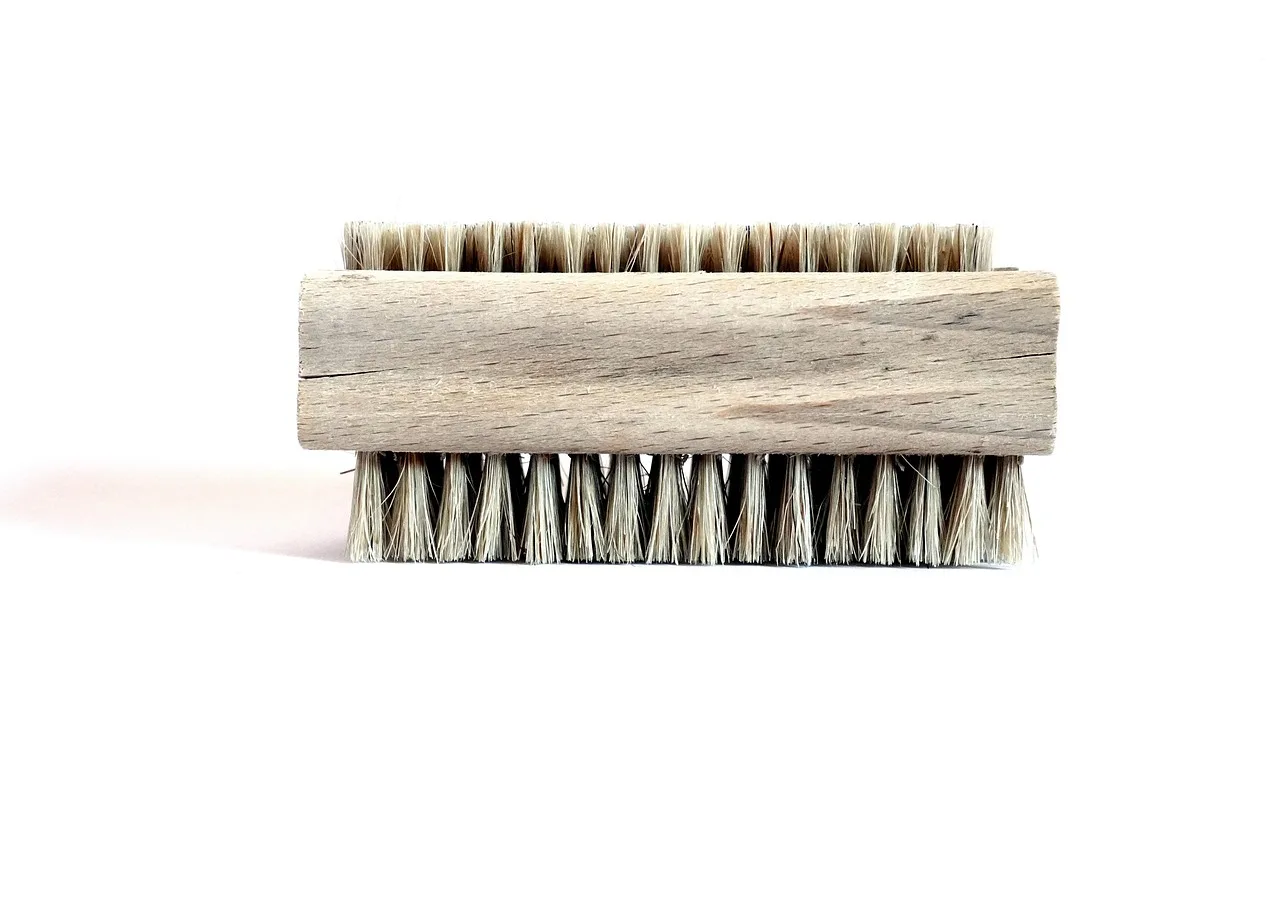
A handheld scrub brush is the most useful small tool for grout, sink edges, tub seams, and other narrow spots that gather soap film. A stiff-bristle head does the work, and a short handle keeps the brush easy to store in a shallow drawer or hanging cup.
For tiny bathrooms, the best version is slim, angled, and easy to grip. The PHYEX brush uses a 45-degree angle and a mini thin head, which fits the task better than a wider brush. If the space is especially tight, the short handle also reduces the chance of knocking into fixtures.
Where it falls short is broad coverage. It can slow you down on floor tiles, and it is less efficient on a large tub wall than a steam cleaner or scrubber with interchangeable heads. Alpine Dream Clean also notes a brush kit that extends up to 30 feet, which shows how quickly reach can become overkill in a small bath.
Bathtubs, sinks, and shower edges
For tubs and sinks, use the brush where the curve meets the seam. That is where buildup tends to stay after a quick rinse. For shower edges, a stiff brush gets into the lip where a cloth often slips over the top.
Where a crevice brush does better is in the narrow gap behind the faucet base, the seal around the toilet base, and vent slots. Those spots are too tight for many scrub brushes, even a slim one.
Squeegee and microfiber cloths: best for daily wipe-downs
A squeegee and microfiber cloths are the best low-space pair for daily wipe-downs. The squeegee clears shower glass and glossy tile, while microfiber picks up dust, fingerprints, toothpaste splatter, and small spills from mirrors and counters.
Microfiber cloths win on storage because they stack flat. That matters in a bathroom with one narrow shelf or a thin drawer. The main upkeep is laundering them often enough that they do not stay damp in a closed bin.
The SetSail squeegee is a good example of a compact wall-hung tool. For a small room, wall storage is often better than a floor caddy because it keeps the floor open and dries the tool faster.
Shower glass and tile water removal
Use the squeegee right after showering or cleaning wet tile. This lowers spotting and keeps a bathroom looking cleaner with less scrubbing later. In wet zones, prevention saves more effort than later polishing.
For mirrors and faucet chrome, microfiber is the better fit. It is thinner, easier to wring, and more likely to leave a clean finish without a spray bottle and a pile of paper towels.
Bathroom tool matrix for small spaces
This section turns the roundup into a shopping rule: buy for the task, then check whether the tool can actually live in the room. Small bathrooms fail storage tests before they fail cleaning tests.
| Task | Tool type | Storage footprint | Reach | Best surface | Downside |
|---|---|---|---|---|---|
| Fast floor cleaning | Spray mop | One upright handle; no bucket required | Good on open floor paths | Tile, vinyl, sealed floors | Not ideal if the head is too wide for the toilet gap |
| Grout lines | Handheld scrub brush | Drawer-friendly | Strong in close quarters | Grout, tile seams, tub edges | Manual scrubbing takes time |
| Shower glass | Squeegee | Hooks flat to a wall | Easy vertical reach | Glass and glossy tile | Only useful on smooth surfaces |
| Mirror spots | Microfiber cleaning cloth | Thin stackable storage | Hand-reach only | Mirrors, sinks, counters | Needs washing and air-drying |
| Behind toilet and vents | Crevice or vent brush | Narrow profile | Good for tight gaps | Behind fixtures, vents, baseboards | Poor fit for broad surfaces |
| Bucket tasks | Collapsible bucket | Flat-packs for storage | Same reach as the mop used with it | Mixed-use washing and rinsing | Must be watertight and fully dry before folding |
Built-in bottle versus bucket setup
A spray mop with a built-in refillable water bottle removes the need for a separate bucket, which is a major win in a small bathroom. That setup also shortens the cleanup path, since you can spray, wipe, and put the tool away without carrying extra gear through the hall.
A regular mop still has a place if the bathroom floor is large enough to justify a bucket or if you want a separate rinse system. Even then, a collapsible bucket is usually the storage-friendly version, provided it is watertight and not left folded while damp.
Which one should you buy?
If you want the smallest useful kit for a bathroom under 50 sq ft, start with three tools: a spray mop, a handheld scrub brush, and a microfiber cloth. That trio covers floors, grout, counters, mirrors, and most daily spill cleanup without a bulky caddy.
If shower glass is your biggest annoyance, add a squeegee before you buy a more specialized tool. If the toilet base and behind-fixture dust are the main problem, trade the squeegee for a crevice brush. A common first-timer mistake is buying a large floor mop first and leaving the corners unsolved.
For seniors or anyone who bends less easily, the best setup is the one with the longest reach and the least floor-level handling. Use an electric spin scrubber with seven interchangeable heads, and also a 56-inch extendable handle on its tile tub scrubber brush. Those long handles help reduce bending, but they also take more storage room than a hand brush.
Suppose the bathroom has one narrow closet shelf and almost no floor storage. In that case, choose hanging or stackable tools first: a squeegee hook, a thin microfiber stack, and a slim brush. If a tool needs a dry corner that does not exist, it becomes clutter, even if it cleans well.
When a collapsible bucket is worth it
A collapsible bucket is worth buying when you still need a bucket for rinsing or mixing, but cannot spare full-time storage volume. It flat-packs, which helps in a tiny hall closet or under a sink. The limit is durability and drying: if it is not fully emptied and dried, it can become awkward fast.
For many small bathrooms, it is optional rather than essential. If your routine already uses a spray mop and microfiber cloths, you may not need any bucket at all.
When disposable wipes make sense
Disposable wipes make sense for renters, guest baths, or one-off messes when laundry access is inconvenient. They are also useful when you need a quick sink or toilet-base wipe and do not want to wash cloths immediately.
The tradeoff is replacement cost and waste. Reusable microfiber cloths are usually the better long-term choice for most daily jobs, while disposable products fit occasional cleanup or travel-level storage limits.
How to store bathroom cleaning tools in a small space
Store by frequency, not by category. Keep the daily tools closest to the door or sink, and push the deeper-cleaning tools to a higher shelf or a labeled bin. In a small bathroom, the fastest tool should be the easiest one to grab.
Wall hooks work well for a squeegee and a spray mop with a slim handle. A shallow drawer can hold microfiber cloths, a hand brush, and a spare melamine sponge pack. A vent brush or crevice brush belongs in a narrow slot where its profile will not get crushed.
Avoid storing wet tools in a closed bin. That is the quickest way to create odor and shorten the life of reusable parts. Rust-resistant materials matter here, especially near showers and sinks, but airflow matters just as much.
One more practical note: a bulky caddy is often the wrong fit in a powder room. It may look organized on a larger floor plan, but in a tiny bath it steals the very space you need to move and dry tools properly.
Frequently asked questions
What cleaning tools are good for small bathrooms?
Choose tools that store flat, hang up, or fold down, and that solve a specific job. Small bathrooms do best with a narrow mop head, a stiff grout brush, microfiber cloths, and a squeegee. Skip oversized caddies and wide brushes unless the room has real storage room.
What tools help clean bathroom corners and behind the toilet?
Use a handheld scrub brush for corners and grout, then add a crevice or vent brush for the gap behind the toilet and other tight slots. A triangular mop head can help on the floor, but the smallest hand tools are usually best for the hardest-to-reach spots.
What is the best cleaning tool for a bathtub in a small bathroom?
A handheld scrub brush is the simplest answer for most tubs because it reaches seams, corners, and curved edges without taking much storage. For heavier buildup, a steam cleaner or powered scrubber can help, but those tools need more space and more drying room.
Are collapsible cleaning tools worth it for tiny bathrooms?
Sometimes. A collapsible bucket is useful if you still need bucket washing but have almost no storage space. It is less useful if your routine already relies on a spray mop and microfiber cloths. Check that it is watertight and fully dry before folding.
How do I store bathroom cleaning tools in a small space?
Use hooks for hanging tools, shallow bins for cloths and brushes, and one dedicated slot for long-handled items. Keep wet tools out of closed containers until they dry. If a tool cannot dry properly, it will take up more space in the long run because it becomes harder to keep clean.
Products related to this article
Sponsored / affiliate links. As an Amazon Associate I earn from qualifying purchases. I may earn additional commission from eligible campaigns.