Bathroom Faucet Size Chart: Find the Right Fit
Match the faucet to your sink’s hole count, hole spacing, spout reach, and clearances; standard centerset faucets fit 4-inch spreads, while widespread faucets usually fit 8-inch spreads. A poor match can leave holes exposed, make the handles awkward to use, or send water where the basin cannot catch it. This guide shows how to read a bathroom faucet size chart and measure your sink before you buy.
Faucet mounting patterns and key dimensions


Bathroom faucets do not all use the same mounting pattern. The box may list a style name, but the sink decides whether that faucet sits cleanly, covers the old holes, and sends water into the basin instead of onto the deck.
Use the chart below as a fit check, not a style guide. Start with hole count and hole spacing, then check spout reach and spout height against the sink bowl.
| Faucet layout | Sink opening pattern | Common fit note | What to check first |
|---|---|---|---|
| Single-hole | One mounting opening | Compact layout; may cover extra holes with an escutcheon | Hole count and deck coverage |
| Centerset | Three holes with 4-inch spacing | Common on smaller bathroom sinks | Center-to-center hole spacing |
| Widespread | Three holes with 8–16 inches between outer holes | Needs more deck space and separate parts | Outer-hole spacing and counter width |
| Wall-mount | Wall plumbing, not deck drilling | Needs wall rough-in and sink-to-spout clearance | Plumbing location and water landing point |
What the main dimensions mean
Three measurements usually do most of the work: hole spacing, spout reach, and spout height. Hole spacing tells you whether the faucet body can mount to the sink or deck. Spout reach tells you where the water lands. Spout height affects hand clearance and splash distance.
Why width alone does not tell you fit
A faucet can look narrow and still miss the bowl, or look large and still fit well. Overall faucet width mainly affects visual footprint, while mounting-hole spacing controls installation. Spout geometry determines whether the stream lands over the drain zone.
How to use this chart with your sink
First match the mounting pattern. Then compare the faucet’s reach and height to the sink bowl, the rear ledge, and nearby walls or cabinets. If the sink is shallow or narrow, a compact faucet often works better than a taller one with a long reach.
What size faucet fits your sink?
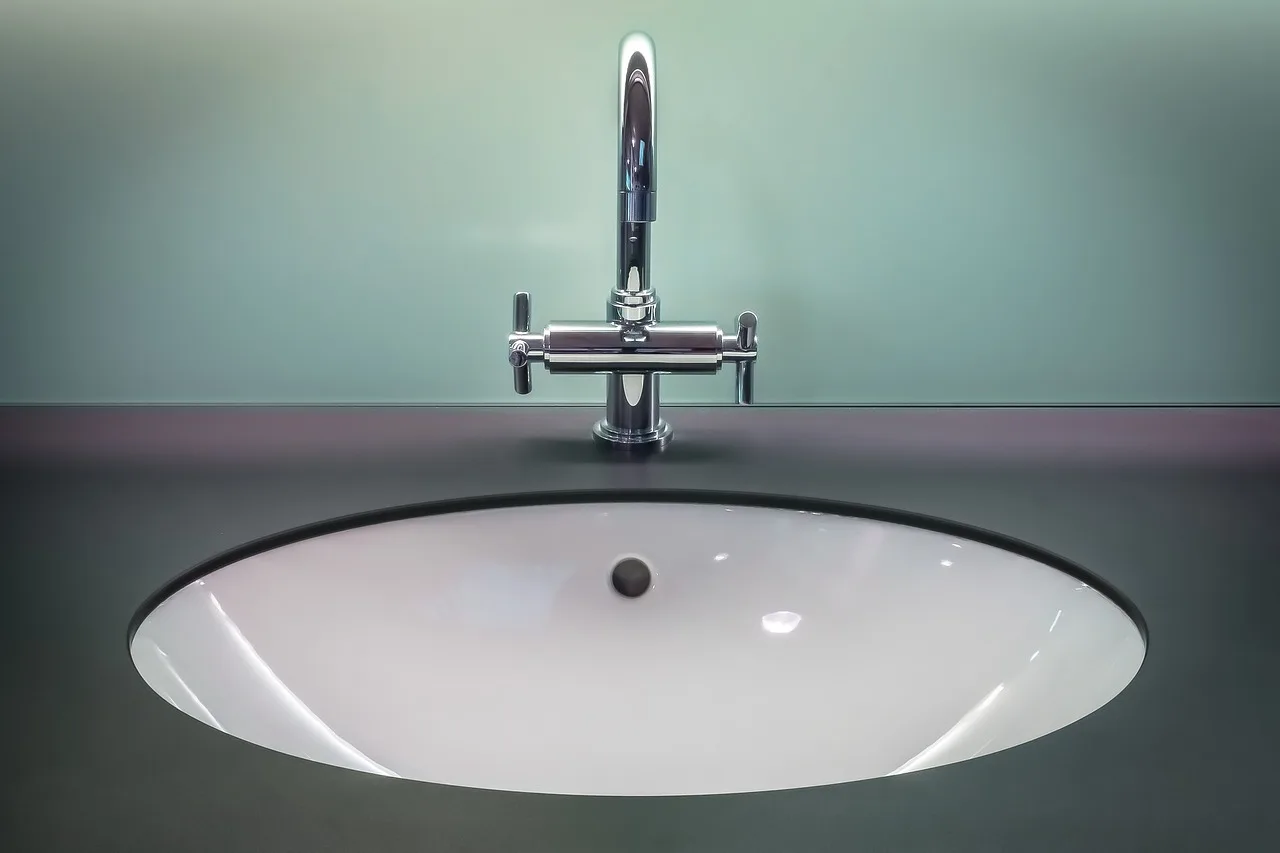
The right faucet size depends on the sink layout, not just the bathroom. A single-hole sink wants one mounting opening, a 3-hole sink may take a centerset or widespread body, and wall-mount setups depend on wall plumbing and the bowl’s position below the spout.
Single-hole sinks
A single-hole bathroom faucet uses one mounting opening. This is the simplest layout to match because the faucet and handle assembly mount through one hole. If the sink has extra holes, some single-hole models can use an escutcheon to cover them.
Centerset sinks
A centerset bathroom faucet commonly uses 4-inch spacing on three-hole sinks. That works well on many small bathroom sinks with a compact deck. It does not automatically fit every three-hole sink, especially if the sink has unusual drilling or limited room behind the bowl.
Widespread sinks
A widespread bathroom faucet has separate handles and a spout. These commonly fit 8–16 inches between the outer holes and need more deck space than a centerset body. They suit larger sinks and countertops, but the available flat surface matters as much as the hole pattern.
Wall-mount setups
A wall-mount bathroom faucet is not a drop-in replacement for a deck-mounted faucet. It needs wall plumbing in the right place, plus enough clearance so the stream lands in the basin. Some setups use 8-inch spacing, but wall rough-in must match the sink height and projection.
Say your sink has three holes on a narrow vanity top with only a small flat deck behind the basin. A widespread faucet may fit the hole pattern, yet the handles can crowd the backsplash or cabinet edge. In that case, a centerset or single-hole style may work better.
Bathroom faucet hole sizes and spacing
The standard faucet hole diameter is 1 3/8 inch, or 35 mm. That is the common drilling size many faucets are built around, but manufacturer-specific variations do exist. Moen, for example, is cited as having some sinks with 1 1/4 inch and 1 1/2 inch faucet holes.
Standard hole diameter
Hole diameter matters when you are replacing a faucet or using a deck plate. If the opening is too small, the faucet will not pass through cleanly. If the opening is too large, the base or trim may not cover it the way you expect.
How to measure center-to-center spacing
Faucet spacing is measured center to center, not from outside edges. On a three-hole sink, measure from the center of one hole to the center of the next. That is the number used for centerset fit and for the outer holes on a widespread setup.
When hole size varies by brand
Do not assume every sink matches the same drilling size. Some brand-specific sinks and some older vanities use different openings. Before you buy, check the product spec sheet for both the faucet and the sink so the body, deck plate, and gaskets line up.
How to measure your sink
Measure the sink, not the faucet box. The box can list a style that sounds right, but the sink’s hole pattern, deck space, and basin shape decide whether the faucet lands in the right place and clears the rear edge.
- Count the sink holes and note whether they are single-hole, three-hole, or wall-mount compatible.
- Measure hole spacing center to center on any three-hole sink.
- Measure the flat deck area behind and beside the holes.
- Check the basin depth and the distance from the rear wall or backsplash to the sink rim.
- Compare the faucet’s spout reach and spout height to the basin center and clearance needs.
Measure hole spacing correctly
If the sink has three holes, measure the middle-to-middle distance. Do not measure outside edge to outside edge. A 4-inch centerset layout is one of the most common bathroom faucet configurations, but that number only helps if your actual center-to-center spacing matches it.
Check deck space around the holes
Deck space matters for handle swing, escutcheons, and finger room. A widespread faucet needs more room because the handles and spout sit apart. A tight deck can make a technically correct layout feel cramped or make cleaning around the base harder.
Measure the basin depth and rear clearance
Look at the rear slope of the basin and the space behind the sink. A faucet can match the holes and still fail if the handles hit a backsplash or the spout lands too close to the front wall of the bowl. This is where sink shape matters as much as hole count.
Picture a shallow vanity sink with a short bowl and a backsplash only a few inches behind the deck. A tall faucet may clear the rim, but the handle could strike the wall or the water could splash because the drop distance is too great. A lower-arc model often fits that setup better.
How spout reach and height affect fit
Spout reach and spout height do different jobs. Reach determines where the stream lands in the basin. Height determines how much room your hands have under the spout and how far water falls before it hits the bowl.
Spout reach and water landing point
Spout reach determines where the water stream lands in the basin. If the reach is too short, water may hit the front slope or miss the drain zone. If it is too long, water can land too far forward and splash more than it should.
Spout height and hand clearance
Spout height affects hand clearance and water-drop distance. A low-arc faucet often works well with compact vanities and shallow sinks. A high-arc faucet can suit deeper sinks or vessel-sink layouts, where taller clearance is useful and the bowl can accept a longer drop.
When a taller faucet causes splash
Higher is not always better. In a shallow basin, extra height can increase splash because water falls farther before it reaches the bowl. The best match is the faucet that keeps the stream centered over the drain zone and leaves enough hand room without creating excess drop.
Single-hole, centerset, and widespread differences
These three layouts solve different sink problems. Single-hole faucets keep the footprint compact. Centerset faucets bundle the handles and spout closely together. Widespread faucets split the parts apart and need more room across the deck.
Single-hole bathroom faucet fit
A single-hole bathroom faucet suits sinks with one opening or sinks where you want a compact layout. It is also useful when you want to hide extra holes with a deck plate. That makes it a practical option for small sinks and simple vanity tops.
Centerset bathroom faucet fit
A centerset bathroom faucet commonly fits a three-hole sink with 4-inch spacing. This is a good match for many smaller bathroom sinks because the base is compact and the handles sit close to the spout. It is not the right choice for every three-hole sink, especially if the deck is unusually wide or narrow.
Widespread bathroom faucet fit
A widespread bathroom faucet uses separate handles and a spout, and it commonly fits 8–16 inches between the outer holes. This layout needs more counter or deck space, so it is better for larger sinks and vanities. It is also easier to misfit if the flat area is limited.
Faucet fit worksheet
Use this worksheet before you order. It turns the decision into three checks: hole spacing, spout reach, and spout height. If one of them fails, the faucet may still install, but it will often look wrong or function poorly.
| Check | What to measure | Pass signal | Red flag |
|---|---|---|---|
| Hole spacing | Center to center on three-hole sinks | Matches the faucet layout you want | Outside-edge measurements instead of center spacing |
| Spout reach | From mounting point to water outlet | Water lands over the basin and drain zone | Stream hits the front slope or misses the bowl center |
| Spout height | From deck or wall to outlet | Hands fit under the spout without excess splash | Low clearance or a long drop in a shallow sink |
Quick pass or fail guide
If the sink has one hole, start with a single-hole faucet. If it has three holes at 4-inch spacing, a centerset faucet is the first layout to check. If the outer holes are 8–16 inches apart, look at widespread models. If the faucet is wall-mounted, confirm the plumbing rough-in before anything else.
If the sink is shallow, prefer a lower-arc faucet with a reach that puts the stream over the drain zone. If the sink is deep or vessel-style, a higher-arc faucet may work better. If the backsplash is tight, measure the handle and spout clearance before you buy.
Frequently asked questions
Are all bathroom faucets the same size?
No. Bathroom faucets vary by hole count, hole spacing, spout reach, and spout height. A faucet that fits one sink may miss the drain zone or leave holes exposed on another sink. The right size depends on the sink geometry, not just the style name on the box.
Are bathroom faucets standard size?
Some parts of bathroom faucet sizing are common, but they are not universal. The standard faucet hole diameter is 1 3/8 inch, or 35 mm, and 4-inch centerset spacing is common. Even so, manufacturers can vary, so you should check the spec sheet before buying.
What size are bathroom taps?
Bathroom taps are usually sized by the sink they fit, not by one universal body size. Single-hole faucets use one mounting opening, centerset models commonly use 4-inch spacing, and widespread faucets commonly fit 8–16 inches between the outer holes. The sink layout decides the match.
What size faucet for bathroom sink?
Start with the sink’s hole pattern. A single-hole sink needs a one-opening faucet, a three-hole sink with 4-inch spacing often suits a centerset model, and a wider three-hole layout may need a widespread faucet. Then confirm spout reach and height so water lands in the bowl.
What is the standard bathroom faucet hole size?
The standard faucet hole diameter is 1 3/8 inch, or 35 mm. That is the common size many faucets are designed around, but there are exceptions. Some sinks use different hole diameters, so the sink and faucet spec sheets should both be checked before installation.
How do I measure faucet hole spacing?
Measure center to center, not edge to edge. On a three-hole sink, measure from the middle of one hole to the middle of the next. That number tells you whether the sink fits a centerset layout, a widespread layout, or neither without an adapter or deck plate.
Will a widespread faucet fit 4-inch holes?
No, not as a normal direct match. A widespread faucet commonly fits 8–16 inches between the outer holes, while a 4-inch centerset layout is a different pattern. If your sink has 4-inch spacing, look at a centerset faucet first, unless the manufacturer lists a special exception.
What faucet size works for a small bathroom sink?
A small bathroom sink usually works best with a compact layout. Single-hole faucets fit one opening and can cover extra holes with an escutcheon. Centerset faucets also suit many small sinks because they use 4-inch spacing and keep the body compact, while taller widespread models can feel crowded.
Products related to this article
Sponsored / affiliate links. As an Amazon Associate I earn from qualifying purchases. I may earn additional commission from eligible campaigns.