Shower Door Installation Cost / Price / How Much
Shower door installation is commonly reported to cost about $700 to $2,000 installed, with many homeowners paying around $1,100 to $1,600 (HomeAdvisor; Angi). Framed doors usually cost less, while frameless and custom glass often cost more. Bad measurements, tile repairs, or out-of-plumb walls can add hundreds and force a reorder. This article breaks down labor, glass type, hardware, removal, and the conditions that change a quote.
Typical cost range
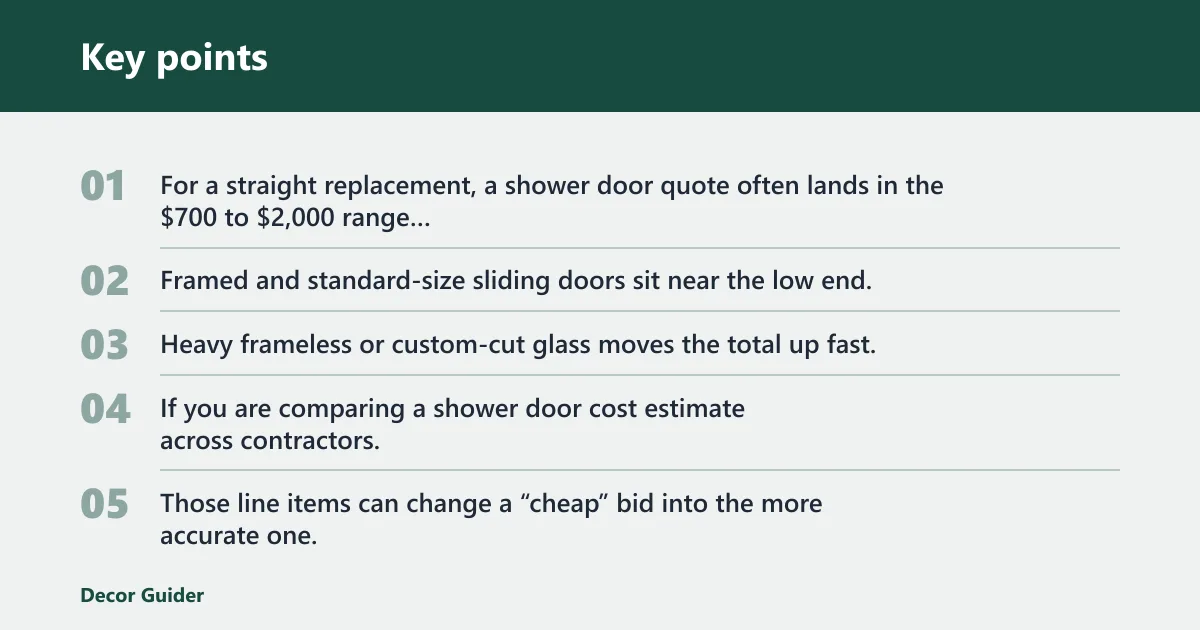


For a straight replacement, a shower door quote often lands in the $700 to $2,000 range once material, labor, and basic sealant work are included (HomeAdvisor; Angi). Framed and standard-size sliding doors sit near the low end. Heavy frameless or custom-cut glass moves the total up fast.
If you are comparing a shower door cost estimate across contractors, the biggest differences usually come from whether the quote includes templating, delivery, removal, caulking, and any wall repair. Those line items can change a “cheap” bid into the more accurate one.
Typical installed price ranges by door type
Door style drives the biggest price swing because it changes glass weight, hardware, and labor time. Framed units usually cost the least because the metal frame carries much of the load. Frameless doors cost more because thicker glass and stronger hardware are standard, and custom fabrication often adds lead time (HomeAdvisor; Angi).
| Door type | Typical installed range | Typical material range | Labor-only range | Expected install time | Common excluded line items | When stock doors stop being viable | What drives the cost |
|---|---|---|---|---|---|---|---|
| Framed | $700 to $1,200 | $300 to $700 | $300 to $600 | 2 to 4 hours | Old-door removal, threshold repair, upgraded hardware | When the opening is out of square or the walls are not plumb | Lower material cost, lighter glass, simpler hardware |
| Semi-frameless | $900 to $1,500 | $450 to $900 | $350 to $700 | 3 to 5 hours | Templating, finish upgrades, wall shims | When the opening needs custom widths or irregular cutouts | More metal than frameless, but less than a full frame |
| Sliding / bypass | $900 to $1,700 | $450 to $1,000 | $400 to $800 | 3 to 6 hours | Rollers, track replacement, track cleanup | When tracks, rollers, or wall conditions are no longer standard | Track alignment, rollers, and more parts to adjust |
| Pivot / swing | $1,100 to $1,800 | $500 to $1,100 | $450 to $900 | 4 to 6 hours | Reinforcement, hinge upgrades, door stop parts | When the opening cannot carry hinge loads safely | Heavier doors, hinge load, and tighter fit requirements |
| Frameless | $1,300 to $2,500+ | $700 to $1,500+ | $500 to $1,000+ | 4 to 8 hours | Custom glass, extra helpers, specialty hardware | When stock sizes cannot match the opening or clearances | Thicker glass, templating, premium hinges, more labor |
What is usually included in the base quote?
A solid quote should list the door itself, templating or measurement, delivery, installation, caulking, and basic cleanup. Some installers also include standard hardware in the door price. Disposal of the old enclosure is often separate, especially if glass must be removed in pieces.
Why one contractor quote can be far higher than another
One quote may include only labor, while another bundles the door, templating, delivery, and removal. Local labor rates also vary, and some companies add a minimum service charge even for a simple swap. If one bid assumes custom glass and the other assumes stock sizing, the gap can be large.
Shower door cost by type
Shower door type changes both the material bill and the install bill. A stock framed door can be a quick fit. A frameless enclosure with custom glass usually needs measurement, fabrication, two-person handling, and more exact wall conditions.
Framed and semi-frameless doors
Framed doors are usually the cheapest to buy and install because the frame helps compensate for small irregularities. Semi-frameless doors cost more, but still use some framing to reduce hardware demand. They are a common middle ground for homeowners who want a cleaner look without full frameless pricing.
Frameless doors
How much does a frameless shower door cost installed? A typical installed price is about $1,300 to $2,500 or more, depending on size, glass thickness, and hardware finish (HomeAdvisor; Angi). Frameless doors use thicker tempered glass, more exact measurement, and stronger hinges or clamps, so both labor and materials rise.
Sliding, bypass, and pivot doors
Sliding and bypass doors often cost less than a large frameless swing door, but track and roller quality matter. Pivot doors can be economical for narrower openings, yet they need solid anchoring and enough clearance for the door arc. If the opening is off square, adjustment time goes up.
What affects the price of shower door installation?
The final price changes with glass thickness, opening size, wall condition, and the amount of prep needed before the door can hang correctly. A simple, standard opening can stay near the quoted base price. A custom opening with tile repair or reinforcement can add several hundred dollars.
Glass thickness and hardware weight
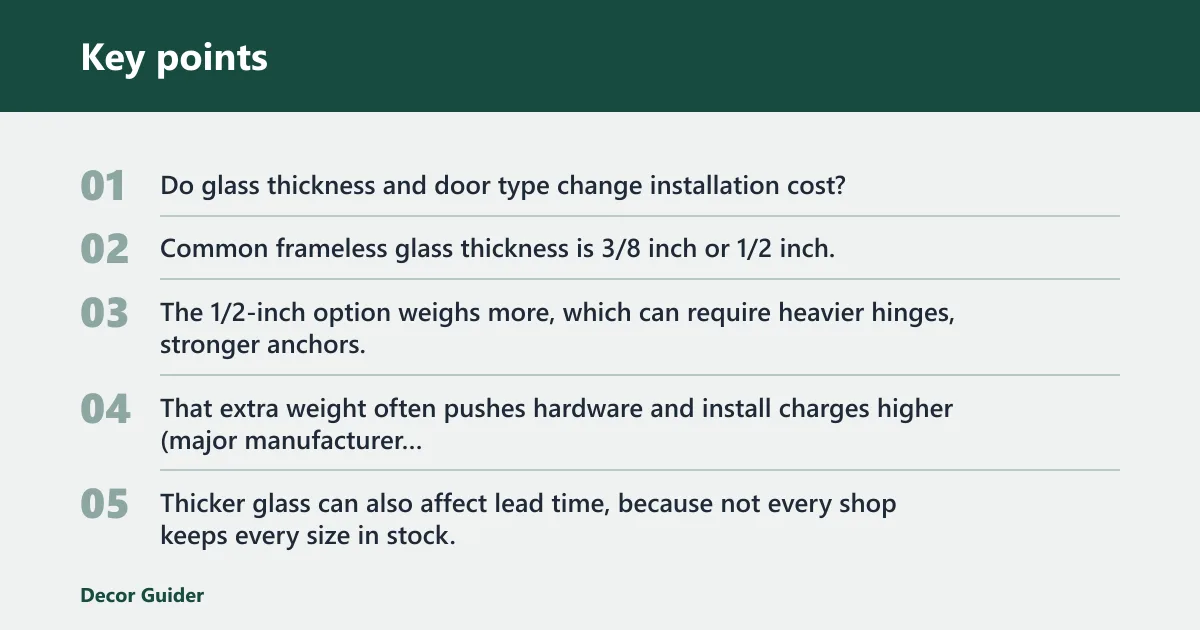
Do glass thickness and door type change installation cost? Yes. Common frameless glass thickness is 3/8 inch or 1/2 inch. The 1/2-inch option weighs more, which can require heavier hinges, stronger anchors, and more labor to set safely. That extra weight often pushes hardware and install charges higher (major manufacturer installation specs; ASTM C1048 for heat-treated flat glass).
Thicker glass can also affect lead time, because not every shop keeps every size in stock. A heavier door may need two installers for safe handling. That matters on tight bathroom layouts where the panel must be lifted into place without chipping tile or striking the tub edge.
Opening size, custom fabrication, and out-of-square walls
Standard-width openings are cheaper because many doors are stocked in common sizes. Custom widths cost more because the glass must be templated and cut to fit the exact opening. Out-of-plumb walls and out-of-square corners also increase labor because the installer has less room to absorb errors.
Picture a 60-inch opening on paper, but the tile wall leans inward at the top by 3/8 inch. A stock door may no longer fit cleanly, so the installer has to change the layout or order custom glass. That extra step can add both time and cost.
Wall condition, tile type, and backing needs
Tile type matters because drilling through porcelain, stone, or large-format tile takes more care than drilling through basic ceramic. If the wall lacks solid backing where hinges or tracks need to land, the installer may need reinforcement. Waterproofing repairs, damaged trim, and cracked threshold pieces can all appear on the final bill.
Suppose the old enclosure was mounted into hollow drywall behind tile. If the new glass door needs a hinge anchored into the same area, the installer may have to open the wall and add backing first. That is no longer a simple door swap.
Shower door cost checklist table
This checklist helps you compare bids line by line. The goal is not the lowest number on the page. It is the quote that includes the same parts, the same assumptions, and the same site conditions.
| Door type | Likely labor complexity | Hidden add-ons | Quote red flags |
|---|---|---|---|
| Framed | Low to moderate | Old-door removal, caulking, threshold repair | Does the quote exclude disposal or sealant? |
| Semi-frameless | Moderate | Upgraded hinges, finish changes, wall shims | Is templating listed, or only “install”? |
| Sliding / bypass | Moderate to high | Rollers, track replacement, track cleanup | Are rollers and tracks included, or extra? |
| Pivot / swing | High | Reinforcement, hinge upgrades, door stop parts | Does the bid mention weight limits? |
| Frameless | High | Custom glass, extra helpers, specialty hardware | Does the installer charge again for a second visit? |
Compare estimates line by line. Door price, templating, delivery, installation, caulking, and disposal should appear separately or be clearly bundled. If one quote omits wall repair, threshold work, or hardware finish selection, that quote is incomplete.
- Check whether the quote is for a standard or custom opening.
- Confirm glass thickness and tempered glass compliance.
- Ask whether templating, delivery, and disposal are included.
- Ask what happens if the walls are out of plumb or out of square.
- Confirm whether caulking, sealing, and cleanup are in the final price.
- Get the cost for any wall repair, reinforcement, or trim replacement in writing.
Installed cost breakdown
Installed pricing is easiest to compare when each part of the job is separated. A complete quote usually includes the shower door, the hardware package, labor, removal of the old enclosure, delivery, and caulking. If those items are bundled, ask for the bundle contents in writing before you sign.
Door
The door itself is the biggest material cost, especially when the opening requires custom glass. Standard framed units are usually the least expensive, while thicker frameless glass and specialty shapes cost more. Tempered safety glass is the norm for shower enclosures because it is designed to meet safety expectations for impact and breakage behavior (CPSC; ASTM C1048).
Hardware
Hardware includes hinges, handles, clamps, rollers, tracks, and stops, depending on the door style. Finish upgrades, such as matte black or brushed nickel, can raise the hardware total. Frameless systems often need heavier-duty components to support the weight of the glass.
Labor
Labor covers measurement, setup, drilling, leveling, alignment, and final adjustments. It can also include a return visit if the installer is templating one day and installing after fabrication. More complex openings and heavier glass add time, which is why frameless labor is usually higher than framed labor (HomeAdvisor; Angi).
Removal
Removal of the old door can be simple or labor-intensive depending on the condition of the existing enclosure. Hardened sealant, corroded brackets, and broken track parts can slow the job. Some contractors include removal in the base price, while others bill it separately.
Delivery
Delivery is often separate for large, fragile, or custom-made panels. This is especially common when the glass is fabricated off site and must be brought in on a scheduled date. If the contractor has to make multiple trips, delivery or trip charges can increase.
Caulking
Caulking helps seal the enclosure where the glass meets the wall, pan, or threshold. It is a routine part of most good installations, but some bids leave it out or only include a basic bead. For more detail on that line item, see Sealing and caulking.
What is included in installation labor?
Labor usually covers measuring, setting the door, fastening hardware, aligning the panels, and sealing the edges. A reasonable labor line also includes minor adjustment work during install. If the contractor must remove an old door, repair tile, or dispose of glass, those tasks may be billed separately.
Templating, delivery, and setup
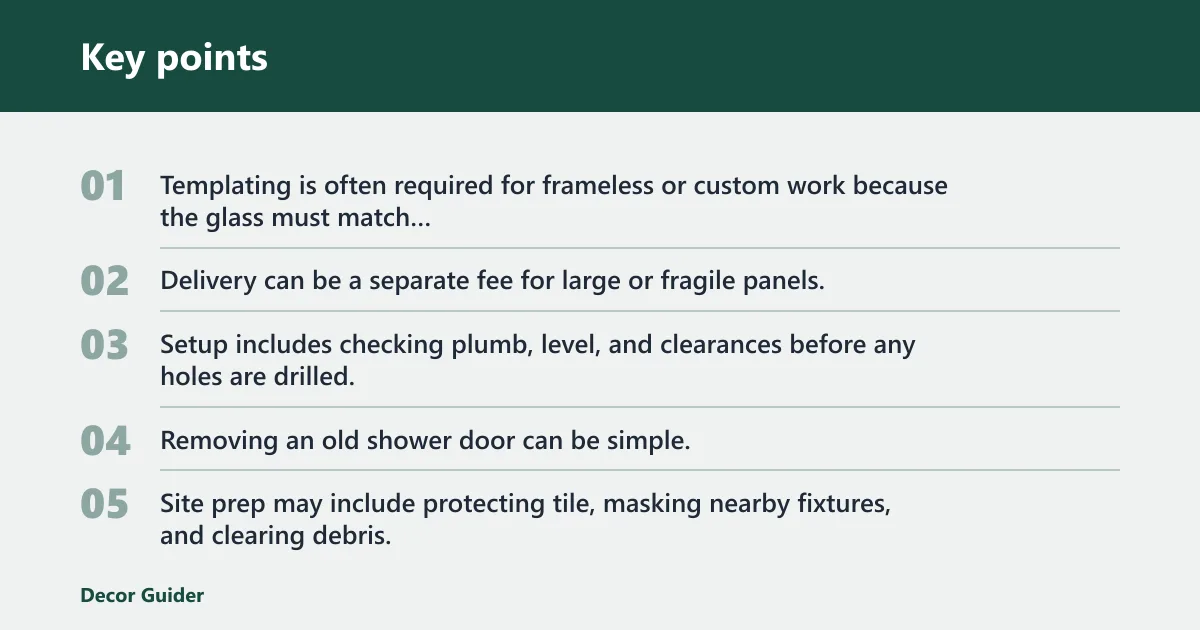
Templating is often required for frameless or custom work because the glass must match the exact opening. Delivery can be a separate fee for large or fragile panels. Setup includes checking plumb, level, and clearances before any holes are drilled.
Removal of the old door and site prep
Removing an old shower door can be simple, or it can take time if sealant has hardened or clips have corroded. Site prep may include protecting tile, masking nearby fixtures, and clearing debris. Some installers charge a minimum service fee even for a fast replacement.
Caulking, sealing, and disposal charges
Sealing and caulking are part of a proper installation because the glass-to-wall and glass-to-pan joints need a water-tight finish. Disposal charges often cover broken glass handling and haul-away. If a quote says only “install door,” ask whether these items are extra.
Can you install a shower door yourself?
Yes, a simple framed replacement can be a DIY job if the opening is standard, the walls are sound, and you are comfortable measuring carefully. Frameless doors are harder because the panels are heavy, tempered glass cannot be trimmed on site, and an error can mean a reorder.
When DIY can make sense
DIY can make sense for a stock framed door on a standard opening with good tile and solid backing. The main savings come from labor, which can be a large share of the total cost. You still need the right tools, accurate measurements, and enough help to move glass safely.
When pro installation is safer
Professional installation is usually safer for frameless glass, custom openings, or older showers with questionable backing. A pro can handle wall irregularities, heavy panels, and hinge alignment. That matters because a small measurement miss can leave gaps, leaks, or hardware stress.
Hidden costs of a failed DIY install
The hidden cost is not just time. A wrong measurement can mean a custom panel has to be reordered. Chipped tile, damaged thresholds, broken glass, or stripped anchors can add repair costs that exceed the original labor charge.
How long does installation take?
A straight replacement can often be finished in a few hours, while a custom frameless job may take most of a day, especially if templating or wall prep is needed. Lead time matters too, because custom or thick glass may take longer to fabricate than a stock door.
Straight replacement versus custom install
For a like-for-like replacement, the installer may only need to remove the old unit, confirm measurements, and set the new door. Custom installs take longer because the opening may need a template visit first, then a return visit after fabrication. Out-of-plumb walls add more setup time.
Why lead time matters for tempered or custom glass
Most shower doors use tempered safety glass, and that glass is ordered to size. Once cut and tempered, it cannot be altered. If the opening is wrong, the delay is not a small adjustment; it can become a full remake. That is why careful measuring matters before you buy (CPSC; ASTM C1048; major manufacturers’ installation guidance).
When an existing shower can accept a new door
Can a shower door be installed in an existing shower? Yes, if the opening is stable, the walls can support the hardware, and the threshold or pan is in good condition. Existing showers can accept new doors when the size is standard and the old mounting points do not need major repair.
A common first-timer mistake is assuming a 60-inch opening means any 60-inch door will fit. If the tile edge is uneven or the walls lean, the real fit can be smaller or skewed. That is where a simple replacement turns into a custom order.
Frequently asked questions
How much does shower door installation cost?
Framed and standard sliding doors are usually cheaper. Frameless and custom glass cost more because they require thicker material, more exact measurement, and more labor.
Is it cheaper to install a shower door yourself?
Usually yes, if the door is framed, stock size, and the opening is simple. The savings come from skipped labor charges. For frameless or custom doors, the risk of breakage, wrong measurements, or poor alignment can erase those savings quickly.
How much does a frameless shower door cost installed?
A frameless shower door commonly costs about $1,300 to $2,500 or more installed (HomeAdvisor; Angi). The range depends on glass thickness, hardware finish, opening size, and any wall repair needed for hinges or clamps. Custom openings and heavier panels can push the number higher.
Do glass thickness and door type change installation cost?
Yes. A 1/2-inch pane weighs more than a 3/8-inch pane, so it can require stronger hardware and more handling time. Frameless and pivot doors usually cost more to install than framed doors because they depend more on precise alignment and heavier parts.
What extra costs can come up during shower door installation?
Extra costs can include wall repair, tile drilling, threshold or trim replacement, upgraded hardware, disposal, and a second trip if custom glass is needed. If the installer finds hidden water damage or weak backing, the quote can rise before the door is set.
Products related to this article
Sponsored / affiliate links. As an Amazon Associate I earn from qualifying purchases. I may earn additional commission from eligible campaigns.