Caulking a Bathroom Cost / Price / How Much
Bathroom caulking usually costs about $100 to $300 for a simple recaulk, and about $250 to $600 when old silicone removal, mold cleanup, or full perimeter work is included. Bad caulk lets water into joints, which can mean stained drywall, loose tile, and a bigger repair bill later. This guide breaks quotes into scope tiers, per-foot pricing, prep work, material costs, and red flags.
Bathroom caulking price calculator


Use this table to split a bid into scope, length, labor, and materials. The totals below are built for a homeowner sanity check, not a quote from one city or one contractor, so they are best used to spot pricing that is far above or far below the job description.
| Scope tier | Estimated linear feet | Tube count | Labor hours | Material cost | Fair total range |
|---|---|---|---|---|---|
| Tub/shower only | 20–35 ft | 1–2 tubes | 1–2 hours | $8–$36 | $100–$220 |
| Full bathroom | 35–60 ft | 2–3 tubes | 2–4 hours | $16–$54 | $200–$380 |
| Mold-removal re-caulk | 20–60 ft | 2–4 tubes | 3–6 hours | $16–$72 | $280–$500+ |
Quick check: a tub/shower-only quote should be lower than a full-room quote, and a mold-removal job should be higher because removal, cleaning, and drying add time. If a bid ignores those differences, it is not giving you enough detail to judge the price.
📊 Bathroom retiling cost can range from $400–$2,000 for smaller projects. Source: Thisoldhouse.
How much does bathroom caulking cost?
A simple bathroom recaulk usually lands between $100 and $300, with more involved work rising to $250 to $600 or more. The total usually includes labor and materials, and the biggest drivers are prep, removal of old caulk, and access around the joint.
What the price usually includes
For a normal job, the contractor removes failing caulk, cleans the joint, applies bathroom-rated sealant, and leaves enough cure time for the bead to set. Bathroom-rated silicone is the right pick for most bathroom applications because it resists moisture better than basic caulk, but that also pushes material cost up.
Most bids are not priced by tube alone. Labor, travel, and minimum call-out fees matter more than the retail price of the caulk on a shelf.
Minimum service charges and trip fees
Professional handyman pricing often starts with a minimum call-out fee of $100 to $150 in many markets. That means a tiny repair can still cost more than the tube itself, because the visit, setup, and travel time are built into the bill.
Regional variation matters, too. A fair U.S.-wide estimate for a plain tub/shower recaulk should not look like a bargain-bin material price, and it should not look like a full remodel either. The job sits in the middle because it is small, but it is still skilled labor.
What changes the price?
Bathroom caulking cost changes most with scope, prep, and access. One tub corner is a very different job from a full bathroom perimeter with old, cracking silicone, mildew staining, or hard-to-reach joints behind fixtures.
Scope: one tub, one shower, or the whole bath
A tub/shower-only job usually covers the tub-to-wall line, the shower pan-to-surround line, and a few related edges. A full bathroom job may also include the sink basin, backsplash seams, and the toilet base, depending on what the quote says and what actually needs sealing.
Say your tub surround only has one failed bead along 18 feet of edge. That is a smaller job than a bathroom where the sink, toilet base, and shower all need fresh sealant. The extra joints add length, and length adds labor.
Prep level: cleaning, scraping, drying, masking
Prep can be the difference between a quick recaulk and a longer repair. Old caulk removal, soap scum cleaning, mold treatment, masking, and drying time all add labor hours. If a contractor skips those steps, the new bead can bond poorly and fail early.
A common first-timer mistake is assuming new caulk can cover cracked old material. It usually should not. Failed caulk traps moisture, and that can lead to loose edges, staining, and repeat work soon after.
Access, height, joint shape, and condition
A straight, open tub edge is easier than a narrow gap behind a vanity or an awkward corner around a shower niche. Deep gaps often need more product and more careful tooling. Poor access raises the time per foot, which raises the quote.
Contractor-to-contractor pricing also varies. Some handymen quote hourly, others use a trip minimum, and others bundle caulking into a broader bathroom maintenance visit. Two bids can both be fair and still differ because one includes setup, cleanup, and a return trip for multiple bathrooms.
How much is a tube of caulk?
A tube of caulk commonly costs $8 to $18 in Vancouver hardware stores, and that is a useful retail reference point for bathroom jobs elsewhere. Bathroom-rated silicone usually costs more than standard caulk, but it is the better fit for wet areas because it holds up longer against moisture.
Standard caulk vs bathroom-rated silicone
Bathroom-rated silicone is recommended for most bathroom applications. It tends to cost more than basic acrylic or general-purpose caulk, but it is the safer choice around tubs, showers, and other wet zones where water exposure is routine.
For homeowners comparing a DIY tube to a pro quote, the material cost is only part of the picture. A tube can be cheap while the finished job still costs much more because the old sealant must be removed, the joint cleaned, and the bead shaped correctly.
Coverage per tube
A typical bathroom tube can cover about 20 to 30 linear feet, depending on bead size and gap width. Narrow, shallow joints use less product; wide or uneven gaps use more. That is why two bathrooms with the same floor plan can still need different tube counts.
How much is a case of caulk? A case only makes sense when you are sealing multiple bathrooms or running repeated jobs. For one tub, a case is usually overkill. For two or three bathrooms, a multi-bath package can cut the per-room total, especially if the contractor is already on site.
How much does caulking cost per foot?
A practical per-foot estimate for bathroom caulking is often the fastest way to sanity-check a quote. If the bid price divided by total joint length lands far above the expected range for the scope, ask what prep, removal, or mold work is included before you accept it.
Simple per-foot math
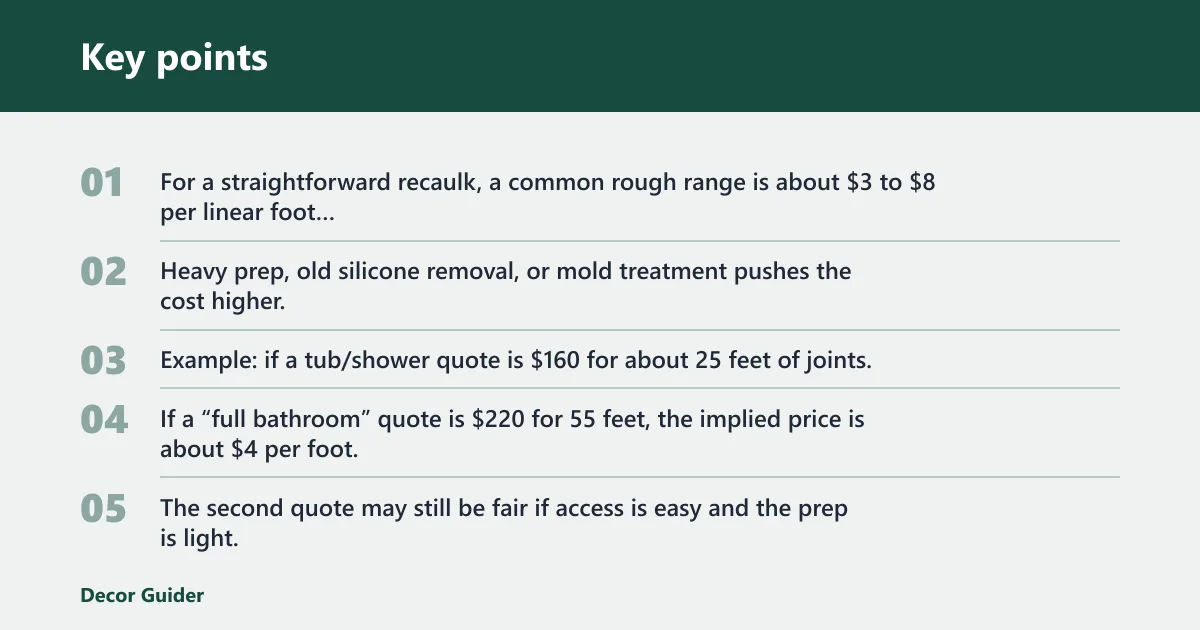
For a straightforward recaulk, a common rough range is about $3 to $8 per linear foot once labor and materials are included. That range is only for simple work. Heavy prep, old silicone removal, or mold treatment pushes the cost higher.
Example: if a tub/shower quote is $160 for about 25 feet of joints, the implied price is about $6.40 per foot. If a “full bathroom” quote is $220 for 55 feet, the implied price is about $4 per foot. The second quote may still be fair if access is easy and the prep is light.
How removal and prep change the per-foot rate
Old caulk removal is labor-heavy. Scraping and cleaning out failed beads takes time, and any mold treatment or drying period adds more. That is why a mold-removal re-caulk can cost far more per foot than a cosmetic refresh of clean, sound joints.
How to use joint length to sanity-check a quote
Count the visible seams before you call for bids. Include the tub-to-wall line, shower pan-to-surround edges, sink basin edges, and toilet base if those are part of the job. Then ask the contractor whether the estimate is based on linear feet, room scope, or a minimum service charge.
Suppose a bathroom has about 45 feet of sealing needs, but a quote lists only a flat “small job” fee with no mention of removal or material type. That is a warning sign that the price may leave out part of the actual work.
Why old caulk removal matters
Old caulk removal is one of the biggest reasons bathroom caulking costs rise. It takes labor, it exposes hidden damage, and it often decides whether the new bead will hold or fail. Skipping this step can make a cheap bid expensive later.
How removal time affects labor cost
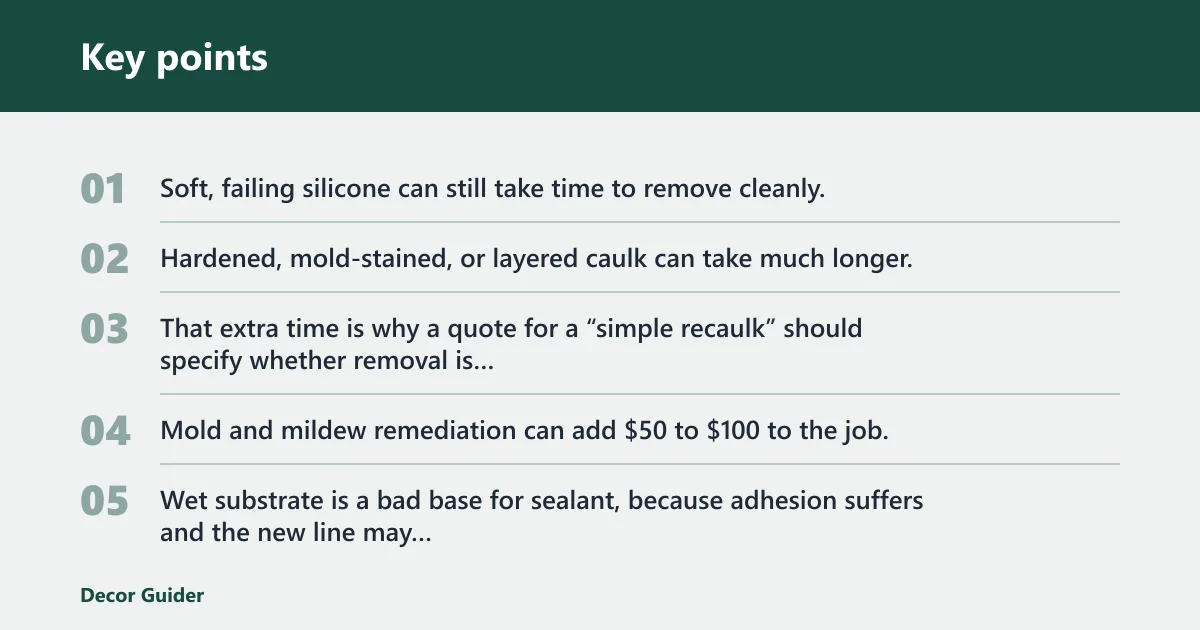
Soft, failing silicone can still take time to remove cleanly. Hardened, mold-stained, or layered caulk can take much longer. That extra time is why a quote for a “simple recaulk” should specify whether removal is included or billed separately.
Surface prep, mold treatment, and drying time
Mold and mildew remediation can add $50 to $100 to the job, and the surface may need drying time before new caulk goes in. Wet substrate is a bad base for sealant, because adhesion suffers and the new line may fail early.
The practical risk is water damage. If a failed bead lets water into the wall or under the tub edge, the repair can move from a caulk job to damaged drywall, loose tile, or substrate replacement.
Bond failure risk when shortcuts are used
Fresh caulk does not fix a dirty or damp joint. If the old bead is left in place, or the surface is not fully clean, the new material may peel, split, or separate at the edges. That is why removal and prep belong in the quote, not as an afterthought.
How to compare quotes
A fair quote should tell you what joints are included, what product is being used, whether removal is part of the job, and whether mold treatment or drying time is separate. The more specific the line items, the easier it is to compare bids without guessing.
What a fair quote should name line by line
- Which areas will be caulked, such as tub-to-wall, shower pan, sink basin, or toilet base.
- Whether old caulk removal is included.
- Whether bathroom-rated silicone is specified.
- Whether mold treatment or drying time is extra.
- Whether the bid includes a minimum call-out fee or a bundle discount for more than one bathroom.
Quote red flags
- No mention of old caulk removal.
- No material spec, especially for wet areas.
- A total that is far below the likely labor time.
- Vague wording like “touch-up” when the job needs full perimeter sealing.
- No mention of mold treatment even when staining is visible.
- No breakdown for multiple bathrooms, even though the contractor is quoting more than one room.
Bundling can lower the total
Multi-bathroom packages for 2–3 bathrooms are often $450–$800, which can be easier to justify than separate minimum charges for each room. Bundling helps because the contractor spreads travel, setup, and cleanup across more work.
That said, the discount should still make sense. If one bathroom needs mold removal and another only needs a quick vanity bead, the quote should reflect the difference instead of flattening everything into one vague price.
Frequently asked questions
How much does caulking cost?
The final price depends most on labor, prep, and access, not on the tube alone.
How much to charge for caulking?
If you are pricing the work as a handyman, a fair quote should cover labor, removal time, materials, travel, and a minimum visit charge. For small bathroom jobs, that often means a floor price near $100 to $150 before any add-ons for mold or extra bathrooms.
How much does caulk cost?
Bathroom caulk is not expensive as a material. A tube often runs $8 to $18 at retail in Vancouver hardware stores, and bathroom-rated silicone usually costs more than basic general-purpose caulk because it is made for wet areas and longer service life.
How much does it cost to re caulk a bathtub and shower?
A tub-and-shower recaulk commonly falls around $120 to $220 for a straightforward job, based on Vancouver pricing, but the total can rise with mold removal, heavy scraping, or full perimeter work. If the quote is much lower, ask what prep is missing.
Products related to this article
Sponsored / affiliate links. As an Amazon Associate I earn from qualifying purchases. I may earn additional commission from eligible campaigns.