Flush Mount Light vs Semi-Flush Mount Light: Which Fits?
For ceilings under about 8 feet, a flush mount is commonly the safer choice; for ceilings around 8 feet or higher, a semi-flush mount can work if the fixture’s bottom stays at least 7 feet above the floor. Pick the wrong one, and you can get glare, tight clearance, or a fixture that drops into a walkway. This guide covers height rules, clearance math, room-by-room fit, and the dimensions to check before you buy.
| Decision factor | Flush Mount Light | Semi-Flush Mount Light | Winner |
|---|---|---|---|
| Ceiling height fit | Sits directly against the ceiling and suits low ceilings. | Needs a little vertical room because it hangs on a short stem. | Flush Mount Light |
| Walking clearance | Best where headroom is tight and people pass underneath often. | Can work if the bottom still clears the walking path safely. | Flush Mount Light |
| Bulb access | May require removing the whole fixture for bulb changes. | Usually easier to reach for bulb changes. | Semi-Flush Mount Light |
| Cleaning | Generally easier to dust because it has little exposed depth. | Needs more cleaning because the stem and underside collect dust. | Flush Mount Light |
| Light feel | More direct and compact; glare control depends on the diffuser or bottom cover. | Can add a bit of upward glow onto the ceiling and a softer visual break. | Semi-Flush Mount Light |
| Sloped ceiling flexibility | Flat canopies can limit use on angled ceilings. | Can be easier to adapt if the model includes a sloped-ceiling canopy. | Semi-Flush Mount Light |
How drop affects fixture fit and function
What the drop changes
Flush mount lights leave almost no gap between the fixture and the ceiling. Semi-flush mount lights leave a small gap below the ceiling on a stem. That small change affects headroom, bulb access, cleaning, and how the fixture reads in the room.
A common fixture width cited is about 13 inches, and fixtures can range from 12 to 24 inches wide. Width matters for visual scale, but total height or drop matters more in low-ceiling rooms. A wide fixture can still fit well if it stays flat; a compact fixture can still fail if it hangs too low.
One-sentence room fit summary
Use flush mount when the ceiling is low, the path is busy, or the fixture sits in a narrow pass-through. Use semi-flush mount when you have more height, want easier bulb access, and can allow a little visual depth without taking away clearance.
Which fixture fits your ceiling?
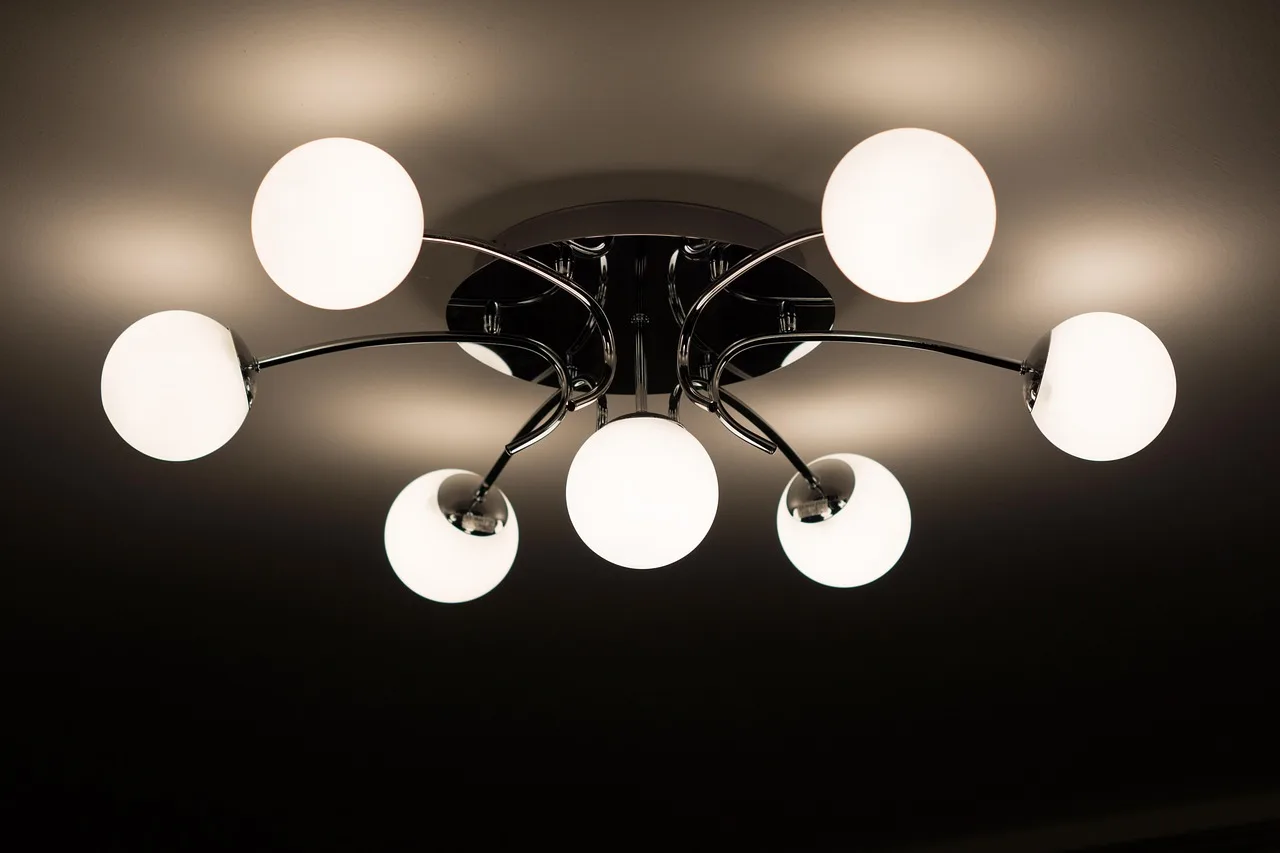
The ceiling height and the fixture’s total drop should decide the purchase before style does. A flush mount is said to be a good fit for ceilings up to 8 feet high, while semi-flush mount lighting is described as a good choice for 9 to 10 foot ceilings. In occupied walking areas, keep the bottom of the fixture at least 84 inches above the floor.
| Ceiling height | Walking area | Over-table area | Safe maximum fixture drop | Recommended fixture type |
|---|---|---|---|---|
| Lower than 9 feet | Hallways, entries, basement paths | Usually not the main use case | Keep the bottom above 84 inches from the floor | Flush Mount Light |
| 8 feet | Any passage you walk through | Small dining or kitchen zones only if clearance works | Very short drop; often flush or near-flush | Flush Mount Light |
| 9 to 10 feet | Entries, bedrooms, family rooms | Dining tables, kitchen islands, reading areas | Enough drop to stay above 84 inches in traffic areas | Semi-Flush Mount Light |
| Over 10 feet | High-traffic spaces with open floor plans | Tables and central room zones | Depends on fixture height and room layout | Semi-Flush Mount Light |
Measurement checklist before you buy
- Measure the ceiling height from floor to ceiling in inches.
- Check the fixture total height, including canopy depth, stem, body, and diffuser.
- Mark where people walk underneath the light.
- Compare the fixture’s bottom point with the 84-inch clearance rule in occupied passage areas.
- Confirm whether the room needs direct downward light, softer ceiling bounce, or both.
Suppose your hallway ceiling is about 8 feet, and the fixture would hang about 10 inches below the ceiling. That leaves about 86 inches to the bottom, which clears the 84-inch rule by about 2 inches. In a narrow passage, that thin margin makes a flush mount the safer pick.
Is a flush mount light better for an 8-foot ceiling?
Yes, in most cases an 8-foot ceiling points to a flush mount light because it keeps the profile tight and protects headroom. Flush mount lighting is said to be perfect for ceilings up to 8 feet high, and it is a strong fit for low ceilings and minimal visual intrusion. If the room is a walkway, that advantage usually matters more than decorative depth.
Where flush mount works best
Hallways, closets, bathrooms, kitchens, and bedrooms are common rooms for flush mount lighting. Those rooms often need a light that sits close to the ceiling, stays out of the way, and is easy to dust. If you want the least visual interruption, flush mount is the cleaner fit.
When a semi-flush mount still fits
A semi-flush mount can still work on an 8-foot ceiling if the bottom of the fixture stays above 84 inches and the room is not a main walking path. Over a dining table or a bed, that little drop can add depth without causing a clearance problem. The measurement, not the style, decides the answer.
Can a semi-flush mount work in your room?
Yes, a semi-flush mount can work when the ceiling height gives you room for the stem and the fixture bottom still clears the occupied space. It is usually the better choice for 9 to 10 foot ceilings, and it often gives easier bulb access than a flush mount. The key is checking the final drop, not assuming every short-hanging fixture fits.
Best room types for a short drop
Entryways, bedrooms, family rooms, and dining areas are the strongest candidates. These spaces can handle a little more visual depth, and the fixture can help the ceiling feel less flat. In a room where people mostly move around the edges, a small drop is often practical.
How to avoid headroom problems
Measure from the floor to the bottom of the fixture, not just the ceiling to the canopy. If the fixture lands in a route people actually use, keep the 84-inch minimum in mind. A common first-timer mistake is choosing by width alone and then finding that the stem steals clearance where it matters.
Room by room fit

Hallway and entryway
Flush mount lights usually win here because these spaces often need maximum clearance and a low visual profile. Narrow entries also make a hanging fixture feel closer than it looks on paper. If the hallway is dim, a covered bottom or diffuser can help spread light without harsh glare.
Bedroom and family room
Bedrooms can go either way, but glare control matters more because the fixture is often in sight from the bed. A semi-flush mount can work if the room height allows it and the bottom stays out of the line of sight. Family rooms usually have more tolerance for a little extra drop, especially when the ceiling is 9 to 10 feet.
Picture a bedroom with an 8-foot ceiling and a bed centered under the light. A flush mount with a covered bottom reduces the chance of seeing a bare bulb from the pillow. That matters more than adding decorative depth.
Kitchen, bathroom, and dining area
Kitchens often favor flush mount lights when ceilings are low, especially in compact work zones or galley layouts. Dining areas can support semi-flush mount lighting if the fixture is centered over the table and the bottom stays above the walking path. Bathrooms need extra checks beyond height, especially for moisture rating and ventilation.
Bulb access, dust, and cleaning
Flush mount lighting is a good pick if you do not want to spend much time dusting. Its low profile leaves less exposed surface, and the compact shape usually means less visible dust buildup. Semi-flush fixtures are easier to clean bulb-wise than flush lights, but they also collect more dust because of the extra depth and exposed support.
Practical tradeoffs for frequent bulb changes
Flush mount fixtures may require removing the whole fixture for bulb changes, which is awkward if the ceiling is tall or the cover is tight. Semi-flush fixtures usually make bulb access easier because the underside sits lower and the sockets are simpler to reach. If you expect frequent bulb swaps, that convenience may outweigh the cleaner ceiling line.
Covered bottoms and glare control
Light quality is not only about brightness. A covered bottom or diffuser can soften direct view of the lamp and reduce glare in bedrooms, entries, and sitting areas. Semi-flush mounts can also send some light upward onto the ceiling, which can make the room feel less harsh than a bare, direct-down fixture.
Bathroom and sloped ceiling checks
Bathrooms need more than a height check. Choose a fixture with the right damp or wet location rating for the placement, and confirm the room has proper ventilation. Local code considerations can change what is allowed near showers, tubs, and wet zones, so do not assume a general indoor fixture is acceptable.
Damp or wet location rating
Use a damp-rated fixture where moisture is present but direct water contact is not expected. Use a wet-rated fixture where the fixture may face direct water exposure. If the rating does not match the location, the fixture can fail sooner and may not meet code.
Adapting for angled ceilings
Sloped ceilings need special attention. A sloped-ceiling adaptable canopy can help the fixture hang correctly, while a flat canopy can limit placement on angled ceilings. Check that the model you choose is approved for the angle of your ceiling before you buy.
Choose Flush Mount Light if… / Choose Semi-Flush Mount Light if…
Choose Flush Mount Light if you need the lowest profile, the room has an 8-foot ceiling or less, the space is a hallway or closet, or the fixture sits in a walking path that needs maximum clearance. Choose Semi-Flush Mount Light if you have 9 to 10 feet of ceiling height, want easier bulb access, need a little more visual depth, or are placing the fixture over a table, bed, or open room center.
- Choose Flush Mount Light for low ceilings, narrow entries, frequent pass-throughs, and rooms where dust control matters more than decorative depth.
- Choose Semi-Flush Mount Light when the ceiling height gives you room to spare and the fixture’s bottom still clears the 84-inch rule in any occupied path.
- Choose Flush Mount Light if the fixture will be hard to reach and you want the simplest ceiling line.
- Choose Semi-Flush Mount Light if you want easier bulb changes and a softer transition between ceiling and room.


Frequently asked questions
What’s the difference between flush mount and semi-flush mount lighting?
Flush mount lighting sits directly against the ceiling with little to no gap. Semi-flush mount lighting hangs a few inches below the ceiling on a short stem or support. That small difference changes clearance, bulb access, dusting, and whether the fixture fits a low or standard-height ceiling.
How much clearance do I need under a ceiling light?
In occupied walking areas, keep at least 84 inches from the floor to the bottom of the fixture. Measure from the floor, not from the ceiling. If the fixture sits over a place people do not walk through, you can use the room layout to decide whether a short drop is acceptable.
Which light is better for low ceilings?
Flush mount lights are better for low ceilings because they sit closest to the ceiling and leave more headroom. They are especially useful in hallways, closets, kitchens, bedrooms, and bathrooms where a low profile matters. A semi-flush mount can still work if the ceiling is high enough and clearance remains safe.
Can I use a semi-flush mount in a hallway or bedroom?
Yes, but only if the height works. In a hallway, a semi-flush mount needs to stay above the 84-inch clearance rule. In a bedroom, a short drop can add depth and reduce glare if the fixture does not hang into the sightline from the bed or the walking route.
Are flush mount lights easier to clean than semi-flush mount lights?
Usually yes. Flush mount lights have less exposed surface and are simpler to dust because they sit close to the ceiling. Semi-flush mount lights collect more dust around the stem and underside, although they are often easier to reach for bulb changes. The tradeoff is convenience versus cleaning frequency.
Can flush mount or semi-flush mount lights go in a bathroom?
Yes, but only with the right moisture rating and installation conditions. Check for damp or wet location approval, make sure bathroom ventilation is adequate, and confirm local code requirements for the fixture’s placement. A general indoor fixture is not automatically suitable for a bathroom ceiling.
Products related to this article
Sponsored / affiliate links. As an Amazon Associate I earn from qualifying purchases. I may earn additional commission from eligible campaigns.