Best Ceiling Fans for Low Ceilings (2026): research shows
For 8-foot ceilings, choose a flush-mount or hugger fan that leaves roughly 7 feet of floor clearance, and use 42–52-inch blades in many rooms. Pick the wrong drop, and you risk head clearance problems, weak air movement, and a fan that feels too small or too loud. This guide compares low-profile fans by room type, ceiling slope, blade size, and the tradeoff between clearance and airflow.
Best ceiling fans for low ceilings: our top pick
The best overall pick is the Hunter Dempsey 44-inch flush-mount fan, because it fits the 8-foot-ceiling use case cleanly while keeping the profile tight enough for safer blade clearance and steady airflow in bedrooms and smaller living spaces.
It is the most balanced choice here. The 44-inch span lands well for many low-ceiling rooms, and the flush-mount setup avoids wasting headroom that a longer drop would take away.
Where it fits best
Use it in 8-foot bedrooms, nurseries, and compact living rooms where the ceiling is low and the room size is not especially wide. It also makes sense when the room needs light and remote control more than maximum airflow.
When a room is longer or open to a hallway, a low-profile fan can still work, but the airflow ceiling is real. In those spaces, a larger blade span or a stronger motor can matter more than a decorative low drop.
According to Best Ceiling Fans for Small Rooms and Low Ceilings (2026) — The Hunter Dempsey Low Profile has a 44-inch span.
Quick comparison
| Product | Badge | Best for | Price | ||
|---|---|---|---|---|---|
 |
Amico 42 Inch White Low Profile Ceiling Fans with LightsAmico | Budget pick | 42 in · Flush mount · Remote | $54.99
Price as of 24 Sep 2026
|
View |
 |
MINKA-AIRE F845-WH Light Wave 44" Ceiling Fan with LEDMINKA-AIRE | Upgrade pick | 44 in · DC motor · LED kit | $299.00
Price as of 24 Sep 2026
|
View |
 |
Hunter Dempsey, Indoor, Ceiling Fan, Modern, Quiet, 44Hunter | Also great | 44 in · Flush mount · Remote | $199.99
Price as of 24 Sep 2026
|
View |
 |
Westinghouse 7221600 Alloy LED Ceiling Fan with Light,Westinghouse | Our pick | 42 in · High CFM · LED light | $126.04
Price as of 24 Sep 2026
|
View |
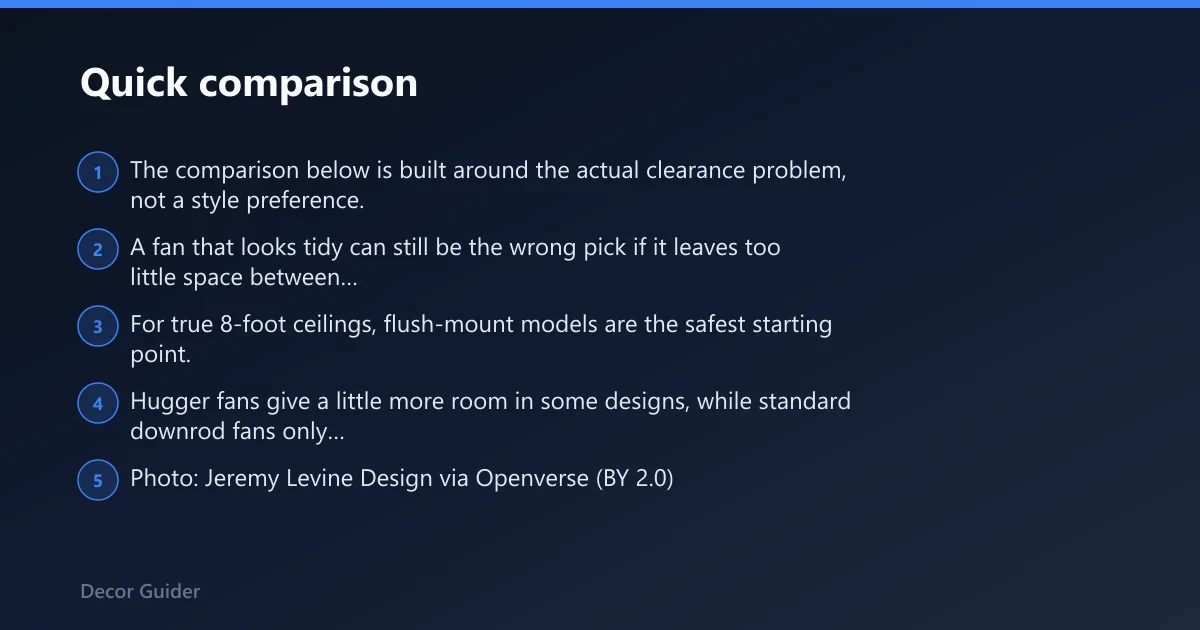
The comparison below is built around the actual clearance problem, not a style preference. A fan that looks tidy can still be the wrong pick if it leaves too little space between the blades and the floor.
For true 8-foot ceilings, flush-mount models are the safest starting point. Hugger fans give a little more room in some designs, while standard downrod fans only belong where the ceiling height allows the extra drop.

How we chose
Clearance came first. The fan had to make sense for low ceilings, with attention to the 7-foot blade-clearance rule and the practical drop from ceiling to blade path.
Room size came next. A 42-inch blade span fits smaller rooms better, while 44-inch to 52-inch fans are the more flexible range for bedrooms and modest living rooms.
Motor type, lighting, and control method also mattered. DC motors are usually quieter and draw less power, AC motors often cost less up front, and integrated LEDs and remotes become more useful when ceiling height is limited.
Amico 42 Inch White Low Profile Ceiling Fans with Lights and Remote: best for tight-budget low ceilings
This is for shoppers who want a low-cost flush-mount fan for an 8-foot room and need the basics done right. Based on the spec sheet and owner feedback, the reversible DC motor, remote, and 42-inch span make it a practical fit for small bedrooms and straightforward installs.
What stands out is the low-profile format paired with six speed settings and wireless control. That combination helps when the room is small but still needs useful air movement and simple day-to-day operation.
The drawback is that a budget flush-mount fan usually gives up some refinement. In a wider room, the airflow may feel modest, and the light and finish may be more functional than polished.
MINKA-AIRE F845-WH Light Wave 44″ Ceiling Fan with LED Light and Remote Control in White Finish: best for design-forward low ceilings
This suits buyers who want a lower-drop fan with a cleaner, more styled look and do not mind paying more for it. The 44-inch size and DC motor make sense for low ceilings where quieter operation matters and the room is not oversized.
What stands out is the included LED light and the quiet reversible DC motor. That gives it better day-to-day flexibility in bedrooms, offices, and other rooms where the fan may run for long stretches.
The drawback is simple: the price is high for a ceiling fan meant to solve a clearance problem. If the room is purely functional, there are cheaper models that cover the same low-ceiling need.
Hunter Dempsey, Indoor, Ceiling Fan, Modern, Quiet, 44 inch, Fresh White: best for 8-foot bedrooms
This is the safest all-around match for a standard 8-foot ceiling, especially when the room needs both light and remote control. Hunter lists it as a flush-mount design for ceilings under 9 ft, which makes it a straightforward fit for rooms where head clearance matters most.
What stands out is the combination of a 44-inch span, LED bulbs, and remote control. That gives it enough blade area for many bedrooms without turning the fan into a clearance problem.
The drawback is that a 44-inch flush-mount fan can still feel small in a wide room with more open floor area. It solves height first, not maximum airflow.
Westinghouse 7221600 Alloy LED Ceiling Fan with Light, 42-Inch, White: best for small rooms that need stronger airflow
This is for compact rooms where airflow matters more than style, and the room size is small enough that a 42-inch fan can do the job. The listed high efficiency and summer/winter reverse function make it a strong fit for a bedroom or office with limited ceiling height.
What stands out is the airflow efficiency and the built-in LED light. That matters in a low ceiling room because the light is closer to eye level and should do more than just glow.
The drawback is that efficiency does not always mean the quietest. In a sleep space, the motor character still matters, and some buyers may prefer a DC model for sound and power draw.
What type of ceiling fan is best for low ceilings?
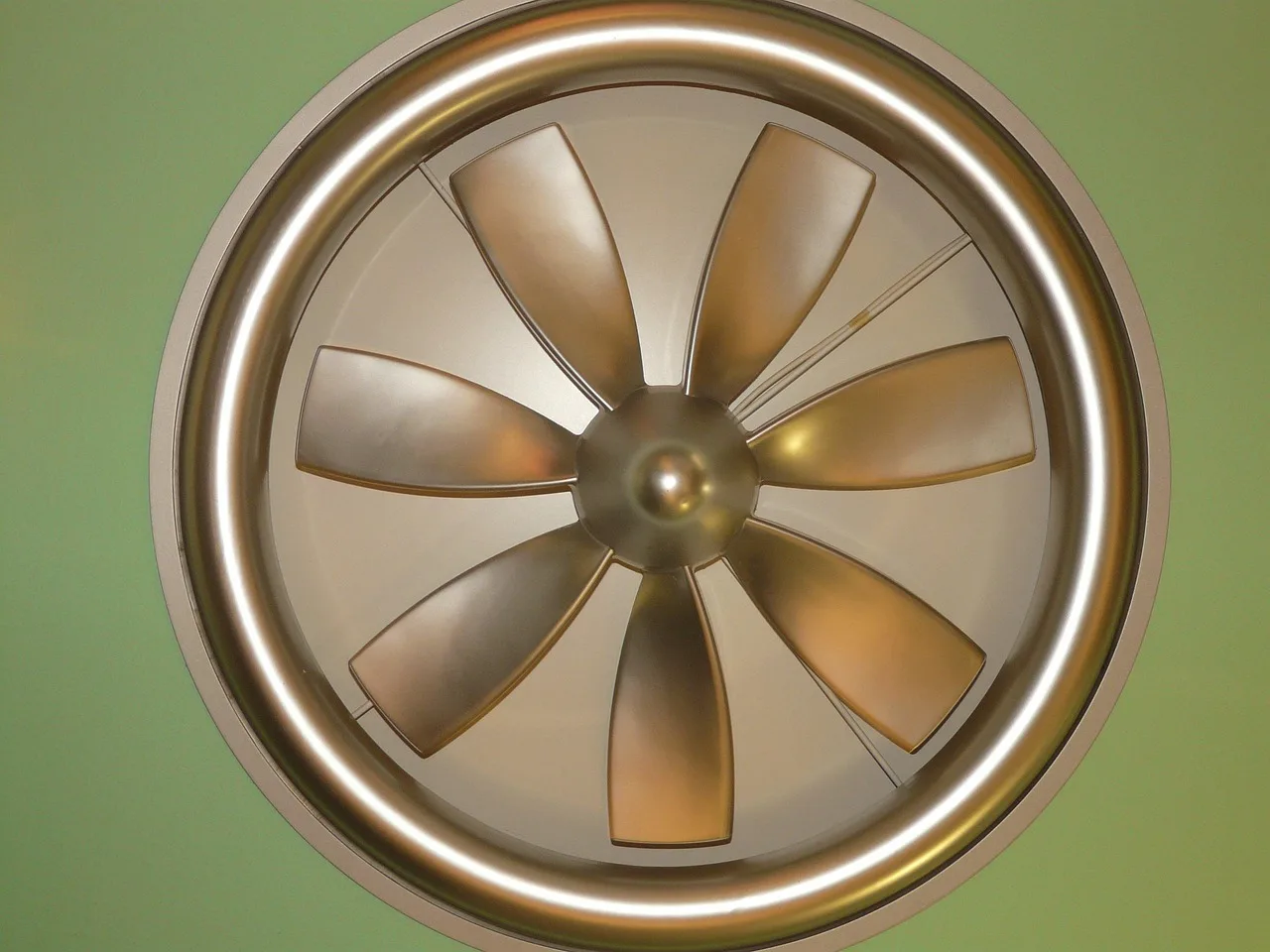
The best type is a flush-mount or low-profile ceiling fan that keeps the blades close to the ceiling while still leaving at least 7 feet between the blades and the floor. For most 8-foot ceilings, that means a tight mount, a modest blade span, and no unnecessary drop.
Flush-mount vs hugger: what the labels really mean
A flush-mount fan mounts directly to the ceiling and sits tight to it, which is why it is usually the first choice for 8-foot ceilings. A hugger fan is a low-drop alternative that can sit slightly lower in some designs, so it is not always identical to a true flush-mount unit.
That difference sounds small, but it changes clearance. In a room where every inch matters, a hugger that drops farther than expected can turn a safe install into a cramped one.
When a standard fan is still acceptable
A standard fan only makes sense when the ceiling is high enough to preserve the 7-foot blade-clearance rule with room to spare. On 8-foot ceilings, a standard downrod usually wastes the limited vertical space and can create a head-height hazard.
Sloped ceilings are a special case. Some slopes need a different mounting approach, but the final question is still the same: can the blades stay safely above head level while moving enough air for the room?
Kid’s room and bunk room safety
For kids’ rooms, bunk rooms, and nurseries, the safest choice is the tightest practical mount with a blade span that matches the room, not the biggest fan that can fit. Low ceilings in these spaces leave little forgiveness if a child stands up fast or reaches toward the fan.
In those rooms, avoid unnecessary drop, choose remote control over pull chains when possible, and prefer integrated lighting if the ceiling height makes a separate lamp awkward.
Low-profile ceiling fan decision table
| Ceiling height | Room size | Safety risk | Mount type | Blade span | Motor type | Light kit worth it? |
|---|---|---|---|---|---|---|
| 8 feet | Small bedroom, nursery, office | Higher head-clearance pressure | Flush-mount | 42 inches to 44 inches | DC if noise matters, AC for lower cost | Yes, if the room lacks another main light |
| 8 feet | Compact living room | Medium, depending on walk paths | Flush-mount or very low hugger | 44 inches to 52 inches | DC preferred for longer run time | Usually yes, because ceiling light output matters more |
| 8 feet plus | Bedroom with wider floor area | Lower if blade path stays above 7 feet | Low-profile or short downrod | 44 inches to 52 inches | DC for quiet, AC if budget is tight | Useful if the room needs primary light |
| Sloped ceiling | Varies by footprint | Mounting geometry matters | Low-profile only if clearance stays safe | Match the room, not the slope alone | Either, based on budget and noise tolerance | Often yes, because the fixture location may limit lamp placement |
| Low ceiling with bunk beds | Child’s room | Highest | Flush-mount | Small to mid-size | Quiet DC or simple AC | Yes, dimmable is preferred |
Use the table as a filter, not a slogan. The safest fan is the one that fits the ceiling height, the room width, and the way people actually move through the space.
Best low-profile ceiling fan by room type
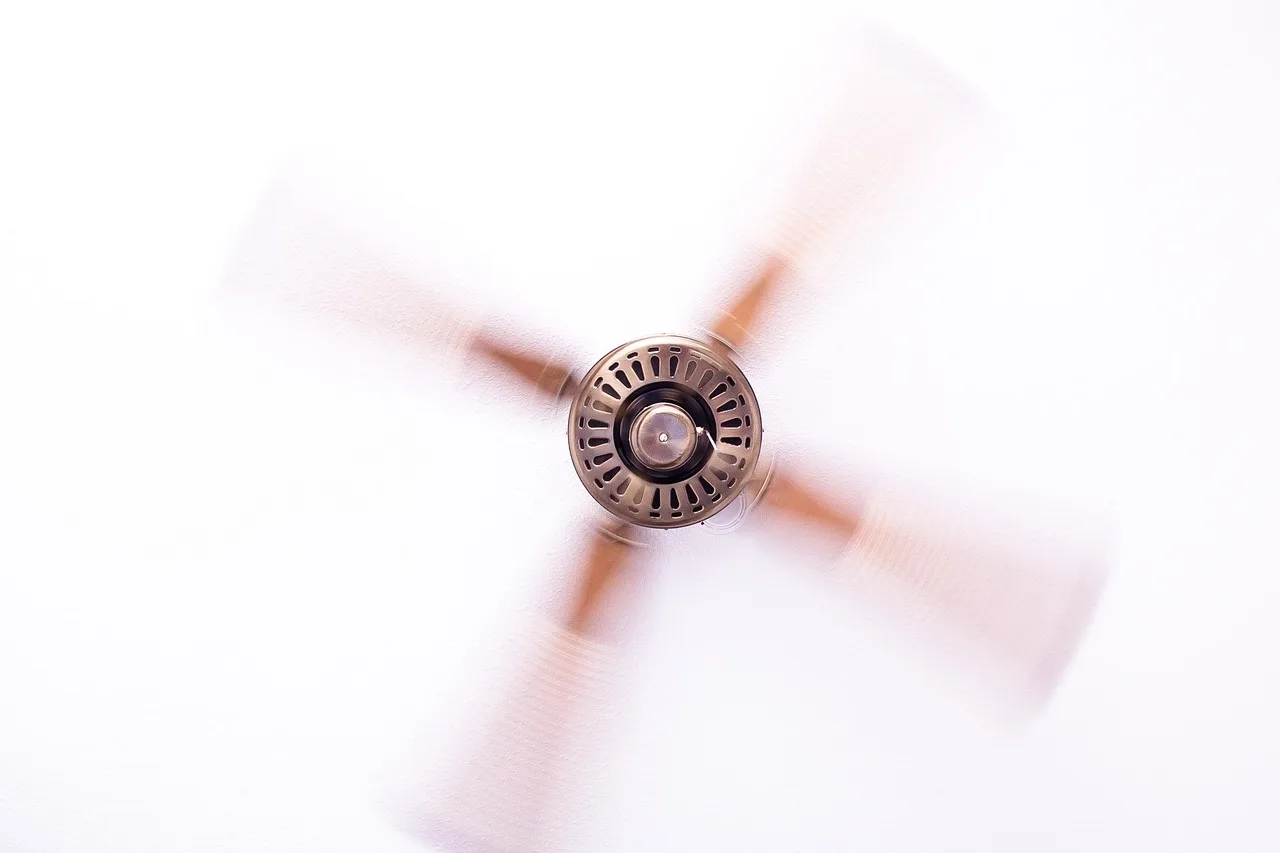
Best for small bedrooms
For a small bedroom, the best fit is usually a 42-inch to 44-inch flush-mount fan with remote control and integrated light. That size is small enough to stay proportional, but it still moves enough air for sleep without feeling oversized.
The Hunter Dempsey and the Amico both fit this use case well. The Hunter leans cleaner for a bedroom with a more finished feel, while the Amico is the more budget-friendly route.
Best for nurseries and kid’s rooms
For nurseries and kid’s rooms, safety comes before output. A flush-mount fan with dimmable LED light and remote control reduces cord clutter, keeps the fixture tight to the ceiling, and makes nighttime adjustments easier.
The safest setup is one that avoids pulling the blades into the room any more than needed. In a bunk room, that matters even more because standing height can change fast near the fan path.
Best for wider rooms that need more airflow
Wider rooms need more than a short mounting profile; they need blade span and motor strength. This is where low-profile fans can disappoint, because a tight ceiling mount does not automatically mean enough airflow in a larger room.
The Westinghouse 42-inch model is a better airflow-focused pick for compact spaces, while a 52-inch low-ceiling fan may fit a broader room if the ceiling height still allows safe clearance. The Sofucor and Honeywell Glen Alden are useful size references in that larger low-profile category, but the room must justify them.
Which one should you buy?
Buy the Hunter Dempsey if you want the safest all-around answer for an 8-foot bedroom or small living room and you need a clean flush-mount fit with light and remote control.
Buy the Amico if budget matters most and you still want a flush-mount, reversible DC fan with wireless control.
Buy the MINKA-AIRE if quiet operation and a more design-led look matter enough to pay more for them.
Buy the Westinghouse if your small room needs stronger airflow and you are comfortable prioritizing performance over the quietest possible motor.
If the room is wider than it is deep, do not assume any low-profile fan will solve it. That is the common failure case: the ceiling is safe, but the fan still feels underpowered because the blade span is too small for the room shape.
Frequently asked questions
How much clearance does a ceiling fan need from the floor?
Low-profile fans should keep blades at least 7 feet above the floor. That rule matters more than the product label, because a fan that sits close to the ceiling can still be unsafe if the blade path drops too low in the room.
Are flush-mount and hugger ceiling fans the same thing?
They are similar, but not always identical. A flush-mount fan mounts directly to the ceiling and sits tight to it, while a hugger fan is a low-drop alternative that can have a slightly different profile depending on the model.
What size ceiling fan works for a small bedroom with a low ceiling?
For a small bedroom, 42-inch to 44-inch blades are the usual starting point. That span gives enough air movement without crowding the room, and it is easier to keep within safe clearance limits than a larger fan with more vertical bulk.
Do low-profile ceiling fans move less air?
Not always, but some do in wider rooms. A low-profile fan can move plenty of air in a small bedroom, yet still feel weak in a room with more open square footage or an awkward layout. Blade span and motor quality matter as much as the mount.
Should I choose a DC motor or AC motor for a low ceiling fan?
Choose a DC motor if you want quieter operation and lower power draw, especially in bedrooms or rooms where the fan runs often. Choose an AC motor if upfront cost matters more, but expect a typical tradeoff in noise and efficiency.
Products related to this article
Sponsored / affiliate links. As an Amazon Associate I earn from qualifying purchases. I may earn additional commission from eligible campaigns.