
5 Best Ceiling Fans for Living Rooms (2026): we compared
The best ceiling fan for a living room depends on room size and ceiling height: roughly 44 to 52 inches for smaller to standard rooms, around 54 to 60 inches for open-plan spaces, and a low-profile mount for ceilings under 8 feet. Choose the wrong size, and airflow drops, noise rises, light spreads badly, and the fan looks out of place. This guide shows how I match fan size, blade pitch, lighting, and controls to a living room’s actual layout.
This guide is part of our Home lighting and ceiling fan guide series.
Quick comparison
| Product | Badge | Best for | Price | ||
|---|---|---|---|---|---|
 |
Hunter Fan 52 Inch White Indoor Ceiling Fan with LED LightHunter | Our pick | 52 in white fan · LED kit · pull chain | $138.99
Price as of 24 Sep 2026
|
View |
 |
Minka-Aire F546-WH Contractor 42 Inch Pull Chain CeilingMINKA-AIRE | Budget pick | 42 in contractor fan · white finish · 6-inch downrod | $109.00
Price as of 24 Sep 2026
|
View |
 |
Passky 60 Inch Black Sleek Ceiling Fans with Lights, RemotePassky | Also great | 60 in black fan · remote control · reversible DC motor | $89.97
Price as of 24 Sep 2026
|
View |
 |
Quorum International 64525-86 Soho 52-Inch Ceiling Fan,Quorum International | Upgrade pick | 52 in Soho fan · oiled bronze · reversible walnut blades | $259.50
Price as of 24 Sep 2026
|
View |
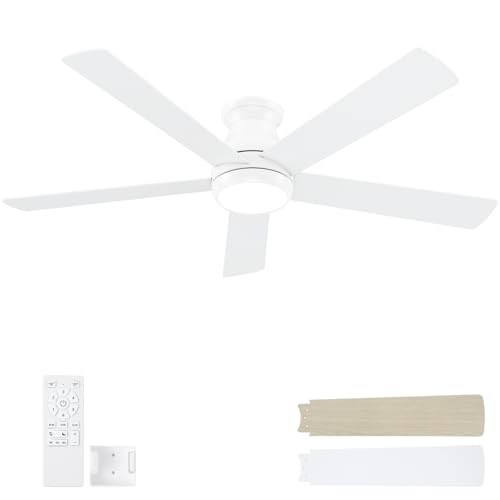 |
POCHFAN 60 Inch White Ceiling Fans with Lights and Remote,POCHFAN | Pair with it | 60 in flush mount · dimmable LED · 6-speed DC motor | $119.99
Price as of 24 Sep 2026
|
View |
For most buyers, the right choice comes down to span, mounting, and whether the fan must replace the main room light. The models below cover a small room, a standard room, and a larger open layout without forcing every living room into the same size bucket.
According to Best Ceiling Fans (2026) – This Old House — This Old House says most ceiling fans cost around $100-$250.
How we chose
I built the shortlist around room fit first. Size, mounting clearance, and airflow came before finish or brand name.
I compared blade span, control type, lighting setup, and motor type, then checked whether each fan fits a small living room, a standard room, or a wide open-plan space.
Noise matters in a room used for TV or conversation, so quieter DC and brushless designs were favored when the spec sheet and owner feedback pointed that way.
Lighting mattered too. A living-room fan that replaces the main light needs a brighter, dimmable LED kit than a fan meant only for circulation.
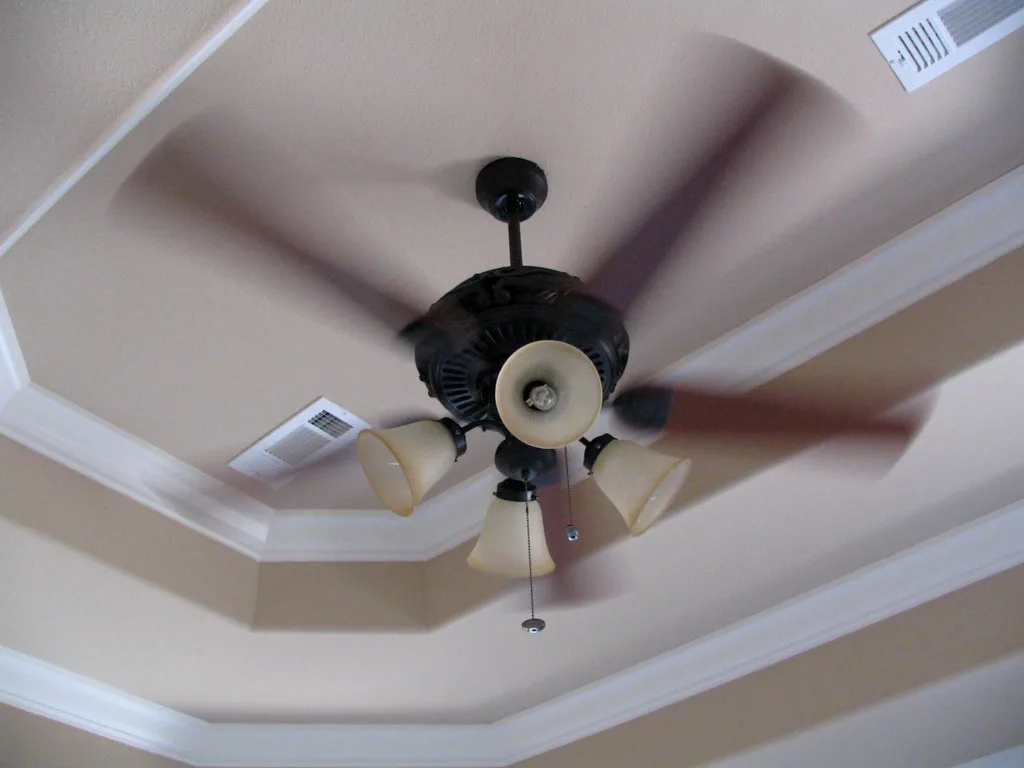
Living-room fan decision table
| Room size and ceiling height | Typical use case | Recommended diameter | Minimum airflow target | Mounting type | Control type |
|---|---|---|---|---|---|
| Small living room, under about 150 sq ft, 8 ft ceiling | Circulation and light-duty cooling | 42 to 48 inches | About 3,000 CFM or more | Flush mount or low-profile semi-flush | Pull chain or remote |
| Standard living room, about 150 to 225 sq ft, 8 to 9 ft ceiling | Main room fan, daytime and evening use | 52 to 56 inches | About 4,000 CFM or more | Semi-flush or short downrod | Remote, with optional app control |
| Large living room or open plan, about 225 to 400 sq ft, 9 ft ceiling or higher | Primary air mover for a wide seating zone | 62 or 66 inches | About 6,000 CFM or more | Downrod mount | Remote, app control, or voice assistant |
| Great room with vaulted ceiling | Wide-area circulation and seasonal reversal | 62 to 66 inches | About 7,000 CFM or more | Longer downrod, often tri-mount or dual-mount compatible | Remote plus app or wall control |
When the fan must replace the main living-room light, choose an integrated LED kit with dimming and a color temperature range that includes warm white. If the room already has recessed lights, a circulation-only fan is often the cleaner choice.
What size ceiling fan do I need for my living room?

For small living rooms, 42- to 48-inch fans are the practical range. Standard living rooms usually work best with 52- to 56-inch fans. Large rooms and open-plan spaces usually need 62-inch or 66-inch models, especially when the seating area is spread out or the room has more than one function.
Small living rooms
HGTV says a longest wall under 12 feet should use a fan width of 48 inches or less. That lines up with 42- to 48-inch fans for compact rooms, where a larger blade span can feel heavy and push air unevenly across the seating area.
In small rooms, low-profile mounting matters as much as diameter. A 48-inch fan on a low ceiling can still work well if the housing stays tight to the ceiling and the light kit does not hang too low.
Standard living rooms
For most living rooms, 52 to 56 inches is the practical middle ground. HGTV says a longest wall greater than 18 feet should use at least a 56-inch fan, and Top Ten Reviews also points to a 56-inch fan for one large room or an open-plan living space.
This is where many homeowners slip up. A 52-inch fan can be right in a standard room, but it is not right for every room. Blade span has to match open floor area, furniture placement, and ceiling height.
Large living rooms and open plans
For large rooms, 62-inch and 66-inch fans are the safer options when the fan has to move air across a wider zone. Mayfair Farms lists an Amico 66-inch fan at 6,468 CFM, which is the kind of output that makes sense when one fan has to cover a broad seating area.
Open-plan rooms usually need more airflow than closed rooms because air has farther to travel and the fan is often competing with kitchen and hallway openings. In those spaces, diameter and CFM should be considered together, not separately.
Should you choose a flush-mount or downrod fan?
Choose a flush mount for 8-foot ceilings and low-clearance living rooms, a semi-flush for modest 8- to 9-foot rooms, and a downrod for higher ceilings or vaulted spaces. The wrong mount can put the blades too close to people or too far from the seating zone to move air effectively.
Flush mount for 8-foot ceilings
Flush mounts keep the fan body close to the ceiling, which helps in older homes and smaller living rooms. They are also the better choice when the room already feels visually crowded by a TV, tall trim, or a low-hanging light fixture.
The tradeoff is reduced vertical separation between blades and ceiling. That can limit airflow efficiency in some rooms, so flush mount works best when the fan is sized correctly and the room is not especially wide.
Semi-flush and downrod options for 9-foot ceilings
Semi-flush fans give a little more drop without hanging too low. For 9-foot ceilings, that middle ground often improves air movement and keeps the fan from looking pinned to the ceiling.
Downrod mounting is the better choice when the ceiling is taller, vaulted, or angled. A longer drop puts the blades where they can actually move living-room air instead of spinning too close to the ceiling plane.
Dual-mount and tri-mount compatibility
Dual-mount or tri-mount fans are useful when the same model might need to work in more than one room. They help if the buyer is unsure whether the next home will have a low ceiling, a standard one, or a taller family room.
That flexibility matters for renters and for homeowners who are replacing a fan in a room with unusual framing. It also reduces the chance of buying a fan that looks right in the box but cannot be installed cleanly in the room.
Are ceiling fans with lights better for living rooms?

Ceiling fans with lights are better when the fan has to do double duty as the room’s main fixture. In a living room that already has enough ceiling or wall lighting, a fan without lights can look cleaner and reduce visual clutter.
Integrated LED light kits
Integrated LED light kits are usually the best fit when the fan replaces the main living-room light. They are more compact than older bulb kits and often give a broader, more even light spread across the seating area.
Hunter’s 52-inch white indoor fan includes an LED light kit, which is useful in a room where the fan also needs to handle ambient lighting. That kind of setup makes more sense than a circulation-only fan when the ceiling light is missing or too dim.
Dimmable output and color temperature
Dimmable output matters in a living room because the same space may host reading, TV, and evening conversation. Warm color temperatures are usually easier on the eyes at night, while brighter settings help when the fan is the main overhead light.
One hard buying check: if the product does not state dimming or color temperature options, treat it as a circulation fan first and a light fixture second.
When the fan should replace the main room light
Choose a lit fan when the room has no central fixture, when recessed lighting is weak, or when the ceiling fan sits over the main seating area. Choose a non-lighted fan when the room already has layered lighting and the ceiling fan’s job is mostly air movement.
That decision affects size too. A fan that is expected to light the room should have enough blade span for airflow and enough light output for the seating zone, which narrows the field fast.
Best overall: Hunter 52 Inch White Indoor Ceiling Fan with LED Light Kit and Pull Chain
This is the most balanced pick for a standard living room that needs both air movement and usable light. The 52-inch size fits the middle of the living-room range, and the LED kit makes it easier to use as the main ceiling fixture rather than just a fan.
What stands out is the practical mix of a 13-degree blade pitch, a standard profile mount with a 3-inch downrod, and pull-chain control for rooms where a wall switch is not enough. Based on the spec sheet and owner feedback, it is the least fussy choice for a room that needs one fan to do two jobs.
The drawback is control simplicity. Pull chain operation is fine for basic use, but it is less convenient than a remote in a room where the fan speed and light level change often during the day.
Best for small rooms: MINKA-AIRE F546-WH Contractor 42 Inch Pull Chain Ceiling Fan
This is the cleanest fit for a small living room or a low-ceiling room where 42 inches makes more sense than a larger span. The 42-inch size fits the under-12-foot wall guidance better than a full 52-inch fan, and the included 6-inch downrod gives it standard installation flexibility.
What stands out is the three-speed pull chain control and manual reversing switch, which keep it simple for a room that does not need app control or a complex setup. The white finish and five-blade layout suit traditional spaces without drawing too much attention.
The drawback is that it is not a lighting-first fan. If the room needs the fan to replace the main light, this model leaves the buyer arranging separate lighting instead.
Best for open-plan spaces: Passky 60 Inch Black Sleek Ceiling Fans with Lights, Remote Control
This is the strongest fit for a larger living room or open-plan seating area where a 60-inch blade span makes more sense than a 52-inch fan. The reversible DC motor and six speed settings make it better suited to broad circulation than a basic pull-chain unit.
What stands out is the remote control and renter-friendly installation that works with standard junction boxes without drilling. Based on specs and reviews, that makes it a practical pick when the room needs more reach but the install has to stay straightforward.
The drawback is that it is a style-forward fan with a black finish, so it may feel visually heavy in a small or bright white living room. It also depends on remote control, which is a plus for convenience but a downside if the handheld control gets misplaced.
Best traditional style: Quorum International 64525-86 Soho 52-Inch Ceiling Fan
This is the best match for a living room that wants a more furniture-like ceiling fan in an oiled bronze finish. The 52-inch span keeps it in the standard living-room range, while the reversible walnut/teak blades give it a warmer look than a plain builder-grade fan.
What stands out is the restrained design and UL listing for dry locations, which matters in a main room where the fan has to look intentional from the sofa. It is a good fit for homeowners who care about finish and blade tone as much as airflow.
The drawback is the price. At $259.50, it is far above basic white contractor fans, and it does not offer the same control flexibility as a modern remote-based smart model.
Best low-profile large-room option: POCHFAN 60 Inch White Ceiling Fans with Lights and Remote
This is the best fit for a large living room that needs a flush-mount look without giving up blade span. The 60-inch size, quiet DC inverter motor, and dimmable LED kit make it a strong candidate for rooms where the fan is both a light source and a circulation tool.
What stands out is the one-touch color temperature control, six speeds, and three programmable sleep modes. Based on specs and reviews, that control package suits a family room used for movie night, reading, and evening conversation.
The drawback is that 60 inches can be too much for a small room, even with a low-profile mount. It is best kept for larger rooms where the extra span will not dominate the space.
Which one should you buy
Pick the Hunter 52-inch if your living room is standard size and the fan needs to replace the main light without adding another fixture. Pick the MINKA-AIRE 42-inch if the room is small, the ceiling is low, or the fan is mostly for modest circulation.
Pick the Passky 60-inch if the room is open-plan, the ceiling is tall enough for a full-size fan, and remote control matters more than pull-chain simplicity. Pick the Quorum Soho if the room leans traditional and the finish needs to work with wood, bronze, or warm-toned décor.
Pick the POCHFAN 60-inch if you want a low-profile fan with stronger lighting control and a quiet DC motor. For buyers comparing output, Top Ten Reviews lists the Fanimation Odyn at 11,190 CFM, the Hunter Palermo at 52 inches and 3,817 CFM, and BestReviews says the Honeywell Carmel moves 5,202 cfm; those numbers show how quickly airflow changes once size changes.
Budget also matters. This Old House says most ceiling fans cost around $100-$250, while some premium models cost upwards of $600 or $700. The right ceiling fan for a living room is usually the one that fits the room first and the budget second.
Frequently asked questions
How many CFM do I need for a living room ceiling fan?
For a small living room, around 3,000 CFM is a reasonable floor. Standard rooms often need around 4,000 CFM or more, while large or open-plan rooms usually need 6,000 CFM or higher. Compare CFM with room size, not just the blade span printed on the box.
Should I choose a flush-mount fan or a downrod fan for my living room?
Use a flush mount for 8-foot ceilings and tight clearances. Choose a semi-flush or short downrod for 9-foot ceilings, and move to a longer downrod when the ceiling is vaulted or unusually high. The goal is to keep blades far enough from the ceiling to move air well.
What is the quietest ceiling fan for a living room?
DC and brushless motors are usually the quietest choices, especially at lower speeds. They are a better fit for movie nights and conversation than older AC designs. A quiet fan also needs balanced blades and a secure mount, because wobble creates more noise than many buyers expect.
Are smart ceiling fans worth it for living rooms?
Yes, if the fan is used often and the room already has enough complexity to benefit from app control or voice commands. Smart control helps when you want to change speed or dim lights from the sofa. It is less useful in a simple room where a pull chain or remote is enough.
Products related to this article
Sponsored / affiliate links. As an Amazon Associate I earn from qualifying purchases. I may earn additional commission from eligible campaigns.