
How Much Is a Ceiling Fan for a Bedroom? Costs & Size
A bedroom ceiling fan often costs about $120–$450 for the fan itself and roughly $250–$900 installed, with small rooms sometimes landing in the few-hundred-dollar range all-in. Buy a unit that is too large, hang it too low, or skip a fan-rated box and you can waste money, get wobble, and pay for a second install. This guide breaks down bedroom fan prices, installation scenarios, the right fan size for the room, and what ceiling height changes before you buy.
How much is a ceiling fan for a bedroom?



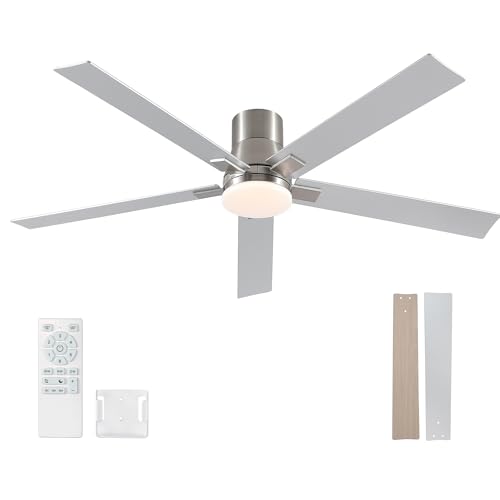
A bedroom ceiling fan usually falls into two budgets: the fan unit and the installed project. The fan itself often lands around $120–$450, while the full installed total commonly reaches $250–$900 depending on wiring, mounting, and ceiling access. The cheapest route is not always the best if the room needs a stronger box or quieter motor.
Typical fan unit price by bedroom use
Bedroom fans cost more when they move more air. They also cost more when they run quieter or use a better motor and better-balanced blades. A higher CFM model can cost more up front, but it may suit a sleeping space better if the room runs warm or the bed sits far from the fan.
What pushes the total up or down
The biggest cost drivers are existing wiring, box condition, ceiling height, and whether the room already has a light fixture in the right spot. A straight swap is cheaper than running new cable. Low ceilings, sloped ceilings, and long downrods can also change the bill.
According to thewholehomeguide.com — Standard bedroom fan sizes mentioned are 42-inch, 48-inch, and 52-inch.
Bedroom ceiling fan size: what fits your room?

Bedroom fan size tracks room area more than style. Standard bedroom fan sizes mentioned are 42-inch, 48-inch, and 52-inch. Small bedrooms under 150 square feet usually use 42-inch fans. Medium bedrooms from 150 to 250 square feet usually use 48-inch fans. Large bedrooms over 250 square feet usually use 52-inch fans.
Small bedrooms: 42-inch fans
A 42-inch fan is the common fit for a small bedroom. It usually suits tighter layouts, guest rooms, or rooms with a bed, dresser, and not much open floor space. For a roughly 12×12 room, a 42-inch fan is often a starting point.
Medium bedrooms: 48-inch fans
A 48-inch fan usually fits a medium bedroom better than a smaller model because it moves air farther across the room. That matters when the bed sits away from the center of the ceiling or when the room is used most nights and needs steadier circulation.
Large bedrooms: 52-inch fans and up
A 52-inch fan suits larger bedrooms where a small unit would feel weak or leave dead spots. In rooms over 250 square feet, a bigger blade span usually helps more than running a small fan faster, which can add noise without improving comfort much.
How a 12×12 room usually fits into the sizing chart
A 12×12 bedroom usually lands in the small-room category, so a 42-inch fan is the practical default. If the room has high ceilings, heavy bedding, or an open path to an adjoining space, a slightly stronger airflow choice can make sense, but size still matters first.
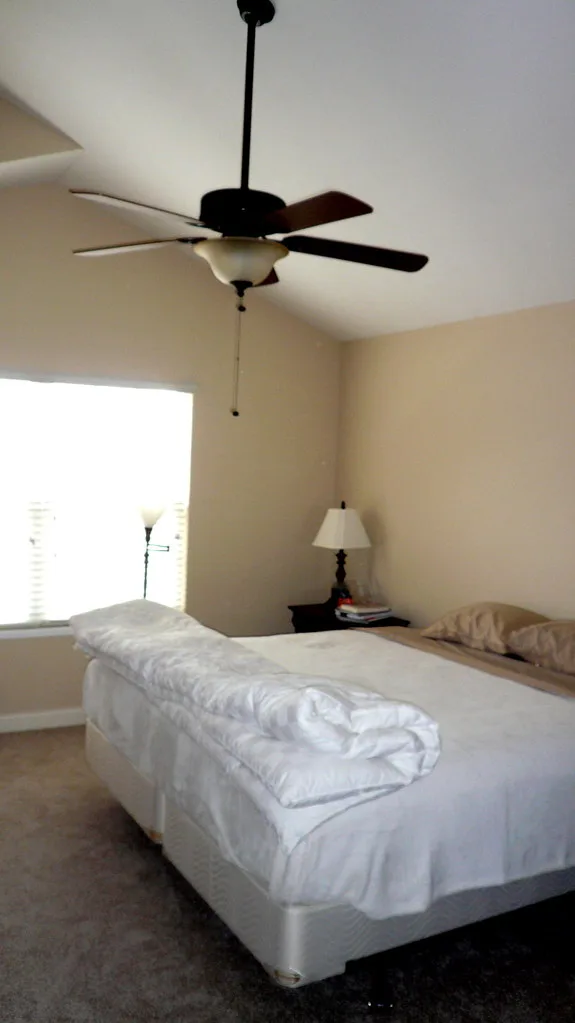
What CFM should a bedroom ceiling fan have?
CFM means cubic feet per minute, the airflow metric used for ceiling fans. Most bedroom fans range from 3,000 to 5,000 CFM. Higher CFM fans are more expensive but move more air. For sleep, the goal is enough air movement to feel cooler without creating a noisy draft over the bed.
Bedroom comfort, sleep noise, and AC use
In a bedroom, airflow should feel even, not harsh. If the room already has air conditioning, a fan with moderate CFM can help spread the cooled air and reduce how hard the AC has to work. In a room with a cross-breeze, lower airflow may be enough.
Why higher CFM often costs more
More airflow usually means a larger motor, a better blade profile, or both. Those parts raise price. Higher output can be useful in a large bedroom or a room with a high ceiling, but a sleeper who wants quiet may prefer a moderate-CFM fan with smooth speed control.
Can your bedroom ceiling hold a fan safely?
A bedroom fan needs a fan-rated electrical box and secure mounting. A standard light box may hold a fixture, but fan movement adds stress that can loosen weak hardware over time. If the ceiling box is not rated for fan weight and motion, it should be replaced before the fan goes up.
Fan-rated electrical box basics
A fan-rated electrical box is built to support both the weight of the fan and the motion it creates while running. That support matters more in a bedroom than many buyers expect, because a wobbling fan above a bed is both noisy and unsafe.
Existing light box versus replacement
If the room already has a light fixture, the box still may not be suitable for a fan. Replacement is often needed when the box is not fan-rated, is loose, or shows damage. A proper box change is a safety cost, not an optional upgrade.
How much does it cost to install a fan in the bedroom?
Bedroom fan installation cost depends on whether the job is a simple fixture swap, a box replacement, or a full wiring run. Ceiling fan cost including installation is typically $100 to $400 in simple cases, but new wiring adds $100 to $300. The total can climb fast when the ceiling is hard to access.
Replace an existing fixture
This is the cheapest path when a bedroom already has the right wiring and a fan-rated box. The fan unit and labor do most of the work here. The budget stays lower because the electrician is not opening walls or adding a circuit.
Install with a fan-rated box
If the existing box must be replaced with a fan-rated one, the project costs more than a simple swap but less than a full wiring job. This is the common middle path in older bedrooms where a light was installed long before a ceiling fan was considered.
Add new wiring
New wiring is the most expensive option because it can require new cable, box work, switch work, and more labor time. Electrical work for new wiring adds $100 to $300. That extra spend often makes sense only when the room has no ceiling fixture location that can be used safely.
What ceiling height do you need for a bedroom fan?
A ceiling fan should be at least 7 feet from the floor. Low ceilings may need a flush-mount or hugger fan to keep clearance safe, while high ceilings may need a downrod to bring the blades into the right air-moving zone. Height changes comfort, noise, and installation cost.
Low-ceiling rooms
Low bedrooms leave less room for a standard downrod fan. A flush-mount model may be the safer choice because it preserves headroom and reduces the chance of the blades sitting too low. This is especially important in smaller rooms where the bed may sit close to the fan path.
High ceilings and downrod needs
High ceilings can make a fan feel weak if it sits too far from the bed. In those rooms, a longer downrod can help place the fan where air mixing works better. Ceiling fans can also help move warm air around in winter, especially with high ceilings.
Which fan features matter most in a bedroom?

In a bedroom, quiet operation usually matters more than decorative extras. Sealed bearings, smooth speed control, and a balanced blade set can matter more than a fancy finish. Summer mode runs counter-clockwise on medium to high speed. Winter mode runs clockwise on low speed. Those settings are simple but useful.
Motor bearings and noise
Sealed bearings usually resist dust and wear better than unsealed bearings, which can become noisy sooner. For a bedroom, that matters because bearing noise can be more noticeable at night than in a kitchen or living room. A quiet motor is often worth paying for.
Fan direction settings for summer and winter
In summer, counter-clockwise rotation on medium to high speed helps create a cooling feel. In winter, clockwise on low speed can help move warm air down from the ceiling. The fan does not lower the actual temperature, but it can change how the room feels and how the AC is used.
Speed control and sleep comfort
Multiple speed settings let the fan run just fast enough for sleep without creating a strong draft. Bedrooms benefit from that control more than other rooms do. A fan that only feels comfortable at one speed is harder to use through changing seasons and sleeping preferences.
Use the cost calculator: three bedroom fan scenarios
This calculator breaks the bedroom project into three common paths. It uses the fan price, labor, and extra electrical work so the budget reflects the actual job. The numbers below are the practical planning range for each scenario, not a one-price answer for every house.
| Bedroom scenario | Typical fan price | Labor range | Extra electrical cost | Total budget |
|---|---|---|---|---|
| Replace an existing fixture | $120–$250 | $80–$150 | $0 | $200–$400 |
| Install with a fan-rated box | $140–$350 | $120–$250 | $50–$150 | $310–$750 |
| Add new wiring | $150–$450 | $150–$350 | $100–$300 | $400–$1,100 |
How to choose the right budget path
- Measure the bedroom square footage.
- Check whether the room already has a ceiling box in the right spot.
- Confirm the box is fan-rated.
- Match fan diameter to room size.
- Check ceiling height and blade clearance.
- Pick airflow and noise level together, not separately.
Wobble, imbalance, and when replacement makes more sense
Wobble usually starts with loose blades, uneven tightening, or a poor mounting box. Balancing can fix many issues, but a bent blade, damaged motor, or repeated shake often points to replacement. A bedroom fan should run quietly enough that it disappears into the room at night.
When is a bedroom fan worth it?
A bedroom fan is worth it when the room feels stuffy, the AC cycles too often, or the bed needs gentle air movement for sleep. If the room already has steady cross-ventilation and stays comfortable at night, a fan may be more about comfort control than necessity.
Frequently asked questions
How big a ceiling fan for a bedroom?
Bedroom fan size usually follows room square footage. Small bedrooms under 150 square feet usually use 42-inch fans, medium bedrooms from 150 to 250 square feet usually use 48-inch fans, and larger bedrooms over 250 square feet usually use 52-inch fans. The right size avoids weak airflow and extra noise.
How big should a ceiling fan be for a bedroom?
A bedroom fan should be large enough to move air across the sleeping area without creating a harsh draft. For most rooms, 42-inch, 48-inch, or 52-inch fans cover the common size bands. If the room is long, high, or open to another space, airflow matters as much as blade span.
How much is it to install a ceiling fan in a bedroom?
Bedroom installation commonly lands from a few hundred dollars for a simple fixture swap to much more when wiring must be added. The total depends on the box, access, and ceiling height. The safest budget is the one that includes mounting work, not only the fan price.
What is the average size ceiling fan for a bedroom?
The average bedroom fan size is usually 48 inches because many bedrooms fall in the medium range. That size fits a broad middle ground without being too small for comfort or too large for a tight room. It is a practical starting point for most homeowners.
How big a ceiling fan for a 12×12 room?
A 12×12 room is 144 square feet, so it usually fits the small-bedroom category. A 42-inch fan is the usual starting choice. If the ceiling is high or the room has heavier cooling needs, the airflow target may matter more than chasing a larger blade span.
Products related to this article
Sponsored / affiliate links. As an Amazon Associate I earn from qualifying purchases. I may earn additional commission from eligible campaigns.