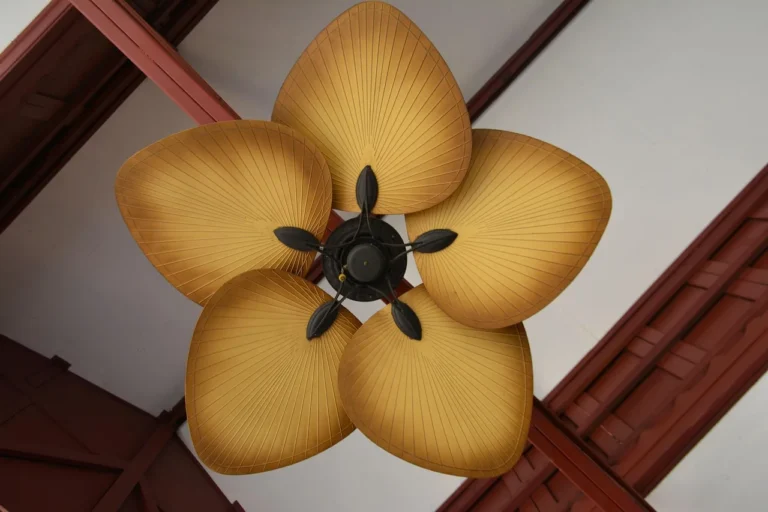
Ceiling Fan Size Chart: Room-by-Room Sizes
For most rooms, a common rule of thumb is to use a ceiling fan size chart by room area first: under about 75 sq ft, 29–36 in; about 75–143 sq ft, 36–42 in; about 144–225 sq ft, 44–50 in; and larger spaces usually need 52 in or more. Then check ceiling height and clearance before you buy. The wrong size can leave dead air, wobble, weak circulation, and a fan that sits too low or moves too little air. This guide gives a room-by-room chart, ceiling-height filters, and exception rules for sloped ceilings, low ceilings, and oversized spaces.
How to size a ceiling fan
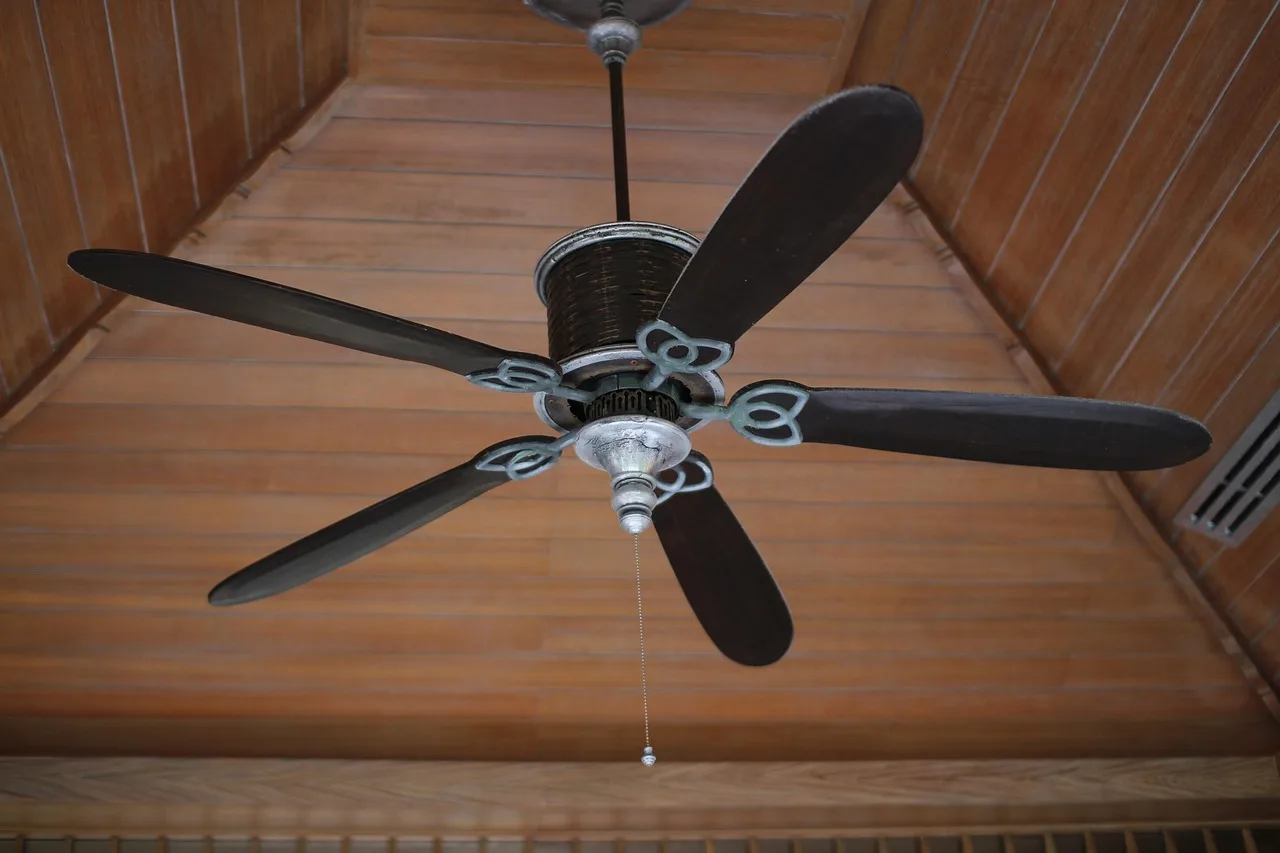


Start with room square footage, then narrow that first choice by ceiling height, blade-tip clearance, and room shape. Blade span is the rotating blade circle measured in inches, and it is the main sizing metric, but it only works when the fan can fit the room and mount correctly.
Measure the room’s length and width, multiply them, and use the square footage as your first pass. Then check whether the room falls near a breakpoint, because 144 sq ft is the transition point where charts may shift from one size band to the next.
How to measure room size
Use the finished room dimensions, not the furniture layout. Measure length times width for a rectangular room, then treat the result as the starting point for fan size. For example, a 10 by 12 room is about 120 sq ft, which points to a mid-size fan rather than a small one.
- Measure the longest wall and the shortest wall.
- Multiply the two numbers to get square footage.
- Match that area to a blade-span band.
- Check ceiling height and mounting type.
- Confirm wall clearance and any slope or beam obstructions.
Handle the 144 sq ft boundary
Use one clear rule for the transition: 144 sq ft belongs in the larger band, so do not split the difference by guesswork. A 12 by 12 room equals 144 sq ft, so treat it as the start of the 44–50 in range and decide the final model by ceiling height, clearance, and how open the room feels.
That means a 12 by 12 room can still call for a smaller-looking fan if the ceiling is low or the walls are close, but the square footage itself places it in the larger band.
Fan size table
This table gives a room-area starting point, then adds the mount type and the checks that stop a bad purchase. Use it as a decision tool, not a one-size rule, because ceiling height and obstructions can rule out a fan that seems correct on paper.
| Room area band | Suggested blade span | Mounting type by ceiling height | Minimum wall clearance | Do not buy if |
|---|---|---|---|---|
| Up to 75 sq ft | 29–36 in | Flush mount for 8-foot ceilings and below; downrod only if the finished blade height still stays in range | 18 inches from walls or beams to the blade tips | The ceiling is low enough that blades would sit too close to the floor, the room is narrow enough that the blade tips would miss clearance, or a sloped ceiling needs an angled adapter |
| 76–144 sq ft | 36–42 in | Flush mount for 8-foot ceilings; downrod for 9-foot and taller ceilings | 18 inches from walls or beams to the blade tips | The fan would sit under a beam, the room is long and narrow enough that a wider fan would crowd the ends, or the ceiling slope needs a compatible adapter |
| 144–225 sq ft | 44–50 in | Downrod for most 9-foot and taller ceilings | 18 inches from walls or beams to the blade tips | The room is too narrow for the blade circle, the blades would end up too low for safe head clearance, or the ceiling angle requires an angled ceiling adapter you do not have |
| 225–400 sq ft | 50–54 in | Downrod for taller ceilings; extended downrod may be needed on higher ceilings | 18 inches from walls or beams to the blade tips | The fan would be too large for a narrow room, the center point is blocked by a beam or light, or the mounting setup cannot keep the body level on a slope |
| Over 400 sq ft | 60 in or larger | Extended downrod is often needed for higher ceilings | 18 inches from walls or beams to the blade tips | The room is open only in appearance but actually broken into separate zones, or the ceiling height and slope make the fan placement unsafe |
For 12 by 12 rooms, the safer answer is usually a 44-inch to 50-inch class fan if the ceiling height and clearance support it. That size matches the boundary point without forcing you into an oversized fan that crowds the edges.
How big should the fan be for your room?

Room size gives you the first answer, but room shape can change the final one. A fan that is correct for square footage can still fail in a narrow room, a long L-shape, or an open-plan area that should be treated as two zones instead of one.
Use small, medium, large, and extra-large bands only as a starting map. Then decide whether the room is truly one area or two connected spaces with different circulation needs.
Small, medium, large, and extra-large rooms
Small rooms usually take the lower blade-span bands, while medium rooms move into the 36–42 in and 44–50 in ranges. Large rooms often need 50–54 in, and very large spaces move to 60 in or larger. A 52-inch fan is also a common fit in larger rooms, depending on the room’s shape and clearance.
That overlap is useful because it reminds you that the exact fan choice can shift at the boundary.
12×12 rooms and other boundary cases
A 12 by 12 room is treated as 144 sq ft in one calculator, so it sits right on the line between mid-size and larger small-room guidance. If the room has a low ceiling or narrow width, stay conservative. If it has good clearance and a standard flat ceiling, the larger band can fit.
Say your bedroom is 12 by 12 with an 8-foot ceiling and a centered light box. A 44-inch to 50-inch class fan may fit better than a smaller one because it keeps the blades away from the walls while still covering the room.
Open-plan, L-shaped, and narrow rooms
Split open-plan spaces into zones when the seating area and dining area are separated by furniture, beams, or a change in use. One oversized fan in the middle of the full square footage can leave one zone weak and the other zone over-served.
A common first-timer mistake is treating an L-shaped room as one rectangle. Measure each leg, then size each zone separately if the airflow needs are different. In a narrow room, blade-tip clearance often matters more than adding another inch of span. For irregular rooms, size the main living zone first, then treat a separate alcove or extension as its own airflow area if the layout blocks circulation.
How ceiling height changes the fit
Ceiling height decides the mount type. An 8-foot ceiling often calls for a flush mount, also called a hugger or low-profile mount. Nine-foot and taller ceilings often need a downrod so the blades sit at a usable finished height instead of hanging too close to the ceiling.
Do not pick the mount from room type alone. A bedroom and a living room can need the same ceiling-height solution if the ceilings are the same.
Flush mount for low ceilings
Flush mounts work best when clearance is tight, especially in 8-foot ceilings. The goal is to keep the fan body close to the ceiling while still leaving enough room for safe blade movement and usable airflow.
The key check is finished blade height, not the housing label. The same flush-mount style can sit differently from one model to another, so confirm the manufacturer’s listing for your model before buying.
Downrods for taller ceilings
Downrods position the fan lower, which helps in 9-foot and taller ceilings. Higher ceilings often need extended downrods so the fan sits in the preferred airflow zone rather than too high to move air effectively.
Finished blade height should be at least 7 feet above the floor, and 8 to 9 feet is the preferred airflow range when possible. That makes finished blade height the real test, not the ceiling height by itself.
Vaulted and sloped ceilings
Sloped or vaulted ceilings need an angled ceiling adapter so the fan body stays level. Without it, the fan can vibrate, wobble, or move air unevenly.
The slope matters as much as the span. A fan may fit the room area and still be the wrong choice if the mounting system cannot handle the angle safely.
How far from the walls?
Keep the blade tips at least 18 inches from walls or beams. That spacing reduces turbulence, helps avoid noise, and keeps the fan from feeling cramped in narrow rooms. Measure from the blade edge, not from the center of the fan.
If the room has fixed obstacles, center the fan where the blades can rotate freely, then check every side. One wall may be fine while a beam, cabinet top, or sloped edge creates a hidden clearance problem.
Narrow rooms and fixed obstacles
Narrow rooms need extra caution because a fan can fit the room area but still fail clearance. If the blade circle pushes within 18 inches of a wall, choose a smaller span or rethink the placement.
Suppose a hallway-like bonus room is 10 feet wide. A fan that seems fine by square footage may be too wide once you apply the blade-tip clearance rule, so the smaller approved span is the better call.
Blade span and airflow
Blade span and airflow are related but not identical. Two fans with the same blade size can move different amounts of air because CFM varies by model. That makes CFM the next comparison after the room-size chart and mount type are already correct.
Use blade span to get the fan into the right size range. Use CFM to compare how strongly two models move air once both fit the room.
How to compare CFM after sizing
Look for CFM on the manufacturer’s listing for each fan you are comparing. If both fans fit the room, the higher airflow number may matter more in a room with heat gain, high ceilings, or weak cross-breeze. If the room is small, fit and clearance usually matter first.
Do not choose a larger diameter just to chase airflow. A properly sized fan with better CFM can outperform a bigger one that is poorly matched to the room.
When airflow matters more than diameter
Prioritize airflow when the room is already near the upper edge of a size band, the ceiling is tall, or the space holds heat. The correct blade span gets the fan in the room. The CFM decides how effectively it moves air once installed.
Large spaces may need more than one fan. That is the point where one larger fan may be less useful than two correctly placed fans.
Frequently asked questions
How do you calculate ceiling fan size?
Calculate room square footage by multiplying length by width, then match that number to a blade-span band. Use the room area as the starting point, not the final answer, because ceiling height, wall clearance, and slope can change the correct mount and size.
How do you measure how big a ceiling fan is?
Measure blade span across the full rotating circle, not the motor housing. The common sizing metric is the diameter of that circle in inches. If the listing shows a range, use the blade-span figure that best matches the room area chart.
Are ceiling fans standard size?
No single standard size fits every room. Fans commonly fall into ranges from 29 to 72 inches, with room size deciding the starting point. Smaller rooms need smaller spans, while large or open rooms often need 52 inches or more.
What size fan fits a 12×12 room?
A 12 by 12 room equals 144 sq ft, which places it at the start of the 44–50 in band. The practical choice depends on ceiling height and clearance, but the room area itself points to that larger band.
How high should ceiling fan blades be?
Finished blade height should be at least 7 feet above the floor, and 8 to 9 feet is the preferred airflow range when possible. That finished blade height matters more than the ceiling height alone, especially in rooms that need a downrod.
Do I need a downrod for a high ceiling?
Usually yes, if the ceiling is 9 feet or taller and the fan would otherwise sit too high. The point of a downrod is to place the blades in a usable airflow zone. Check the manufacturer’s listing for your model to confirm the finished height.
How far should a ceiling fan be from the walls?
Keep the blade tips at least 18 inches from walls or beams. That clearance helps prevent turbulence, noise, and awkward placement in narrow rooms. Measure from the blade edge to the obstruction, and recheck all sides before you buy.
Products related to this article
Sponsored / affiliate links. As an Amazon Associate I earn from qualifying purchases. I may earn additional commission from eligible campaigns.