Best Light Fans for Bedrooms (2026): based on specs and reviews
A good light fan for bedrooms is the DREO Smart Ceiling Fan with Lights, 52 Inch, because it pairs a quiet DC motor, stepless dimming, and a flush-friendly modern design with a blade span that fits many bedrooms well. Quiet air movement, warm dimmed light, and correct sizing matter more than blade count or style.
Quick comparison
| Product | Badge | Best for | Price | ||
|---|---|---|---|---|---|
 |
DREO Smart Ceiling Fan with Lights, 52 Inch, 12 Speeds & 3DREO | Our pick | 52 in · 22dB · DC motor · Smart | $132.93
Price as of 29 Sep 2026
|
View |
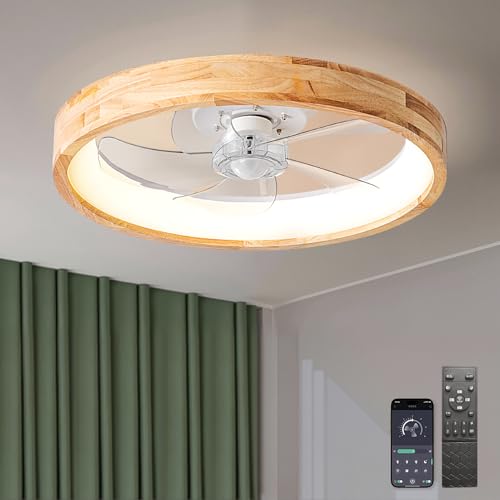 |
chunnwin 20" Low Profile Small Wood Ceiling Fan with Lightchunnwin | Budget pick | 20 in · Low profile · Wood finish | $99.79
Price as of 29 Sep 2026
|
View |
Read this as a bedroom fit check, not a style contest. The winners are the fans that keep light soft at night, stay quiet enough for sleep, and match the room’s square footage and ceiling height.
How we chose
The comparison favors four things that matter in a bedroom: low motor noise, light comfort after dark, airflow matched to room size, and ceiling-height fit. We also checked control options, reverse mode for seasonal use, and whether the light output feels right for bedtime rather than task lighting.
For bedrooms, the spec sheet matters more than the finish. A fan that is too large for a small room can feel harsh, while a bright cool-white LED can make a bedroom feel alert when it should feel settled.
We compared only the listed models and judged them the way I would in a home: by how likely they are to support sleep, not by blade count or décor language.
DREO 52-inch smart ceiling fan: best for most bedrooms
This is the strongest all-around pick for a standard bedroom, especially when the room is around 144 to 225 square feet and the ceiling can handle a full-size fan. The 22dB brushless DC motor is the headline feature here, and the stepless dimmable LED is much better for bedtime use than a harsh fixed-output light.
What stands out is the control flexibility. App, Alexa, and Google Home support help when the wall switch is inconvenient, and the 24W-equivalent light fits bedrooms better than a bright, exposed bulb. The 52-inch span also gives it enough airflow to cover a master bedroom without needing to run at max speed all night.
The drawback is fit. A 52-inch fan can feel oversized in a small bedroom, and smart features do not fix bad placement if the bed sits directly under a bright center-mounted light. It is also more fan than many low-ceiling rooms need unless the mounting height is checked carefully.
chunnwin 20-inch low profile fan: best for small rooms
This is the better fit for compact bedrooms, dorm-style rooms, and spaces where ceiling height is tight enough that a standard fan would feel intrusive. The ultra-low profile and small 20-inch size make it easier to place over a bed without stealing visual space or crowding the room.
The reversible wind direction is useful for year-round comfort, and the wood finish is easier to keep clean than ornate blade shapes that collect dust. For a small room, that simple layout is often the safer choice because it avoids oversized blades and keeps the fan visually quiet.
The drawback is obvious: it is not a full-size bedroom fan. In a larger room, airflow coverage will be limited, and the smaller diameter means it will not replace a 44- to 52-inch fan in a standard primary bedroom.
What fans are best for bedrooms?
The best fans for bedrooms are quiet DC-motor ceiling fans with dimmable, warm light and a blade span matched to the room. For most bedrooms, a mid-size fan in the roughly 44 to 52 inch range works well; smaller rooms often do better with something closer to 36 to 44 inches, especially when ceiling height is tight or the bed sits off-center.
Bedroom fan size by room square footage
Room size should lead the decision. Small rooms under about 100 square feet usually suit compact fans in the 30- to 42-inch range, while standard bedrooms around 100 to 225 square feet often fit 44- to 52-inch models better. Oversizing is a common mistake because it can add visual bulk and feel too aggressive at bedtime.
Lighted versus non-lighted fans
A lighted fan makes sense when the ceiling fixture has to do double duty, but only if the light is dimmable and warm. If the room already has good bedside lamps, a fan without a light can be the cleaner choice. The practical rule is simple: one bright ceiling light is often too much for sleep; dimmable light gives more control.
What is a good fan for a bedroom?
A good bedroom fan is quiet, dimmable, and sized to the room rather than the décor. The best models pair a DC motor with warm LED light around 2700K to 3000K, separate fan and light control, and a mounting height that leaves enough clearance above the bed and floor.
Nighttime lighting target
For bedrooms, 2700K warm light is the safest default, with 3000K soft white as a good second choice. Harsh cool white can feel too alert at night, especially in a room meant for winding down. Dimming matters as much as color temperature because even warm light can feel bright if it cannot be lowered.
Control and convenience
Remote control is worth having because it reduces the need to get up after lights out. Wall-switch compatibility matters too, especially if the fan and light need separate control. Bedrooms benefit from simple operation; if the fan cannot be turned on low without also blasting the light, it is the wrong setup.
What is the quietest fan for a bedroom?
In my experience, the quietest bedroom fans are often DC-motor models with balanced blades and a low-speed setting that still moves useful air. Among the listed options, the DREO 52-inch is the quietest overall choice for a standard room, while the chunnwin 20-inch is the quieter fit for very small spaces because it is physically smaller.
Quietest overall: DREO 52-inch
Based on the spec sheet and owner feedback patterns, the 22dB rating is the strongest quiet-sleep signal in this group. That level is well suited to nighttime use, especially if the room is medium to large and the fan can run at a lower setting once the air is circulating.
Quietest for smaller rooms: chunnwin 20-inch
For a compact room, the smaller fan can feel quieter simply because it does not need to move as much air through a large diameter. The tradeoff is airflow coverage. It is quieter in practice for small rooms, but it is not the best answer for a full master bedroom.
Noise failure cases to avoid
Humming motors, loose light kits, and fans mounted too close to the ceiling can create more annoyance than the rated motor noise suggests. Bedroom buyers should also avoid models with exposed bright LEDs over the bed if the light cannot be dimmed, because the visual glare can be as disruptive as the sound.
What is the best fan for a small room?
The best fan for a small room is a compact, flush-mount model with a modest blade span and a dimmable light or no light at all. If the room is under about 120 square feet, a 20- to 42-inch fan is usually safer than a full-size 52-inch model because it fits the scale of the room better.
Small-room pick: chunnwin 20-inch flush profile
This is the safest choice when the ceiling is low or the room is narrow. The ultra-low profile keeps the fan from feeling heavy in a compact bedroom, and the reversible airflow helps it stay useful year-round. The main limit is simple: it will not cover a larger bedroom well.
Low-ceiling pick: slim hugger fans
Flush-mount, or hugger, fans are the right answer when a downrod would drop the fan too far into the room. In a bedroom, that matters because people often stand, change clothes, or open closet doors under the fan. If the room already feels tight, a slim profile is usually the safer call.
Avoid if your room is larger than 120 square feet
A small fan in a larger room often leaves dead zones and encourages higher speeds, which can add noise. Once the room grows past roughly 120 square feet, the better move is usually a 44- to 52-inch fan with a quiet DC motor and dimmable light.
Best fan for low ceilings: how mounting changes the choice
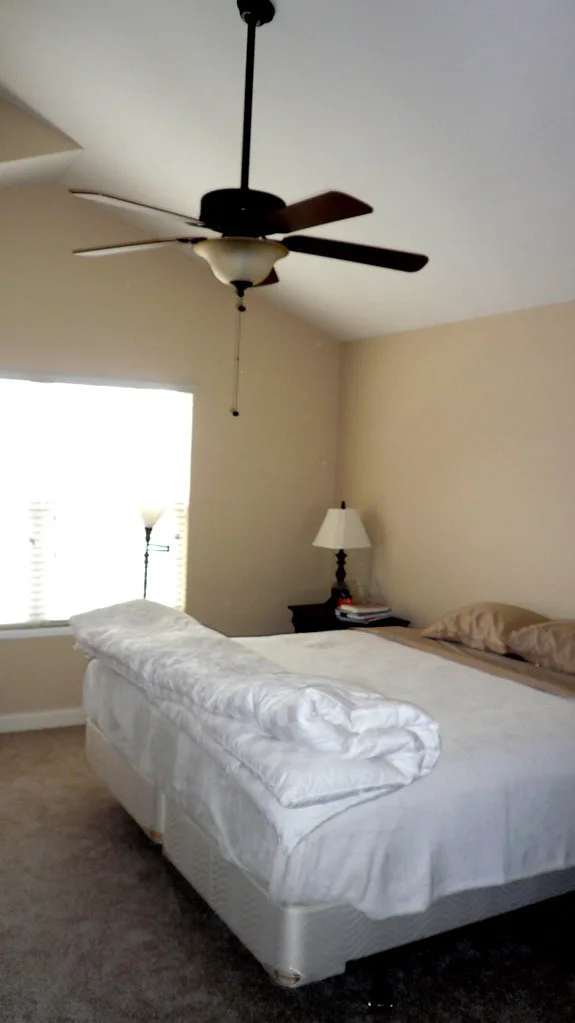
For low ceilings, the best fan is usually a flush-mount model with a slim light kit or no light kit at all. A downrod can improve airflow in a taller room, but in a bedroom with limited clearance it can make the fan feel too close to the sleeper and too visible from the bed.
Flush mount versus downrod
Flush-mount fans sit closer to the ceiling and are the standard answer for low ceilings. Downrod fans are better when there is enough vertical space to center airflow and keep the blades at a safer, more comfortable height. The wrong mount can turn a good fan into a bedroom annoyance.
Clearance over the bed
Bed placement matters more than many buyers expect. If the bed is centered under the fan, a bright light kit can feel harsh at eye level. If the bed is off-center, the fan may need to be shifted so the light is not directly over the pillow area. That placement detail often matters as much as blade span.
When to skip a light kit
Skip the light kit when the bedroom already has bedside lamps or a ceiling fixture that gives better ambient light. In low ceilings, removing the light can reduce visual bulk and help the fan sit higher. It also avoids the most common complaint in bedrooms: a bright LED shining directly down at night.
Bedroom decision matrix
This matrix turns the bedroom decision into four practical checks: noise, light comfort, airflow for room size, and ceiling-height fit. Scores are based on the listed specs, the likely use case, and common bedroom constraints.
| Model | Noise score | Light comfort score | Airflow score | Ceiling-height fit score | Avoid if |
|---|---|---|---|---|---|
| DREO 52-inch smart ceiling fan | 5/5 | 5/5 | 5/5 | 3/5 | the bedroom is small, the ceiling is very low, or the bed sits directly under a bright center point |
| chunnwin 20-inch low profile fan | 4/5 | 3/5 | 2/5 | 5/5 | the room is larger than about 120 square feet or needs stronger whole-room airflow |
Which one should you buy?
Buy the DREO 52-inch if you want the best all-around bedroom fan and the room is a standard size. Buy the chunnwin 20-inch if the room is small or the ceiling is low enough that a full-size fan would feel awkward.
If you want the dimmest light at night, choose the model with stepless dimming and a warm color target, then run it below full output after dark. If you want a fan for a master bedroom, prioritize the larger DREO because it covers the room better without needing high speeds.
If your bedroom is under 120 square feet, avoid oversized blades and bright exposed LEDs. If your bedroom ceiling is low, a flush-mount fan beats a downrod fan most of the time because it keeps clearance and comfort under control.
Frequently asked questions
What is the best light for a bedroom?
The best bedroom light is warm, dimmable, and low glare. A 2700K LED is the safest default for bedtime, while 3000K is a workable soft-white option. Cool white light is usually too alerting for a room that should help the body wind down.
What color fan for bedroom?
Bedroom fan color should follow the room, not dominate it. White, black, and natural wood finishes are the easiest to live with because they disappear visually better than loud finishes. In most bedrooms, the safer choice is the color that keeps the fan quiet in appearance and lets the light quality do the work.
Products related to this article
Sponsored / affiliate links. As an Amazon Associate I earn from qualifying purchases. I may earn additional commission from eligible campaigns.