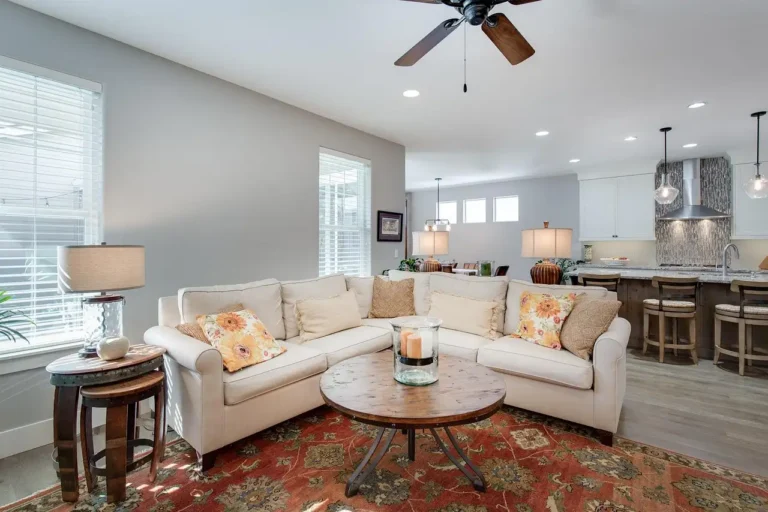
Best Ceiling Fans for Bedrooms (2026): we compared
In general, a bedroom ceiling fan should be sized to the room and ceiling height: smaller rooms may suit a roughly 29–36 inch fan, mid-sized rooms may suit about 42–44 inches, larger rooms may suit about 52 inches, and a flush mount can be a good option if the ceiling is low. Pick the wrong size, and I see wobble, noise, weak airflow, or a fan hanging too close to the bed. This guide compares the best bedroom fans by room size, ceiling height, noise, and control type.
This guide is part of our Home lighting and ceiling fan guide series.
Quick comparison
| Product | Badge | Best for | Price | ||
|---|---|---|---|---|---|
 |
Hunter Dempsey, Indoor, Ceiling Fan, Modern, Quiet, 44Hunter | Our pick | 44 in · Low-profile · LED · Remote | $199.99
Price as of 24 Sep 2026
|
View |
 |
Hunter Anisten, Indoor, Ceiling Fan, with LED Light, 52Hunter | Also great | 52 in · Whisper quiet · Pull chain | $101.99
Price as of 24 Sep 2026
|
View |
 |
Minka-Aire F543L-DK Swept 56 Inch Ceiling Fan withMINKA-AIRE | Upgrade pick | 56 in · DC motor · Dimmable LED · Remote | $449.99
Price as of 24 Sep 2026
|
View |
 |
NKPU Ceiling Fans with Lights and Remote Control, 5 SolidNKPU | Budget pick | 56 in · Solid wood blades · App + remote | $159.99
Price as of 24 Sep 2026
|
View |
This is the quickest way I sort the field before I look at style. Bedroom buyers usually care more about ceiling height, control, and quiet night use than decorative detail.
According to Best Ceiling Fans (2026) — This Old House says most fans cost around $100–$250.
How we chose
The picks below favor bedroom fit over showroom appeal. I filtered for ceiling height, room size, noise profile, control method, and whether the fan includes a light without throwing glare into a sleeping space.
I also weighed motor type, blade span, and mounting style. Based on specs and reviews, the safest choice is the one that fits the room first and the decor second.
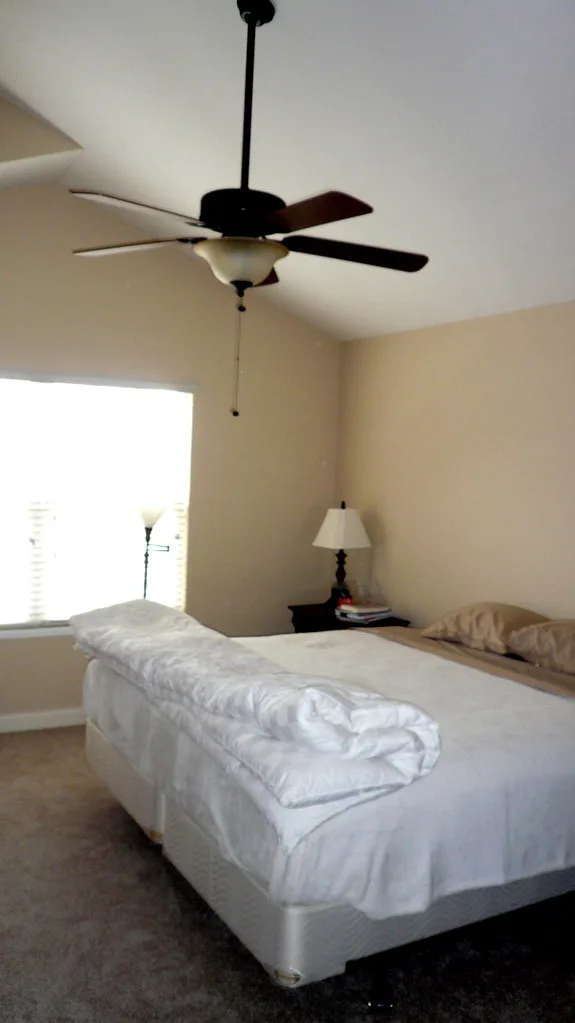
Hunter Dempsey: best for low ceilings
The Hunter Dempsey fits bedrooms with limited clearance and a clean, modern look. It is the easiest match for a room under 9 feet where a hanging downrod would sit too low over the bed.
What stands out is the low-profile mount, integrated LED lighting, and remote control. For a typical bedroom, that combination cuts down on separate wall switches and makes night use simpler.
The drawback is size and flexibility. A 44-inch fan can feel small in a larger primary bedroom, and buyers who want a stronger statement piece may want a 52-inch model instead.
Hunter Anisten: best budget bedroom fan
The Hunter Anisten is the budget-friendly pick for medium bedrooms that still need a full-size fan. Based on the spec sheet and owner feedback, it is a practical buy when quiet operation matters more than built-in smart controls.
Its strongest points are the WhisperWind motor, the 52-inch span, and the integrated LED light. The matte black finish also works in rooms where the fan needs to feel built in, not like an afterthought.
The tradeoff is control simplicity. A pull-chain setup is less convenient from bed than a remote, and buyers who want dimming or app control will need to look higher up the price ladder.
Minka-Aire F543L-DK: best premium bedroom fan
The Minka-Aire F543L-DK is the premium pick for larger bedrooms and buyers who want a more polished finish. Its 56-inch size, DC motor, and dimmable LED make it the most flexible option in this group for year-round use.
What stands out is the six-speed reversible DC motor and the included handheld remote. That pairing gives better control at bedtime, when a low setting and quiet motor matter more than raw output.
The drawback is price. At this level, the fan costs much more than a standard bedroom model, and the room has to be large enough to justify the span.
NKPU ceiling fan with lights and remote: best smart bedroom fan
The NKPU fan is the best fit for buyers who want app control, a dimmable light, and a quieter DC motor without going to a luxury price point. It is also useful in bedroom spaces where adjusting light from bed matters more than a pull chain.
The standouts are the dual control setup, 56-inch blade span, and 18W LED with 1000 lumens. The solid wood blades give it a warmer look than many modern plastic-blade fans.
The drawback is that the modern outdoor-style wording can confuse bedroom shoppers, and the fan still needs enough ceiling height and room width to avoid feeling oversized.
Which one should you buy
Choose the Hunter Dempsey if the ceiling is low and you want a simple, quiet setup with a remote. Choose the Hunter Anisten if the room is medium-sized and the budget is tighter. Choose the Minka-Aire if the bedroom is large and the ceiling can support a 56-inch fan with a premium look.
Choose the NKPU if app control, dimming, and a wood-blade finish matter more than brand familiarity. The right answer is the one that matches ceiling height first, then room size, then how you actually use the room at night.
Bedroom fan selector table
| Room size | Ceiling height | Sleep preference | Blade span | Mounting type | Control method | Light choice |
|---|---|---|---|---|---|---|
| Under 100 sq ft | Under 8 ft | Quiet, low glare | 29–36 in | Flush-mount | Remote or wall control | No light or dimmable LED |
| 100–225 sq ft | 8–9 ft | Balanced airflow | 42–44 in | Low-profile or short downrod | Remote control | Integrated LED with dimming |
| Over 225 sq ft | 9 ft or higher | Stronger air movement | 52–56 in | Downrod | Remote or smart app | Integrated LED, dimmable if used at night |
Failure-case checklist
- Measure the longest wall before choosing blade span.
- Check that the fan will hang high enough above the bed and walking path.
- Confirm the ceiling box is fan-rated, not just light-rated.
- Look for blade wobble in reviews, then check whether balancing kits are included.
- On sloped ceilings, confirm the mount accepts the angle or a compatible adapter.
- Avoid oversized fans in small rooms; they can feel loud even when the motor is quiet.
How to choose the right size and mount
Blade span should follow room size first and ceiling height second. HGTV recommends 48 inches or less for rooms under 12 feet on the longest wall, and at least 56 inches for rooms with a longest wall greater than 18 feet. That rule fits bedrooms well because long rooms need wider blade sweep to avoid dead spots.
Flush-mount and low-profile fans suit lower ceilings. A downrod is the better choice when the ceiling is high enough to keep the blades in the proper air zone without hanging too low over the bed.
Flush-mount, low-profile, and downrod rules
A flush-mount fan sits tight to the ceiling and is the safest choice when clearance is tight. A low-profile design is similar, but some models still leave a small gap for motor housing and airflow.
Downrods help in rooms with standard or tall ceilings. On vaulted ceilings, the angle matters as much as the length, so the fan needs a mount that keeps the blades level.
What to do with sloped or vaulted ceilings
Use a fan rated for angled mounting, and check whether the downrod length is included or sold separately. If the blades tilt with the ceiling, airflow drops and the fan can wobble more than it should.
What size ceiling fan do I need for a bedroom?
The right bedroom fan size follows room width, not style. For a small bedroom, a 29–36 inch fan is usually the right range. For a medium room, 42–44 inches is the safer fit. Larger rooms usually need 52 inches or more, especially when the longest wall runs well beyond the bed zone.
Size matters because an undersized fan leaves hot corners untouched, while an oversized one can feel noisy and visually heavy. HGTV’s bedroom pick, the George Oliver Nicola 52” Ceiling Fan, shows how a 52-inch fan can fit a standard primary bedroom when the room can support it.
Small, medium, and large room fit
Small rooms need tighter blade spans and quieter startup behavior. Medium bedrooms usually benefit from a 42- to 44-inch fan with a light and remote. Large bedrooms can support 52 inches or more, especially when the ceiling is high enough for a proper mount.
Which fan features matter most for sleep comfort?
For sleep, the most useful features are a quiet DC motor, stable mounting, gentle speed steps, and a timer. A bedroom fan should move air without audible rattle or a low hum that shows up once the room gets silent.
Remote control is often the most practical choice because it lets you change speed or shut the fan off without getting out of bed. Smart app control helps when bedtime routines already use a phone, but wall control is still the easiest fallback for guests.
DC vs AC motor
DC motors usually run quieter, use less power, and offer more speed settings. AC motors can still work well, but they are more likely to have a steady hum and fewer fine-speed options. HGTV says fans are more energy-efficient than running AC, and a DC motor helps that comfort-per-watt case even more.
Noise, wobble, and timer settings
Noise is not only about the motor. Loose blades, a crooked canopy, or a box that is not fan-rated can create rattling that a quiet motor cannot hide. Timers and sleep modes matter because they let the fan run long enough to cool the room, then switch off before morning.
Remote, wall control, or smart app
A remote is the simplest choice for most bedrooms. A wall control is better when the fan should feel permanent and easy for guests. A smart app helps with dimming, schedules, and bedtime automations, but it should not replace a physical control in case the network is down.
Are ceiling fans with lights good for bedrooms?
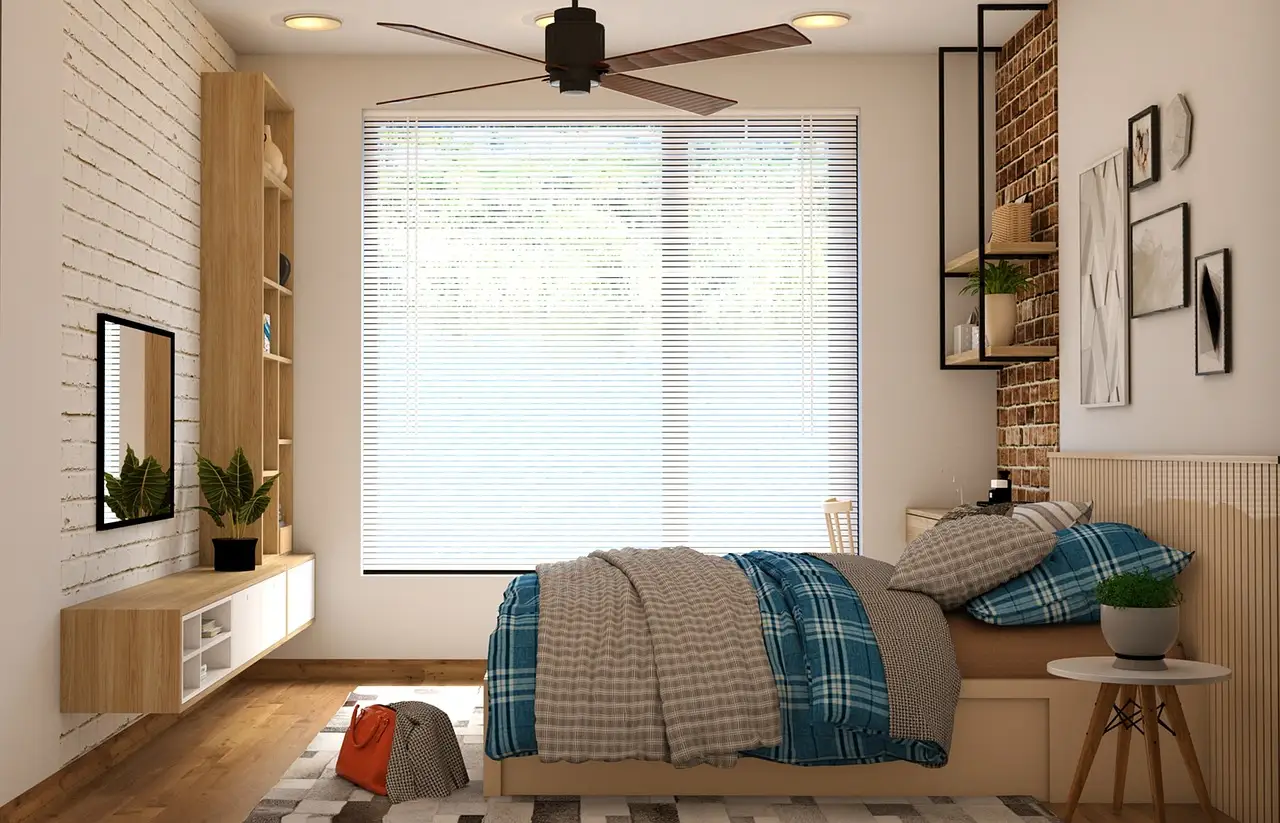
Yes, if the light is dimmable and not too harsh. Integrated LED lights work well in bedrooms because they reduce the need for a separate ceiling fixture, but the output should stay soft enough for winding down, reading, and middle-of-the-night use.
The best setup is usually a warm LED, dimming control, and a shade or globe that spreads light evenly. A no-light fan can be the better buy if the room already has bedside lamps or a ceiling light that does the job well.
Integrated LED basics
Integrated LED kits are common because they are compact and efficient. They can also sit closer to the ceiling, which helps in rooms with limited height. The downside is that the light is part of the fan, so replacement options can be more limited than with a separate bulb kit.
Dimming, lumens, and color temperature
Bedroom light should dim low enough to avoid a harsh ceiling glow. A softer warm color temperature usually feels better at night than a cool white beam. For reading, enough lumens matter; for sleeping, the ability to lower brightness matters more.
When a no-light fan is the better buy
Choose a no-light fan when the bedroom already has enough lamps or when glare is a problem. This is also the safer path for minimalist rooms where a bright ceiling fixture would interrupt the sleep setup.
Best picks by bedroom need
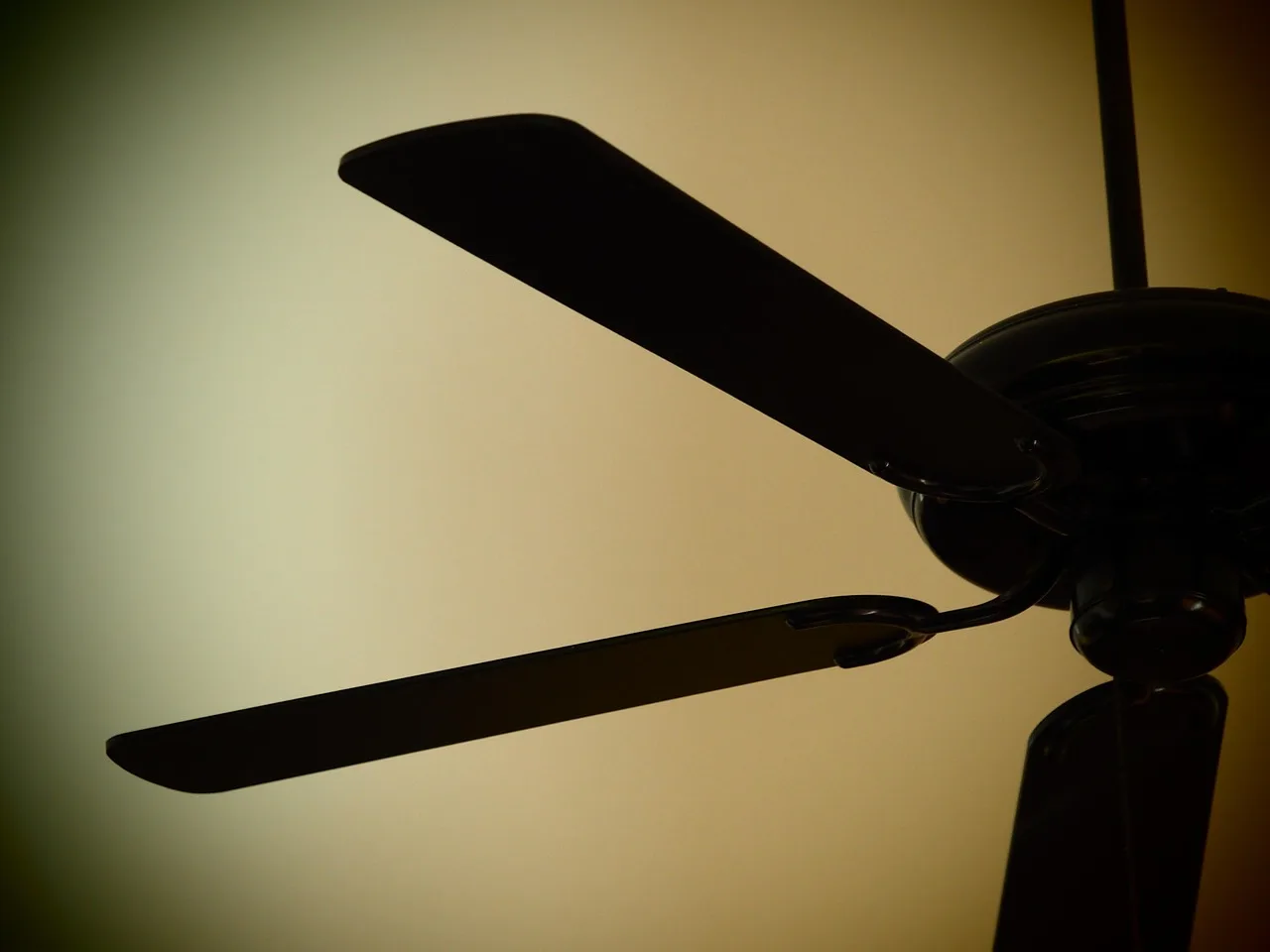
These picks are useful as shortcuts, but each one still needs the room-size and ceiling-height check. A bedroom fan that looks perfect online can still fail if the blade span or mount is wrong for the space.
Best for a small bedroom
The Hunter Dempsey is the safer choice when the room is tight and the ceiling is under 9 feet. Its low-profile form keeps the fan from crowding the bed area, and the remote helps when the switch is not near the pillow.
Best for a medium bedroom
The Hunter Anisten fits a medium room that wants a full 52-inch span without moving into a premium price tier. It works best when the room needs steady circulation and the buyer can live with pull-chain control.
Best for a large bedroom
The Minka-Aire F543L-DK is the strongest fit for a larger room that can support a 56-inch blade span. The six-speed reversible DC motor and dimmable LED make it more adaptable when the same room is used for sleeping and lounging.
Best for a low ceiling
The Hunter Dempsey is the clear low-ceiling choice. Flush or low-profile mounting is the deciding factor here, because a bedroom fan that hangs too low becomes a comfort issue and a safety issue.
Best for a premium bedroom
The Minka-Aire F543L-DK is the premium option because it combines a polished finish, dimmable light, and a DC motor. It is the most complete bedroom package here for buyers who want both function and a more finished look.
How much should you spend?
Most bedroom buyers land in the entry to mid-range band. This Old House says most fans cost around $100–$250, while premium models can cost upwards of $600 or $700. That figure is only for the fan itself, not installation.
Installation cost is separate. Add the light kit if it is sold apart, add the remote if it is not included, and expect more cost if the ceiling box needs replacement or the ceiling is sloped.
Entry, mid-range, and premium price bands
Entry models usually cover basic airflow and a simple finish. Mid-range fans are where better motors, better remotes, and integrated LED options start to make sense. Premium fans tend to pay for quieter operation, stronger materials, and better control choices.
What adds cost
A light kit can raise the price if it is not built in. Remote control and smart control can also add cost. Installation may be the biggest hidden expense, especially when wiring, ceiling boxes, or sloped mounting need extra work.
What blade size is best for a medium bedroom?
A medium bedroom usually does best with a 42–44 inch fan, though some rooms can take 52 inches if the longest wall is large enough. The safest way to choose is to match the blade span to the room’s footprint and the bed placement, not just the decor style.
If the fan is too small, the room can still feel warm at night. If it is too large, the airflow may feel aggressive and the fixture can dominate the room visually.
Should a bedroom ceiling fan have reversible blades?
Yes, reversible airflow is worth having in a bedroom. Summer mode pushes air down to help people feel cooler, while winter mode moves air gently to redistribute warm air without the same direct draft.
That feature matters because bedrooms change use by season. A reversible motor gives the fan a longer useful life and reduces the chance that the room needs a separate comfort fix later.
Frequently asked questions
How quiet should a bedroom ceiling fan be?
Quiet enough that the motor does not stand out once the room is silent. The best bedroom fans avoid hum, rattle, and wobble. If noise appears, the cause is often loose blades, a poor mount, or an unbalanced installation rather than the motor alone.
Do I need a remote control for a bedroom ceiling fan?
A remote is not required, but it is usually the most useful control in a bedroom. It lets you change speed, dim lights, or stop the fan without leaving bed. Wall controls are fine too, but pull chains are less convenient for night use.
Can a low-profile ceiling fan work in a bedroom with low ceilings?
Yes, and it is usually the right answer when the ceiling is under 8 feet. Low-profile and flush-mount designs keep the blades closer to the ceiling and reduce headroom issues. They are also the safest option when the bed sits directly under the fan path.
How much does a good bedroom ceiling fan cost?
Most good bedroom fans fall around $100–$250 before installation, based on the range This Old House gives. Premium fans can run much higher, and the final bill can rise if you add a light kit, remote, smart control, or electrical labor.
Products related to this article
Sponsored / affiliate links. As an Amazon Associate I earn from qualifying purchases. I may earn additional commission from eligible campaigns.