5 Best Desk Lamps for Home Offices: Based on Specs and Reviews
For most home offices, a dimmable LED desk lamp with about 400 to 800 lumens, plus a high-CRI rating and a shaded or directed head that helps keep light off your screen, is a common starting point. Poor placement causes glare, hot spots, and eye fatigue, even when the lamp looks bright enough. This guide compares lamp types by desk depth, monitor count, glare control, and reading comfort, so you can choose the right fit.
Quick comparison
| Product | Badge | Best for | Price | ||
|---|---|---|---|---|---|
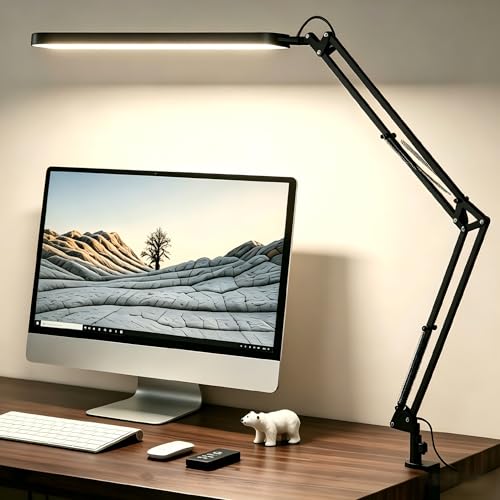 |
SKYLEO Desk Lamp for Home Office, Eye Comfortable LED DeskSKYLEO | Our pick | Swing-arm LED · Memory function · 5 color/11 brightness | $22.35
Price as of 22 Oct 2026
|
View |
 |
Quntis Computer Monitor Lamp, Screen Monitor Light Bar forQuntis | Also great | Monitor light bar · USB-powered · Touch control | $39.95
Price as of 22 Oct 2026
|
View |
 |
TORCHSTAR Metal Desk Lamp, Adjustable Swing Arm, E26, BlackTORCHSTAR | Also great | Metal swing-arm · E26 base · Clamp or stand | $19.99
Price as of 22 Oct 2026
|
View |
 |
Globe Electric 56963 31.5" Multi-Joint Desk Lamp with MetalGlobe Electric | Also great | $24.99
Price as of 22 Oct 2026
|
View | |
 |
LED Desk Lamp for Office Home, 500LM Bright Touch Controlshinelife | Also great | $19.76
Price as of 22 Oct 2026
|
View |
Use the comparison table to match lamp type to your desk depth, monitor count, and glare risk before you sort by style. A lamp that looks right can still fail if its base steals space or its beam lands on a glossy screen.
Desk lamp decision matrix
| Desk size | Monitor count | Glare risk | Preferred light temperature | Mounting option | Recommended lamp type | Avoid if |
|---|---|---|---|---|---|---|
| Very small desk, under 24 inches deep | 1 | Medium to high | 3000K to 4000K | Clamp or clip | Clamp lamp or monitor light bar | You need a wide base or heavy decorative lamp. |
| Compact desk, 24 to 30 inches deep | 1 | Low to medium | 3500K to 5000K | Freestanding base or clamp | Task lamp with adjustable head | Your monitor sits very close to the lamp position. |
| Standard desk, 30 to 36 inches deep | 1 to 2 | Medium | 4000K to 5000K | Freestanding base | Architect or swing-arm lamp | You want fixed lighting with no repositioning. |
| Wide desk, over 36 inches deep | 2 | Medium to high | 4000K to 5000K | Freestanding base or clamp | Wide-reach swing arm or monitor bar | You only need a tiny pool of light for paperwork. |
| Renter or hybrid vanity-office | 1 | Low | 2700K to 4000K | Clamp, clip, or compact base | Clamp lamp or compact task lamp | You cannot leave marks or pinch a fragile surface. |
How we chose
Selection here is fit-first, not style-first. The strongest picks solve a real workspace problem: limited surface area, dual monitors, glare on glossy panels, or the need for adjustable brightness and color temperature.
We compared each lamp on output control, mounting flexibility, desk footprint, and eye-comfort features such as flicker-free LEDs, high CRI, and diffuse or asymmetrical light. That matters more than decorative form.
Desk-lamp categories also vary a lot by purpose. IKEA lists 21 desk lamp items in its US category, and the range includes flexible arms, adjustable light intensity, secure clamps, built-in storage, and models like the TERTIAL at $19.99, RANARP at $59.99, NYMÅNE with wireless charging at $79.99, NÄVLINGE LED clamp spotlight at $21.99, and SVALLET at $4.99. That spread shows how much the mount and feature set change the buying decision.
For broader market context, Esquire calls desk lamps a key desk item for home-office productivity and says a good desk lamp reduces eye strain and harsh overhead lighting. Small Business Trends also points to task-oriented alternatives such as the Verilux HappyLight Duo, which it says provides up to 10,000 lux, and the EppieBasic lamp with a 31.5-inch light bar.
What is the best desk lamp for a home office?
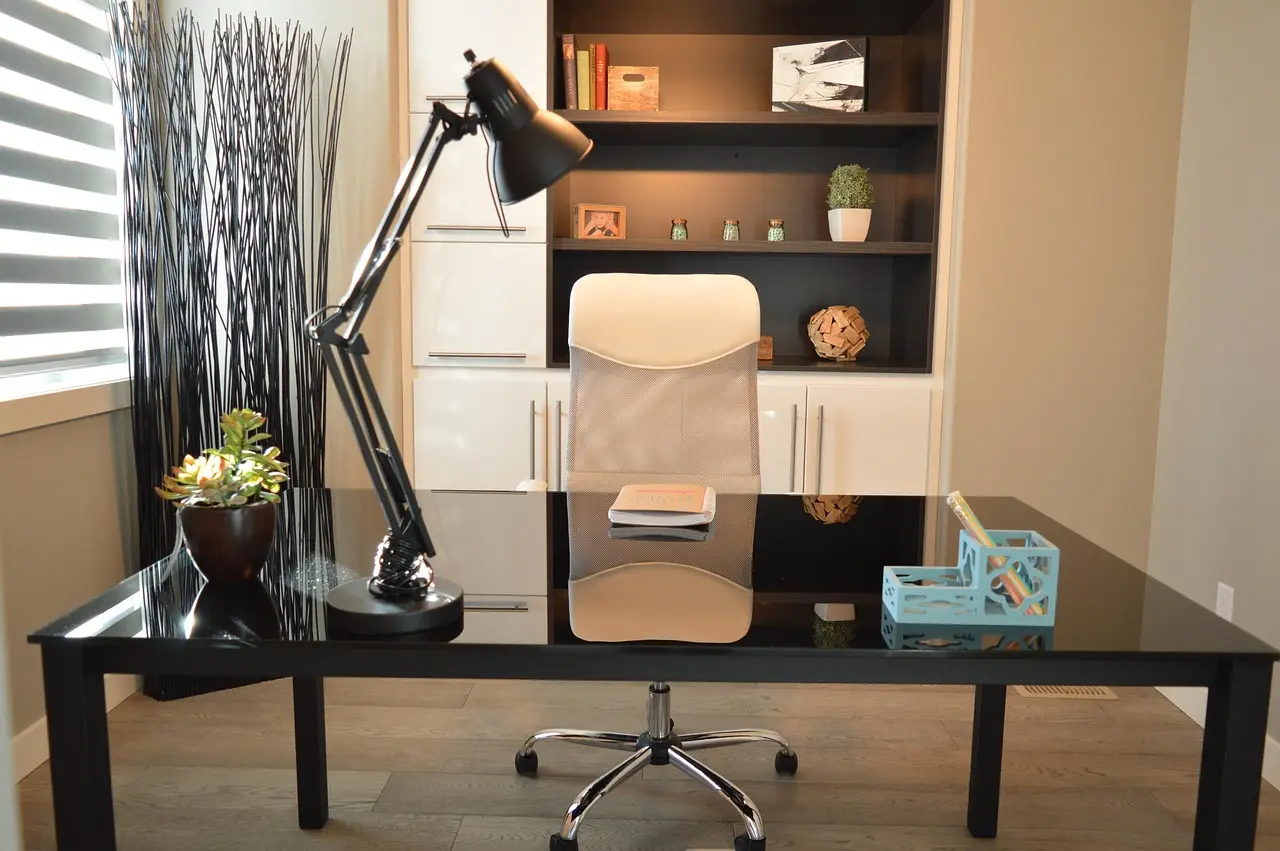
The best desk lamp for most home offices is a dimmable LED task lamp with a directed head, around 400 to 800 lumens, and enough adjustability to keep light off your screen. That combination covers reading, writing, and video-call work without forcing you to overlight the whole room.
For a broad set of desks, the strongest fit is usually a swing-arm or well-built task lamp with memory function and multiple brightness steps. It gives you enough reach for paper work and enough control for a monitor-heavy setup. If your desk is small, a clamp or monitor light bar may fit better.
Best overall pick: SKYLEO Desk Lamp
- Memory function recalls last setting
- 11 brightness and 5 color modes
- USB-powered, compact footprint
This is the most flexible all-around choice for a typical home office. Based on the published specs, it gives you 11 brightness levels, 5 color modes, memory function, and a USB-powered design that keeps the footprint small.
It suits people who want one lamp for writing, keyboard work, and late-night sessions without moving a lot of hardware around. The swing arm helps direct light where you need it, and the compact build is useful on crowded desks.
The drawback is the same thing that makes it versatile: it is still a general-purpose lamp, not a glare-focused monitor bar. If your screen is especially glossy or your desk is very shallow, you may want a more specialized shape.
Desk lamp decision matrix
| Desk size | Monitor count | Glare risk | Preferred light temperature | Mounting option | Recommended lamp type | Avoid if |
|---|---|---|---|---|---|---|
| Very small desk, under 24 inches deep | 1 | Medium to high | 3000K to 4000K | Clamp or clip | Clamp lamp or monitor light bar | You need a wide base or heavy decorative lamp. |
| Compact desk, 24 to 30 inches deep | 1 | Low to medium | 3500K to 5000K | Freestanding base or clamp | Task lamp with adjustable head | Your monitor sits very close to the lamp position. |
| Standard desk, 30 to 36 inches deep | 1 to 2 | Medium | 4000K to 5000K | Freestanding base | Architect or swing-arm lamp | You want fixed lighting with no repositioning. |
| Wide desk, over 36 inches deep | 2 | Medium to high | 4000K to 5000K | Freestanding base or clamp | Wide-reach swing arm or monitor bar | You only need a tiny pool of light for paperwork. |
| Renter or hybrid vanity-office | 1 | Low | 2700K to 4000K | Clamp, clip, or compact base | Clamp lamp or compact task lamp | You cannot leave marks or pinch a fragile surface. |
What desk lamp is best for eye strain?
The best desk lamp for eye strain is the one that reduces contrast problems, glare, and flicker, not the one with the highest output. A flicker-free LED with high CRI, dimming, and a shape that keeps light off your monitor is usually the strongest choice for computer work.
For glare control, a monitor light bar is often better than a traditional lamp because it throws light forward onto the desk and away from the screen. If you prefer a desk lamp, choose a shaded head, a side-positioned arm, or diffused output that spreads light without hot spots.
Best for glare control: Quntis Computer Monitor Lamp
- Asymmetrical design eliminates screen glare
- Auto-dimming ambient sensor included
- Ra98 high color rendering for eye comfort
This is the strongest pick when screen glare is the main problem. The asymmetrical design is built to light the desk while avoiding direct spill on the monitor, and the auto-dimming ambient sensor adds a useful comfort feature for changing room light.
It is especially practical for glossy displays, dual-monitor layouts, and deep focus work where a bright bulb aimed at the desk would create reflections. The published Ra98 color rendering is also a plus for color-sensitive tasks.
The drawback is that it is a monitor bar, so it is less flexible for pure paper work than a swing-arm lamp. If you want light for a sketch pad, notebook, and keyboard at once, a traditional adjustable lamp may feel more natural.
Best for flicker-free output: shinelife LED Desk Lamp
This pick is useful if you want a simple lamp with a narrow list of practical features: 500LM output, touch control, USB charging, 5 brightness levels, and 5 color modes from 3000K to 6000K. The flicker-free claim matters for long computer sessions.
It fits best on a modest desk where you want quick adjustment without extra bulk. The charging port is handy if you want to keep a phone powered nearby.
The drawback is that the lamp is more basic than the best-in-class monitor or swing-arm options. It gives you fewer mounting choices and less reach for wide desks or unusual layouts.
Best for high-CRI color accuracy: Quntis Computer Monitor Lamp
High CRI matters when you care about how paper, fabric, paint samples, or product labels look under the lamp. A lamp with strong color rendering makes whites look cleaner and reduces the muddy cast that cheaper LEDs can create.
That said, high CRI alone does not prevent eye strain. You still need the right position, a dimmer, and low glare on the screen. Color accuracy helps comfort, but it does not replace good placement.
Should a home office desk lamp be warm or cool white?
For most computer work, a neutral-to-cool adjustable range is the best starting point, usually around 3500K to 5000K. Warm white feels softer for evening use, while cooler daylight tones can feel sharper for paperwork and detail work. The right answer depends on the screen, the room, and your comfort.
A lamp with a common 2700K to 6500K span gives you the most flexibility. In practice, many people settle near 4000K to 5000K for daytime focus and move warmer later in the day. The goal is not the coolest light available; it is a setting that lets you see clearly without harsh contrast.
Best Kelvin range for focused work
A middle range around 4000K to 5000K is usually the most practical for a home office because it stays readable without feeling overly blue. That range often works well with a bright monitor and a desk that already gets some daylight.
If the lamp is your only source, start lower and raise the output gradually. Too much color temperature can make a small room feel stark, especially if the desk sits close to a white wall.
When warmer light works better
Warmer light around 2700K to 3500K can be better in the evening, in a bedroom office, or in a hybrid vanity setup where you want the workspace to feel less clinical. It can also help if your screen is already very bright.
Warmer light is not the same as dim light. You still need enough brightness to avoid squinting at paper or keyboard labels.
When daylight white makes sense
Daylight white, often used for detail-heavy work, makes sense when you need maximum visual clarity for handwriting, crafting, or close reading. It can also help in rooms that get very little natural light.
Use it carefully. If your monitor already appears cool, adding a very cool lamp can make the workspace feel harsh and increase contrast fatigue.
What type of desk lamp is best for a small home office?
For a small home office, the best lamp is usually a clamp lamp, compact task lamp, or monitor light bar. These options keep the desk surface open while still giving you directional light where you need it most. The best choice depends on whether you can clamp to the desk edge.
Gooseneck lamps are fine for tight setups, but they can wobble if the base is too light. A stable clamp or a compact weighted base is usually safer on a narrow desk, a shelf desk, or a converted vanity table.
Best for small desks: TORCHSTAR Metal Desk Lamp
- Dual mount: clamp or freestanding
- Full-size swing arm for wide reach
- Uses standard E26 bulb, easy to replace
This is the most adaptable option for a tight workspace because it can clamp or stand freely. The swing arm gives you reach without needing a large footprint, and the E26 socket lets you choose the bulb type that fits your brightness needs.
It works well for renters, students, and anyone who wants a traditional desk-lamp look with flexible mounting. The clamp option is especially helpful when the desktop is too narrow for a broad base.
The drawback is that it depends on a separate bulb, so the final light quality depends on what you install. That adds flexibility, but also another buying step.
Best for renters and clamp setups: Globe Electric 56963
This lamp is a practical fit when you want clamp mounting and a longer reach. The 31.5-inch multi-joint design gives you room to position light over a notebook or to the side of a monitor.
It is a strong choice for renters because the clamp keeps the desk surface clear. The shape also works in hybrid spaces where the same table serves as a workstation and a vanity.
The drawback is that a multi-joint lamp can take more fiddling to position than a simpler desk lamp. If you want one static angle, this is more arm than you need.
Are LED desk lamps better for home offices?
Yes, LED desk lamps are usually the better choice for home offices because they run cooler, last longer, and make dimming and color adjustment easier to package into one light. The useful part is not just efficiency; it is control over brightness and color temperature.
LEDs also make it easier to find flicker-free, high-CRI, and stepless-dimming options. That said, a cheap LED with harsh output can still be uncomfortable. The quality of the beam matters as much as the technology inside it.
Which one should you buy?

Pick the lamp that matches your desk depth, monitor count, and glare risk before you think about finish or shape. A bright lamp with the wrong mount can be more annoying than a smaller lamp with better placement.
Best for large desks and wide coverage: SKYLEO Desk Lamp
Choose this if you want a flexible all-rounder for a standard or large desk, especially when you need a lamp that can move between writing, reading, and general task lighting. Its memory function and multiple color and brightness settings make it easy to reuse the same setting day after day.
The drawback is coverage. For very wide desks or dual monitors placed far apart, a single swing-arm lamp may not spread light evenly across both sides.
Best for dual monitors: Quntis Computer Monitor Lamp
Choose this if your priority is a cleaner screen view and less glare from a light aimed straight at the monitor area. A monitor light bar is often the better answer for dual-screen setups because it keeps the beam above the displays and off the glass.
The drawback is that it is less flexible for side tasks. If you do a lot of paperwork away from the screen, you may still want a second task lamp on the side.
Best for renters and clamp setups: TORCHSTAR Metal Desk Lamp
Choose this if you need a no-fuss mounting option and want to keep the desktop clear. Clamp mounting is valuable on narrow desks, temporary setups, and tables you do not want to crowd with a weighted base.
The drawback is that the final light quality depends on your bulb choice, so the experience can vary more than with an integrated LED lamp.
Best for large desks and wide coverage: Globe Electric 56963
Choose this if you want a longer reach and a more traditional lamp that can cover a broader work zone. Its multi-joint arm helps when the lamp has to clear stacks of paper, a keyboard, or dual-monitor gear.
The drawback is bulk. On small desks, the arm and clamp can feel oversized.
Common first-timer mistake
A common first-timer mistake is buying a bright lamp for a glossy monitor and placing it directly behind the screen. That often creates reflections and makes the desk feel brighter while the eyes feel worse. Side placement, dimming, or a monitor bar usually solves the problem better than more lumens.
How to choose
- Measure desk depth first. Shallow desks usually need a clamp, clip, or monitor bar.
- Count monitors. One screen can work with a swing-arm lamp; two screens often benefit from a wider or higher-mounted light source.
- Check glare risk. Glossy displays need diffused output, side lighting, or an asymmetrical bar.
- Choose the right temperature. Aim for 4000K to 5000K for focused computer work, then move warmer for evening use if needed.
- Look for dimming. Stepless dimming and memory function are more useful than decorative extras.
- Decide on the mount last. A compact base is good when you have room; a clamp is better when every inch counts.
Say your desk is 22 inches deep, your laptop sits on a riser, and you keep a glossy external monitor in front of you. A clamp lamp or monitor light bar is usually the cleaner fit, because a wide base would steal usable space and increase the chance of glare.
Suppose your desk is 40 inches wide, you work on two monitors, and you read paper notes at night. A wide-reach swing-arm lamp with dimming and a 4000K to 5000K range is usually more practical than a small fixed lamp.
Frequently asked questions
How bright should a desk lamp be for working at a computer?
For a desk lamp, 400 to 800 lumens is a practical target for many home offices, though the right amount depends on desk size and room light. Start lower if the lamp sits close to your face or monitor, and increase only until the keyboard and notes are easy to read.
What features should I look for in a desk lamp for a home office?
Prioritize dimming, adjustable color temperature, a stable mount or base, and a head that can angle the light where you need it. Touch controls, memory function, USB charging, and a compact footprint are useful extras, but they should come after glare control and placement.
Which desk lamp is best for a large desk or dual monitors?
For a large desk or dual monitors, a wide-reach swing-arm lamp or a monitor light bar is usually the smartest choice. The wide setup needs either broad coverage or screen-safe lighting, and both are easier to get from a long arm or asymmetrical bar than from a small table lamp.
Products related to this article
Sponsored / affiliate links. As an Amazon Associate I earn from qualifying purchases. I may earn additional commission from eligible campaigns.