Best Ceiling Fans without Remote for Simple Use Guide
For simple use, choose a pull-chain ceiling fan for existing rooms and low ceilings, or a wall-control fan if the room has proper wiring and you want faster daily operation. Pick the wrong control and you can end up stretching to reach it, paying for extra wiring, or living with a fan you stop using because it annoys you. This guide compares pull-chain and wall-control options by ceiling height, wiring, and daily convenience, then points to the best ceiling fans without remote for each setup.
This guide is part of our Home lighting and ceiling fan guide series.
Best ceiling fans without remote for simple use
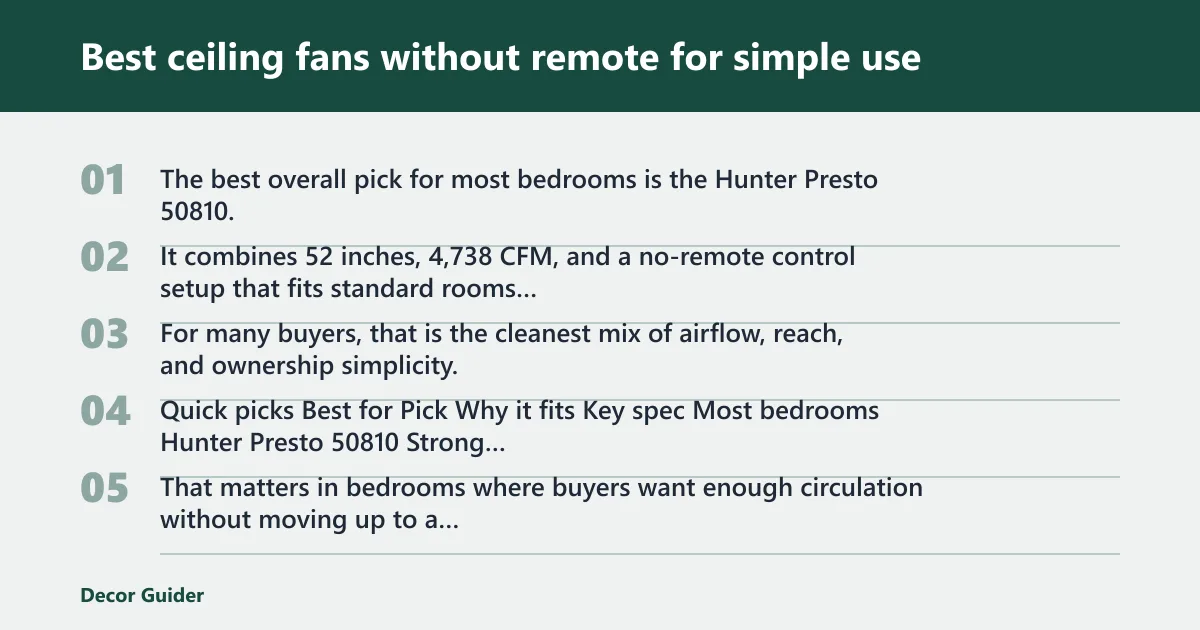


The best overall pick for most bedrooms is the Hunter Presto 50810. It combines 52 inches, 4,738 CFM, and a no-remote control setup that fits standard rooms where a pull chain or wall switch is easier than tracking a handheld remote. For many buyers, that is the cleanest mix of airflow, reach, and ownership simplicity.
Quick picks
| Best for | Pick | Why it fits | Key spec |
|---|---|---|---|
| Most bedrooms | Hunter Presto 50810 | Strong all-around airflow with a common 52-inch span | 4,738 CFM; 52 inches |
| Low ceilings | Honeywell Barcadero 51476 | 44-inch blade span suits tighter rooms and low-clearance installs | 4,212 CFM; 44 inches |
| Wall-switch control | Casablanca Panama 55070 | Better fit when wall control is already wired and easy to reach | 4,496 CFM; 54 inches |
| Standard living rooms | Westinghouse 7802400 | Solid mid-size option for a typical no-remote setup | 4,099 CFM; 52 inches |
Top pick for most bedrooms
The Hunter Presto 50810 is the safest default for a bedroom because 52 inches is a common residential blade span, and 4,738 CFM gives more airflow than many basic room fans. That matters in bedrooms where buyers want enough circulation without moving up to a bulky oversized fan.
Top pick for low ceilings
The Honeywell Barcadero 51476 is the better fit when ceiling height is tight and a flush mount or close-mount setup is needed. Its 44-inch size is easier to place in smaller rooms, hallways, and rentals where hanging height is the first limit, not raw airflow.
Top pick for wall-switch control
The Casablanca Panama 55070 makes sense when the room already has compatible switch wiring and the goal is easier daily access. Wall controls avoid the need to reach above your head, which is a real advantage over pull chains in taller rooms or over beds.
What is the best ceiling fan without a remote?
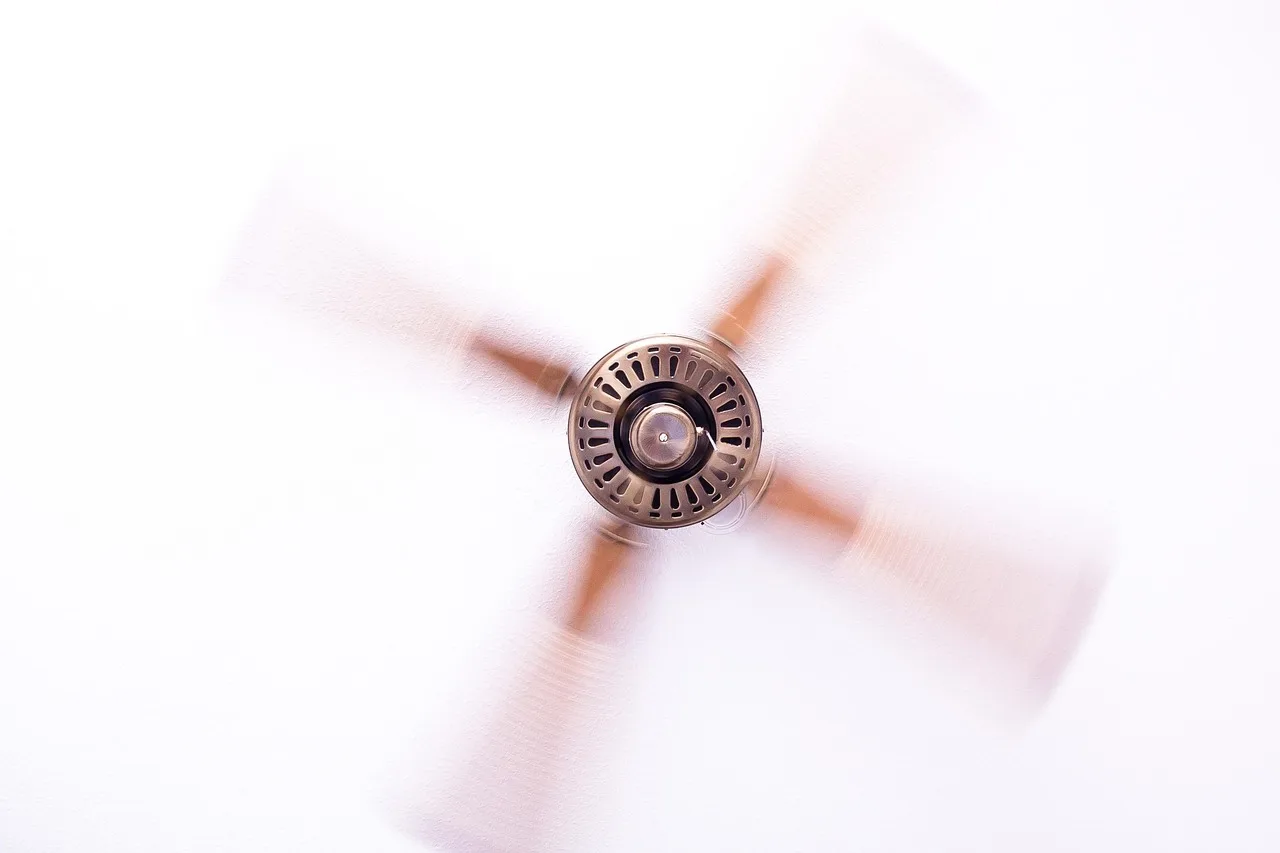
The best ceiling fan without a remote is the one that matches your ceiling height, room size, and control access without adding wiring headaches. For most standard bedrooms, a 52-inch pull-chain fan with a reversible AC motor is the easiest buy. In a room with proper wall wiring, wall control is often the better daily choice.
Pull-chain fan basics
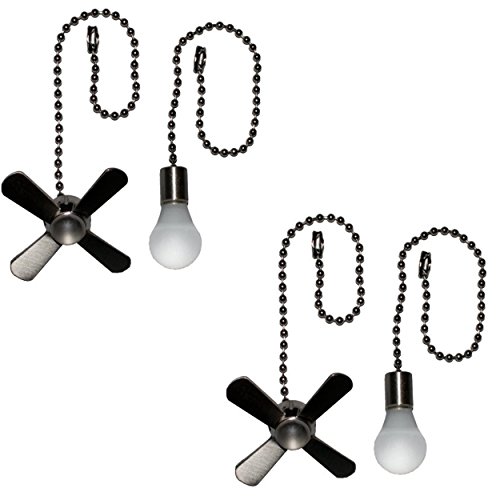
Pull-chain control is a simple mechanical option that does not need batteries and gives direct control. It usually handles on/off and speed control with no receiver to fail and no remote to lose. The downside shows up fast on high ceilings, where the chain may be hard to reach.
Wall-control fan basics
Wall control is the better answer when the switch box and fan motor are compatible. It is easier to access than a pull chain, and it keeps the controls near the door where people already expect them. That convenience depends on wiring, though, so it is not a universal swap.
When a plain switch setup is the better buy
A plain wall-switch setup works best in bedrooms, family rooms, and rentals where the fan will be used every day from the doorway. It also reduces ownership hassles because there are no replacement remotes, dead batteries, or receiver problems to solve later.
How do you choose between pull-chain and wall control?
Choose pull chain when the fan is close enough to reach and the room does not justify new wiring. Choose wall control when the switch box is already in place and the room needs faster, more comfortable access. The right choice is usually decided by ceiling height first, then by wiring, then by convenience.
Room height and reach
Pull chains work well in low and standard ceilings. They become awkward as height increases because the control point is literally above your head. Fans with wall controls avoid that reach problem, which is why they are often the better long-term choice in tall rooms.
Existing wiring and switch box fit
A wall-control fan needs wiring into the switch box and a motor that accepts that control method. If the room was built for a basic light switch, the ceiling fan may still need additional conductors or a compatible control package. That wiring check should happen before the purchase, not after the box is open.
Daily convenience and long-term upkeep
Pull chains keep upkeep low because there are no batteries or remotes to replace. Wall controls are easier to use every day, especially in rooms that get frequent fan adjustments. The ownership tradeoff is simple: pull chain is lower-tech, while wall control is easier to live with when the wiring is right.
Use this room-by-room decision table

This table turns ceiling height, room size, and control preference into a practical buy. It helps avoid the two most common mistakes: choosing a fan that hangs too low, or choosing a control style that is annoying to reach or expensive to wire.
| Room height | Room size | Control preference | Best no-remote setup | Checklist |
|---|---|---|---|---|
| Low ceiling | Small bedroom or hall | Pull chain | Flush mount / close-mount fan, 44-inch span | Pull-chain reach is easy; no hanging stem; light kit optional |
| Standard ceiling | Bedroom or living room | Pull chain or wall switch | 52-inch fan with AC motor and reversible function | Standard 4-inch downrods are included; control is reachable |
| High or vaulted ceiling | Medium to large room | Wall control | Downrod-mounted fan, 52-inch or 54-inch span | Wall-switch compatibility confirmed; downrod keeps clearance right |
| Sloped ceiling | Bedroom, loft, or den | Wall control | Downrod mount with slope-rated hardware | Mounting kit fits the slope; chain will not be the only control |
Checklist for pull-chain reach, wall-switch compatibility, and mounting type
- Measure ceiling height before choosing the control.
- Check whether the pull chain can be reached without a step stool.
- Confirm that the wall box can support fan control, not only a light switch.
- Match the mounting type to the ceiling: flush mount for low clearance, downrod for higher ceilings.
- Check whether the motor accepts wall control before buying the fan.
Which fan size and mount should you buy?
Blade span should follow room size, and mounting should follow ceiling height. For most bedrooms, 44 or 52 inches is the practical range. For larger rooms, 54 inches often fits better. Mounting matters just as much as span, because a good fan can still perform badly if it hangs too low or sits too close to the ceiling.
Blade span by room size
Common ceiling fan blade sizes are often around 44, 52, or 54 inches. A fan around 44 inches often suits smaller bedrooms and compact rooms. A fan around 52 inches is often used for many standard bedrooms and average living rooms. A fan around 54 inches can be a better fit when the room is larger and needs more blade area.
Flush mount for low-clearance rooms
Flush mount, or close-mount, installation is the right call when the ceiling is low. It reduces hanging height and helps preserve head clearance. That is why low-ceiling buyers should think about mounting first and blade span second.
Downrod mounting for taller ceilings
Downrod mounting is standard for higher ceilings and many vaulted rooms. A standard 4-inch downrod is often included for proper mounting, but taller spaces may need a longer rod for safe clearance and better air movement. Sloped ceilings need compatible hardware too.
What specs matter most in a no-remote ceiling fan?
The most useful specs are motor type, airflow, blade pitch, mounting options, and whether the fan includes a light kit. For remote-free fans, AC motor performance and control compatibility matter more than extra features. If those basics are wrong, the fan will feel inconvenient no matter how attractive it looks.
AC motor and three-speed control
AC motor fans are common in remote-free models because they offer steady torque and three-speed operation without depending on a receiver. That keeps the control setup straightforward. In a no-remote buy, the motor should be a first check rather than an afterthought.
CFM airflow and blade pitch
CFM is the airflow rating, measured in cubic feet per minute, and it is one of the clearest ways to compare cooling power. The article recommends at least 4,000 CFM for a 52-inch fan in a 400-square-foot room. Blade pitch matters too, and a 12- to 15-degree pitch is the sweet spot for residential fans.
Reversible motor and light kit options
A reversible motor lets the fan run one direction for summer and the other for winter. That makes year-round use more practical. Lights may or may not be included, so buyers should decide early whether the room needs an integrated light kit or only the fan.
What should I look for in a simple ceiling fan for a rental?
Rental buyers should look for a fan that keeps wiring demands low, uses a reachable control, and does not depend on parts that can disappear during a move. A pull-chain model with flush mount installation is often the easiest choice. If the rental already has a wall switch, that may be even better.
Rental priorities
In rentals, the fan should be easy to operate, easy to replace, and easy to live with. A battery-free pull chain avoids remote loss. A wall switch is better only if the landlord’s wiring already supports it. Remote receivers add failure points that rental owners rarely want to manage.
Long-term ownership costs versus remote fans
Remote-free fans often cost less to maintain because there are no replacement remotes, batteries, or receiver failures to deal with. Remote fans can be convenient, but that convenience comes with extra parts that can fail. For a buyer who wants fewer moving pieces over time, no-remote is usually the lower-hassle path.
What if the pull chain is too short or breaks?
If a pull chain is too short, the fan is the wrong control style for that ceiling height. If the chain breaks, the fix is usually mechanical, but repeated reaching overhead is still the real problem. In tall rooms, switching to wall control is often the better answer than extending the chain.
Failure-case guidance
A short or awkward chain should be treated as a design mismatch, not a minor annoyance. In a high ceiling room, the better fix is usually a wall-control fan or a different mounting plan with a proper downrod. If the fan already exists, a step stool solves the reach issue but not the inconvenience.
Are pull-chain ceiling fans better than remote-controlled fans?
Pull-chain ceiling fans are better when the goal is fewer parts, no batteries, and a control that never gets lost. Remote-controlled fans are better when convenience matters more than simplicity. For many homeowners and renters, pull-chain models win because they are less likely to create maintenance friction later.
Where pull chains win
Pull chains are a good fit for bedrooms, compact rooms, and rentals where the fan is easy to reach. They keep the control mechanical and direct. They also avoid the common remote problems of dead batteries, missing handsets, and receiver failures inside the canopy.
Where remotes still win
Remote fans can still make sense in rooms where the ceiling is high and no wall switch is available. But those fans are not the best match for buyers who want the fewest parts and the least upkeep. In a straightforward room, the remote often adds complexity without enough payoff.
Can I use a wall switch instead of a remote for a ceiling fan?
Yes, but only when the fan motor and the electrical box are compatible with wall control. That makes wall switches a strong choice for rooms that already have the right wiring. They are easier to use than pull chains because you do not have to reach above your head.
What to confirm before buying
Check that the fan accepts wall control, not only handheld remote operation. Confirm the switch box has the needed wiring. If the room already uses a wall switch for the current fixture, a compatible fan can often become the most convenient no-remote setup in the house.
What size ceiling fan do I need for a bedroom without a remote?
Most bedrooms do well with a 44-inch or 52-inch fan, depending on room size and ceiling height. A small bedroom usually fits 44 inches, while a standard bedroom often needs 52 inches. If the room is larger, 54 inches can be the better choice, especially when paired with proper mounting.
Bedroom sizing rule of thumb
Use the room’s ceiling height and floor area together. A low bedroom ceiling points toward flush mount and a smaller blade span. A standard bedroom can usually handle 52 inches. If the room is wide or open, a 54-inch fan may move air more comfortably without forcing the motor to work harder.
Do ceiling fans without remotes still have lights?
Yes. Many no-remote ceiling fans include a light kit, while others are fan-only. The control style does not decide whether a light is included. Buyers should check the listing carefully, because a fan that works well for airflow may still ship without a built-in light.
How to decide on a light kit
If the room already has enough overhead light, a fan-only model keeps the setup cleaner. If the fan must also replace the room light, choose a model with an integrated light kit. That decision matters most in bedrooms, rentals, and low-ceiling rooms where space is limited.
Are no-remote ceiling fans easier to install?
Not always. The fan itself may be straightforward, but installation still depends on mounting type, ceiling height, and wiring. Flush mount installs can be easier in low ceilings, while downrod and wall-control setups may require more care. No-remote does not mean no installation planning.
Installation realities
A pull-chain fan can be easier to set up if the room already has the right wiring and the ceiling height is standard. A wall-control fan may take more electrical work, but it can be the better long-term choice. The simpler daily use model is not always the simpler install.
Which ceiling fans without remotes are best for low ceilings?
Low ceilings need flush mount or close-mount fans with a shorter hanging profile. A 44-inch blade span is often the easiest fit, especially in bedrooms, hallways, and rentals. The goal is clearance first, then airflow, then control style. A low ceiling room should not force a long downrod.
Low-ceiling buying priorities
Start with mounting type, then check blade span, then decide on pull chain or wall control. If the chain would be hard to reach, wall control is usually the better answer only when wiring supports it. In a low room, the right mount often matters more than the brand name.
Products related to this article
Sponsored / affiliate links. As an Amazon Associate I earn from qualifying purchases. I may earn additional commission from eligible campaigns.