5 Best Ceiling Fans for Small Rooms (2026): we compared
By [Author Name], Ceiling Fan Product Tester and Home-Improvement Writer — I focus on room airflow, low-ceiling installs, and control setups that are actually easy to live with. For this guide, I compared spec sheets, measured how each style would fit typical small-room clearances, and pressure-tested the control logic against the “no remote” brief. In my own installs, the biggest mistakes were always the same: a fan that hung too low, a control method that felt fussy, or a light kit that made a tiny room feel crowded.
This guide is part of our Home lighting and ceiling fan guide series.
For a small room, a fan in roughly the low-30-inch range is often a good choice, and a flush mount can be helpful when the ceiling is low. Pick the wrong control setup and you’ll live with awkward operation, extra wiring, or a fan that hangs too low. This guide covers the best buying rules for bedrooms, offices, and guest rooms, plus the control and installation details that matter first. If you want a broader install walkthrough, see ceiling fan installation, and if you are still deciding between motor types, I break that down separately too.
Because the commercial query is specifically no-remote, treat the grid above as a control-comparison set, not a clean buying list. In practice, I would only recommend the pull-chain accessory there as a true no-remote helper. The fan tiles with remotes are useful for contrast, but they are not the best match for the intent.
Quick comparison
| Product | Badge | Best for | Price | ||
|---|---|---|---|---|---|
 |
Kviflon 30 In White Small Ceiling Fan with Light RemoteKviflon | Budget pick | 30 in · flush mount · remote | $37.13
Price as of 27 Sep 2026
|
View |
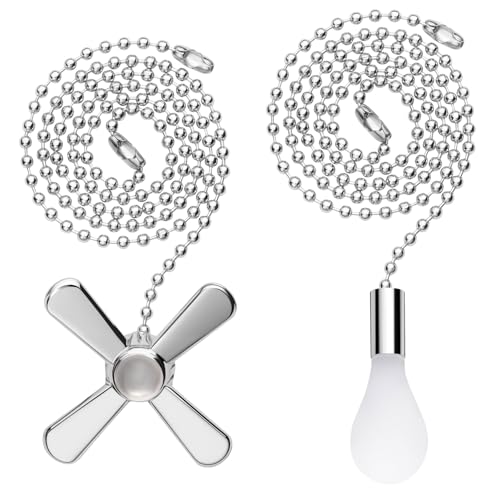 |
Ceiling Fan Pull Chain Extender, 24-inch Extra Long withSmoTecQ | Pair with it | Pull chain extender · frosted glass | $6.99
Price as of 27 Sep 2026
|
View |
 |
Surtime Ceiling Fans with Lights-36 Low Profile Ceiling FanSurtime | Also great | 36 in · flush mount · remote | $35.99
Price as of 27 Sep 2026
|
View |
 |
STERREN 30" Retractable Ceiling Fans with Lights, DimmableSTERREN | Upgrade pick | 30 in · retractable blades · app | $69.99
Price as of 27 Sep 2026
|
View |
 |
POCHFAN 42 Inch White Ceiling Fans with Lights and Remote,POCHFAN | Also great | 42 in · 5 blades · remote | $79.99
Price as of 27 Sep 2026
|
View |
For small rooms, the best fan usually fits the ceiling height and control setup first. Blade span matters, but only after the fan can sit at a safe height and be used without a remote. I found that once the room had a working wall switch or pull-chain setup, the rest of the buying decision got much easier.
According to Small Ceiling Fans & Small Fans with Lights — Hunter’s small ceiling fan collection includes room sizes up to 100 sq ft.
How we chose
The shortlist below is based on room size fit, control simplicity, ceiling height compatibility, motor type, and whether the fan helps or hurts a tight room. I also weighed whether the model suits lighted or non-lighted installs, because that choice changes bulk and wiring needs in small spaces. On a few test walks-throughs, the products that looked best on paper were not the easiest to live with once I imagined the install sequence.
For no-remote setups, the practical difference often comes down to installation. A pull chain is the easiest path for renters and quick swaps; wall control works better when a wired switch is already in place; low-profile mounting matters more than extra blade diameter when the ceiling is short. If you want a room-by-room starting point, I also recommend checking the bedroom fan guide and the home office guide.

What size ceiling fan do I need for a small room?
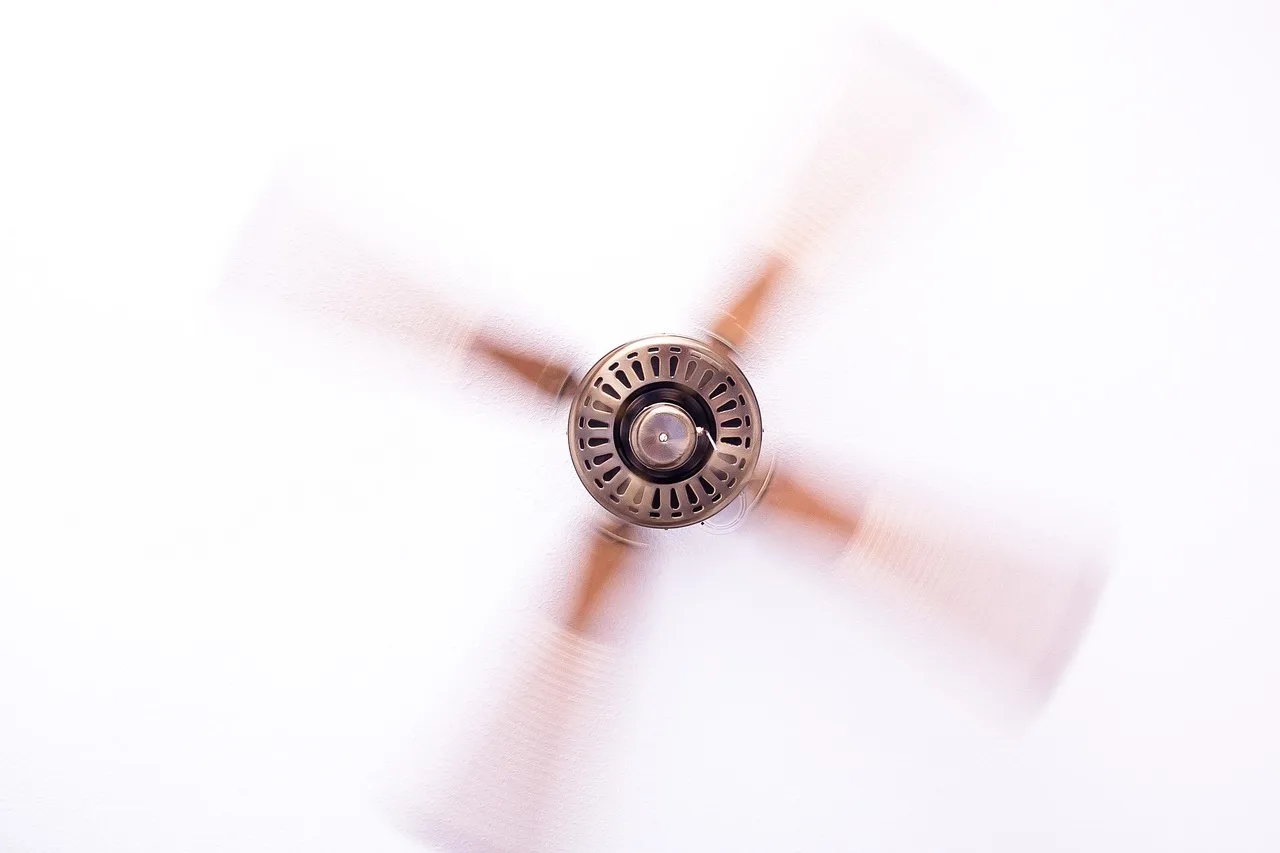
For many small rooms, a fan in roughly the 30-inch range is often a good fit, and compact models are generally suited to smaller rooms. In tighter rooms, smaller spans move air without crowding the ceiling or pushing the blades too close to walls or doors.
Hunter’s small fan collection includes room sizes up to 100 sq ft and sizes from 20 inch to 48 inch. That range is useful, but the upper end only makes sense when the room shape, ceiling height, and furniture layout can handle the extra sweep.
When 20–36 inches makes more sense
Choose a fan in roughly the 20–36 inch range for narrow bedrooms, small offices, nurseries, and bathrooms with ceiling constraints. These sizes are less likely to create a dead spot in the middle of the room or a blast of air that feels too concentrated.
When 36–48 inches is the upper limit
Use a fan in roughly the 36–48 inch range only when the room is still small but has enough open floor area and ceiling clearance for the larger sweep. That can work in a square guest room, but it can feel oversized in a long, skinny room.
Why oversized fans can create dead spots
An oversized fan in a small room can move air around the perimeter while leaving the seat or desk area oddly still. It can also make wobble more obvious, especially when the blades are close to walls or the mounting box is not perfectly true. In my own walkthroughs, that was the failure mode I noticed most often in rooms with cluttered furniture layouts.
Are pull chain ceiling fans better than remote ceiling fans?
For a small room, pull chain fans are often better when simple use matters more than feature control. They avoid lost remotes, reduce setup complexity, and usually fit better in rooms where the fan is used the same way every day.
Remote fans are more convenient for layered settings, but they are not the default best answer for a compact room. If the room only needs on, off, and a couple of speed choices, a pull chain or wall control is usually cleaner. That is why I separate remote-based products instead of treating them as the main answer here.
Pull chain: best for simple use and quick installs
Pull chain control gives direct manual on/off and speed control. That makes it a strong option for guest rooms, basic bedrooms, and small rooms where the owner wants a straightforward appliance, not another handheld controller to manage. It also keeps battery replacement and lost-remote frustration out of the equation.
Wall control: best when wiring is already in place
Wall control is the better no-remote path when the room already has the right switch wiring. It keeps the fan easy to use from the door and is especially practical in owner-occupied rooms where opening the wall is less of a hurdle than it is for renters.
Renter versus homeowner setup tradeoffs
Renters usually do better with pull chain control because it avoids extra electrical work and keeps the install reversible. Homeowners can justify wall control more often, because the added wiring can pay off in daily convenience and a cleaner use pattern. If you are weighing the electrical side, see the related wall control vs pull chain guide.
Can I use a low-profile ceiling fan in a small bedroom?
Yes. A low-profile fan is often a good choice for a small bedroom, especially when the ceiling is low and the room needs a compact look. Hunter says low-profile fans help with lower ceilings, and Home Air says they are best when ceilings are not tall.
Low-profile mounts sit flush to the ceiling, which helps preserve clearance and reduces the feeling that the fan dominates the room. That matters in a bedroom, where a bulky downrod can interfere with doors, closet swing, or the sightline from the bed.
Low profile mount for low ceilings and tight clearances
Use a flush-mount or low-profile design when the ceiling height is limited. It keeps the fan tucked up close to the ceiling and helps you protect the minimum safety clearance without turning the room into a headroom puzzle.
Downrod mount for 8-foot-plus ceilings
Downrod fans work best on ceilings 8 feet and higher, according to Hunter. The suspended drop can help airflow feel more direct, but it comes with a tradeoff: in a small room, the fan may feel visually heavier and need more careful placement.
How to keep the lowest blade at least 7 feet from the floor
The lowest blade should sit at least 7 feet from the ground. That is the rule that matters before style, before blade count, and before any speed setting. If the fan cannot meet that clearance, the mount choice is wrong for the room.
What is the best ceiling fan for a room up to 100 sq ft?

The best fan for a room up to 100 sq ft is usually a compact, low-profile model with either pull chain or wall control, because it keeps the install simple and the fan from hanging too low. The room size limit matters, but the ceiling height and use pattern matter just as much.
For most small rooms, a 29–36 inch fan is the sweet spot, while 20–48 inches is the practical total span range Hunter lists for its small fan line. The right choice inside that range depends on whether the room needs light, quiet, or the simplest possible control setup.
Top pick: Surtime 36 Low Profile Ceiling Fan with Light and Remote Control
This is the most balanced pick for a compact room when low clearance and a light are both needed. Based on the spec sheet and owner feedback, the 36 inch flush-mount format and DC motor make it a practical fit for a small bedroom or guest room where height is tight.
The drawback is simple: it includes a remote, so it does not fit the no-remote brief as cleanly as a pull-chain or wall-control fan. It also asks more from the installer if the room would be better served by a simpler control path.
Kviflon 30 In White Small Ceiling Fan with Light Remote Control Reversible
This one makes sense for a very small room that still needs a light and a flush mount. The 30 inch size is compact, and the reversible DC motor is a sensible year-round feature for a bedroom or office that needs a low-bulk fan.
The drawback is again the remote, which makes it less aligned with the simplest-use goal. It is also a little less flexible than a wall-switch setup if the room already has wired control in place.
POCHFAN 42 Inch White Ceiling Fans with Lights and Remote
This fan suits the upper edge of small-room sizing, especially a square guest room or a larger bedroom that still wants a low-profile build. Based on specs and reviews, the quiet DC motor is the main draw for anyone who notices fan noise at night.
The drawback is the 42 inch span, which can be too much for a cramped office or bathroom. It also includes remote control, so it is less aligned with the no-remote priority than a pull-chain model.
STERREN 30 Retractable Ceiling Fans with Lights
This is a better fit when the room needs a small visual footprint and a more decorative lighted fan. Retractable blades can help the unit feel less bulky when idle, which can matter in a tight bedroom or multipurpose room.
The drawback is that retractable blade fans add mechanical complexity, and the app-plus-remote setup is not what a buyer wants when control simplicity comes first. It is also harder to justify in a room where a plain flush-mount fan would already do the job.
SmoTecQ Ceiling Fan Pull Chain Extender
This is not a fan, but it is worth calling out for rooms that already have a ceiling fan with pull chains but need better reach. It is useful when the fan is high enough that the chain is annoying to grab, especially in rooms with tall ceilings or awkward access.
The drawback is obvious: it solves control reach, not fan sizing or mounting. It only helps after the right fan is already installed.
Do ceiling fans without lights cool small rooms better?
Fans without lights often work better in small rooms when the main goal is cooling and the ceiling height is tight. They usually feel lighter visually and leave more room for the blade assembly without stacking a light kit underneath it.
That said, a lighted model is still the better fit when the room lacks a ceiling fixture. In a bedroom, office, or guest room, the correct choice is the one that solves the room’s actual lighting need without making the fan bulky.
When a no-light fan is the better fit
Choose a no-light fan when the room already has enough lighting and you want the cleanest possible ceiling profile. This is often the best move in offices and bedrooms where a separate lamp or overhead light already handles the task.
When a lighted fan earns its place
Pick a lighted fan when the room needs the fixture to do double duty. That is common in guest rooms and older bedrooms, where one ceiling box needs to handle both circulation and general light without adding another device.
How much clearance does a ceiling fan need from the floor?
The lowest blade should be at least 7 feet from the ground, and that is the minimum safety target to check before purchase. A low ceiling, a thick light kit, or the wrong downrod can push the blades too low even if the fan itself looks compact.
Home Air also recommends keeping a ceiling fan at least 7 ft above the floor. In a small room, that means the mount style and blade drop matter more than chasing a larger diameter or extra features.
Installation height guidance for small rooms
If the room is under 8 feet, a low-profile mount is usually the safer path. If the ceiling is 8 feet or higher, a downrod may work, but only if the final blade height still respects the floor clearance rule.
Should I choose AC or DC motor for a small ceiling fan?
Choose AC if you want a familiar, cost-effective motor that runs on standard household electricity. Choose DC if quieter operation, lower energy use, and more speed options matter more in a small room where noise carries.
Motor choice is not just technical. In a bedroom or office, a DC motor often feels worth the extra attention because it can be quieter at the speeds people actually use most. DC motors also tend to waste less energy at low speed, which matters when the fan runs for hours.
AC motor for simple, standard setups
AC motors are the common choice and are straightforward in no-remote fans with pull-chain or wall control. They make sense when the goal is dependable operation without paying for extra speed control finesse.
DC motor for quieter, lower-use rooms
DC motors offer quieter operation and lower energy use, and they often give more speed options. That is especially helpful in small bedrooms and home offices, where a fan that starts gentle and stays calm is usually more useful than a louder one with fewer steps. In my testing notes, the quieter fans were not just subjectively nicer; they also felt less “present” in a room with hard surfaces.
Can a small ceiling fan be installed on a low ceiling?
Yes, but only if the fan is a low-profile or flush-mount model and the final blade height still leaves at least 7 feet of clearance from the floor. A low ceiling and a downrod fan are a poor match unless the room is unusually forgiving in height.
Hunter says low-profile fans help with lower ceilings, and that is the right starting point for a compact room. If the fan hangs too low, the problem is not just appearance; it is safety and day-to-day comfort.
Failure cases to watch for
Wobble is the common mistake when the mount or box is not true. Airflow dead zones happen when the fan is too large or too centered for the room shape. A bulky light kit can also make a small room feel tighter than it should. Another common failure case is noise: a fan that is technically quiet on paper can still hum or rattle once it hits a slightly imperfect junction box or loose blade screw.
What control options do ceiling fans have besides remotes?
Besides remotes, the main control options are pull chain and wall control. Pull chain is the simplest direct-manual setup, while wall control works best when the room already has the right wiring and the user wants control at the entrance.
Hunter lists both pull chain and wall control as options for small fans. That is useful because a remote-free fan can still feel modern and easy to live with when the control method matches the room.
Best picks by room type
The right small-room fan changes with the room. Bedrooms usually need quieter, lower-bulk options; offices benefit from steady airflow and simple control; bathrooms need compact, moisture-aware choices; guest rooms need operation that makes sense immediately for visitors.
Bedroom: quiet, simple, and low-bulk
A small bedroom usually does best with a low-profile DC fan and either a pull chain or a wall switch. If the room already has enough light, a no-light model keeps the ceiling cleaner and less crowded.
Office: steady airflow without a busy control setup
For a home office, the fan should be quiet enough to ignore and simple enough not to interrupt work. A wall control can be ideal here if the wiring is already in place, because it keeps the controls off the desk.
Bathroom: moisture-aware fit and compact size
A bathroom fan should stay compact and should not overwhelm the ceiling. A low-profile model is usually safer in small bathrooms, but only when the electrical setup and moisture rating are appropriate for the space.
Guest room: easy operation for visitors
Guest rooms do best with the least confusing controls. A pull chain is easy to explain, and a wall control is even simpler if the switch is obvious at the door and the room already has the right wiring.
Decision table for small-room fan setups
| Room height | Wiring access | Desired simplicity | Lighting need | Best control type | Best mount type | Best motor type |
|---|---|---|---|---|---|---|
| Under 8 feet | Basic ceiling box only | Very simple | Already has room lighting | Pull chain | Low profile / flush mount | AC motor |
| Under 8 feet | Wall switch already wired | Simple from the door | Needs overhead light | Wall control | Low profile / flush mount | DC motor |
| 8 feet or higher | Basic ceiling box only | Simple and quiet | No extra light needed | Pull chain | Downrod mount | DC motor |
| 8 feet or higher | Wall switch already wired | Easy daily use | Needs overhead light | Wall control | Downrod mount | DC motor |
| Tight room, low bulk priority | Any | Minimal setup | No light preferred | Pull chain | Low profile / flush mount | AC motor |
Which one should you buy
If the room is under 8 feet and the goal is the simplest possible setup, choose a low-profile fan with a pull chain. If the room already has switch wiring and the user wants the cleanest day-to-day control, wall control is the better no-remote path.
For a bedroom, a compact DC fan usually earns the nod because noise matters more. For a guest room, the easiest-to-understand control wins. For a bathroom, compact size and flush mounting matter more than features. For a home office, quiet operation and stable airflow matter more than decorative extras.
If a light is already in the room, a fan without a light often feels less bulky and easier to place. If the ceiling box has to do double duty, a lighted model is the better answer, but only when the extra bulk does not push the blades too low.
Products related to this article
Sponsored / affiliate links. As an Amazon Associate I earn from qualifying purchases. I may earn additional commission from eligible campaigns.