Shipping Costs and USPS Postage Rates by Parcel Size
USPS shipping costs and USPS postage rates usually come in lowest with Ground Advantage for most home-decor parcels under 20 lb, while Priority Mail Flat Rate tends to make sense only when a small, heavy item fits the flat-rate box. I have seen plenty of shippers miss this by a few inches or a pound, then pay too much at the counter or buy postage for the wrong size tier. This guide maps size, weight, zone, and speed to the cheapest acceptable USPS service.
What actually sets USPS shipping costs


The five inputs that move the price
For most decor shipments, the price moves on five inputs: packed weight, packed dimensions, destination zone, service speed, and package shape. The key word is packed. I have packed the same ceramic candle holder two different ways and watched the price change fast once thick foam and a larger carton entered the picture.
Weight is only the starting point. Zone matters because a box going nearby often prices lower than the same box going across the country. Speed matters because USPS Ground Advantage is listed as 2–5 days, USPS Priority Mail is listed as 2–3 days, and Priority Mail Express is listed as 1–3 days.
Why packed size can matter more than item size
Decor shippers often measure the item and stop there. That misses the costly part. The bill follows the outer box, plus the air added by padding, corner protectors, double boxing, or awkward shapes such as lamp harps and framed art.
A lightweight wreath can cost more to ship than a dense box of cabinet pulls because the wreath needs a large carton. A mirror with thick edge foam can move into a worse rate tier before the shipment even gets heavy.
Retail counter price vs Commercial Rates from the start
This choice changes the math early, so I put it near the top. Post Office retail pricing is what many people pay at the counter. Commercial Rates are lower prices available for many USPS services when postage is bought online, including through USPS Click-N-Ship.
The gap is meaningful. USPS Ground Advantage starts from $7.90 at the Post Office and $6.93 with commercial pricing. Priority Mail starts from $11.00 at the Post Office and $9.04 with commercial pricing. If a shipment sits near the line between Ground Advantage and Priority Mail, that gap can flip the better choice.
According to usps.com — USPS Ground Advantage is listed as 2–5 days.
Shipping Costs for Dining Tables and Full Sets
Freight for a standalone dining table typically lands in the lower hundreds, but adding chairs or requiring custom crating can push quotes into the low thousands. Choosing the wrong carrier or skipping proper packaging often leads to damage fees or costly return shipments.
The supporting guide breaks down pricing by shipment format—table-only, kitchen table, or full dining room set—and explains exactly which variables change your final quote. It also includes a decision table to help you choose between standard freight and white-glove handling before requesting estimates. Reviewing dining table shipping costs ensures you budget accurately and avoid preventable transit expenses.
Shipping Costs for Kitchen Cabinets by Freight Method
Shipping kitchen cabinets typically costs $150 to $400 for a few boxed parts via LTL freight, while full-kitchen orders run $600 to $2,500 or more. Flat-packed units ship significantly cheaper than pre-assembled ones because they take up less trailer space and weigh less per box.
Inadequate packaging often adds hundreds of dollars in damage claims, return freight, and replacement parts. Understanding how cabinet format, packing method, and freight mode interact helps you control the total landed cost before checkout. This guide on kitchen cabinet shipping costs breaks down pricing by shipment size, compares assembled versus flat-pack rates, and details the box dimensions and insurance steps needed to protect your order.
Shipping Costs for TV Stands: Parcel vs. Freight
Shipping a TV stand typically costs between $40 and $150 via standard parcel carriers, but heavier or bulkier units often require freight services that cost significantly more. The exact price depends on the stand’s material, dimensions, weight, and whether you disassemble it before packing. Choosing the wrong shipping method can trigger oversized-package surcharges or erase any savings from buying used furniture.
Understanding where the parcel-to-freight break point falls helps you budget accurately and avoid surprise fees at checkout. This breakdown of TV stand shipping costs explains how to calculate your rate, select the right service type, and choose packing materials that protect the piece without inflating dimensional weight.
How much does USPS postage cost for a package by weight and zone?

USPS package postage rises as weight and destination zone rise, but actual cost bands also shift with packed dimensions and service choice. For most decor boxes, I compare Ground Advantage first, then weight-based Priority Mail, then any flat-rate option that fits. The same weight can price very differently once the box gets bulkier or travels farther.
A practical way to estimate before buying a label
Start with the packed box after taping it shut, not the item listing, gift receipt, or maker’s carton. Measure the outside after all padding is in place, because USPS prices the finished shipping carton that enters the mailstream, not the product page dimensions. Then compare two service families first: Ground Advantage and weight-based Priority Mail.
- Pack the item fully, including corner boards, bubble, paper, and void fill.
- Measure the outer length, width, and height of the final carton.
- Weigh the sealed package.
- Check the destination ZIP to see whether the box is going nearby or to a farther zone.
- Price the same box in Ground Advantage and Priority Mail, using Commercial Rates through Click-N-Ship if possible.
- If the item is small and dense, also compare a Priority Mail Flat Rate package that it can fit without strain.
Why zone changes the total even when the box stays the same
Zone is USPS’s built-in distance measure for domestic package pricing, so the same sealed carton usually costs less going to a nearby ZIP than to one several states away. A compact box of brass knobs going to a nearby state may keep Ground Advantage clearly ahead. Send that same box farther away, and weight-based Priority Mail can narrow the gap or overtake it if the box is still compact and the delivery window matters.
For decor, zone shows up most clearly on moderate-to-heavy cartons. Dense shipments feel it right away. Bulky but light cartons feel zone pressure and size pressure at the same time.
The simple two-service comparison that avoids overpaying
For most household shipments, this is enough: check Ground Advantage first for the sealed box, then check weight-based Priority Mail for that same box. If the package is heavy for its size, also test a flat-rate envelope or box. That short comparison catches most pricing mistakes without turning shipping into a spreadsheet project.
What is the cheapest USPS shipping service for packages?

For many domestic packages, USPS Ground Advantage is often one of the cheapest USPS shipping services for ordinary home shipments because its base price is usually lower when speed is less important. It is listed as 2–5 days and starts from $7.90 at the Post Office or $6.93 with commercial pricing. Priority Mail or Flat Rate can still win when density, zone, or urgency changes the math.
When Ground Advantage usually wins
Ground Advantage is the default price check for decor parcels that are light to moderate in weight, not extremely urgent, and packed in ordinary cartons. Folded linens, pillow covers, curtain panels, replacement lamp shades with careful sizing, and mixed decor bundles often start here.
It is usually the cheapest slower package option in the USPS domestic lineup. That matters when the item has healthy padding but does not need a two-to-three-day window.
When Priority Mail beats Ground Advantage despite the higher starting price
Priority Mail is listed as 2–3 days and starts from $11.00 at the Post Office or $9.04 with commercial pricing. It often pulls ahead of Ground Advantage when a box gets heavier, goes farther, or needs faster delivery without moving all the way up to Express.
Priority Mail also gives more packaging flexibility than many shoppers realize. It can be used with your own packaging or with USPS Flat Rate packaging. That means compact, heavy decor pieces deserve a direct Priority Mail comparison every time.
When Priority Mail Express is worth the jump
Priority Mail Express is the fastest USPS domestic package option. It is listed as 1–3 days, starts from $35.65 at the Post Office, and has commercial pricing from $31.11.
Most decor shipments do not need it. The cases that do are replacement parts for a broken fixture before an event, a last-minute gift, or an urgent repair piece where delay costs more than postage.
How dimensions affect USPS shipping costs
Light but bulky shipments
This is where many estimates go wrong. Lampshades, pillows, wreaths, large but thin wall art, and padded frames may weigh very little, yet the carton can be large enough to push the shipment into a more expensive outcome.
The fix is packing discipline. Collapse what can be safely collapsed. Use corner protection that fits the frame instead of huge soft voids. Pick a box that matches the item closely rather than defaulting to a moving carton.
Dense small shipments
Hardware sets, candle holders, brackets, drawer pulls, hinges, and compact fixtures behave the opposite way. They stay small while weight rises fast. These are the packages where Ground Advantage may still be fine nearby, but weight-based Priority Mail or Flat Rate often deserves a hard look.
Dense items are where shippers most often miss savings by assuming Ground Advantage is always cheapest. In my own rate checks, it often is not once the parcel gets heavy for its size.
How extra padding can push a shipment into a worse rate outcome
Padding is essential for fragile decor, but oversized padding is expensive. A glass candle hurricane wrapped with thick loose bubble may force a bigger cube than a snug insert, molded corners, or a smaller double box. The safer pack is not always the bigger one.
For framed art and mirrors, edge protection often matters more than blanket thickness. For lamp bases, immobilizing the base can matter more than adding more fill. The best pack job protects the weak points without growing the box more than needed.
Choosing the Right Box Size for Shipping Dishes via USPS
Shipping dinnerware through USPS requires matching box dimensions to your load to avoid breakage and dimensional weight surcharges. A double-wall 14 x 14 x 12-inch box with two inches of padding on every side works well for standard dinner plates, while heavier sets often need a 15 x 15 x 10 dish pack.
Oversized or undersized boxes directly increase postage costs and damage risk. Our guide to shipping boxes for dishes breaks down wall strength ratings, divider kits, and specific box sizes that keep fragile items secure while staying within cost-effective USPS size limits.
Trimming carton size to reduce dimensional weight
Shippers often pay for air volume rather than actual product weight, making oversized cartons a silent cost driver. Down-sizing packages can lower dimensional weight, but only if the new box retains sufficient cushioning to protect fragile contents. best box resizers are detailed in our comparison of manual and professional tools, which highlights when trimming size genuinely lowers postage versus when it increases damage claims and packing labor. This matters because a poorly resized box can cost more in carrier surcharges and tape than it saves in postage, especially for low-volume shippers using standard retail rates.
When is Priority Mail Flat Rate cheaper than weight-based shipping?
Priority Mail Flat Rate is cheaper than weight-based shipping when the item is dense, compact, and fits the USPS flat-rate package cleanly. The strongest case is usually a heavy-for-size shipment going farther away. It loses value quickly when the item is light, oddly shaped, or needs a custom box.
Priority Mail Flat Rate Envelope and when it makes sense
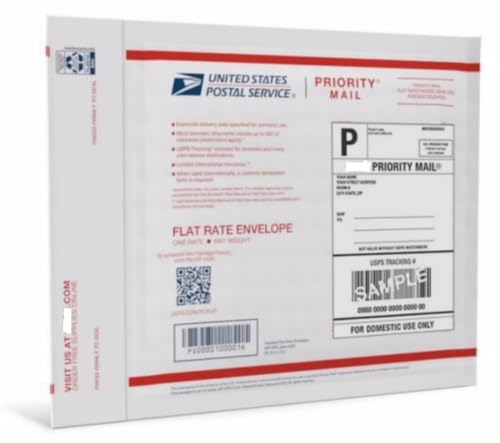
The Priority Mail Flat Rate Envelope costs $12.90 at the Post Office and $11.12 with commercial pricing. It works best for dense items that fit the envelope without forcing the seams or creating a risky bulge.
Think compact textile samples, flat metal brackets, thin replacement hardware packs, or a small stack of decor papers in stiff protection. If the contents are light, Ground Advantage usually wins. If the contents are dense and traveling far, the envelope can be a smart check.
Flat Rate boxes vs your own packaging
Flat Rate packaging is used with Priority Mail and Priority Mail Express. In flat-rate tiers, the price is fixed for the package type rather than changing by zone or weight. That fixed-price setup is strongest when the box is heavy for its size.
Own packaging usually wins for lightweight items, awkward shapes, or shipments that need custom internal supports. A lamp finial set may love Flat Rate. A framed mirror usually will not.
The easy density test
Run this quick test before choosing Flat Rate: if the item feels surprisingly heavy in a very small box, check Flat Rate. If the item feels mostly like air, check Ground Advantage first. If it needs a custom carton to stay safe, compare Ground Advantage and weight-based Priority Mail before looking at Flat Rate.
What is the difference between retail and commercial USPS rates?
Retail USPS rates are the prices commonly paid at the Post Office counter, while commercial USPS rates are lower prices available when labels are bought online through tools such as Click-N-Ship. For many single-package shippers, the difference is large enough to change which service is cheapest, so both should be compared early.
Where the gap shows up most clearly
Ground Advantage starts from $7.90 at the Post Office and $6.93 commercially. Priority Mail starts from $11.00 at the Post Office and $9.04 commercially. Priority Mail Express starts from $35.65 at the Post Office and $31.11 commercially.
That means a shipper comparing a few decor cartons can save real money by pricing online first, even without mailing at business volume.
Who gets each price
Retail pricing is the default at the counter. Commercial Rates are available through USPS Click-N-Ship and matter to both business and non-business shippers. This is not only for stores. Anyone shipping a lamp part to family or mailing framed art to a buyer should still check the online price.
Retail vs Commercial Rates: how much can Click-N-Ship save?
Click-N-Ship can save money because it gives access to lower Commercial Rates on eligible USPS services, lets users buy labels online, print at home, and schedule pickup. For many decor shipments, that can narrow the gap between services enough to make Priority Mail more competitive or keep Ground Advantage clearly cheapest.
How to use Click-N-Ship
USPS Click-N-Ship is the basic home-label tool. Enter the origin and destination, package weight, package dimensions, and service. Then buy the label, print it at home, and attach it to the box.
It also lets users schedule package pickup. That can save a trip and prevent a rushed counter decision, which is where many people overpay.
Who should always check Commercial Rates first
Anyone mailing a box rather than a stamped envelope should usually check Commercial Rates first. The savings matter most when the shipment sits near a service breakpoint, such as a small heavy parcel that could work with Ground Advantage, weight-based Priority Mail, or a Flat Rate envelope.
Decision table: the cheapest USPS option for common package profiles
How to read the table
The table below is a practical chooser, not a promise. Use it to decide which rate tier to check first, then price the actual packed box. The same item can move to a different winner after padding, a farther zone, or a need for faster delivery.
| Item type | Packed size | Weight band | Flat Rate likely better? | Rate tier to check first |
|---|---|---|---|---|
| Folded textiles, pillow covers, table runners | Small soft parcel or compact carton | Light | No, usually not | USPS Ground Advantage commercial first |
| Cabinet pulls, brackets, hardware sets | Very small box or rigid mailer | Dense | Sometimes, especially if far zone | Ground Advantage, then Priority Mail Flat Rate Envelope |
| Candle holders, small metal decor, compact fixtures | Small carton | Heavy for size | Often worth checking | Priority Mail Flat Rate or weight-based Priority Mail |
| Lamp parts, finials, harps, small shades | Long narrow or compact carton | Light to moderate | Only for dense small parts | USPS Ground Advantage commercial first |
| Framed art with corner protection | Large shallow carton | Light to moderate | No | Ground Advantage, then weight-based Priority Mail |
| Mirror with heavy padding | Large shallow or double box | Moderate to heavy | Rarely | Weight-based Priority Mail first if urgent; otherwise Ground Advantage |
| Decor bundle with mixed fragile pieces | Medium custom carton | Moderate | Usually no | Ground Advantage commercial first |
| Small furniture parts, knobs, casters, mounting kits | Small compact box | Dense to heavy | Often worth checking | Priority Mail Flat Rate, then Ground Advantage |
Common decor profiles that fall between services
The table matters most in the awkward middle ground. A small dense box of sconce hardware can stop being a clear Ground Advantage shipment. A large lightweight frame can stop being cheap to ship despite low weight. Those are the moments when checking the right tier first saves time and money.
What USPS service should I use for a fragile but lightweight package?
For a fragile but lightweight package, USPS Ground Advantage is usually the first service to price, as long as the delivery window is acceptable and the carton is kept tight. If extra padding makes the box bulky or the shipment needs faster delivery, weight-based Priority Mail becomes the stronger comparison.
Fragile but lightweight items
Think glass ornaments, small ceramic decor, mini frames, or a light lamp shade that still needs stiff protection. The cheapest safe option usually comes from reducing empty space without crowding the item. Better inserts beat bigger boxes.
If the object is delicate but flat, rigid layers can control size well. If the object is round or irregular, snug supports often protect better than lots of loose fill.
Heavy compact items
For heavy compact decor, start with Ground Advantage and a Flat Rate check. Weight-based Priority Mail also deserves a look when the destination is farther away or the package needs the faster 2–3 day window.
Time-sensitive gifts and replacement parts
If timing matters more than postage, move up the speed ladder. Priority Mail is often the practical middle choice. Priority Mail Express is the fastest USPS domestic package option when a broken part, event item, or replacement piece cannot wait.
Mailpieces vs packages
Some decor-related mail is not a package at all. A letter stamp starts from $0.82. Square, oversized, or unusual envelopes start from $1.31. Standard-sized postcard stamps start from $0.65. Global Forever international stamps start from $1.75.
Use stamps only when the mailpiece truly qualifies. Once the contents become thick, rigid, padded, or boxed, return to package pricing.
Choosing the right shipping box for fragile lamps
Lamps ship safely when the box matches the item’s weight, height, and fragility. For most standard lamps, a double-wall box with molded inserts and roughly two inches of cushioning prevents cracked bases, broken harps, and dented shades during transit. Taller or heavier models with glass shades typically require a two-box system to control movement and resist crushing.
Packaging failures directly lead to damage claims and refunds, making box selection just as important as choosing the correct postage rate. The guide on shipping boxes for lamps breaks down which materials, inserts, and protection levels work best based on lamp type, base weight, shade fragility, and shipping distance.
Packing supplies needed to ship a bed frame safely
Shipping a bed frame without the right materials almost guarantees bent rails, scratched finishes, or lost hardware. The core kit for most frames includes a mattress bag, 2-inch foam or moving blankets, stretch wrap, corner guards, zip ties or labeled hardware bags, and a double-wall box for the rails. Heavier metal or glass frames going long distances require additional plywood or crating.
Choosing supplies based on your specific frame type and shipping method prevents overbuying while keeping every component protected in transit. This breakdown of bed frame shipping supplies details exactly which kits work best for wood, upholstered, and oversized king frames so you only purchase what your move actually requires.
How to Pack and Ship an Apartment Move Efficiently
Apartment moves require the right supplies to minimize trips, breakage, and cost. This guide highlights the most efficient boxes, packing materials, and specialty items—like medium boxes for furniture, book boxes, and stretch wrap—to protect fragile items without overspending. It also explains what to avoid, such as oversized cartons that complicate stair carries, and how to calculate quantities for one to two boxes per room plus extras for books and decor.
For a tailored list of the best supplies and budget-friendly options, check out recommendations for apartment move supplies.
Protecting Furniture During Transshipment
Shipping bulky items like sofas requires specialized materials to prevent abrasion and crush damage that standard cardboard cannot address. The supporting article details a budget-friendly supply stack, including moving blankets, stretch wrap, corner protectors, and ratchet straps, tailored to different sofa types and shipping methods. sofa shipping supplies are essential for securing the load and protecting fragile arms and legs during transit. Understanding the specific function of each item, from abrasion control to load stabilization, helps prevent costly repairs and ensures the furniture arrives in its original condition. This guide prioritizes practical purchasing orders for different transport scenarios.
Choosing the Right Shipping Box for Cabinet Hardware
Shipping cabinet hardware safely starts with the right box. The guide on cabinet hardware boxes identifies the smallest double‑wall cartons that leave minimal void and pairs them with inserts that stop parts from rubbing together, preventing bent pulls, chipped finishes, stripped threads, and costly returns. It breaks down the optimal box type by hardware category—hinges, mounting plates, mixed kits, and even ultra‑light bagged accessories—using a clear packing matrix and quick‑compare tables. Knowing which box and insert to use lets you cut damage rates, streamline inventory, and keep shipping costs low, especially when you’re handling large volumes of small metal parts.
Matching Box Styles to Small Furniture Parts
Shipping small furniture parts safely depends on matching the box style to the shape and fragility of each component. Double-wall corrugated boxes, document mailers, and long cartons each serve distinct roles: flat panels need rigid flat boxes, legs and rails require long narrow cartons, and knobs or screws stay secure in small cube boxes. Using the wrong container leads to bent panels, snapped corners, or spilled hardware that turns an inexpensive shipment into a costly return.
A practical packing matrix organizes ten common furniture parts by shape, fragility, and hardware count so you can select the correct container before taping anything shut. Choosing the best shipping boxes for these components reduces damage claims and keeps postage costs predictable by avoiding oversized packaging.
How to Choose the Right Shipping Box for Home Decor
Fragile glass and ceramics require small double-wall corrugated boxes, while textiles, wood, and metal items ship safely in single-wall or mailer boxes. The rule is simple: pick the smallest box that still leaves one to two inches of padding on every side. Oversized boxes waste filler material and inflate dimensional weight charges; undersized ones crack decor and crush corners.
Matching box strength to each item’s breakage risk prevents damage during storage, moving, gifting, or resale. This guide compares regular slotted containers, full overlap designs, and specialty mirror boxes by material and cost so you can pack confidently. For a detailed breakdown of which style protects specific decor categories, review the best shipping boxes before buying supplies.
Choosing a Shipping Scale for Home Decor Parcels
A digital shipping scale rated for 5 to 50 pounds with 0.1 oz resolution prevents postage shortfalls and protects margins when you ship home decor from home. Scales that lack the right readability force reweighs at the post office, eroding profits on items like small mailers or boxed wall art.
The guide on home seller shipping scales breaks down how to match your typical parcel size and selling platform limits to the correct capacity. It compares digital models, dedicated postal scales for lightweight postage, and units with separate displays so you can weigh bulky boxes without blocking the readout.
What is the fastest USPS service for packages?
Priority Mail Express is the fastest USPS service for domestic packages. It is listed as 1–3 days, starts from $35.65 at the Post Office, and has commercial pricing from $31.11. For most decor shipments it is a premium choice, but it can make sense for urgent gifts, replacement parts, or event deadlines.
When the speed premium makes sense
Fast shipping is expensive, so the real question is whether delay costs more. For an urgent replacement glass shade, missing mounting hardware, or a gift needed by a fixed date, the premium can be easier to justify than it would be for ordinary decor stock.
USPS services, supplies, and recent rate changes to know
Ground Advantage, Priority Mail, and Express at a glance
For package decisions, these are the main domestic services to keep in view. Ground Advantage is listed as 2–5 days. Priority Mail is listed as 2–3 days. Priority Mail Express is listed as 1–3 days.
First-Class Mail is listed as 1–5 days for mailpieces, and Media Mail is listed as 2–8 days. Media Mail rarely matters for decor unless the shipment is actually eligible media, such as a book, and should not be treated as a decor shortcut.
What USPS shipping supplies are free?
USPS offers free branded shipping supplies for certain services, mainly Priority Mail and Priority Mail Express packaging. That includes Flat Rate envelopes and boxes tied to those services. Those packages are not general-purpose free boxes, they must be used with the matching USPS service family.
That matters for cost planning. A free box can still lead to a higher postage choice if the item would have been cheaper in a plain custom carton sent by Ground Advantage.
What USPS rates changed recently?
USPS prices can change, and starting prices alone do not settle the real cost of a packed decor shipment. The safest habit is to verify current rates in Click-N-Ship or at the USPS price tool before buying postage, especially when the box is near a service breakpoint or going to a farther zone.
Domestic vs international, briefly
This guide centers on domestic package choices. For international letter mail, Global Forever stamps start from $1.75. For international packages, price and service rules differ enough that a separate check is the right move rather than guessing from domestic charts.
Frequently asked questions
How much does it cost to ship with Click-N-Ship?
Click-N-Ship does not create one flat USPS price; it gives access to lower Commercial Rates on eligible services. For example, Ground Advantage starts from $6.93 commercially instead of $7.90 at the Post Office, and Priority Mail starts from $9.04 instead of $11.00, so exact cost still depends on the packed shipment.
Products related to this article
Sponsored / affiliate links. As an Amazon Associate I earn from qualifying purchases. I may earn additional commission from eligible campaigns.