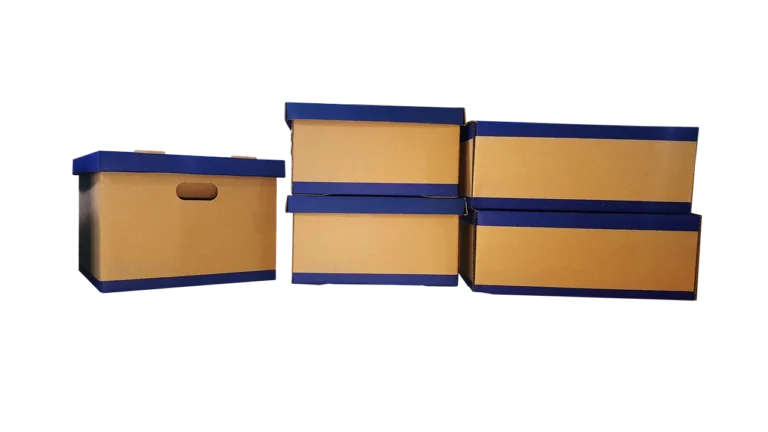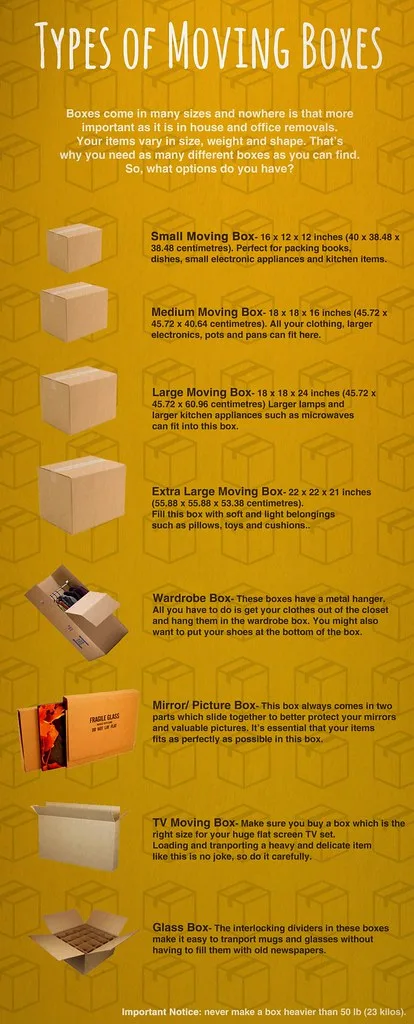
How Much Does It Cost to Ship a Bookshelf?
Shipping a bookshelf usually costs $75 to $300 for standard ground service, but oversized or assembled pieces can jump to $300 to $800+ once dimensional weight, packing, and lift-gate or white-glove fees apply. Poor sizing or weak packing can double the bill and damage the bookcase. This guide breaks down flat-pack versus assembled shipping, dimensional weight, service thresholds, and the main price drivers so you can budget accurately.
This guide is part of our Shipping costs and USPS postage rates series.
How bookshelf size and carrier fees set the shipping price
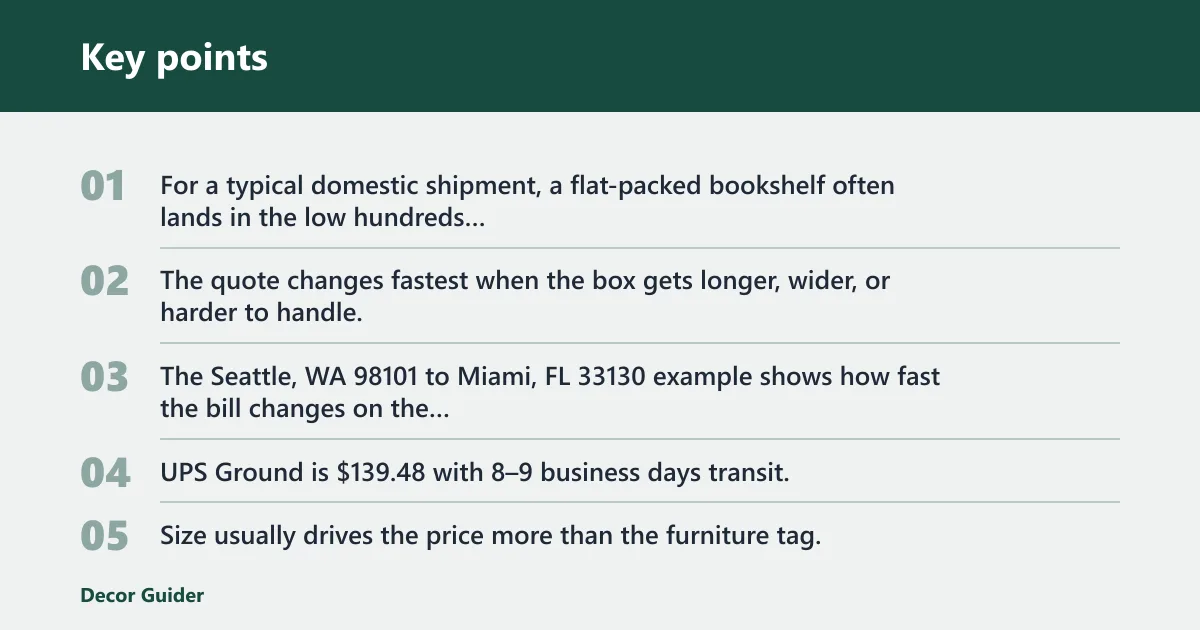


For a typical domestic shipment, a flat-packed bookshelf often lands in the low hundreds on ground service, while a large assembled unit can move into the several-hundred-dollar range quickly. The quote changes fastest when the box gets longer, wider, or harder to handle, because carriers bill by size as well as weight.
Bookshelf shipping cost calculator
| Size class | Packed dimensions | Estimated actual weight | Likely dimensional weight | USPS fit | UPS/FedEx fit | Simple cost band |
|---|---|---|---|---|---|---|
| Small shelf carton | 40 × 20 × 6 in | 20–30 lb | 25–35 lb | Possible | Yes | $75–$140 |
| Standard 5-shelf carton | 50 × 32 × 8 in | 30–60 lb | 60–75 lb | Borderline at the ceiling | Yes | $140–$300 |
| Oversized assembled unit | 73 × 18 × 7 in | 99 lb | About 66.2 lb by divisor 139 | No practical fit for many lanes | Yes, often oversized pricing | $250–$800+ |
The Seattle, WA 98101 to Miami, FL 33130 example shows how fast the bill changes on the same lane. UPS Ground is $139.48 with 8–9 business days transit, FedEx Ground is $221.51 with 8–9 business days, UPS 3Day Select is $263.04, and UPS 2nd Day Air is $376.06.
What changes the quote fastest
Size usually drives the price more than the furniture tag. A compact shelf unit can stay in ground-service range, while a taller or assembled bookcase can trigger dimensional pricing, oversized handling, or a carrier size threshold that pushes the bill up fast.
What a bookshelf should ship
A bookshelf should usually ship flat-packed, not assembled. Flat-packing cuts the carton footprint, lowers damage risk at the veneer edges and corners, and gives you a better chance of staying inside standard carrier limits. If the piece cannot be broken down cleanly, shipping assembled becomes the fallback, not the first choice.
Flat-packed vs assembled
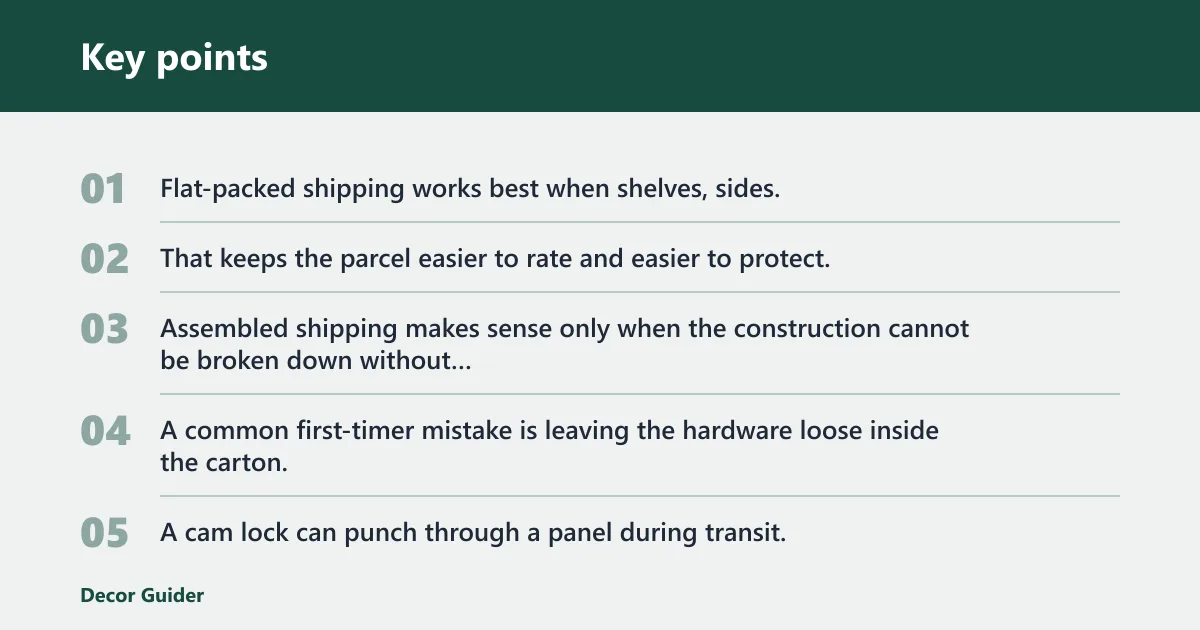
Flat-packed shipping works best when shelves, sides, and top panels can stack without forcing the carton into an odd shape. That keeps the parcel easier to rate and easier to protect. Assembled shipping makes sense only when the construction cannot be broken down without damaging cam locks, shelf pins, or joinery.
A common first-timer mistake is leaving the hardware loose inside the carton. A cam lock can punch through a panel during transit. Bag it, tape it inside the box, and keep it from shifting.
When to break it down further
Break the piece down further if the assembled footprint pushes you near a carrier ceiling or if a tall, narrow unit would be vulnerable to twisting. Panel stacking matters because a stack of flat parts spreads impact better than one large, rigid frame. If the box starts bulging, the shipping class usually gets worse.
Suppose a five-shelf bookcase can be disassembled into two side panels, five shelves, and a top and bottom panel. That version may fit a flatter carton and ship on ground service. Leave it assembled, and the same unit may cross a size threshold that raises the label price and damage risk at the same time.

How much does a packed bookshelf weigh?
A packed bookshelf commonly lands around 30–60 lb when flat-packed, though assembled units can run higher depending on material and hardware. Weight matters, but it is only part of the quote. Carriers also price by the space the carton takes up, so a lighter box can still bill high if it is large.
Why dimensional weight can beat actual weight
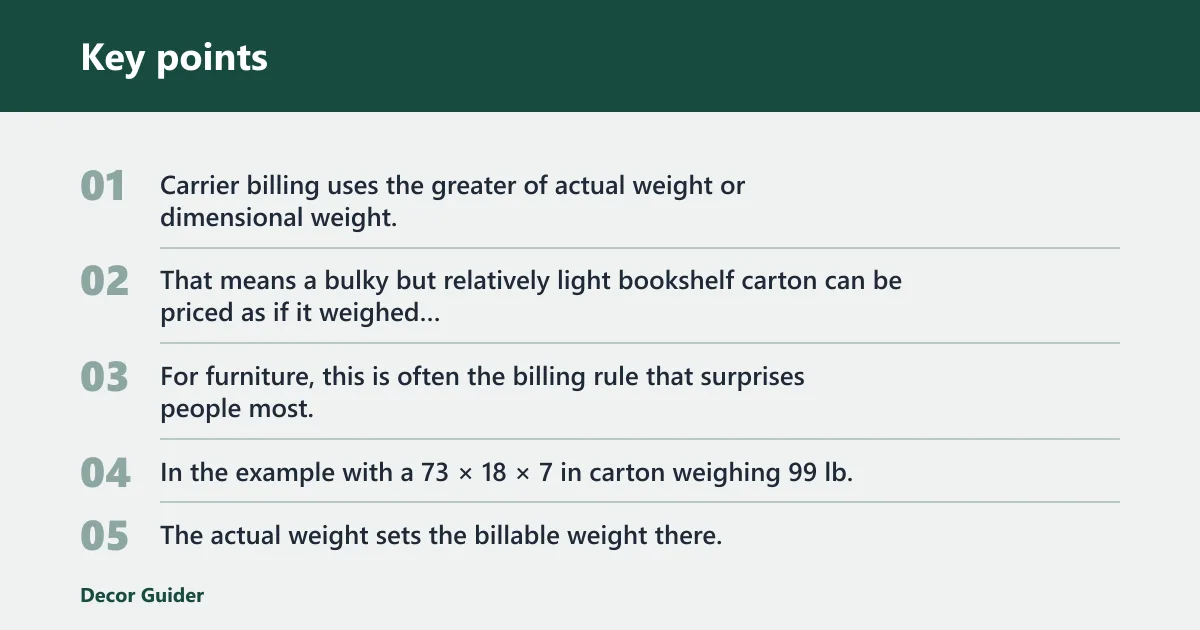
Carrier billing uses the greater of actual weight or dimensional weight. That means a bulky but relatively light bookshelf carton can be priced as if it weighed much more than the scale says. For furniture, this is often the billing rule that surprises people most.
In the example with a 73 × 18 × 7 in carton weighing 99 lb, the guide says the scale reading beats a volume figure of roughly 66.2 lb using divisor 139. The actual weight sets the billable weight there, but a smaller scale number could have lost to dimensional weight instead.
Why dimensional weight changes the bill
Dimensional weight matters because a carrier is selling truck space, not only pounds. A long box with plenty of air around the panels consumes room that could have held another parcel. That is why a bookshelf in a big carton can cost more than a heavier but tighter shipment.
| Billing factor | What carriers look at | Why it matters for a bookshelf |
|---|---|---|
| Actual weight | Scale reading | Sets the floor for the rate |
| Dimensional weight | Box volume divided by the carrier divisor | Can exceed the scale weight on large cartons |
| Billable weight | The greater of actual or dimensional weight | Usually decides the final line-haul price |
Can you ship a bookshelf with USPS?
Yes, sometimes, but USPS is limited by size more than many people expect. The guide cites a 130-inch length-plus-girth ceiling, and a 50 × 32 × 8 carton lands exactly on 130. Any bulge, proud tape seam, or sloppy wrap can push it over the limit.
USPS size-limit caveat
USPS can work for smaller flat-packed shelves, but it is not the safest option for larger bookcases. Once the carton approaches the 130-inch length-plus-girth ceiling, the risk of rejection rises. UPS and FedEx allow up to 165 inches, so they accept more oversized furniture cartons.
That gap matters on a bookshelf. A box that is barely acceptable for USPS on paper can become a problem after you add cardboard corners, foam edge guards, or a little extra tape. Measure the finished carton, not the bare panels.
What affects the shipping price most?
Three things move the price fastest: zone or distance, service speed, and carton size or shape. A long-haul route costs more than a short one, expedited delivery costs far more than ground, and a bulky carton can trigger dimensional pricing even before the label is printed.
Zone and distance
The Seattle to Miami example shows why route matters. Ground service on a long cross-country lane can still be competitive, but the same box with faster delivery jumps sharply. Distance also matters because some carriers price more aggressively as zones increase.
Service speed
Ground is usually cheaper than expedited service. In the example lane, UPS Ground at $139.48 sits far below UPS 3Day Select at $263.04 and UPS 2nd Day Air at $376.06. Faster service buys speed, but it also buys a bigger invoice.
Carton size and shape
Square, snug packaging is easier to rate than a long carton with wasted air. A flat-packed bookshelf often ships more cheaply than the same unit assembled because the carton can be flatter, more stable, and easier to keep inside standard service thresholds.
How to pack a bookshelf for shipping
Pack the bookshelf to stop movement first, then protect the weak points. Veneer edges and corners chip easily, and loose hardware can crush panels from the inside. Cardboard between panels, foam or cardboard edge guards, and hardware taped inside the box are the basics that most shipping failures ignore.
Packing checklist
- Stack flat panels with cardboard between them so finished surfaces do not rub.
- Cover veneer edges and corners with foam or cardboard edge guards.
- Bag shelf pins, cam locks, screws, and brackets together, then tape the bag inside the box.
- Use strapping or banding so the load cannot shift inside the carton.
- Fill voids so panels cannot slide and punch through the walls.
- Seal seams firmly, but keep tape flat so it does not create proud ridges.
Picture a 50 × 32 × 8 carton with two painted side panels and four shelves. If the panels are separated by cardboard and the edges are protected, the box stays flatter and safer. If the hardware bag floats loose, the inside can become the problem, not the outside.
What carriers quote for the same bookshelf
On the same bookshelf, carrier choice changes the price a lot. Ground service is the cheapest quote in the example, while air services climb quickly. The box does not change, but the service level and handling promise do, which is why the final number moves so much.
Ground versus air
| Carrier service | Example price | Example transit | Fit for a bookshelf |
|---|---|---|---|
| UPS Ground | $139.48 | 8–9 business days | Best budget option in the example |
| FedEx Ground | $221.51 | 8–9 business days | Works, but costs more on this lane |
| UPS 3Day Select | $263.04 | 3 business days | Faster, with a steep jump in price |
| UPS 2nd Day Air | $376.06 | 2 business days | Fastest quoted option, highest cost |
For seller-paid shipping, ground service often protects margin better because it keeps the quote closer to the item’s value. For buyer-paid shipping, a flatter carton can prevent sticker shock. In both cases, the packaging decision affects the invoice before the carrier ever sees the box.
Frequently asked questions
How much does it cost to ship a bookshelf?
Most standard bookshelf shipments fall around $75 to $300 on ground service, but the price can rise sharply for oversized or assembled pieces. The exact quote depends on packed size, actual weight, dimensional weight, route, and service speed. Long-haul lanes and air service push the total up fastest.
How much does it cost to ship a bookcase?
A bookcase ships on the same rules as a bookshelf, so the cost range is similar. A flat-packed bookcase in a compact carton can stay in a lower ground band, while a tall assembled unit can move into a much higher bracket. Size and packing matter more than the label name.
How much does it cost to ship a box of books?
A box of books usually costs less than a bookshelf if the carton stays dense and compact. Books are heavy for their size, so actual weight often drives the bill more than dimensional weight. If the box gets large enough, though, the dimensional rule can still raise the price.
What size box do I need to ship a bookshelf?
A common flat-packed bookshelf carton is about 50 × 32 × 8 inches, which gives room for stacked panels, cardboard separators, and edge protection. Smaller pieces may fit a tighter carton. The right box is the one that protects veneer edges and stays inside carrier size limits after packing.
How much does a bookshelf weigh packed for shipping?
A packed bookshelf often weighs 30–60 lb in flat-pack form. Larger assembled pieces can weigh more, and the billed weight may still be higher than the scale reading if the carton is bulky. Always weigh the finished box and compare that result with the size-based billing rule.
Is it cheaper to ship a bookshelf assembled or flat?
Flat is usually cheaper because it shrinks the carton, lowers dimensional weight, and reduces the chance of oversize handling. An assembled bookshelf is harder to rate and easier to damage. If the unit can be safely broken down, flat-pack shipping usually gives the better bill and the better protection.
What is the cheapest way to ship a bookshelf?
The cheapest way is usually a flat-packed bookshelf sent by ground service, packed tightly enough to avoid dimensional penalties. Compare at least two carriers, because the example lane shows a wide spread between UPS Ground and FedEx Ground. Avoid expedited service unless the delivery speed is worth the jump.
Products related to this article
Sponsored / affiliate links. As an Amazon Associate I earn from qualifying purchases. I may earn additional commission from eligible campaigns.
 Golden Home Essentials XXXL Heavy Duty Couch Support for Sagging Cushions - 30in x 68in Extra Wide Sofa Cushion Board - 0.4in Saggy Cushion for Seat Support
 Furniture Sliders 4 Pack, 3.5 Inch Heavy Duty Reusable Furniture Moving Sliders for Hardwood Floors and Carpet, Beige Floor Protection Pads for Chairs, Sofas, Tables and Home Moving