Tie Down Straps vs Rope
Tie-down straps are usually the safer choice for moving and vehicle loads because they are rated, easier to inspect, and less dependent on knot skill. Rope fits temporary, low-speed, or specialty lashings where knots and retensioning are acceptable. Choose poorly and a load can loosen, shift, scratch surfaces, or fail under vibration, wind, and sudden braking. This guide compares holding power, knot and buckle failure risk, surface protection, and the best use cases for home, moving, and outdoor storage.
Tie down straps vs rope: the core trade-off
| Factor | Tie Down Straps | Rope | Winner |
|---|---|---|---|
| Load control | Ratchet straps are commonly used when higher tension control is needed. Cam buckle straps give less clamp force but are easier to tune for lighter cargo. | Tension depends on knot choice and how well the rope is cinched. Some materials also relax over time. | Tie Down Straps |
| Surface protection | Polyester webbing spreads pressure across a wider area than bare rope, which helps on painted panels, soft furniture, and tarp edges. | Thin rope can cut into soft goods and leave pressure marks. Hardware choice still matters, but the line itself is more point-loaded. | Tie Down Straps |
| Setup speed | Cam buckles are faster than ratchets. Ratchets take more steps, but they hold tension better once set. | Rope can be quick for simple lashings, but secure knots take practice and rechecking. | Tie Down Straps |
| Outdoor durability | Straps with UV protection and corrosion-resistant metal hardware hold up better outdoors than untreated gear. | Polypropylene, nylon, polyester, and paracord each age differently, and knots can loosen as conditions change. | Tie Down Straps |
| Best fit for road transport | Rated straps with a stated working load limit are often the safer choice for cargo in trucks, trailers, and roof systems. | Rope is better treated as backup or very light-duty securement, not a substitute for rated tie-downs on public roads. | Tie Down Straps |
Load control
Straps win here because the hardware does the work, not friction alone. Ratchet straps use a mechanical ratchet mechanism that allows tighter control, while cam buckle straps give a lower-load option with quicker adjustment and less aggressive tension control.
Rope can be adjusted too, but the hold depends on the knot and the rope material. That makes it flexible, yet more variable under vibration and repeated movement.
Surface protection
Polyester webbing is kinder to finished surfaces than a narrow rope line. It spreads the force over more area, which matters on painted furniture, appliance edges, tarp hems, and boat hull contact points.
Rope has more risk of abrasion and indentation, especially when the load shifts. If the cargo is soft, finished, or wrapped, the line itself can become the damage point.
Hardware, knots, and anchor-point compatibility
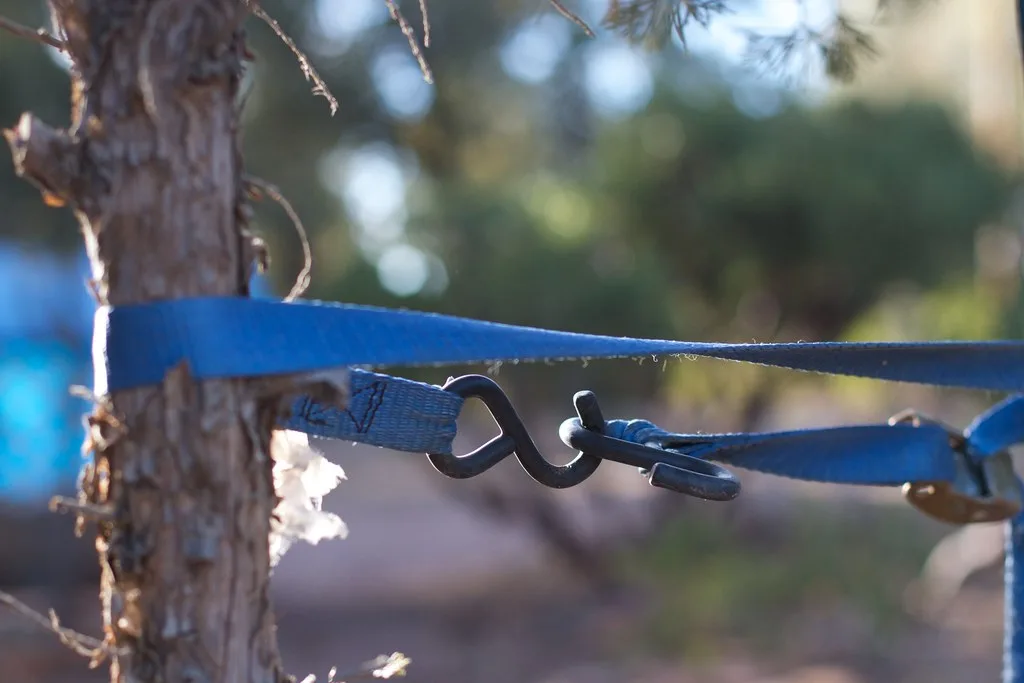
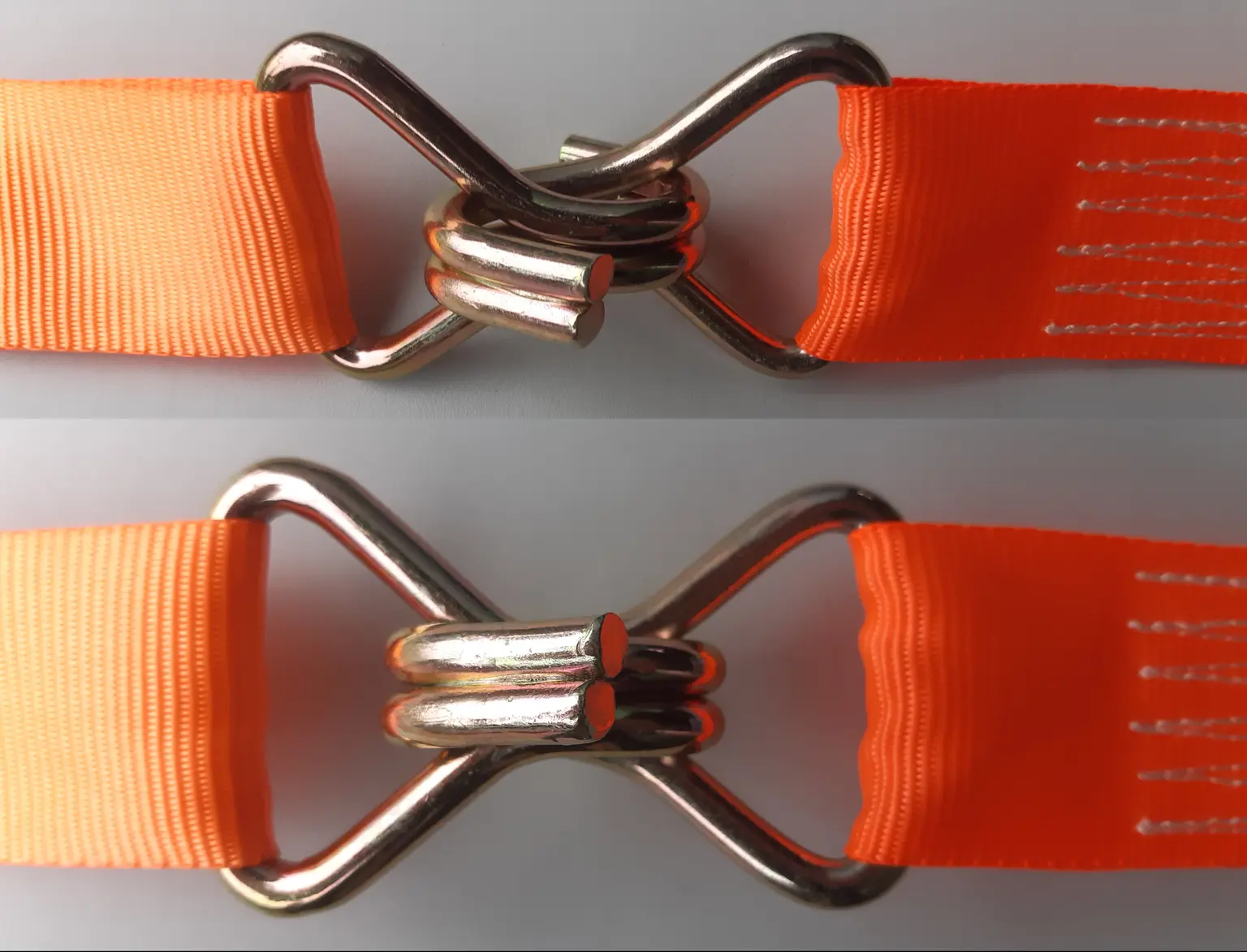
Anchor points matter as much as the tie-down choice. A stable truck bed point or trailer point gives a strap a predictable path, and closed-end hardware is more secure than open S hooks; S hooks can bend, slip, and detach in transit.
Rope works with more improvised anchor shapes, but that flexibility does not fix a weak anchor. For road transport, the anchor should be secure before the tie-down choice matters.
Weather exposure and long-term storage
For outdoor use, the material mix matters. Tie-down straps with UV protector and corrosion-resistant metal are the safer pick for long exposure, especially when the load sits outside for weeks or months.
Rope can serve in temporary covers or light lashings, but it can loosen over time. That matters more in storage than in a short trip, because a tie-down that starts tight may not stay that way.
Tie down straps and rope compared
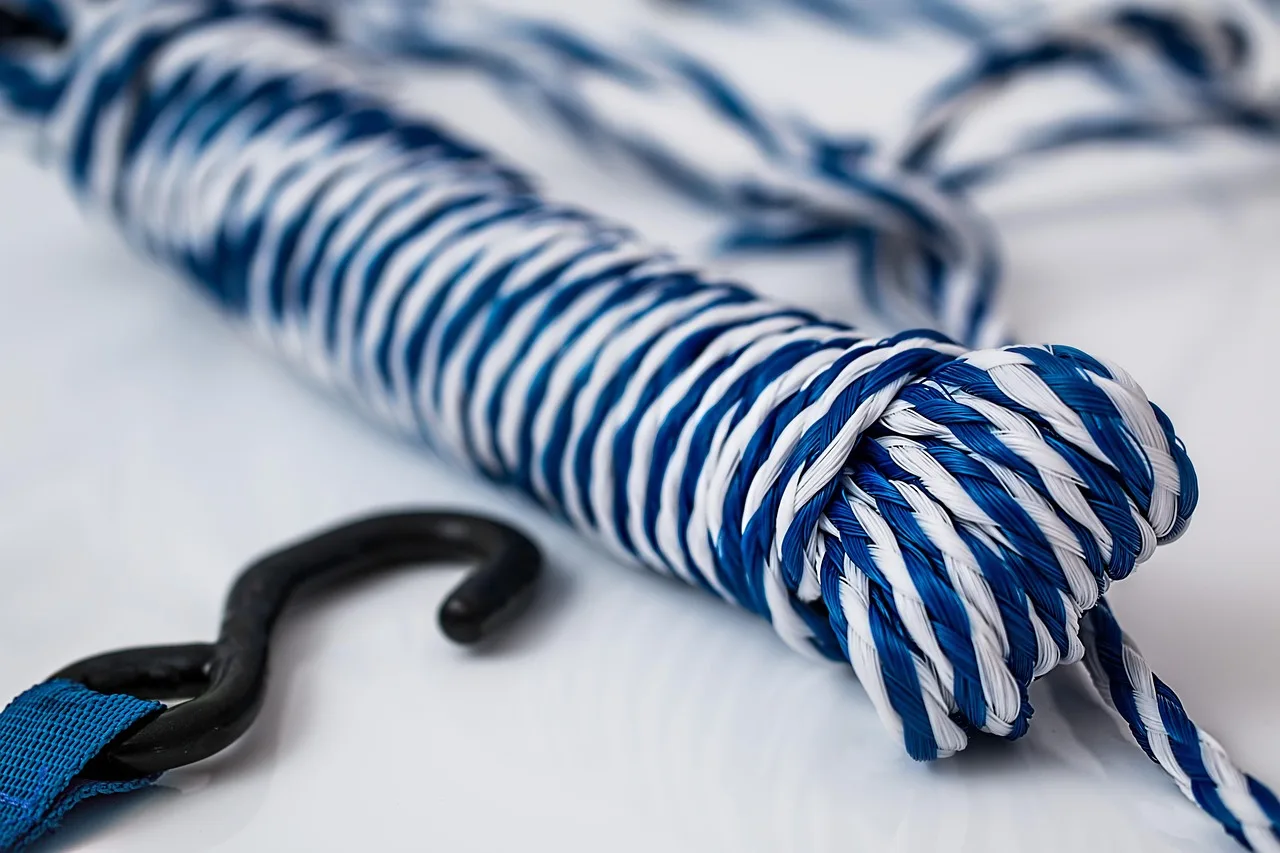
The practical difference is not raw strength alone. It is how each option behaves when a load vibrates, a surface rubs, weather changes, or an anchor point is less than ideal.
Load control and tension retention
Ratchet straps deliver maximum tension and security in most comparisons, which makes them the default for bigger and heavier loads. Cam buckle straps are better for lighter applications where you need faster setup and gentler clamp force.
Rope is adjustable, but the hold depends on the knot and the material. Nylon, polyester, polypropylene, and paracord all behave differently, and that variation matters when a load is likely to move.
Surface protection and abrasion risk
Webbing protects better because it spreads load across a wider band. That helps with patio chairs, boxed appliances, and wrapped furniture, where a narrow line can bite into corners or finish layers.
Rope is more likely to leave marks on soft goods or dig into edges. If the cargo has a tarp, the danger is often at the tie point, not the middle of the cover.
Hardware: straps rely
Straps rely on the hardware style as much as the webbing. Closed systems are more secure than open S hooks, and corrosion-resistant metal lasts longer outdoors than basic hardware.
Rope can fit many anchor shapes, which is useful for odd setups. Still, the knot has to hold the tension. For cargo, a trucker’s hitch is the better rope choice for tensioning, and a bowline knot is useful for a secure fixed loop; a taut-line hitch is best treated as a tensioning aid for light, adjustable lashings rather than a primary vehicle-load knot.
Weather exposure and long-term storage: long storage changes the math
Long storage changes the math. UV, rain, and repeated wet-dry cycles can relax a rope system and wear unprotected material faster than a rated strap with UV resistance and corrosion-resistant metal hardware.
For a patio set left outside or a tarp over stacked items, the safest choice is the one that still holds after days of sun and wind. That is usually a strap system with the right hardware and a realistic recheck schedule.
Are tie down straps better than rope?
Yes, for most moving and vehicle loads. Tie-down straps are the safer default because they are rated, easier to inspect, and less dependent on knot skill. Rope is better reserved for light-duty, temporary, or specialty lashings where the load is stable and you can recheck tension often.
On public roads, legal and safe securement depends on rated tie-downs, suitable anchor points, and local transport rules. Never rely on rope alone for a load that can shift, tip, or damage other road users if it loosens.
When a strap is the safer default
Use a strap when the item can slide, tip, or bounce. That includes furniture, appliances, kayaks, cargo in a trailer, and stacked household items that will ride over bumps or need to stay fixed for more than a short hop.
When rope is acceptable only for lighter, lower-risk tasks
Rope fits light tarps, minor bundle control, and backup lashing where the consequence of slack is low. Even then, it should be checked often, because knot slip and material relaxation are real failure modes.
Why legal and rated securement matters on public roads
Proper cargo securing helps prevent shifting, falling, or causing accidents. For road use, choose gear with a stated working load limit that exceeds the expected load, and follow the vehicle or trailer manual for anchor use, tie-down count, and routing.
What type of tie down strap is best for heavy loads?
Ratchet straps are the better choice for heavy loads because they give the highest tension control in most comparisons. Cam buckle straps are the better fit when the cargo is lighter and you want faster setup with less clamp force. For either type, the working load limit should exceed the expected load, and the hardware should match the anchor point.
For transport, the strap rating matters more than marketing language. A strong-looking strap with weak hooks or a poor anchor path can fail sooner than a lower-looking but properly rated system.
Ratchet straps for the highest tension control
The ratchet mechanism allows tight adjustment, which is useful for heavy cargo, irregular loads, and items that must stay fixed during travel. The trade-off is overtightening risk, especially on soft goods, tarp edges, or fragile frames.
Cam buckle straps for lighter cargo and quicker setup
Cam buckles are for lighter applications. They are faster to set than ratchets and easier to fine-tune, but they do not give the same clamp force, so they fit lighter cargo better than heavy, shifting loads.
Why WLL and hardware quality matter more than marketing claims
Working load limit is the safety benchmark that matters on real cargo. Look for corrosion-resistant metal hardware, UV protection, and webbing that resists abrasion, because the weakest component decides the system.
Say your moving blanket bundle sits on a truck bed with painted side rails. A ratchet strap with the wrong hook can scratch the rail, while a closed-end setup with a proper anchor path protects the finish and holds tension more predictably.
Tie-down decision matrix
Use this matrix to match the task to the safest choice. For any on-road load, follow the vehicle or product manual, avoid exceeding the vehicle’s rated roof, hitch, or tow limit, keep items out of airbag zones and the driver’s view, and check local laws.
| Scenario | Safest choice | Main failure risk | Minimum hardware or features needed | Do not use |
|---|---|---|---|---|
| Moving furniture | Tie Down Straps | Webbing slip, corner abrasion, or hardware scratches | Ratchet or cam buckle straps, closed-end hardware, abrasion protection where straps cross edges | Loose rope on painted or finished surfaces |
| Securing a tarp | Rope | Knot loosening, wind flap, grommet tear | Light rope, secure knots, stable anchor points, frequent recheck | Heavy ratchet tension on thin tarp edges |
| Patio furniture storage | Tie Down Straps | UV wear, strap slack, frame scuffing | UV-protected straps, corrosion-resistant metal hardware, soft contact points | Untreated rope left outdoors for long periods |
| Appliance transport | Tie Down Straps | Shift, denting, and finish damage from concentrated pressure | Ratchet straps, strong anchor points, edge protection, WLL that exceeds the expected load | Paracord or other light rope |
| Kayak or cargo hauling | Tie Down Straps | Lift, side shift, and hook movement in wind | Straps matched to the load, secure roof or bed anchor points, closed-end hardware | Open hooks or rope that depends on knot skill alone |
| Irregular loads | Tie Down Straps | Uneven force distribution and movement at odd angles | Ratchet straps, multiple anchor points, abrasion protection at contact points | One rope line over a sharp edge |
| Short-distance moves | Tie Down Straps | False confidence from a quick but weak setup | At least 2 straps per piece of gear, rated hardware, stable anchor points | Single knot-only rope lashings |
| Long-term outdoor storage | Tie Down Straps | UV degradation, corrosion, and tension loss | UV-protected webbing, corrosion-resistant metal, periodic recheck | Untreated rope or bungees left in the weather |
Moving furniture
Tie Down Straps are the better pick because furniture is often finished, bulky, and easy to bruise at the corners. A strap spreads force across a wider band, which reduces scuffing and makes the load less likely to walk during transport.
Securing a tarp
Rope is acceptable here when the job is light and temporary. Ball bungees are ideal for quick, lightweight tarp fastening, while rope works when you need adjustable lash points and do not need heavy clamp force.
Picture a 10-by-12-foot tarp over stacked yard tools during a windy afternoon. A light rope lashing with a bowline and a tensioning hitch is usually easier on the tarp edge than a hard ratchet pull that can tear the hem.
Patio furniture storage
Tie Down Straps are the safer outdoor storage pick because they hold better over time and are easier to inspect for wear. Choose webbing with UV protection and metal parts that resist corrosion, since patio storage often means repeated exposure.
Appliance transport
Tie Down Straps are the clear choice for appliance transport because the load is heavy, rigid, and prone to tipping. Use rated straps, stable anchor points, and enough tie-downs to keep the unit from rocking or sliding.
Kayak or cargo hauling
Tie Down Straps are the better fit because wind and vehicle motion can shift a long, light object fast. Closed systems are more secure than open S hooks, and the strap path should keep the hull or cargo from rubbing on hard hardware.
Irregular loads
Tie Down Straps work better when the load has odd shapes or mixed surfaces. The webbing is easier to route around corners, and the tension can be distributed across more than one anchor point instead of depending on a single knot.
Short-distance moves
Tie Down Straps still win, even for a quick trip. A common first-timer mistake is using just one rope line because the drive is short, then discovering that the load shifted at the first brake light.
Long-term outdoor storage
Tie Down Straps are the better choice because weather exposure changes how materials behave. Rope can loosen and degrade, while UV-protected straps with corrosion-resistant metal hold their shape and are easier to inspect for damage.
When should you use rope instead of tie-down straps?
Use rope only when the load is light, stable, and low risk, or when you need a flexible line that can route through odd anchor points. For vehicle cargo, treat rope as a backup or specialty tool, not the default securement method.
Rope also fits temporary tie-offs for tarps, garden materials, and other jobs where frequent rechecking is realistic. For public-road hauling, the safer path is still a rated strap system with proper anchors and a verified working load limit.
Light-duty tasks where the load is stable
Rope is suitable when the load is not likely to shift and the consequence of slack is low. It can work for a bundled tarp, light yard gear, or a temporary cover that is easy to inspect and retension.
Situations that need flexible anchor-point routing
Rope can thread through places where hardware would be awkward. That versatility is useful around odd rails, fence posts, and temporary tie-off points, provided the anchor itself is sound.
Knots to use, and the ones to avoid for vehicle loads
Use a trucker’s hitch when you need tension, and a bowline knot when you need a secure fixed loop. A taut-line hitch can help with adjustability on light lashings, but it is not the right primary knot for vehicle loads that vibrate, shift, and brake hard.
Choose Tie Down Straps if… / Choose Rope if…
Choose Tie Down Straps if the load can shift, the surface scratches easily, or the setup will stay outdoors. Choose Rope if the task is light-duty, temporary, and low risk, and you can inspect or retension it often. For moving and hauling, straps usually win because rated hardware and webbing are easier to trust.
Choose Tie Down straps if…
Choose Tie Down Straps if you are moving furniture, appliances, kayaks, or mixed-shaped cargo. Choose them if you need a stated working load limit, better abrasion control, and a system that stays tight without knot-dependent tension. Choose ratchet straps for heavier cargo and cam buckle straps for lighter cargo.
Choose Rope if…
Choose Rope if you are fastening a light tarp, tying a temporary cover, or making a backup lashing where quick routing matters more than maximum hold. Choose it only if the knots are secure, the anchor points are stable, and the load does not need rated road-transport securement.


Frequently asked questions
Are tie down straps better than rope for securing a load?
Yes, for most moving and vehicle loads. Straps are easier to rate, easier to inspect, and less dependent on knot skill. Rope still has a place for light, temporary work, but it should not be the default for cargo that can shift under vibration or braking.
Can ratchet straps damage a tarp or cargo if overtightened?
Yes. The ratchet mechanism can apply tight pressure, which can crush soft cargo, tear a tarp hem, or leave pressure marks on finished surfaces. Use only the tension needed to prevent movement, and add padding or edge protection where the strap crosses a fragile surface.
What knots work best if I have to use rope?
A trucker’s hitch is the most useful rope knot for tensioning cargo, and a bowline knot is reliable for a fixed loop. A taut-line hitch is better for light, adjustable lashings than for primary vehicle securement. For road transport, rope should not replace rated tie-downs.
How many straps should I use to secure cargo?
Use at least 2 straps per piece of gear. That is a practical minimum for keeping a load from rolling, sliding, or shifting when the vehicle turns or brakes. Larger, irregular, or top-heavy items may need more tie-downs, depending on the manual and the anchor layout.
What materials make tie down straps last longer outdoors?
Look for polyester webbing with UV protection and corrosion-resistant metal hardware. Those features handle sun and weather better than untreated materials. Abrasion resistance also matters, because straps that rub on rough edges wear out faster and lose reliability sooner.
Products related to this article
Sponsored / affiliate links. As an Amazon Associate I earn from qualifying purchases. I may earn additional commission from eligible campaigns.