Cam Buckle Straps Price
Cam buckle straps vary in price depending on width, length, hardware, and load-rated construction. Pick the wrong width or rating, and you can waste money, end up with a poor fit, or buy a strap that cannot hold the load safely. This guide explains what drives price and which cam buckle strap setup gives the lowest safe cost for common jobs.
How cam buckles work and where to use them
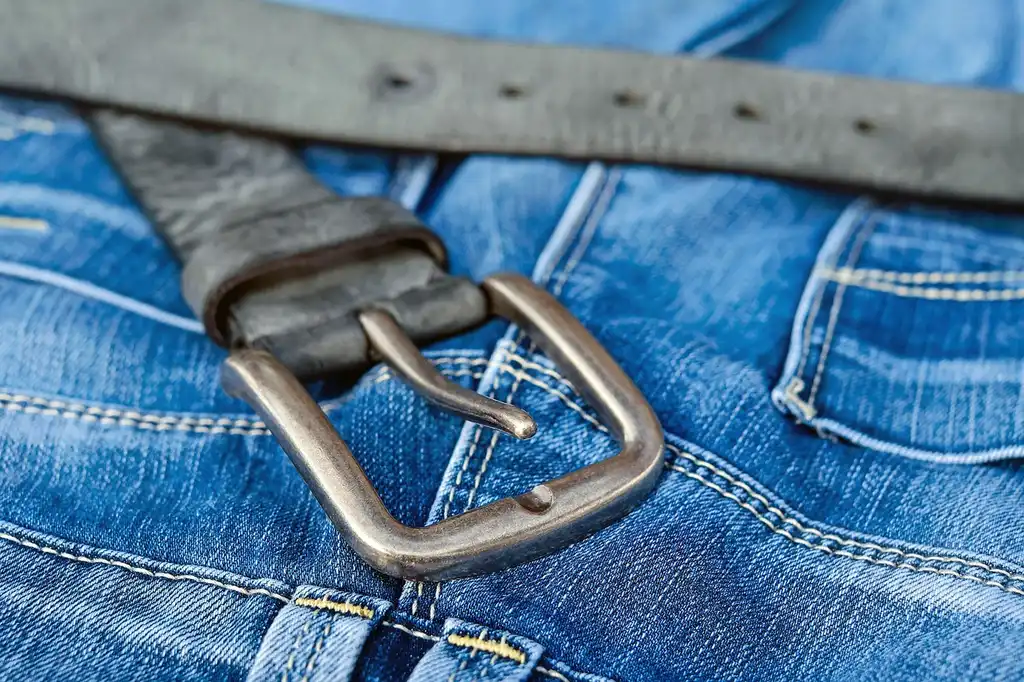


A cam buckle strap is a webbing tie-down that tightens by pulling the strap through cam buckle hardware, then locks when the cam closes against the webbing. It is common for cargo securement and light loads because you can tension it by hand fast, with no need for the high force of a ratchet strap.
How the cam buckle tightens webbing
The buckle uses a spring-loaded cam. Thread the webbing through the slot, pull the loose end to remove slack, and the cam grips the strap when you release it. That makes it fast for items that need steady holding force, not extreme tension.
Common widths and lengths
Many listings center on 1 inch and 2 inch straps. Common lengths include shorter consumer sizes as well as longer options. Width affects how much webbing is used and how much load the strap can usually handle; length changes convenience, reach, and price.
Where cam buckle straps fit in cargo securement
Use them for lighter cargo, household moving, gear boxes, bikes, and other loads that should stay put without heavy compression. If a load needs very high tension or must resist aggressive shifting, a ratchet strap is usually the better tool.
Cam buckle strap price matrix
This matrix normalizes common products by width, length, hardware, and listed price so you can compare the examples shown below.
| Width | Length | Hardware type | Listed price | Buyer recommendation |
|---|---|---|---|---|
| Loop-only | Not listed | Endless loop | $3.75 | Lowest-cost option when you only need a looped tie-down and no hooks. |
| Loop-only | Not listed | CAMO endless loop | $4.50 | Budget loop option when color or finish matters less than fit. |
| 1 inch | Not listed | S-hooks | $4.95 | Low-cost hooked choice for anchor points that accept S-hooks. |
| 1 inch | Not listed | Wire hooks | $5.45 | Budget hooked option when wire hook shape fits the anchor better. |
| 1 inch | Not listed | Heavy duty S-hooks | $6.95 | Choose this when you need a stronger 1-inch hooked strap and can pay a small premium. |
| 1 inch | Not listed | Heavy duty wire hooks | $7.50 | Heavy-duty hooked choice for tougher anchor points and slightly higher cost. |
| 2 inch | 12′ | E-track fittings | $6.25 | Mid-range E-track choice for standard van or trailer rail use. |
| 2 inch | 16′ | E-track fittings | $6.50 | Best value when you need a little more reach without moving to hooks. |
| 2 inch | 20′ | E-track fittings | $6.75 | Longer reach with only a small price increase over the 12′ version. |
| 2 inch | Not listed | Plate trailer hooks | $8.00 | Pay extra when your anchor point is a plate-style trailer connection. |
| 2 inch | Not listed | Flat snap hooks | $10.00 | Use when the flat snap shape is needed; this is a higher-cost hook option. |
| 2 inch | Not listed | E-fittings and plate trailer hooks | $12.50 | Specialty setup when one strap needs both fitting styles. |
Width-normalized examples
The examples in the list show how width, hardware, and attachment style change price together.
Length-normalized examples
Within comparable groups, price can move with length, but the step-up is not always large. Hardware style still matters more.
Hardware and price notes
Loop-only straps sit at the low end because they leave out hooks. Hook styles add cost because they add metal, shape, and compatibility requirements. Flat snap hooks and plate trailer hooks cost more than basic S-hooks in the examples above because they are built for more specific anchor points.
Budget, mid-range, and heavy-duty recommendations
For budget use, start with an endless loop strap if your anchor point already fits a loop. For mid-range use, a 2-inch E-track strap is a practical buy when you already have E-track rails. For heavier securement, the heavy-duty hook options make more sense than the cheapest loop-only strap.
Why do cam buckle strap prices vary?
Cam buckle strap prices vary because width, length, hardware, and load-rated construction all change what the strap can do and what it must include. A narrow loop strap is usually cheaper than a wider strap with metal hooks, while a specialty E-track or heavy-duty listing costs more because of fit, material, and attachment details.
Width: 1 inch versus 2 inch
Width affects both price and use case. A 1-inch strap is common for lighter cargo and smaller anchor points. A 2-inch strap is usually a better fit for larger cargo and E-track use, and it often appears in more specialized listings that cost more than simple 1-inch loop products.
Length: 12′, 15′, 16′, and 20′
Longer straps usually cost more because they use more webbing and give you more reach. Longer lengths also add convenience when you need to go around larger items or reach farther anchor points.
Hardware: loops, hooks, and E-track fittings
Hardware changes both compatibility and price. Endless loop straps are the cheapest in the examples because they have no hooks. S-hooks and wire hooks add cost. Flat snap hooks, plate trailer hooks, and E-track fittings raise price further when the anchor point calls for a specific shape.
Webbing and load-rating differences
Listings may use polyester webbing or seatbelt webbing, and some mention UV or water resistance. When a product lists working load limit or breaking strength, that should matter as much as price. A strap that is cheaper but under-rated for the cargo is not a safe bargain.
Say your cargo is a pair of folding chairs in a small hatchback. A 1-inch endless loop strap may be the cheapest workable choice if you already have anchor points that accept loops. If the same cargo sits in a trailer with metal rails, a hooked or E-track version may fit better even if it costs more.
Are endless loop cam buckle straps cheaper?
Yes. Endless loop cam buckle straps are usually the lowest entry price because they remove hook hardware and use a simpler layout. They are often cheaper than hooked options and other specialty versions.
Loop-only construction
A loop-only strap has fewer parts and less metal, so it often starts at a lower price point. That makes it a good fit for tie-down points that do not need hooks at all, or for cargo that needs a soft webbing loop around a bar or rail.
When loop straps are the lowest-cost option
Loop straps are the lowest-cost option when your anchor point already suits a loop and you do not need the convenience of a hook. They also make sense when you need to secure lightweight cargo and want to spend as little as possible on the strap itself.
When loops are not practical
Loop straps are a poor choice when you need fast clip-in attachment to a trailer, rail, or ring. If the anchor point is awkward, a hook can save time and reduce frustration. The extra hardware cost may be worth it because the strap fits the job without improvised wrapping.
What do hooked and E-track straps cost?
Hooked cam buckle straps cost more than endless loop versions because the hardware adds material and attachment flexibility. Specialty hooks such as flat snap hooks can push the price higher.
S-hooks, wire hooks, snap hooks, and flat snap hooks
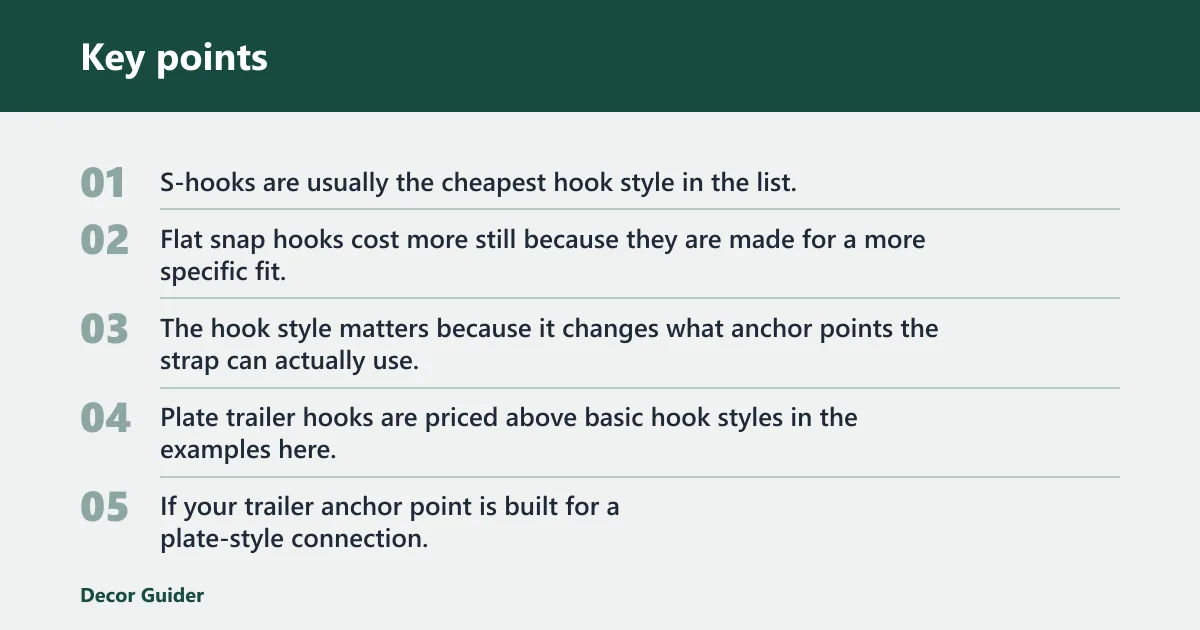
S-hooks are usually the cheapest hook style in the list. Wire hooks cost slightly more. Flat snap hooks cost more still because they are made for a more specific fit. The hook style matters because it changes what anchor points the strap can actually use, not just how it looks.
Plate trailer hooks and compatibility
Plate trailer hooks are priced above basic hook styles in the examples here. That premium is tied to fit. If your trailer anchor point is built for a plate-style connection, the extra cost can be worth paying. If not, you would be spending more for hardware you cannot use well.
2 inch E-track cam buckle straps
Two-inch E-track straps are a mid-range option in this set. That makes them practical for cargo vans, trailers, and storage setups with E-track already installed.
When hook premiums are worth paying
Pay the premium when the hook matches the anchor point and saves you from fighting the strap. A hook can make loading faster, cleaner, and more secure than a loop in the wrong spot. The cheapest strap is not always the cheapest usable strap.
Suppose you have a trailer with plate-style anchor points and a load that shifts during turns. A plate trailer hook strap is more sensible than a loop strap that does not connect properly. The better fit can save time and reduce wasted money on the wrong hardware.
Which cam buckle strap is cheapest for your job?
The cheapest safe cam buckle strap depends on the cargo, the anchor point, and how much tension you need. For light loads, endless loop straps are usually cheapest. For trailer or van rails, E-track versions can be the best value. For stronger securement, a heavy-duty hooked strap is often worth the extra cost.
Light loads and small cargo
Choose the cheapest endless loop strap when you only need light securement and already have a place for the loop to sit. If you need hooks, a basic hook version is still a low-cost option.
General-purpose moving and storage
For moving boxes, bins, or household storage, a 1-inch or 2-inch strap should be matched to the anchor point first, then to price. A simple hooked strap can be the cheaper usable option if it avoids extra hardware or awkward setup. Do not buy a wider strap just because it sounds stronger.
Heavier securement needs
Heavy-duty cam buckle straps are worth the extra cost when the listing shows heavier construction or a higher load rating and your cargo actually needs it. That is a small premium for a stronger setup when compared with the cheapest loop strap.
When to skip cam buckles for a ratchet strap
Skip a cam buckle strap when the load needs very high tension, such as equipment that must be pulled down hard and held under significant compression. Cam buckles are better for controlled securement than forceful tightening. If a strap must cinch aggressively, a ratchet strap is the safer fit.
How do you thread a cam buckle strap?
Threading a cam buckle strap is simple: open the cam, feed the webbing through the slot, pull the slack out, and let the cam grip the strap. Keep the webbing flat and untwisted. If the strap slips, check whether the buckle is fully engaged and whether the webbing is routed correctly.
Step-by-step threading
- Open the cam buckle by pressing the cam lever.
- Insert the loose end of the webbing through the slot.
- Pull the webbing until the strap is snug around the cargo.
- Release the lever so the cam clamps the webbing.
- Check that the strap sits flat and the anchor points are secure.
Common threading mistake to avoid
A common first-timer mistake is twisting the webbing before it enters the buckle. That reduces grip and makes the strap harder to tension evenly. Keep the strap flat, and do not exceed the listed working load limit if that figure is provided.
Frequently asked questions
How much do cam buckle straps cost?
Cam buckle straps usually range from basic, low-cost options to more specialized versions with extra hardware or higher-rated construction. For many shoppers, the practical range lands in the middle, with simple 1-inch or 2-inch options priced below heavier hardware combinations.
What is a cam buckle strap?
It is a webbing tie-down that tightens by pulling the strap through cam buckle hardware. The cam grips the webbing to hold tension. That makes it useful for cargo securement, moving, and light-duty tie-down work where quick hand tension is enough.
Cam buckle vs ratchet strap: which is better?
Cam buckle straps are better for quick hand tension and lighter loads. Ratchet straps are better when you need much higher tension and a harder clamp on the cargo. If the load needs strong compression, a cam buckle is usually the wrong tool.
What are the prices for cam buckle straps with hooks?
Hooked cam buckle straps cost more than endless loop versions because the hardware adds material and attachment flexibility. Specialty hook styles and trailer-specific hardware usually cost more than basic hook styles.
What size cam buckle strap do I need?
Choose 1 inch for lighter cargo and smaller anchor points, and 2 inch for larger cargo or E-track setups. Length depends on the distance around the load and the anchor spacing; shorter and longer options are both common. Match the strap to the anchor first, then to the price.
Products related to this article
Sponsored / affiliate links. As an Amazon Associate I earn from qualifying purchases. I may earn additional commission from eligible campaigns.