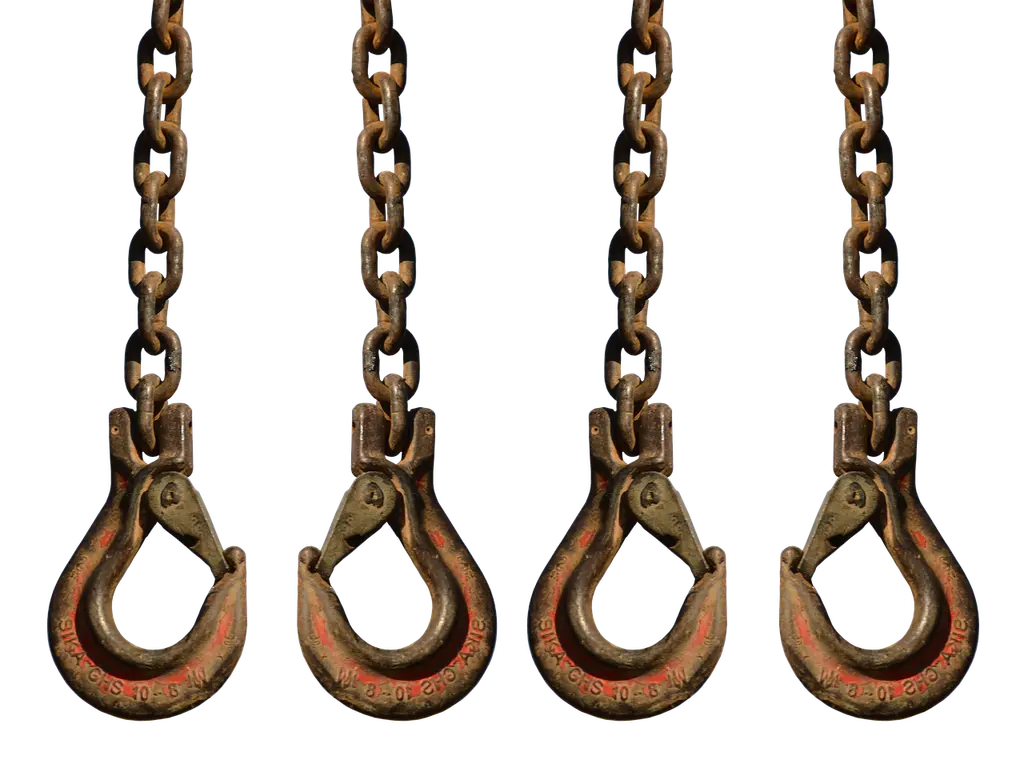
Heavy Duty Tarps Cost: What Buyers Pay by Material
Heavy-duty tarps usually cost about $20 to $150 for standard sizes, while custom or reinforced options can run $200 or more. Material, weight, reinforcement, and fit matter more than the label “heavy-duty.” A tarp that is too light can fail early and cost more in replacements, cargo damage, or downtime than a sturdier option with a higher upfront price.
What counts as a heavy-duty tarp?
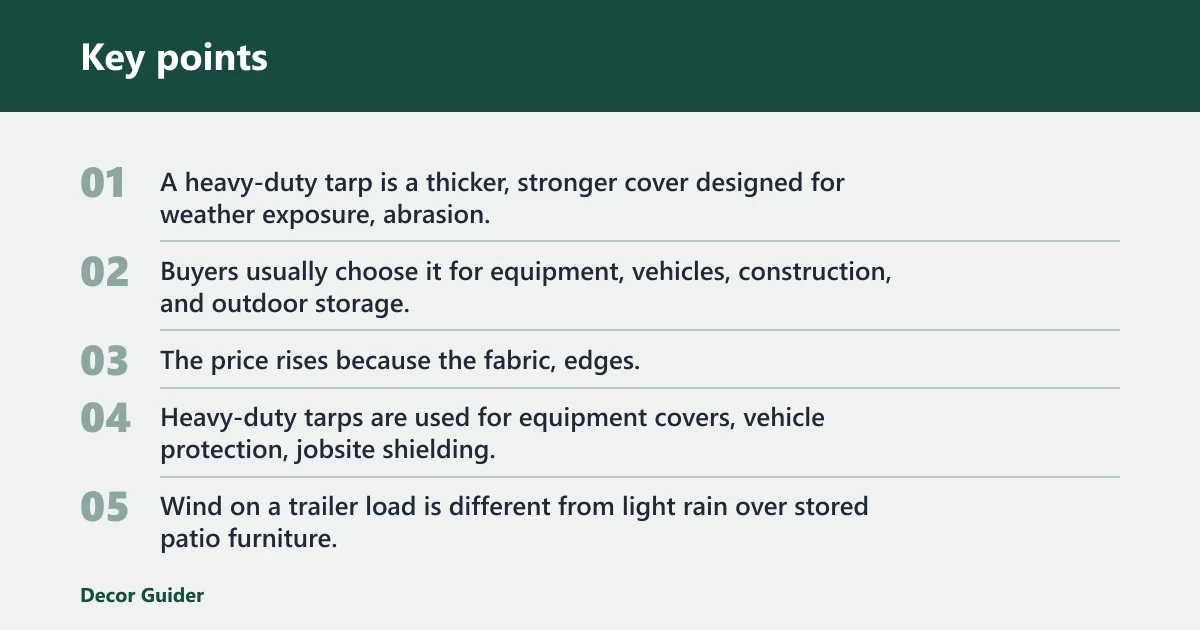


A heavy-duty tarp is a thicker, stronger cover designed for weather exposure, abrasion, and repeated use. Buyers usually choose it for equipment, vehicles, construction, and outdoor storage, where basic covers tear, stretch, or wear through too quickly. The price rises because the fabric, edges, and attachment points are built for longer service.
Common jobs and failure points
Heavy-duty tarps are used for equipment covers, vehicle protection, jobsite shielding, and outdoor storage. The failure risk changes with the job. Wind on a trailer load is different from light rain over stored patio furniture, and a tarp that works for one may fail quickly in the other.
Weather resistance matters when the tarp stays outdoors. UV resistance matters when sun exposure is constant. Abrasion resistance matters when the tarp rubs against lumber, metal, corners, or moving cargo. UV exposure and weathering are major reasons outdoor covers age faster; the ASTM D4329 and D4674 test families are commonly used to simulate UV and weathering effects on plastics and coated materials, which shows why these claims are source-sensitive rather than generic. ASTM D4329 ASTM D4674
Material types and what buyers usually pay
Polyethylene tarp options are usually the lowest cost. They are lightweight, water-resistant, and a good fit for temporary cover and rain protection. For short jobs, that can be enough. For repeated use, the lower buy-in can turn into a higher cost if the tarp fails early.
Canvas duck tarp options cost more because the fabric is tightly woven cotton and breathable. That makes them a better fit for long-term, reusable, abrasion-resistant use. PVC vinyl tarp options sit in the heavy-duty group and are used for waterproof coverings. Mesh tarp options allow water and/or light to pass through, which suits shade screens, privacy fencing, and building wraps where airflow matters.
How much do heavy duty tarps cost?
For standard sizes, heavy-duty tarps usually fall around $20 to $150. Custom or reinforced builds can run $200 or more, especially when the job needs a special size, stronger edges, or fastening hardware. The price depends less on the word “heavy-duty” and more on material, weight, finish, and fit.
What changes the price most
Material choice is the first price split. Polyethylene is usually the lowest. Canvas duck costs more. PVC vinyl often sits higher because it is used for waterproof, commercial, and custom work. Mesh can be priced for specialty use rather than raw strength alone.
Size also matters. A larger tarp needs more material, more edge work, and often more attachment points. Shape matters too. Rectangles are simpler. Odd cuts, cutouts, and truck or trailer fits add labor. If you need a tarp that wraps around corners or covers a machine with vents and protrusions, the cost moves up fast.
For thickness and weight, buyers usually see two different spec styles. Poly tarps are often sold by mil thickness, while canvas and vinyl are more often sold by ounces per square yard. A mil is one-thousandth of an inch, so it describes material thickness; ounces per square yard describe fabric weight and often correlate with denser or heavier construction. That is why a “mil” number on poly is not directly interchangeable with an “oz” number on canvas or vinyl. The Spruce: Tarp thickness guide Denier and fabric weight overview
How thick is a heavy-duty tarp?
Thickness is usually read as material weight, and common custom options include 14 oz, 18 oz, 22 oz, 40 oz, and 50 oz. Higher weight generally signals heavier construction, but the right choice depends on exposure, movement, and wear. A heavier tarp is not automatically the better buy.
Reading weight classes without overbuying
A 14 oz tarp can fit lower-stress work where protection matters more than constant abrasion. An 18 oz or 22 oz tarp is a stronger middle ground for repeated outdoor use and tougher handling. A 40 oz or 50 oz build is closer to a specialty heavy cover for harsher duty or custom commercial work. These weights are common in custom vinyl and canvas-style builds, not in thin consumer poly sheeting. Tarps Now vinyl tarp weight examples Tarps Now canvas tarp weight examples
Suppose you need a cover for a parked machine that stays outside through sun and rain. A lighter tarp may look cheaper at checkout, but it can fail sooner at the folds, seams, or tie points. If the same cover will rub on steel corners every day, moving up in weight can be the cheaper choice over time.
Match weight to the job
Use weight as a guide, not a shortcut. Wind load, rubbing surfaces, and storage duration matter as much as the number on the spec sheet. A lighter tarp may be fine for temporary rain cover. For long storage, open-air jobs, or repeated handling, a heavier class often pays back in fewer replacements.
Why do heavy duty tarps cost more?
Heavy-duty tarps cost more because they use more material, denser fabric, and stronger finishing details. Reinforced hems, corners, and edge binding take time and add life to the cover. Better fasteners also raise the price. The extra cost is often tied to slower wear, fewer tears, and longer service life.
Reinforcement, edges, and attachment hardware
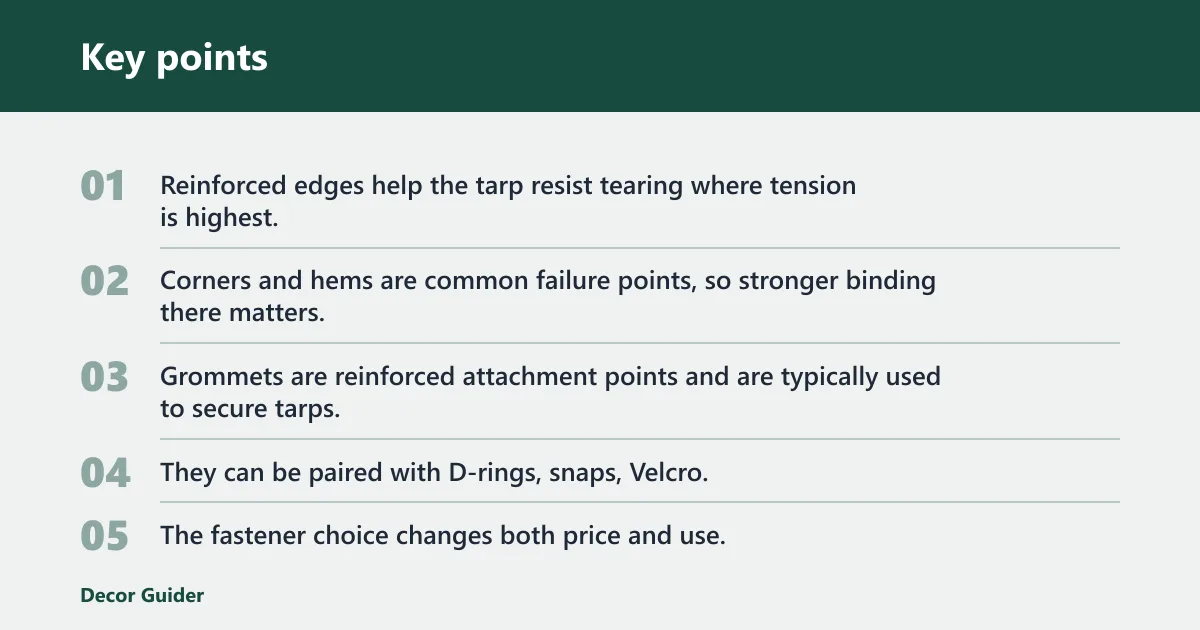
Reinforced edges help the tarp resist tearing where tension is highest. Corners and hems are common failure points, so stronger binding there matters. Grommets are reinforced attachment points and are typically used to secure tarps. They can be paired with D-rings, snaps, Velcro, or zippers depending on how the cover must close or hold tension.
The fastener choice changes both price and use. Grommets are common and simple. D-rings give stronger tie-down points. Snaps, Velcro, and zippers support tighter closure or faster access. If the tarp needs frequent removal, or if it must seal a specific opening, those features can be worth the added cost.
What materials are used in heavy duty tarps?
Heavy-duty tarps are commonly made from materials such as polyethylene, canvas duck, PVC vinyl, and mesh. Each material serves a different job. The best one depends on whether you need water blocking, breathability, abrasion resistance, shade, or a custom fit for a truck, trailer, or work site.
Polyethylene tarp
Polyethylene tarp is water-resistant, lightweight, and usually affordable. It is a practical choice for temporary cover and rain protection. It is also the easiest material to find in common sizes, which keeps the starting price lower. Industry guides commonly describe poly tarps in mil thickness ranges rather than fabric weight, which is why poly often looks different on spec sheets than canvas or vinyl. Poly-America tarp thickness guide
Canvas duck tarp
Canvas duck tarp is tightly woven cotton fabric that breathes better than plastic-style covers. It costs more than poly, but it is a stronger choice for long-term, reusable, abrasion-resistant use. Buyers often choose it when the tarp must handle repeated folding and rough contact.
PVC vinyl tarp
PVC vinyl tarp is a heavy-duty material category used for waterproof coverings. It is common in custom-made commercial tarps because it can be built to order and finished for demanding use. This is where many buyers start to see higher prices tied to both material and fabrication.
Mesh tarp
Mesh tarp allows water and/or light through, so it works well for shade screens, privacy fencing, and building wraps. It is used where airflow matters. That makes it different from a full waterproof tarp, and the right choice depends on the job, not on weight alone.
Cost decision table
This table gives a practical way to compare heavy-duty tarp options before you buy. It ties material, weight, size, reinforcement, and fastening style to the price tier you are likely to see, along with the best use case, the likely failure mode, and the point where an upgrade makes sense.
| Material | Weight / size band | Reinforcement | Fastening options | Expected price tier | Best use case | When to upgrade |
|---|---|---|---|---|---|---|
| Polyethylene | Light to mid weight; small to medium stock sizes | Basic hem, standard corners | Grommets | Low | Temporary rain cover, short-term equipment cover | Upgrade if it will stay outdoors for months or rub against sharp edges |
| Polyethylene | Heavier stock or custom size | Reinforced edges and corners | Grommets or D-rings | Low to mid | Repeat use with moderate weather exposure | Upgrade if wind load or abrasion is common |
| Canvas duck | Mid to heavy weight; larger reusable covers | Stitched hems and reinforced stress points | Grommets, D-rings, snaps | Mid to high | Long-term storage, reusable abrasion-resistant cover | Upgrade if the item needs full waterproofing rather than breathability |
| PVC vinyl | Heavy weight; custom dimensions | Reinforced edges, stronger welds or bindings | Grommets, D-rings, zippers | High | Waterproof commercial covers, truck and trailer applications | Upgrade if the opening needs frequent access or a shaped fit |
| Mesh | Vented or shade-focused sizes | Reinforced perimeter | Grommets, D-rings, Velcro | Mid to high | Shade, privacy, building wrap, airflow needs | Upgrade if the cover must block water, not just light or sight lines |
| Custom-made solid vinyl or mesh | 14 oz to 50 oz for some custom tarps | Built to order with reinforced edges | D-rings, snaps, Velcro, zippers | High to very high | Special shapes, large covers, commercial use | Upgrade if stock sizes leave gaps, slack, or exposed corners |
Price bands by material, weight, and fit
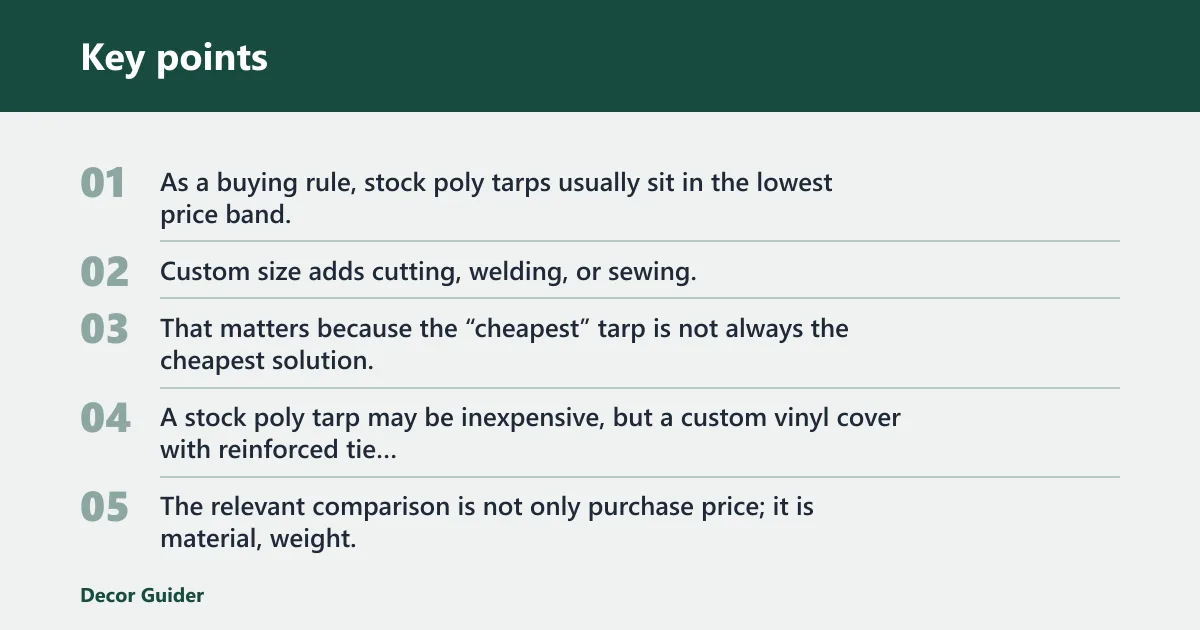
As a buying rule, stock poly tarps usually sit in the lowest price band, midweight canvas often moves into the middle band, and custom vinyl or custom-fit covers are where prices rise fastest. Stock size keeps labor low. Custom size adds cutting, welding, or sewing, which is why the same material can move from affordable to premium once fit becomes job-specific.
That matters because the “cheapest” tarp is not always the cheapest solution. A stock poly tarp may be inexpensive, but a custom vinyl cover with reinforced tie points can avoid costly flapping, exposure, or repeated replacement when the job demands a precise fit. The relevant comparison is not only purchase price; it is material, weight, and whether the size is stock or custom.
Are custom heavy-duty tarps worth it?
Custom tarps are worth it when a stock size wastes material, leaves gaps, or fails at the edges. They are less useful when a standard rectangle already covers the job cleanly. Because custom-made tarps are built to order in any size or shape required, they cost more, but they can cut fit problems.
When custom sizing pays off
Heavy-duty roll tarps are listed for truck and trailer boxes up to 24 feet in length, which shows how much size can matter in the final build. For large equipment, odd dimensions, or cargo that needs a precise wrap, custom work can reduce flapping, wear, and exposure.
Picture a trailer load with corners that leave a gap under a stock tarp. That gap can catch wind, loosen tie-downs, and wear the cover faster. A custom cut with the right fastening points can cost more up front and still be the lower-cost option if it avoids repeated replacement.
When stock sizes are enough
If the cover is temporary, rectangular, and easy to tie down, stock sizes usually make better value. You avoid extra labor, special fittings, and long lead times. For many homeowners, that is all they need.
Custom quotes can be harder to compare because shipping, handling, and fabrication are bundled differently from one seller to another. That is why the size and build details matter more than any broad shipping claim. If you are comparing quotes, make sure the same material weight, edge finish, and fastening style are included in each price.
Cost per use worksheet
This worksheet helps you compare a cheap tarp with a more durable one in plain terms. Use seasons or uses, not only checkout price. A tarp that costs more but lasts several seasons can be the lower-cost choice if the cheaper one fails early.
- Write the purchase price of each tarp.
- Estimate the number of uses or seasons each tarp should last in your job.
- Divide price by expected uses or seasons.
- Add replacement cost if the cheaper tarp is likely to fail early.
- Compare the final cost per use, not the sticker price alone.
| Tarp option | Price | Expected uses or seasons | Cost per use | Notes |
|---|---|---|---|---|
| Light poly tarp | $25 | 5 uses | $5 per use | Good for short rain cover; replace sooner if wind or abrasion is frequent |
| Heavier reinforced poly tarp | $60 | 20 uses | $3 per use | Better for repeat use, tie-down stress, and longer storage |
| Canvas duck tarp | $110 | 30 uses | $3.67 per use | Useful when breathability and abrasion resistance matter more than the lowest price |
Frequently asked questions
What is considered a heavy duty tarp?
A heavy-duty tarp is generally a stronger-than-standard cover made for repeated use, weather exposure, and abrasion. It is commonly used for equipment, vehicles, construction, and outdoor storage. Buyers usually expect better wear resistance, UV resistance, and stronger attachment points than a basic tarp offers.
Why are heavy duty tarps so expensive?
They cost more because they use denser material, stronger hems, and better edge and corner reinforcement. Hardware such as grommets, D-rings, snaps, Velcro, and zippers also adds cost. Custom sizing raises the price further because the tarp is built to order rather than cut from a simple stock pattern.
Where can I buy a heavy duty tarp?
You can buy them from industrial suppliers, truck and trailer sources, farm and contractor suppliers, and custom tarp makers. The best source depends on whether you need stock sizing or a custom build. For cost comparison, prioritize clear material specs, weight, reinforcement details, and whether the seller is quoting stock or custom dimensions.
What is the difference between poly and canvas tarps?
Polyethylene tarps are usually lighter, water-resistant, and more affordable, so they fit temporary cover and rain protection. Canvas duck tarps are more expensive, breathable, and better for reusable abrasion resistance. If you need long-term outdoor use or rough handling, canvas often lasts longer; if you need low cost, poly is usually the simpler buy.
Products related to this article
Sponsored / affiliate links. As an Amazon Associate I earn from qualifying purchases. I may earn additional commission from eligible campaigns.