How to Pack Lamps for Shipping
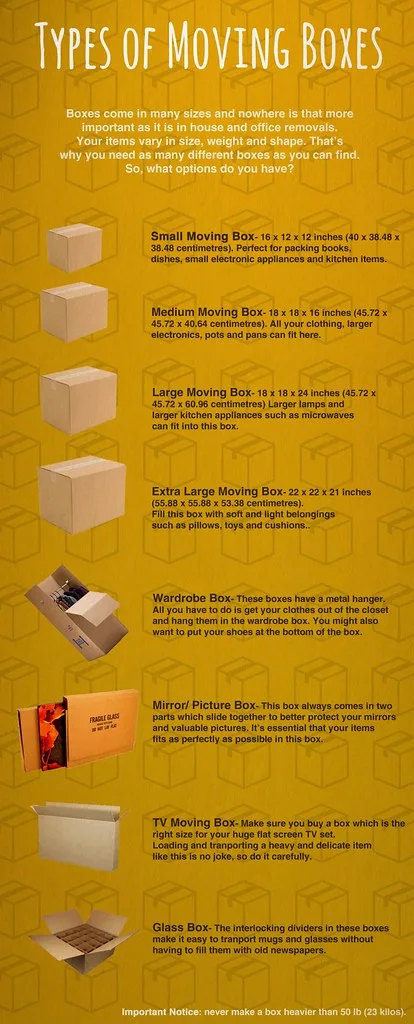
Wrap the base, remove the bulb and shade, and pack each lamp part in separate cushioning so no glass or ceramic touches hard edges. Skipping that method usually leads to broken sockets, cracked shades, bent harps, and costly returns or replacements. This guide shows how to pack table lamps, floor lamps, lampshades, bulbs, cords, and finials by type and breakage risk.
What you’ll need
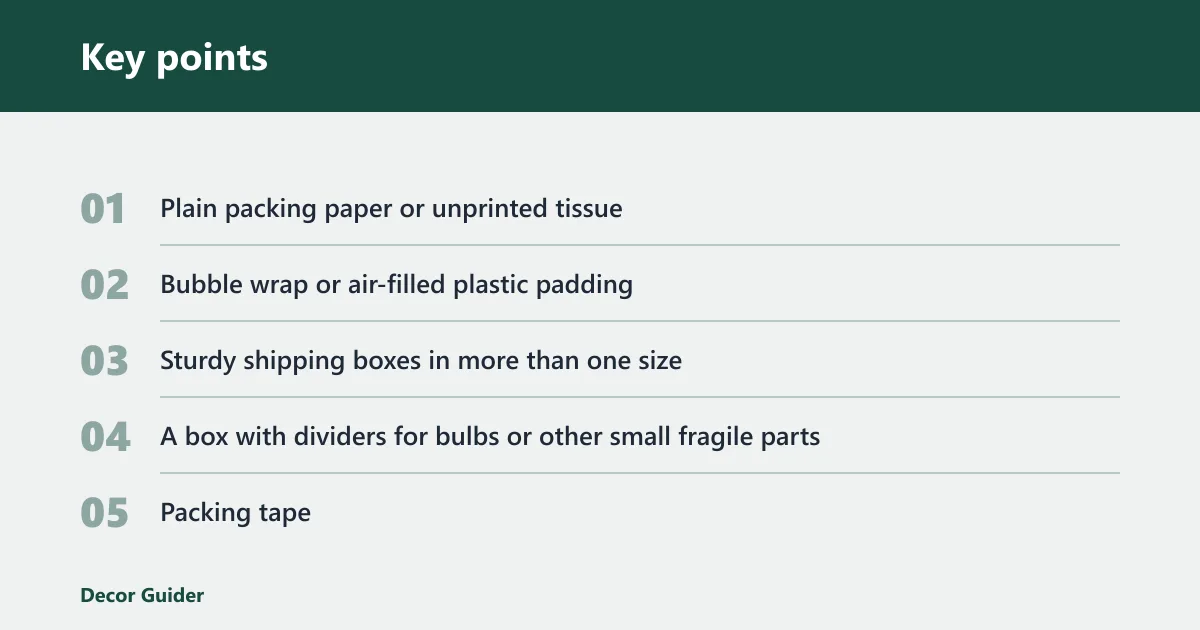


- Plain packing paper or unprinted tissue
- Bubble wrap or air-filled plastic padding
- Sturdy shipping boxes in more than one size
- A box with dividers for bulbs or other small fragile parts
- Packing tape
- Permanent marker
- Labels marked Fragile and This End Up
- Extra paper, dish towels, or clean socks for void fill when needed
- Scissors
Before you pack a lamp, what should you check?
Check the lamp type, the shade shape, the bulb type, and any brittle or glued parts before you choose a box. That tells you whether you need a standard carton, a divider box, or a larger, double-layered setup, and it also helps you avoid oversize packaging that raises shipping cost.
Identify the lamp type and fragile parts
Sort the lamp into table, floor, glass, or antique, then note the base material, harp height, finial, socket, and cord condition. Antique lamps often need more padding because old glue, thin glass, and older wiring can fail under vibration.
Decide whether the lamp is safe to ship
Look for cracked shades, loose wiring, wobbling sockets, and brittle glued joints. If the base is already unstable or the glass is badly cracked, replacement shipping may cost less than a failed shipment and a claim.
Measure the widest parts before choosing a box
Measure the widest point of the base and the shade, then allow room for wrap on all sides. A snug carton is the goal. Too much empty space makes the parts move, and too much box volume can push up dimensional weight.
How do you pack a lamp for shipping without breaking it?
Disassemble the lamp completely, wrap each part separately, and box the base, shade, bulb, harp, and finial so they cannot strike one another. The safest approach is a snug box with voids filled, because movement is what turns a normal bump into a cracked socket or bent metal.
Step 1: Disassemble the lamp
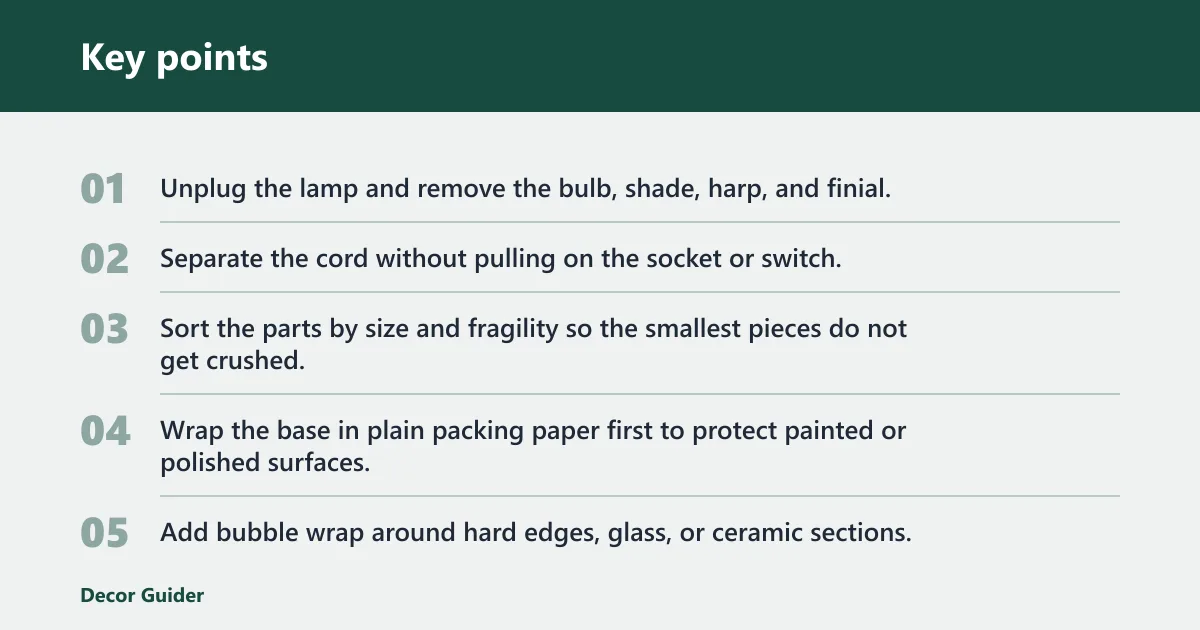
- Unplug the lamp and remove the bulb, shade, harp, and finial.
- Separate the cord without pulling on the socket or switch.
- Sort the parts by size and fragility so the smallest pieces do not get crushed.
Keep the bulb out of the socket first. That prevents breakage and stops loose hardware from tearing the shade or scratching the base during transit.
Step 2: Wrap the base and cord
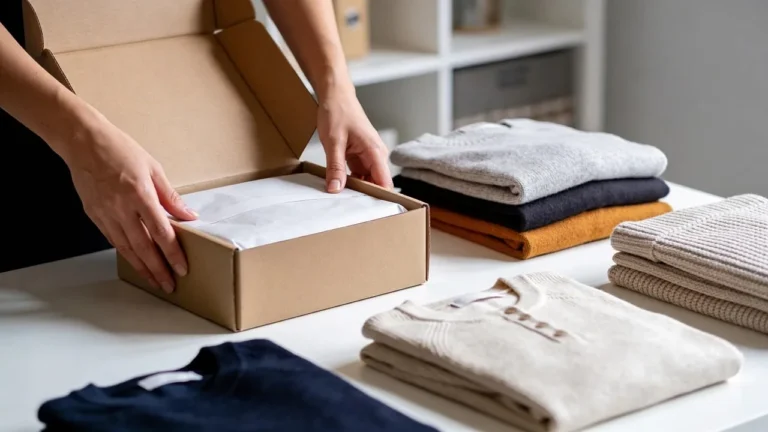
- Wrap the base in plain packing paper first to protect painted or polished surfaces.
- Add bubble wrap around hard edges, glass, or ceramic sections.
- Hold the cord against the wrapped base without tightening it around the finish.
- Use tape only on the wrapping, not directly on delicate surfaces when possible.
AAA Movers recommends bubble wrap or a paper pad for the base, and it advises packing the base down in the carton. Fill around it with paper, bubble wrap, or towels so the base cannot tilt.
Step 3: Wrap the shade and bulb separately
- Wrap the shade in plain paper or tissue.
- Do not use newspaper or other printed paper on delicate shades because ink can transfer.
- Wrap each bulb individually in bubble wrap or air-filled padding.
- Put bulbs in a divider box when you have one, with extra padding on top before sealing.
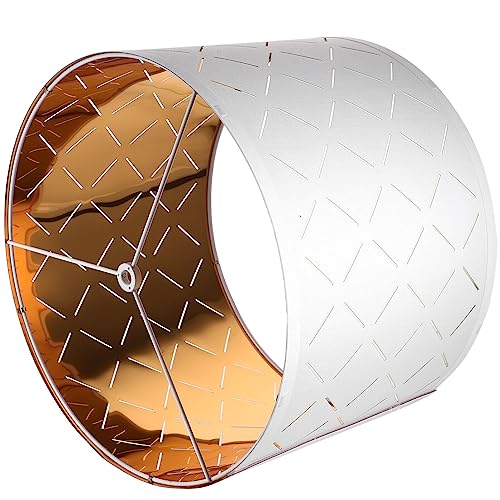
A lamp shade should sit in its own appropriately sized box. If the shade is sturdy and the wrapping is thick enough, a second shade can sometimes be nested inside another, but only if the inner and outer surfaces are fully separated by padding.
Step 4: Box, pad, and label the shipment
- Choose a snug box that leaves little empty space around the wrapped parts.
- Set the base down first, then add paper or bubble wrap around the sides.
- Use void fill so nothing can shift when you shake the box lightly.
- Seal the carton with packing tape.
- Mark the box Fragile, This End Up, and the room name.
For shipping, the box has to survive more than a short move in a truck. A good seal, strong corners, and little internal movement matter more than decorative wrapping.
How do you pack lamp shades and bulbs?
Pack shades and bulbs as separate items, not as attachments to the base. Shades need soft, clean wrap and enough room to keep their rims from bending, while bulbs should be wrapped one by one and placed where they cannot roll or strike one another.
Use the right materials for shades
Plain packing paper or tissue is the best first layer for most lamp shades. Avoid printed paper because ink can transfer onto fabric, parchment, or light-colored lining. If the shade is especially delicate, add a second layer of paper and then place it in a box that fits closely.
Pack bulbs one by one
Wrap each bulb individually in bubble wrap or air-filled plastic padding. If you have several bulbs or other small fragile pieces, a divider box is useful because each slot holds one item. A plastic Christmas ornament box can work as an alternative divider box for small bulbs.
Keep incandescent bulbs out of the shipment
Incandescent bulbs should not be shipped. They are fragile, heat-sensitive, and more likely to fail in transit. If a lamp uses that bulb type, remove it and replace it at the destination instead of packing it.
How do you pack a floor lamp for shipping?
Pack a floor lamp in sections so the pole, base, cord, and shade do not stress each other in the box. Long parts need a taller carton or a two-box approach, and the base needs extra padding because it carries most of the weight and can bruise nearby pieces.
Break the lamp into long and short parts
Separate the base, pole sections, harp, finial, shade, and bulb. Tape the wrapped cord to the pole only after the finish is protected. Long metal sections should not rattle inside an oversized box, or they can bend under pressure.
Use a box that matches the lamp height
Select a carton that fits the longest section without forcing a diagonal angle. Add paper or bubble wrap around each section until the parts stay fixed. If the pole or base leaves too much void, use a second box or a heavier carton rather than overfilling one weak box.
Protect the bottom end first
Floor lamps are often damaged at the base and socket ends, where impacts concentrate. Put the heavier end down, then build padding around it. If the lamp is tall and awkward, a double-wall box is worth the extra protection and lower risk of crushing.
How do you package a glass lamp for shipping safely?
Package a glass lamp with more padding than a standard table lamp because the base itself is part of the hazard. Wrap the glass base in plain paper first, then bubble wrap, and keep it from touching the shade, cord, or any hard corner in the carton.
Separate glass from every other part
Glass should not share direct contact with metal harps, ceramic pieces, or loose hardware. Wrap the glass base on all sides, then fill the box with enough paper or bubble wrap that the lamp cannot shift during handling or a drop onto a conveyor.
Use extra void fill in the bottom and corners
Glass lamps need cushion below and beside the base because corners transmit impact fast. If there is any open space after the lamp is centered, add more paper in about 5 to 10 inch layers and recheck for movement before sealing. That small top-up keeps the base from settling after the first compression.
Lamp shipping matrix
This matrix helps you choose a box, padding level, and warning level by lamp type. Use it as a packing decision table, not as a one-size-fits-all routine.
| Lamp type | Bulb type | Shade type | Required box size | Padding level | Do-not-ship warnings |
|---|---|---|---|---|---|
| Table lamp | LED or CFL removed and wrapped separately | Drum, empire, or cone shade in its own box | Snug single-wall or double-wall carton with 2-3 inches of wrap on each side | Medium | Do not ship with bulb installed; avoid printed paper on the shade |
| Floor lamp | LED or halogen removed and wrapped separately | Large shade, often boxed alone | Tall carton or two-box layout that matches pole length | High | Do not force the pole diagonally in a short box; avoid loose sections |
| Glass lamp | Any removable bulb, packed first | Fabric or glass-adjacent shade boxed separately | Double-wall box with extra corner padding | High | Do not allow glass to touch metal parts; watch for cracks and chips |
| Antique lamp | Remove bulb and do not ship incandescent bulbs | Old silk, paper, or fragile shade in a separate box | Sturdy double-wall carton, often with internal bracing | Very high | Do not ship if wiring is brittle, glue joints are failing, or the base is already unstable |
Common mistakes
Most shipping damage comes from leaving parts attached, using the wrong wrap, or choosing a box that is too large for the load. A few small changes prevent most failures.
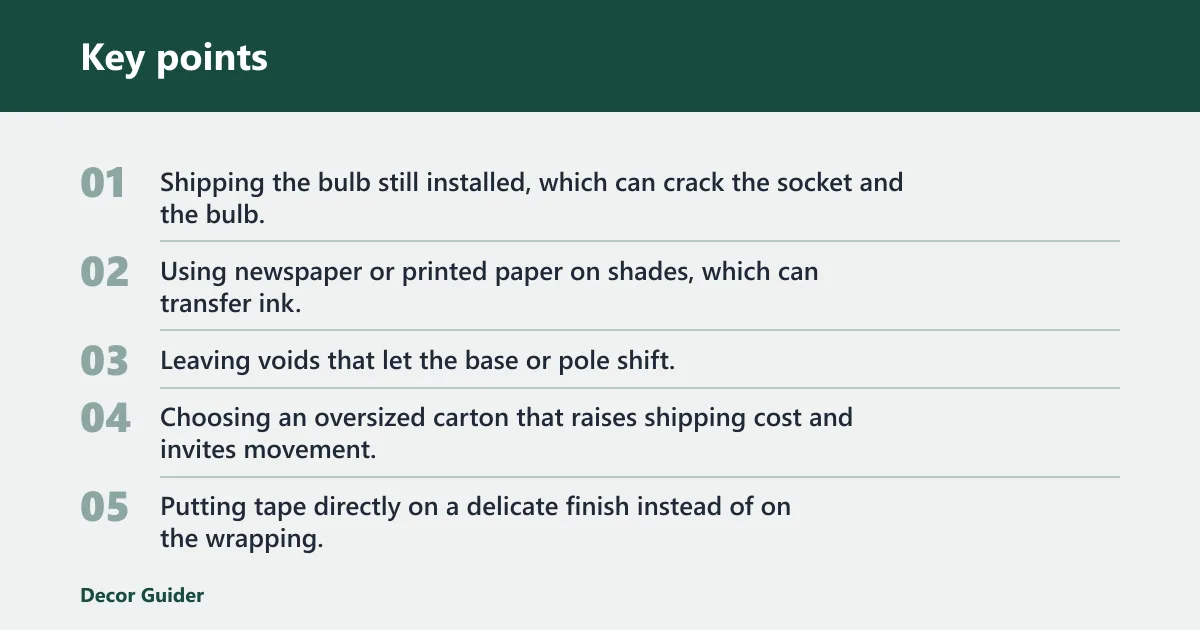
- Shipping the bulb still installed, which can crack the socket and the bulb.
- Using newspaper or printed paper on shades, which can transfer ink.
- Leaving voids that let the base or pole shift.
- Choosing an oversized carton that raises shipping cost and invites movement.
- Putting tape directly on a delicate finish instead of on the wrapping.
- Ignoring brittle glued joints or loose wiring before sealing the box.
Say your table lamp has a 14-inch drum shade and a ceramic base with a loose harp. Pack the shade in its own box, wrap the base separately, and use a divider box for the bulb. If the box still rattles after one layer of paper, add another 5 to 10 inches of void fill and check again.
Suppose a floor lamp has a tall pole and a glass accent near the socket. A short carton will force the pole to bend, so the better choice is a tall box with the heavier end down and padding around every joint. That keeps the load stable and avoids pressure on the glass trim.
Frequently asked questions
How do I pack light bulbs for shipping?
Remove the bulbs first, wrap each one individually in bubble wrap or air-filled padding, and place them in a divider box if possible. Pack the bulbs before the rest of the lamp parts so they cannot roll around. Label the box Fragile, especially if it contains several small bulbs.
Can I ship incandescent light bulbs?
No. Incandescent bulbs should not be shipped. Remove them from the lamp, set them aside, and use a replacement bulb at the destination instead of placing them in the shipping carton.
How should I pack lamp shades for shipping?
Wrap the shade in plain packing paper or tissue, never newspaper or other printed paper. Put it in its own appropriately sized box, and add paper, air-filled padding, towels, or socks only where needed to stop movement. If you nest shades, keep every surface fully separated by padding.
What supplies do I need to pack a lamp for shipping?
You need plain packing paper or tissue, bubble wrap or air-filled padding, strong boxes, a divider box for bulbs, packing tape, and Fragile and This End Up labels. Add a marker for room names and extra void fill so the lamp base, shade, and bulb stay fixed during transit.
Products related to this article
Sponsored / affiliate links. As an Amazon Associate I earn from qualifying purchases. I may earn additional commission from eligible campaigns.