Moving Box Cost: How Much Moving Boxes Really Cost
A studio or one-bedroom move usually spends roughly $75 to $250 on boxes and packing supplies, while larger homes often run higher depending on specialty boxes and padding. Buying too few boxes can trigger full-price store runs; buying too many leaves you with unused supplies and a larger move bill. This guide breaks down moving box prices by room, item type, specialty box, and total all-in packing cost.
This guide is part of our Shipping costs and USPS postage rates series.
Typical Cost Range
Most moving boxes cost between $1 and $8 each on average, but the final bill depends on size, wall strength, and whether you buy singles or bundles. Standard boxes sit at the low end. Wardrobe, dish pack, TV, and mirror boxes cost more because they use more material and protect fragile items.
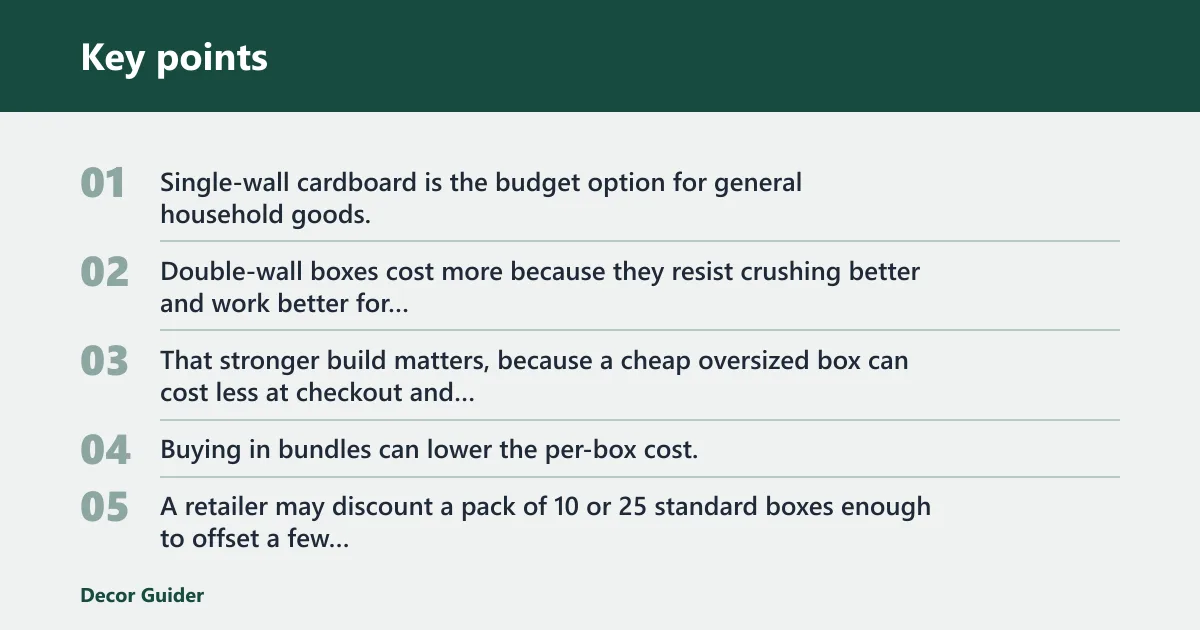
Single-wall cardboard is the budget option for general household goods. Double-wall boxes cost more because they resist crushing better and work better for books, kitchen items, and anything that stacks under weight. That stronger build matters, because a cheap oversized box can cost less at checkout and more in breakage or labor later.
Buying in bundles can lower the per-box cost. A retailer may discount a pack of 10 or 25 standard boxes enough to offset a few specialty items, especially for a one-bedroom or two-bedroom move. The catch: bundle savings only help if the box sizes match your actual room-by-room inventory.
How much are moving boxes by size?
Standard cardboard boxes are priced at $1-$4, with the smaller sizes usually cheapest and the largest standard sizes closer to the top of that range. Typical dimensions vary by seller, but the practical use of each size matters more than the sticker price. A too-large box can become overweight fast.
| Box size | Typical dimensions | Price per box | Best-use items |
|---|---|---|---|
| Small | about 16 x 12 x 12 in. | $1-$3 | Books, tools, canned goods, small appliances |
| Medium | about 18 x 18 x 16 in. | $1.60-$3.50 | Kitchenware, folded clothes, toys, pantry items |
| Large | about 18 x 18 x 24 in. | $2-$6 | Linens, pillows, lampshades, lightweight household goods |
| Extra-large | about 24 x 18 x 24 in. | $3-$8 | Bulky but light items such as bedding and seasonal decor |
Small boxes work best for dense items. Medium boxes handle mixed contents. Large and extra-large boxes look efficient, but they can slow you down if they end up too heavy to carry safely. That is why a bigger box is not always a better value.
Single-wall vs double-wall boxes
Single-wall boxes are the standard choice for general packing. Double-wall boxes use a second corrugated layer, which increases crush resistance and usually costs more. For books, dishes, and stacked items, the extra strength can prevent collapse and cut down on repacking mid-move.
Double-wall is worth the premium when the box will carry weight, travel a long distance, or sit under other boxes in the truck. Single-wall makes sense for lighter loads and low-stress items. A box price that looks lower can turn expensive if the contents fail in transit.
📊 Moving boxes cost between $1 and $8 each on average. Source: How Much Do Moving Boxes Cost? Prices by Size + Cost Calculator.
How much are specialty moving boxes?
Specialty boxes usually cost far more than standard cartons because they solve specific packing problems. Wardrobe and dish-pack boxes often cost $10 to $40 per box, while picture, mirror, and TV boxes are also priced well above standard cardboard. Use them for fragile or awkward items, not for ordinary household clutter.
Wardrobe boxes
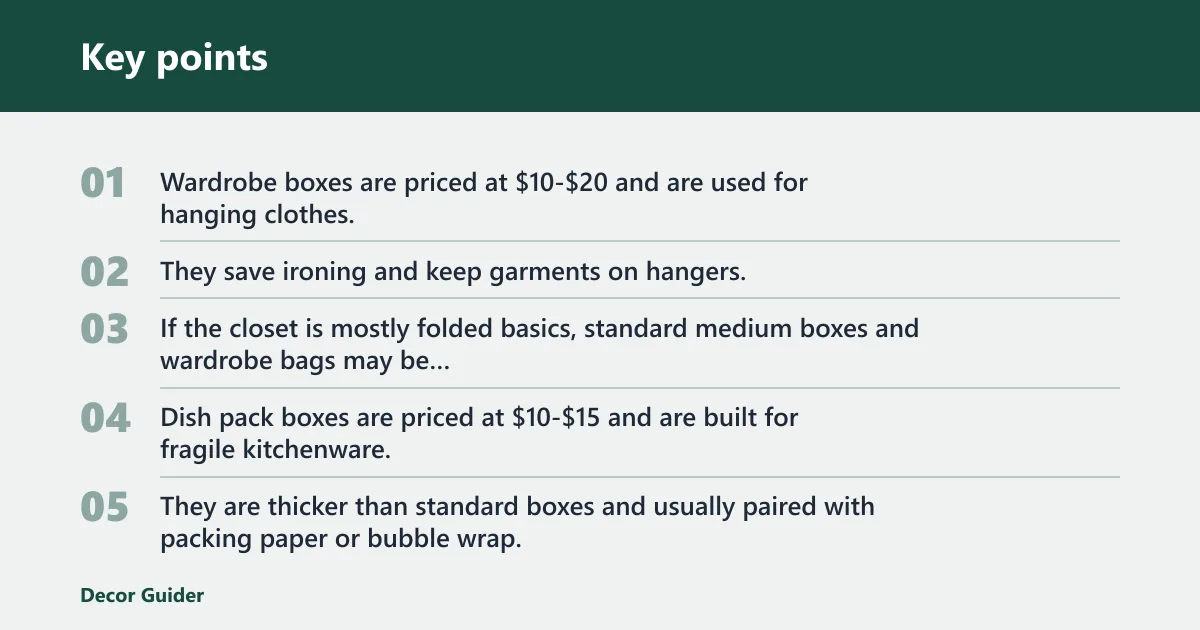
Wardrobe boxes are priced at $10-$20 and are used for hanging clothes. They save ironing and keep garments on hangers, which can be worth the premium for business clothing or dresses. If the closet is mostly folded basics, standard medium boxes and wardrobe bags may be cheaper alternatives.
Dish pack boxes
Dish pack boxes are priced at $10-$15 and are built for fragile kitchenware. They are thicker than standard boxes and usually paired with packing paper or bubble wrap. The extra cost makes sense for glassware, plates, and cookware that can chip under pressure or shift during transport.
Picture and mirror boxes
Picture boxes help protect framed art and prints, while mirror boxes are priced at $5-$8 and are made for wall mirrors and flat glass. Flat fragile items are a poor fit for generic cartons, because the corners crush easily. Specialty sizing lowers the chance of scratches and frame damage.
TV moving boxes are priced at $20-$40 and fit flat-screen sets better than general cartons. They are useful when the screen size and original packaging are unavailable. If the item is small and low value, a standard box plus ample cushioning may be enough.
How much extra should you budget for packing supplies?
Budget extra for tape, cushioning, and paper even if the box count looks complete. Packing tape runs $2 to $5 per roll, bubble wrap costs $10 to $20 per roll, and packing paper is a common added cost for dishes, glassware, and breakables. Those supplies can add $20 to $75+ to a typical move.
A simple supplies budget for a typical move
- Packing tape: 2 to 4 rolls, or about $4 to $20
- Bubble wrap: 1 to 2 rolls, or about $10 to $40
- Packing paper: 1 bundle or more, often $10 to $25+
- Labels and markers: small add-on cost, often overlooked
A common first-timer mistake is buying enough boxes and forgetting the closure and cushioning materials. Without tape, a box is not ready to move. Without paper or wrap, fragile items need extra space, which can trigger more box purchases than planned.
Room-by-room moving box cost worksheet
A room-by-room worksheet turns box shopping into a budget estimate instead of a guess. For a studio or apartment, the total often lands in the lower hundreds once standard boxes, one or two specialty boxes, and supplies are counted together. Larger homes climb quickly because kitchens and closets need more packing protection.
Studio move budget
A studio usually needs mostly small and medium boxes, plus a modest supply budget and limited specialty packing. If the home has a full kitchen or breakables, dish packs can push the total higher. The all-in cost is often driven more by supplies than by the cardboard itself.
| Item | Estimated count | Unit cost | Subtotal |
|---|---|---|---|
| Small/medium standard boxes | 15-20 | $1-$3.50 | $15-$70 |
| Large standard boxes | 2-4 | $2-$6 | $4-$24 |
| Specialty boxes | 1-3 | $5-$20 | $5-$60 |
| Packing supplies | 1 budget | — | $20-$50 |
| Estimated total | $44-$204 | ||
1-bedroom move budget
A one-bedroom move usually adds more kitchenware, books, and closet items, so both standard and specialty box counts rise. This is where bundle pricing starts to matter more, because a dozen standard boxes can cost less together than bought one by one. Fragile-item packing often becomes a separate line item.
| Item | Estimated count | Unit cost | Subtotal |
|---|---|---|---|
| Small/medium standard boxes | 25-35 | $1-$3.50 | $25-$122.50 |
| Large standard boxes | 5-8 | $2-$6 | $10-$48 |
| Specialty boxes | 3-6 | $5-$20 | $15-$120 |
| Packing supplies | 1 budget | — | $30-$75 |
| Estimated total | $80-$365.50 | ||
2-bedroom move budget
A two-bedroom move can require a wide spread of box types because it usually includes more shared household items, furniture accessories, and fragile kitchen goods. More rooms also mean more tape and cushioning. The main budget risk is buying too many large boxes and too little paper for breakables.
| Item | Estimated count | Unit cost | Subtotal |
|---|---|---|---|
| Small/medium standard boxes | 35-50 | $1-$3.50 | $35-$175 |
| Large standard boxes | 8-12 | $2-$6 | $16-$72 |
| Specialty boxes | 5-10 | $5-$20 | $25-$200 |
| Packing supplies | 1 budget | . | $40-$100 |
| Estimated total | $116-$547 | ||
Picture a one-bedroom with a stacked bookshelf, six dinner plates, and a glass coffee table top. If the move plan assumes only standard boxes, the kitchenware and glass can force last-minute specialty purchases. A better estimate would split general packing from fragile-item packing at the start.
How many moving boxes do you need?
A moving box calculator works best when it counts by room and item type instead of using a single house-wide guess. Start with the kitchen, closets, books, decor, and fragile items. Then adjust for how much of the home is actually being packed versus left behind or sold.
Room-by-room box count planning
- List each room you are packing.
- Estimate dense items, such as books and tools, separately from light items.
- Add specialty boxes only for hanging clothes, fragile kitchenware, art, mirrors, or TV screens.
- Include packing tape, paper, and bubble wrap in the budget.
- Round up slightly for gaps, but avoid a large surplus of extra-large boxes.
Overbuying usually happens with large boxes and specialty boxes. Underbuying often happens with tape and cushioning. The safest budget approach is to count the breakables first, then assign standard boxes to everything else. That keeps the cost tied to actual contents, not a rough guess.
Is it cheaper to rent or buy moving boxes?
Reusable plastic moving bins can be cheaper than cardboard for some short moves, but the answer depends on quantity, rental duration, and whether you value convenience over upfront cost. Bins usually cost more at checkout, yet they do not need tape and can cut assembly time. Buying cardboard is usually simpler for one-time moves.
Buy-vs-rent tradeoffs
Buying cardboard works well when you need low upfront cost, flexible sizing, and the ability to keep or recycle boxes afterward. Renting bins makes sense when you want stackable containers, faster setup, and less tape use. The best choice depends on whether the move is one trip or a longer process.
| Option | Upfront cost | Other costs | Best use case |
|---|---|---|---|
| Cardboard boxes | Lower | Tape, paper, bubble wrap | Most local moves |
| Reusable plastic bins | Higher | Usually no tape required | Short, organized moves |
If the move involves many books or fragile items, cardboard can still be the better fit because it is easy to sort by weight and purpose. If the goal is quick packing and repeated handling, bins can cut labor and waste. Either way, the room-by-room count still matters.
Where can I get free moving boxes?
Free boxes are often available from local stores, office break rooms, apartment recycling areas, community groups, and reused-box pickups from friends or neighbors. Free is not always best, though. Damaged cartons, weak bottoms, and food residue can create more packing work than the money saved.
Ask for clean, dry boxes with intact corners. Grocery and liquor boxes can be sturdy, but they vary by size and shape. Free sources work best for lightweight, non-fragile items. For dishes, mirrors, and art, purpose-built boxes still protect better than random leftovers.
Frequently asked questions
How much does a moving box cost?
Moving boxes cost between $1 and $8 each on average, with standard cardboard boxes usually at the lower end and specialty boxes priced higher. Wardrobe, dish pack, TV, and mirror boxes cost more because they are designed for specific items and usually use more material.
How much are moving boxes for a studio or apartment?
A studio or small apartment often costs about $75 to $250 all in when standard boxes, a few specialty boxes, tape, and cushioning are included. The total rises if the kitchen is fragile-heavy or if you buy specialty boxes for clothes, mirrors, or artwork.
What is the average price for moving boxes?
The average price for moving boxes is usually described as $1 to $8 each, depending on size and type. Standard cardboard boxes are priced at $1-$4, while heavy-duty or double-walled boxes are priced at $3-$8. Specialty boxes sit higher than both.
Are moving boxes cheaper in bundles or individually?
Bundles are often cheaper per box than single purchases, especially for standard cardboard sizes. The discount matters most when you need many small and medium boxes. Buying individually can still make sense for specialty boxes if you only need one or two.
Products related to this article
Sponsored / affiliate links. As an Amazon Associate I earn from qualifying purchases. I may earn additional commission from eligible campaigns.
 Large Picture Hanging Strips Heavy Duty, 32-Pairs(64 Strips) Sticky Picture Hangers for Walls No Damage Wall Picture Hangers Without Nails Refill Adhesive Poster Strips
 Furniture Sliders 4 Pack, 3.5 Inch Heavy Duty Reusable Furniture Moving Sliders for Hardwood Floors and Carpet, Beige Floor Protection Pads for Chairs, Sofas, Tables and Home Moving