Bed frame strap price: what to pay for each fix type
A $4 clip set handles mild mattress slip on a wood or metal frame. Spend about $20 on a cam-buckle strap when the bed shifts a lot, the mattress is heavy, or the frame has slats, gaps, or an adjustable base. Pick the wrong strap and you get nightly shifting, broken clips, and more spending on repeat fixes. I compare bed frame strap price by failure mode, frame type, mattress size, and slip severity.
What bed frame strap price tells you about the fix


Why price changes with strap type and hardware
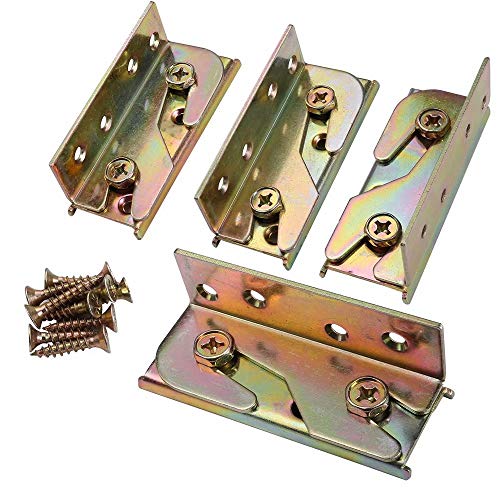
Bed frame straps are sold for different jobs. Elastic sheet straps, mattress straps, and cam buckle straps may all hold bedding in place, but each one fights a different kind of movement. Price climbs when the strap needs stronger webbing, firmer hardware, or better corner control.
A simple clip set is generally suited to light sheet creep. A mattress strap is generally meant to hold the mattress or topper more firmly in place.
The fast rule: sheet control versus mattress hold
If the sheet slides off first, start with elastic sheet straps. If the mattress itself drifts on the frame, move up to mattress straps or cam buckle straps. On slick, slatted, or open-gap frames, the cheapest clip kit often becomes a repeat buy rather than a fix.
When low price is fine and when it is a false economy
Low price is fine when the problem is mild and the bed is easy to reach. It becomes a false economy when clips keep popping off, when the mattress shifts every few nights, or when the frame type needs a firmer anchor than fabric clips can provide. A $4 to $8 kit can stop a nuisance. It usually cannot solve structural slip.
According to Bed Straps – Walmart.com — Some bed sheet straps are priced from $3.97. (source)
How much do bed frame straps cost?
Bed frame strap price usually falls into three bands: budget elastic clip sets, midrange adjustable strap kits, and higher-priced cam buckle setups. The cheapest sheet straps in search results can start at just a few dollars, while basic branded sheet-strap sets often sit in the roughly $8 to $15 range, and more specialized systems can cost more.
Budget range for elastic clip sets
Budget strap sets are the entry point for fitted-sheet control. Examples in search results include some bed sheet straps priced from $3.97, an adjustable bed sheet holder strap set priced at $9.99, and Sopito bed sheet straps listed at $7.99. These are the right buys for corner lift, light wrinkling, and minor mattress creep.
Midrange price for standard strap kits
Midrange straps are where many shoppers land. SONORO KATE bed sheet straps are listed at $12.99, Gorilla Grip bed sheet straps are listed at $13.99, and AGALI adjustable elastic bed straps are priced at $14.99. Armscye 6 Pack Adjustable 2 Way Bed Sheet Straps were marked was $18.99. This tier usually buys better clips, more adjustment, and steadier tension.
Higher price for cam buckle straps and wider webbing
Cam buckle strap setups cost more because the hardware holds tension better and the webbing is usually wider. A cam-buckle strap example in the article is priced at $8.97, while a locking mattress strap example in the article is priced at $19.59. For stubborn slip, the extra cost often pays for itself in fewer resets.

Price by use case: which strap fits which bed
The best bed frame strap price is the one that matches the failure mode. A queen on a tight wood platform does not need the same hardware as a king on a slatted metal frame. Use the table to match bed type, slip severity, strap style, and the kind of failure you are trying to stop.
| Bed type | Slip severity | Recommended strap style | Expected price band | Common failure mode |
|---|---|---|---|---|
| Wood platform, Twin to Queen | Mild sheet creep | Elastic sheet straps with metal clips | $4 to $10 | Clips pop off fitted sheet corners |
| Wood platform, King or California King | Moderate mattress drift | Cam buckle strap with soft-edge contact | $15 to $25 | Mattress slides on smooth rails |
| Metal frame with center rail | Moderate to heavy slip | Cam buckle strap plus corner grippers | $12 to $25 | Frame flex and rail movement |
| Upholstered frame | Mild to moderate slip | Wide strap, soft-edge contact, corner grippers | $10 to $20 | Abrasion on fabric or foam edge |
| Slatted frame | Heavy slip | Cam buckle strap, 1 to 1.5 inch width | $15 to $25 | Mattress creeps between slats |
| Adjustable base | Light mattress movement only | Low-tension strap or sheet strap, never tight | $4 to $15 | Over-tension and binding at movement points |
| Box spring setup | Moderate slip | Mattress strap with corner grippers | $9 to $20 | Box spring drift under load |
Queen, king, and California king examples
A queen bed usually does well with one strap pair for the mattress and one set of corner grippers if the problem is sheet creep. A king or California king more often needs wider webbing or an added anchor point because there is more surface area for the mattress to travel. Bigger beds magnify small frame issues.
Are bed sheet straps the same as bed frame straps?
No. Bed sheet straps are usually elastic corner devices with metal clips that hold fitted sheets in place. Bed frame straps are broader and can be built to hold the mattress or topper against the frame. Mattress straps and cam buckle straps are stronger tools, and they are chosen for different failure modes.
What elastic sheet straps actually do
Elastic sheet straps are usually sold in 4-pack or 6-pack formats. They clip to fitted-sheet corners and pull the fabric tight so corners do not ride up. That makes them a budget fix for restless sleepers, thin sheets, and corners that keep slipping off a mattress edge.
What mattress straps are built to do
Mattress straps are meant to restrain the mattress or topper itself. They often work better than sheet straps on slick platform beds, metal frames, and box spring setups where the whole sleep surface creeps. A mattress topper strap example in the article is priced at $12.99, which sits between basic clips and heavier hold-down hardware.
When corner grippers help more than a stronger strap
Corner grippers can solve a sheet problem without forcing the user into tighter mattress restraint. They are useful in a 4-corner setup when the fitted sheet, not the mattress, is the thing moving. On upholstered frames, they can also reduce mattress creep without pressing hard against fabric edges.
What strap length do you need for each bed frame?
Choose strap length by wrap path, not by guesswork. Shorter straps work for sheet corners and compact frames; longer straps fit platform beds, wider mattresses, and deeper anchor paths. For wood platform beds, the guide lists 72 to 96 inches for common use, and 1 to 1.5 inches for strap width.
48 inches and other short-strap use cases
Short straps around 48 inches make sense when the anchor points are close together or when the goal is light sheet control on a compact frame. They are common for simple clip-style fixes and small beds where the strap does not need to pass far under the base.
72 to 96 inches for common platform and metal frames
For wood platform beds, 72 to 96 inches is the practical range listed in the guide. That length usually reaches inside rail corners or crossbar points without leaving excess slack. It also suits many metal frames where the anchor point sits low and the wrap path stays direct.
96 to 120 inches for larger beds and deeper wraps
Use 96 to 120 inches when the bed is larger, the anchor is farther from the mattress edge, or the strap must travel around a center rail or low-profile base rail. This range also fits king and California king setups better when the frame has a wider span or a deeper wrap path.
Cam buckle straps or elastic sheet straps?
Cam buckle straps are the safer default for most mattresses because they tighten by hand and are easier to control than aggressive hardware. Elastic sheet straps still make sense for light sheet control, but they are a weaker answer when the mattress itself shifts or the frame has hard slip points.
Why cam buckle straps are the safer default
Cam buckle straps give controlled tension. That matters on slippery mattresses, slatted frames, and box spring setups where a small amount of extra hold can stop nightly drift. They also reduce the risk of over-tightening compared with ratchet straps, which are too forceful for most home mattress support jobs.
Where elastic clip sets still make sense
Elastic clip sets are still the best low-cost buy when the only problem is a fitted sheet that will not stay in place. They are quick to install, easy to replace, and fine for a cheap first try. For a mild problem, there is no need to buy heavier hardware.
Why ratchet straps are a poor home choice for most sleepers
Ratchet straps pull hard and can create too much tension for a mattress, especially on adjustable bases or upholstered frames. They can also create point pressure that damages edges or makes the mattress sit oddly. A hand-tightened cam buckle strap is the better default for most home setups.
Will bed frame straps damage an upholstered bed?
They can, if the strap is too narrow, too tight, or routed against fabric without protection. Upholstered beds need soft-edge contact, wider webbing, and careful anchor placement. A strap that works on metal can scuff fabric or compress foam trim on a padded frame.
How width affects edge contact and wear
Width matters because a 1 inch strap concentrates load more than a 1 to 1.5 inch strap. Wider webbing spreads contact and reduces abrasion risk on upholstery. That is why wider straps are usually the better pick when the strap will touch fabric-covered rails or decorative edges.
How to avoid abrasion on fabric and foam
- Route the strap along inside rail corners or low-profile base rails when possible.
- Keep the strap off decorative seams, piping, and soft foam corners.
- Use corner grippers before tightening the main strap.
- Pull only until the mattress stops creeping, then stop.
How much tension is too much on an adjustable base
Too much tension is any pull that binds the moving sections or changes the base’s motion. Adjustable bases need room to articulate. For that reason, low-tension strap choices are safer than hard-lock setups. A strap should hold the mattress in place, not fight the frame’s movement.
How many straps do you need for a queen bed?
Most queen beds need one strap pair for basic mattress hold, then a 4-corner setup if the fitted sheet keeps creeping or the mattress drifts at both head and foot. The number changes with anchor points, frame material, and whether corner grippers are doing part of the work.
One strap pair versus a 4-corner setup
One strap pair is usually enough when the mattress shifts in one direction and the frame has solid anchor points. A 4-corner setup helps when the problem is sheet pull at every corner. It is especially useful on queen beds with light bedding or smooth covers.
When to add corner grippers
Add corner grippers when the sheet is the weak link. They pair well with straps because they hold the corners while the strap manages the broader slide. That combination often works better than buying a stronger strap alone, especially on queen beds with moderate motion.
How anchor points change the count
Inside rail corners, center rail points, side rail holes, crossbar points, and low-profile base rails all change how many straps are practical. The more direct the anchor path, the fewer straps are needed. When the anchor is awkward or far away, extra strap points may be required to keep the load even.
Frequently asked questions
What is the cheapest strap for keeping a mattress from sliding?
The cheapest fix is usually not the best mattress fix. A low-cost elastic clip set can help a little, but mattress movement often needs more structure. If the mattress itself slides, a cam buckle strap is usually the smarter budget buy because it prevents repeat slip better than the lowest-priced clip kit.
How many straps do I need for a queen bed frame?
A queen bed often needs one strap pair for light mattress hold, or a 4-corner setup when sheet creep is the main issue. If the mattress shifts on a slatted or metal frame, one stronger cam-buckle strap may work better than several weak clips. The anchor points decide the final count.
Should I use cam buckle straps or elastic sheet straps?
Use elastic sheet straps for fitted-sheet lift and light corner movement. Use cam buckle straps when the mattress itself slides, the frame is low-friction, or the bed has slats or gaps. For most home mattress support, cam buckle straps are the safer default because tension is easier to control.
Can I use ratchet straps for mattress support?
Usually no. Ratchet straps can create excessive tension and point pressure, which is a bad match for mattresses, upholstered edges, and adjustable bases. A hand-tightened cam buckle strap is a better choice because it holds firmly without the aggressive pull that can damage the sleep setup.
Products related to this article
Sponsored / affiliate links. As an Amazon Associate I earn from qualifying purchases. I may earn additional commission from eligible campaigns.