Bed Frame Buying Guide: How to Choose the Right Frame for Your Mattress, Room, and Lifestyle
Why the Right Bed Frame Matters
You spend roughly a third of your life in bed, so the frame underneath that mattress deserves more thought than a quick scroll-and-click. A good frame supports your mattress properly, keeps it from sagging, and can add years to its life. A bad one squeaks, wobbles, or collapses under pressure.
I’ve tested more bed frames than I care to count, and the differences between a $100 frame and a $500 frame often have nothing to do with looks. They show up in the thickness of the steel, the spacing of the slats, and whether the center support actually touches the floor. This guide walks you through every decision point so you can filter by your situation—renter, homeowner, senior, eco-conscious—instead of just picking the prettiest option.

NEW JETO
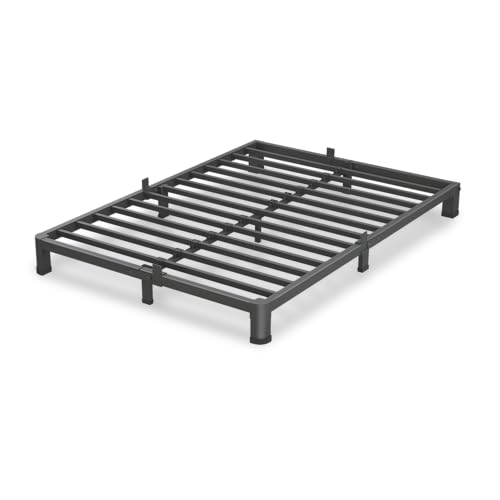
NEW JETO Metal Bed Frame,Queen Size Bed…
- FASHIONABLE AND BEAUTIFUL:This bed frame adopts wrought iron frame,featuring a sleek and minimalistic design.The edges and corners…
- STRONG STABILITY: This metal bed frame is supported by upgraded metal rods and metal legs, which stand the test of time. Our bed f…
- STURDY TUBE: The sturdy steel slat support with center support legs makes the metal bed more stable without any annoying sliding o…
As an Amazon Associate I earn from qualifying purchases.
You’ll leave knowing exactly what to check for in terms of size, material, weight capacity, assembly, and noise. No fluff, just the stuff that matters.
If you’re looking for a solid starting point that balances price and practicality, the NEW JETO Metal Bed Frame is a popular choice. It’s a 14-inch queen frame with a steel slat system and extra storage space underneath, which we’ll talk about more in the storage section.
Bed Frame Types Explained
Before you compare prices or colors, you need to know the main types of frames. Each one changes how your mattress feels, how easy the bed is to get in and out of, and how much storage you get.
Platform Beds
A platform bed has a solid, flat surface for your mattress—either a wooden slat system or a solid deck. No box spring needed. This is the most common type in modern homes because it’s low-profile, simple, and works with almost any mattress.
Slat spacing matters here. If the gaps between slats are wider than 3 inches, a memory foam mattress can sag into the gaps over time. Look for slats that are 2.5 to 3 inches apart, or use a bunkie board to bridge the gaps.
Platform beds sit lower to the ground than traditional frames, usually 12 to 18 inches tall. That makes them great for kids, seniors, or anyone who doesn’t want to climb into bed.
Panel Beds
Panel beds are the classic design with a headboard, footboard, and side rails. They typically require a box spring or a foundation, because the rails are just a border—there’s no center support built in.
If you buy a panel bed, check whether it includes a center support rail. Some cheap ones skip this, and that’s a recipe for a sagging mattress in the middle. A proper panel bed should have a center support leg that touches the floor.
Panel beds look more traditional and often come in wood finishes like oak, walnut, or cherry. They’re heavier and harder to move, but they anchor a room visually.
Adjustable Bases
Adjustable bases let you raise your head, feet, or both. They’re common for people with acid reflux, sleep apnea, or back pain. You can also get them with massage features, USB ports, and under-bed lighting.
These bases are essentially motorized platforms. They require a mattress that can flex—memory foam, latex, or a hybrid. Don’t put a traditional innerspring mattress on an adjustable base unless it’s specifically designed for that.
Adjustable bases are the most expensive option in this list, often costing $500 to $2,000 or more. They also need a power outlet nearby, so plan your room layout around that.
Storage Beds
Storage beds have drawers or a lift-up frame that reveals space underneath. They’re a lifesaver in small apartments or bedrooms with no closet. You can store off-season clothes, extra bedding, or shoes.
Drawer-based storage beds are easier to access than the lift-up kind, but they need clearance in front of the bed to open. Lift-up beds use gas pistons to raise the whole mattress—great for storing large items like suitcases, but you have to clear the bed surface first.
One thing to watch: a storage bed is heavier and harder to move than a simple platform. If you move often, that’s a real downside. The NEW JETO Metal Bed Frame solves this differently—it’s a raised platform with open space underneath, so you get storage without drawers or pistons. Just slide bins under the bed.
Upholstered, Wood, and Metal Frames
These terms describe the material of the frame, not the type. You can have a platform bed in metal or an upholstered panel bed.
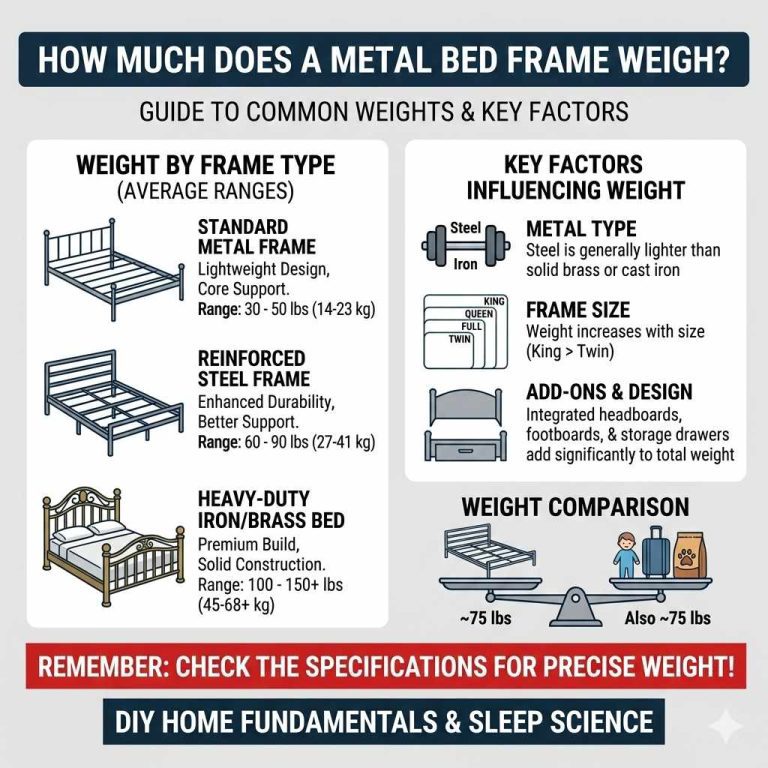
Metal frames are usually the most affordable and the strongest per pound. Steel frames can support 1,000 to 3,000 pounds, depending on the gauge of the steel. They’re also lighter than wood, which makes them easier to move. The downside is they can squeak if not assembled tightly.
Wood frames look warm and classic, but quality varies wildly. Solid hardwood like oak or maple is durable but heavy. Engineered wood (MDF or particleboard) is cheaper but can warp or chip. Check the joints—dowels and glue are weaker than metal brackets and bolts.
Upholstered frames have a fabric or leather cover over a wood or metal base. They add softness and style, but the fabric can stain and wear. Look for removable, washable covers if you have pets or kids.
Bed Frame Sizes and Mattress Compatibility
Bed frames come in standard sizes: twin, twin XL, full, queen, king, and California king. Always measure your mattress before buying. A queen mattress is 60 inches wide and 80 inches long, but some frames add a few inches for the headboard or side rails.
Most frames are designed for one mattress size, but some have adjustable width settings. For example, a frame labeled “full/queen” can fit both by moving the side rails. That’s handy if you plan to upgrade your mattress later.
Slat Spacing and Center Support
Slats are the horizontal bars that hold your mattress. Their spacing affects mattress support and durability.
For foam mattresses, slats should be no more than 3 inches apart. For innerspring mattresses, you can go up to 5 inches. If the spacing is too wide, the mattress will sag between the slats, which voids the warranty on many foam mattresses.
Center support is a vertical beam that runs down the middle of the frame, with legs that touch the floor. Without it, a queen or king mattress will dip in the middle over time. Always check that a frame has at least one center support leg for queen sizes, and two for king sizes.
Box Spring vs. No Box Spring
A box spring is a wooden frame with springs inside that sits between the mattress and the bed frame. It used to be necessary for all innerspring mattresses, but modern mattresses are thicker and often don’t need one.
Platform beds and adjustable bases don’t require a box spring. Panel beds and traditional metal frames do, unless they have a built-in slat system.
If you put a memory foam mattress on a box spring, it can trap heat and reduce airflow. You’re better off with a platform or slatted frame. If you’re not sure, check your mattress warranty—many manufacturers require a specific type of support.
Key Features and Durability Factors
Once you narrow down the type, you need to look at the details that separate a good frame from a frustrating one.
Weight Capacity and Materials
Weight capacity is the maximum load a frame can support, including the mattress, bedding, and people. A standard queen frame should handle at least 500 pounds. Heavy-duty frames go up to 1,000 or more.
Steel frames are generally stronger than wood at the same thickness. Look for steel that’s at least 1.2mm thick—anything thinner can bend. The NEW JETO frame uses reinforced metal rods and legs, which is a good sign for durability.

Wood frames should have solid hardwood legs, not particleboard. Check the leg attachment—metal brackets with screws are stronger than wood screws that go straight into the frame.
Noise Prevention and Stability
Squeaks and creaks come from loose joints, metal-on-metal contact, or wood rubbing on wood. The best way to prevent noise is to buy a frame with a welded or bolted construction, not one that snaps together with plastic clips.
If your frame does squeak, you can fix it. Tighten all bolts, add felt pads between the slats and the frame, and apply a little WD-40 to metal joints. For wood frames, rub a candle or soap on the joints to lubricate them.
Stability also depends on the floor. On carpet, a frame with legs can wobble if the legs aren’t adjustable. Look for frames with adjustable leveling feet—they let you compensate for uneven floors.
Assembly and Portability
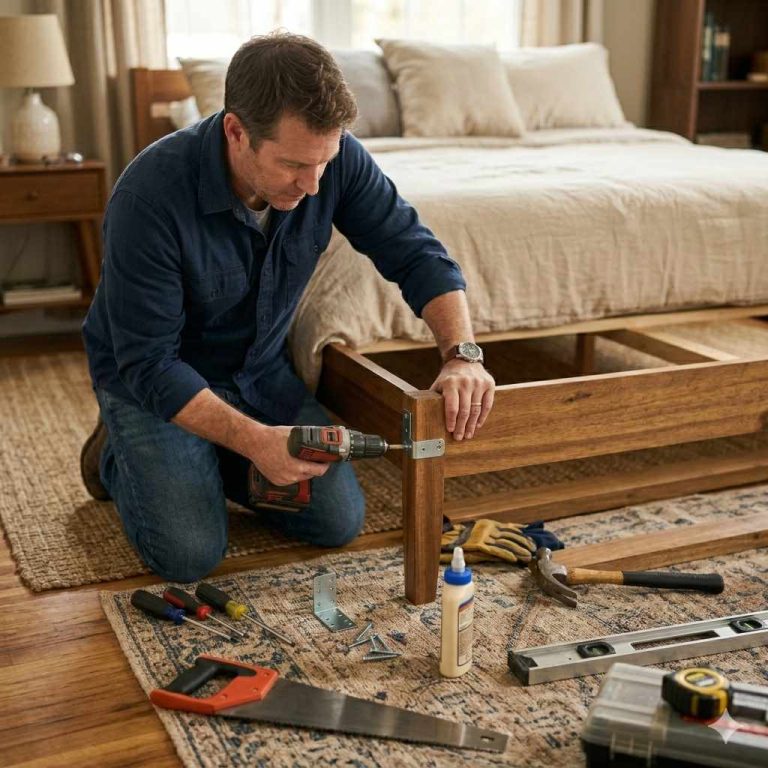
Some frames assemble in 10 minutes with no tools. Others take an afternoon and a socket wrench. If you’re not handy, look for tool-free assembly or frames that come pre-assembled.
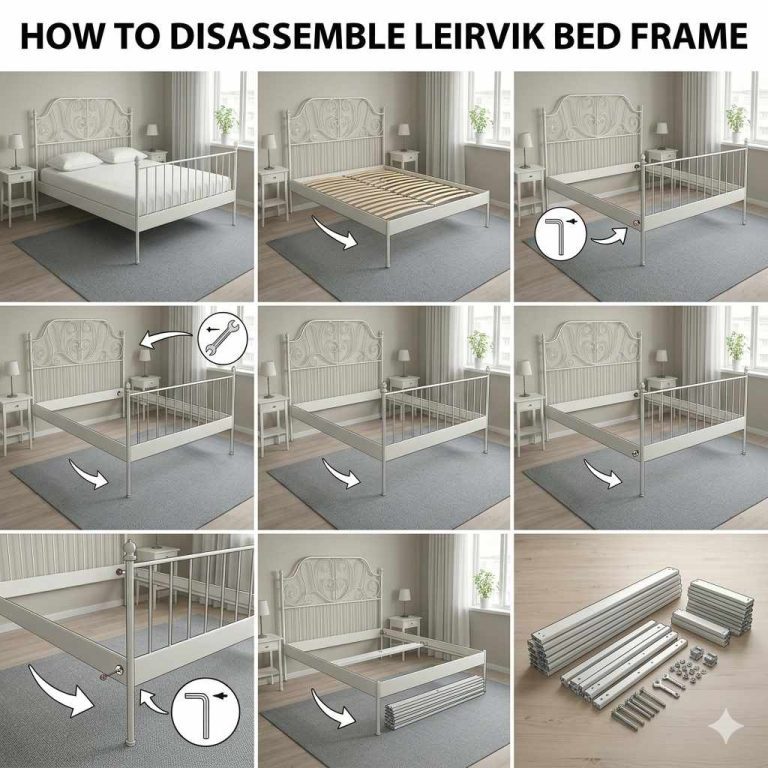
Portability matters if you move often. Metal frames are lighter and can be disassembled into a few pieces. Wood frames are heavier and bulkier. Storage beds with drawers are the hardest to move—you’ll need to remove the drawers and possibly the headboard.
Check the return policy and warranty before you buy. A good frame should have at least a 1-year warranty. Many brands offer 5 or 10 years on the frame structure. If a frame has no warranty, that’s a red flag.
Matching the Frame to Your Room and Lifestyle
Your frame should fit your room’s dimensions, your aesthetic, and your daily habits. A frame that looks great in a showroom might be a pain in a small bedroom.
Room Layout and Aesthetic
Measure your room before you buy. A queen bed frame is usually 62 to 65 inches wide and 82 to 85 inches long. Add 24 inches of clearance on each side for walking, and 36 inches at the foot if you have a dresser or bench.
Think about height. A low platform bed (12-16 inches) makes a room feel larger because it keeps the sightline low. A tall frame (18-24 inches) feels more traditional and gives you under-bed storage.
Match the frame material to your existing furniture. Metal frames work well in industrial or modern rooms. Wood frames suit farmhouse or traditional styles. Upholstered frames add softness to any room but show dust more.
Accessibility and Bed Height
Bed height is a big deal for seniors, people with mobility issues, and anyone who has had knee surgery. The ideal height is when your feet touch the floor while sitting on the edge of the bed, with your knees at a 90-degree angle.
For most adults, that’s a bed height of 19 to 23 inches from the floor to the top of the mattress. If you have a thick mattress (12-14 inches), you need a lower frame to compensate. If your mattress is thin, you might need a taller frame.
Pets also factor in. Older dogs and cats struggle to jump onto tall beds. A low platform frame is easier for them. You can also add a pet ramp or steps.
Budget, Sustainability, and Where to Buy
Bed frames range from $50 to over $2,000. The sweet spot for a decent metal frame is $100 to $300. Wood frames typically start around $200 for a queen, and upholstered frames start around $300.
Set a budget, but don’t just buy the cheapest option. A $70 frame might last two years; a $200 frame can last ten. Consider the cost per year of use—that’s the real value.
If sustainability matters to you, look for frames made from bamboo, reclaimed wood, or recycled steel. Bamboo grows fast and is highly renewable. Reclaimed wood gives a unique look and keeps old lumber out of landfills. Recycled steel frames are sturdy and reduce mining demand.
Where you buy matters. Online retailers like Amazon have the widest selection and often free shipping. Local furniture stores let you see the frame in person, but they usually cost more. Check the return policy—some online sellers charge a restocking fee for returns, which can be 15-20% of the price.
Before you click buy, read the reviews for mentions of noise, assembly difficulty, and durability. One or two bad reviews are normal; a pattern of complaints about the same issue is a warning.
Frequently Asked Questions
Do I need a box spring with a platform bed?
No. Platform beds have a solid slat system that replaces the need for a box spring. You place your mattress directly on the slats. If your platform bed has slats spaced more than 3 inches apart, add a bunkie board or a piece of plywood to support foam mattresses.
What is the best bed frame material for heavy people?
Steel is your best bet. Look for a frame with a high weight capacity, at least 500 pounds for a queen. Avoid frames with thin metal tubes (less than 1.2mm thick) or particleboard legs. The NEW JETO metal frame uses heavy-duty reinforced steel rods and center support legs, which is a solid choice for heavier sleepers.
How do I keep my bed frame from squeaking?
Tighten all bolts and screws first—loose joints cause most squeaks. Add felt pads between the slats and the frame rail. For metal-on-metal contact, apply a small amount of WD-40 or silicone spray. For wood joints, rub a candle or bar soap on the contact points. If it still squeaks, check for cracked slats and replace them.
Can I use a memory foam mattress on any bed frame?
Memory foam needs a solid, flat surface with good airflow. Platform beds with slats spaced 2.5 to 3 inches apart work well. Avoid box springs with coils—they can create pressure points. Also avoid frames with solid wood decks that don’t have holes, because foam can trap heat. The best option is a slatted platform or a bunkie board.
How much should I spend on a bed frame?
For a queen or king, plan to spend $150 to $400 for a quality frame that will last. Budget frames under $100 often have thin metal or weak joints. Luxury frames above $500 add style and features, but you’re paying for aesthetics, not just support. Check the warranty—a 5-year warranty is a good sign of durability.
The Bottom Line
Choosing a bed frame comes down to matching the frame to your mattress, your room, and your life. Here’s what to remember:
- Measure your mattress and room first—size compatibility is non-negotiable.
- Platform beds are the most versatile and work with most mattresses without a box spring.
- Check slat spacing (under 3 inches for foam) and center support for queen and king sizes.
- Steel frames offer the best strength-to-weight ratio; wood adds warmth but check for solid hardwood, not particleboard.
- Consider bed height for accessibility—seniors, pets, and your own comfort matter.
- Look for a warranty of at least 1 year, and read reviews for noise and assembly complaints.
- If you move often, choose a lighter metal frame that’s easy to disassemble.
For a balance of durability, storage, and easy assembly, the NEW JETO Metal Bed Frame checks those boxes. It’s a 14-inch queen platform with a steel slat system, center support legs, and open under-bed space for bins. You can check the current price on Amazon and see if it fits your needs.
If you run into issues like a mattress that doesn’t fit or a frame that’s noisy, we’ve got guides on fixing mattress fit and repairing bed frames to help you out.
Products related to this article
Sponsored / affiliate links. As an Amazon Associate I earn from qualifying purchases. I may earn additional commission from eligible campaigns.