Best Ratchet Straps for Securing a Mattress (2026): We Compared
Best ratchet straps for securing a mattress are 1-inch or 2-inch polyester straps with soft loops or edge protectors, used in pairs at the head and foot, tightened just enough to stop shift without compressing the foam. Over-tightening can crease the mattress, crush the edges, and let wind work the load loose. This guide covers strap type, placement, tension, and a short buying checklist for trucks, trailers, and moving vans.
Quick comparison
| Product | Badge | Best for | Price | ||
|---|---|---|---|---|---|
 |
KJE Ratchet Straps Heavy Duty(4 Pack), 2" x 15′ RatchetKJE | Our pick | 2" x 15′ · 10,000lb · J-hook | $59.99
Price as of 23 Oct 2026
|
View |
 |
Rhino USA Retractable Ratchet Straps (4-Pack) – 2in x 10ft,Rhino USA | Upgrade pick | 2" x 10′ · 3,033lb · Retractable | $129.90
Price as of 23 Oct 2026
|
View |
 |
US Cargo Control Flat Hook Ratchet Straps 2 Inch x 18 FootUS Cargo Control | Also great | 2" x 18′ · 10,000lb · Flat hook | $41.22
Price as of 23 Oct 2026
|
View |
The right strap for a mattress depends on how the mattress sits in the vehicle and how far the anchors are from the load. Flat transport usually needs less compression and more padding. On-edge or folded setups need tighter control over slip, corner wear, and loose webbing.
How we chose
We compared each option on mattress-specific fit, not generic cargo use. The main filters were strap width and length, hook compatibility with truck beds and trailer tie points, published WLL or breaking strength, and features that reduce scuffing or excess tail.
Polyester webbing mattered because it stretches very little, so the mattress stays where you set it after the first pull. We also favored ratchets with better grip and handle control, since easy tightening can keep you from crushing a soft mattress edge.
For mattress transport, WLL is the number to use first. Breaking strength is the failure figure, but it is not the safe working number for choosing a tie-down.
What size ratchet straps do you need to secure a mattress?
For most mattress loads, 1-inch straps suit lighter, smaller setups, while 2-inch straps give more surface area and better control on larger mattresses or longer anchor spans. Choose length based on the vehicle bed and anchor spacing, not just the mattress size.
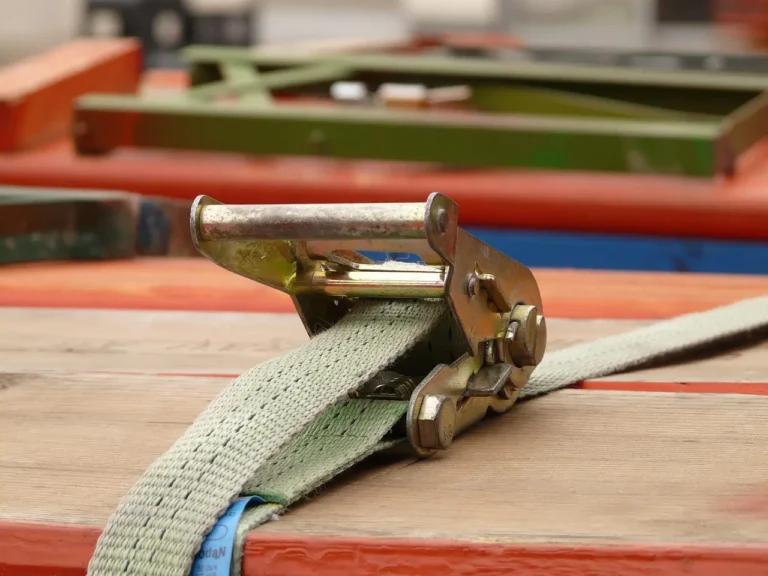
Polyester webbing is the standard material here because it has minimum stretch and resists UV damage, mold and mildew, and abrasion better than stretchier webbing. That low stretch matters when you want the strap to stay snug without re-tightening after every bump.
1-inch versus 2-inch straps
Use 1-inch straps when the mattress is light, the anchors sit close to the load, and you want less bulk over the corners. Use 2-inch straps when the mattress is large, the route is longer, or the strap must span wider anchor spacing without digging into the fabric.
A 2-inch strap also spreads pressure better across soft-sided mattresses, which helps reduce edge compression. A 1-inch strap can still work, but it needs padding or a protector more often.
Length based on mattress size and anchor spacing
Pick length by the path the strap must travel around or over the mattress, plus the distance to the anchor points. A short truck bed with low anchor spacing can work with a shorter strap; a trailer with side rails or a longer van floor usually needs more length for a clean route and a safe tail.
Published examples show the range you will see in retail listings: 2 inches by 10 feet, 2 inches by 12 feet, 2 inches by 15 feet, 2 inches by 18 feet, and 2 inches by 27 feet. Those lengths matter because a mattress should not be forced into a strap that is too short to route without sharp angles.
Minimum count by mattress position
Use at least two straps for a flat mattress, with one near the head end and one near the foot end. If the mattress is on edge or folded, add more control points because the load can billow, bow, or walk sideways more easily.
A common first-timer mistake is using one strap across the middle of a queen mattress in a pickup bed. That can leave the ends free to lift in wind, and the center strap can compress the middle while the corners shift.
Are ratchet straps safe for securing a mattress in a truck bed?
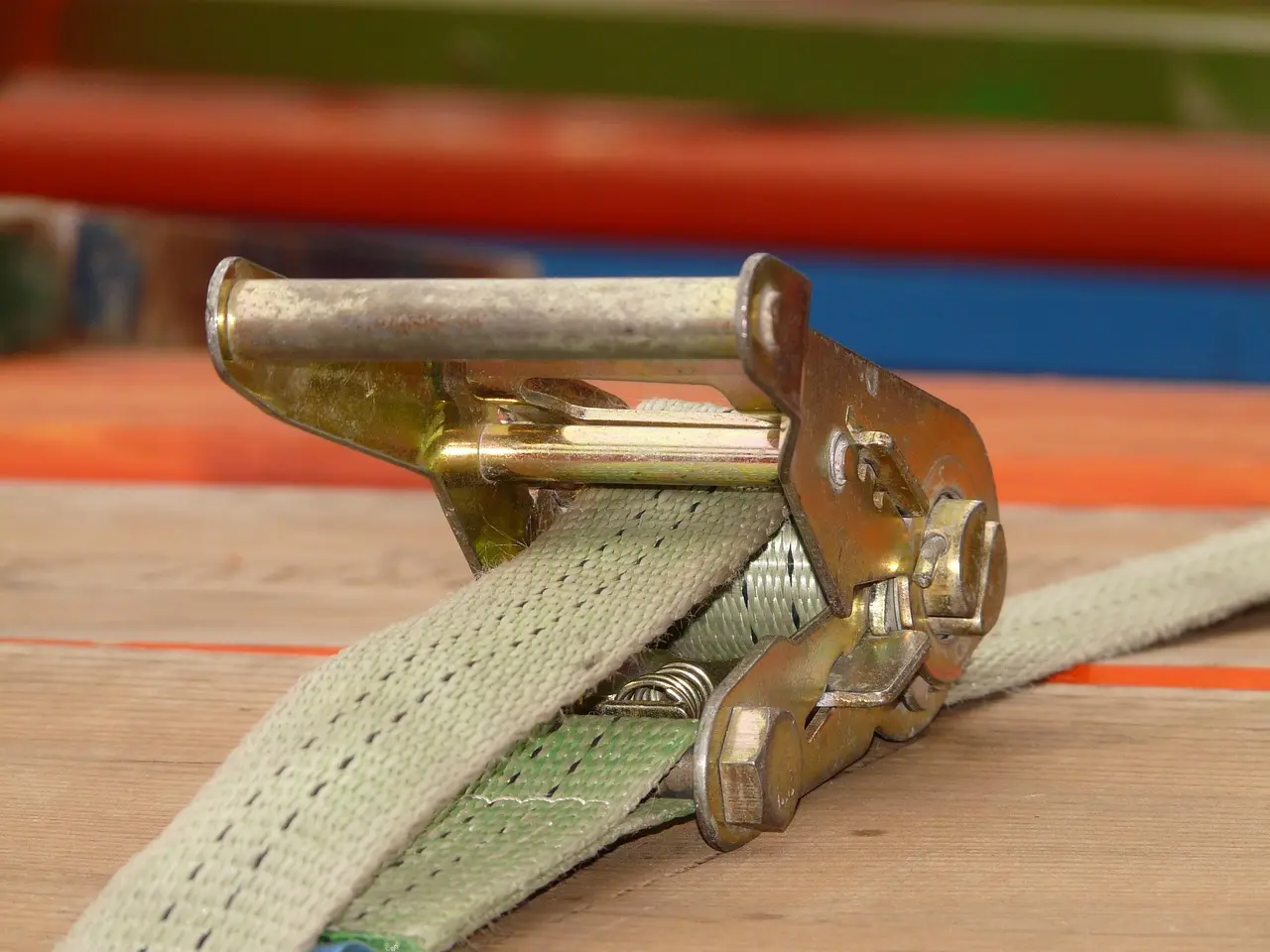
Yes, but only when the mattress is positioned in a way that the model can tolerate and the straps are padded, evenly tensioned, and anchored to solid points. Many mattresses should stay flat, especially foam, hybrid, and innerspring models that can deform or edge-damage if stood upright or folded.
Ratchet straps are safest when they control motion, not when they squeeze the mattress into shape. If a mattress already wants to fold, bow, or lean, the strap should only stabilize it; it should not be used to force an unsafe position.
Flat transport versus on-edge transport
Flat transport is the lowest-risk option for many mattresses. It reduces edge stress and keeps the load from leaning into a side rail where wind can catch it.
On-edge transport can work for some mattresses, but it raises the risk of edge slippage and fabric wear. A mattress on edge needs more careful anchor placement and usually more padding at contact points.
Common failure modes
The most common mattress failures are soft-sided compression, corner crushing, webbing abrasion, and wind billowing. Billowing matters because a loose mattress cover can move under airflow even when the strap still looks tight.
Another problem is strap creep caused by poor routing. If the webbing crosses a sharp corner without a sleeve or protector, it can dig into the mattress cover and weaken the hold.
When to use blankets or padding with straps
Use moving blankets, edge guards, or a protective sleeve whenever the strap touches a sewn seam, corner, or printed fabric panel. These do not replace the strap; they keep the webbing from acting like a cutting edge.
If the mattress has a plush pillow-top or a delicate knit cover, padding becomes more important. The strap should sit over the protection layer, not directly on the mattress edge.
Mattress tie-down decision table
| Mattress position | Recommended strap width | Minimum strap count | Ideal anchor points | Common failure risks |
|---|---|---|---|---|
| Flat | 1 inch to 2 inch; choose 2 inch for larger sizes | 2 | Front and rear tie points, or opposite side rails that keep the mattress from sliding lengthwise | Center compression, corner scuffing, tail flapping in wind |
| On edge | 2 inch | 3 | Low anchors that keep the mattress from leaning, with at least one strap high enough to stop tip-over | Edge slip, bowing, seam wear, sideways shift |
| Folded | 2 inch with padding | 3 | Anchors that hold both halves together and keep the fold from opening under vibration | Creasing, hinge stress, seam failure, strap over-tightening |
This table is a starting point, not a guarantee that every mattress can be transported in every position. If the manufacturer says the mattress should stay flat, follow that instruction first and use the straps only to stabilize the load.
Best mattress strap picks
KJE Ratchet Straps: best for short truck beds
- 2-inch webbing suits larger mattress bundles
- High-strength polyester webbing resists stretching
- Includes storage bag for easier handling
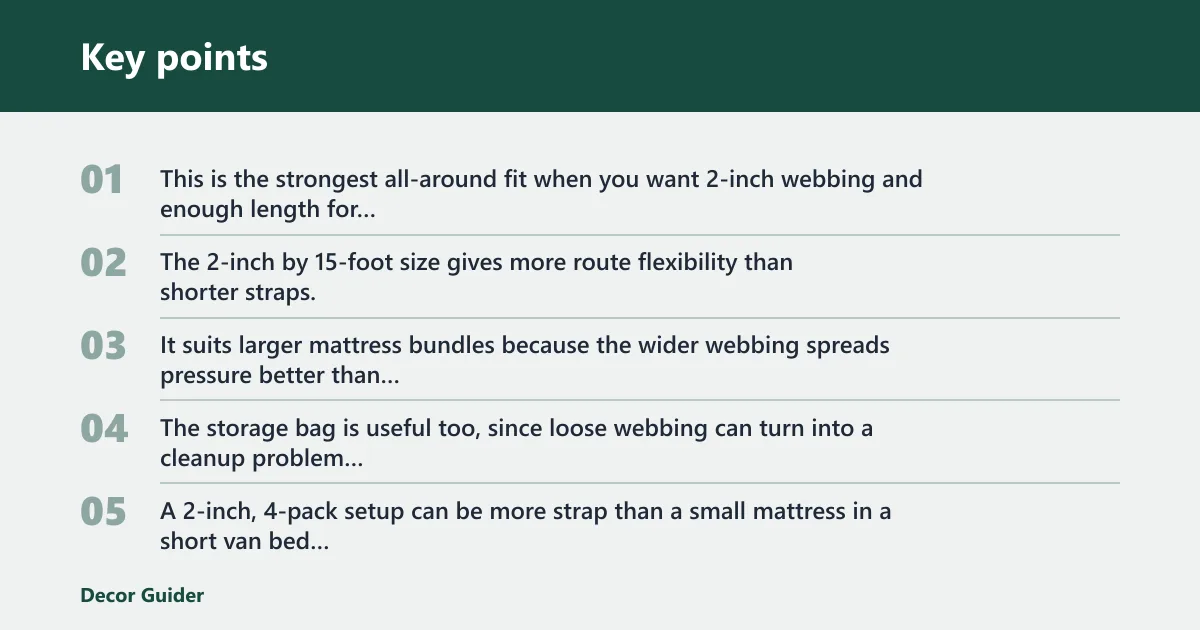
This is the strongest all-around fit when you want 2-inch webbing and enough length for a mattress in a pickup or trailer. The 2-inch by 15-foot size gives more route flexibility than shorter straps, and the 10,000-pound max break strength gives a wide margin above a typical mattress hold-down need.
It suits larger mattress bundles because the wider webbing spreads pressure better than narrow straps. The storage bag is useful too, since loose webbing can turn into a cleanup problem during unloading.
The drawback is bulk. A 2-inch, 4-pack setup can be more strap than a small mattress in a short van bed actually needs, and the J-hook style is only ideal if your anchor points accept that shape cleanly.
Rhino USA Retractable Ratchet Straps: best for easier tightening
- Self-retracting design manages excess strap length
- Includes soft loop tie downs for versatile anchor points
- Padded handle and coated hooks improve handling
Choose this if you want less loose webbing and a cleaner finish around the mattress. The retractable design manages excess strap length, and the padded handle plus coated hooks make tightening and release easier when you need careful control.
The 2-inch by 10-foot length works well in tighter truck beds or van cargo areas where anchor points sit close to the load. The included soft loop tie downs also help when you need a compatible anchor without metal-on-fabric contact.
The drawback is length. Ten feet can be tight for wider mattress routes or for setups where the strap has to travel around padding, corner guards, or side rails.
US Cargo Control Flat Hook Ratchet Straps: best for cleaner anchor fit
- 18-foot length adds extra wrapping room
- Wide-handle ratchet offers controlled tensioning
- Working load label supports compliant use
This pick makes sense when the vehicle offers secure flat tie points that match the hook shape. The 2-inch by 18-foot length gives extra wrapping room, and the wide-handle ratchet helps with controlled tightening on a soft load.
The flat hook can sit well against certain trailer or truck anchors, which reduces awkward loading angles. Its working load label also helps when you want a more compliance-minded setup.
The drawback is that flat hooks are not universal. If your anchor points are round bars, thin loops, or recessed slots, another hook style may fit better.
Which one should you buy?
If your budget is tight and your mattress stays flat in a truck bed, start with the KJE set. It gives the longest usable route here, a 2-inch webbing width, and enough break strength headroom for mattress transport without needing a complicated setup.
If cleanup matters most, the Rhino USA retractable option is the easiest to live with. It is especially useful when you want less tail to tuck away after you cinch the mattress.
If your trailer or van has flat tie points and you want a more controlled anchor match, the US Cargo Control flat-hook strap is the best fit of the three. For a mattress that must stay flat only, a moving blanket plus two well-placed straps is usually safer than forcing an upright or folded position.
Say your queen memory foam mattress is going into a pickup bed with anchor points near the corners. Two 2-inch straps, one near the head and one near the foot, plus corner padding, is a better plan than trying to stand it on edge and over-tighten one center strap.
Suppose your trailer floor has side anchors but the mattress is thick and likely to scuff. Then a 2-inch strap with a smooth route, a protective sleeve at each contact point, and a low, even tension setting will do more good than a smaller strap pulled harder.
How to choose
Start with the mattress manufacturer’s transport advice. If the mattress should stay flat, use a flat setup and do not rely on straps to force a fold or upright position.
Next, match the strap to the anchor system. Double J hooks suit many slotted or looped points, flat hooks fit broader tie points, and wire hooks can work where the anchor geometry is different, but only when the anchor and hook shape mate safely.
Then choose width and length together. Two-inch polyester straps are the safer default for larger mattresses because they spread load better and resist stretch, while shorter straps are easier to manage in small cargo spaces if the anchor spacing is close.
WLL should be your selection number, not breaking strength. Breaking strength is the maximum failure figure; WLL is the safer cargo suitability rating. For mattress transport, you are choosing control and contact area, not brute force.
Finally, pay attention to the ratchet handle. A longer or wider handle can give more control and easier tightening, which helps you stop at the point where the mattress is secure but not crushed. Corrosion resistance matters too if the straps may ride in a damp truck bed or trailer.
- Place the mattress flat if the model requires it, or keep the chosen safe transport position unchanged.
- Put padding or a sleeve where the strap crosses fabric, seams, or corners.
- Run two straps at opposite ends for a flat mattress; add a third if the load is on edge or folded.
- Tighten until the mattress cannot shift, then stop before the foam or edge visibly compresses.
- Secure or tuck the loose tail so wind cannot catch it.
Frequently asked questions
How many ratchet straps should I use for a mattress?
Use at least two straps for a flat mattress, one near the head and one near the foot. If the mattress is on edge or folded, add a third strap so the load cannot tip, bow, or open at the fold during braking or cornering.
What hooks are best for mattress tie-downs?
Double J hooks are versatile for many cargo points, flat hooks fit broader tie points, and wire hooks can suit some anchor layouts. The best choice is the one that matches your vehicle’s anchor without twisting the strap into a sharp angle or putting metal directly against mattress fabric.
How do I stop ratchet straps from damaging a mattress?
Use protective sleeves, moving blankets, or edge guards anywhere the strap touches the mattress cover. Keep tension even, avoid over-tightening, and do not place the strap directly over a sharp corner or sewn seam if you can route it across a padded section instead.
What working load limit do I need for mattress tie-downs?
Use WLL to judge the strap, not breaking strength. A mattress usually does not need extreme capacity, but it does need enough working margin for vibration and route changes. The right number depends on the mattress weight, setup, and anchor spacing, so select from the product’s WLL label, not the failure figure.
How do I keep a mattress from shifting during transport?
Keep the mattress flat when possible, use two straps at opposite ends, and tighten until the load cannot slide or billow. If the mattress must ride on edge or folded, add more restraint points, use padding at contact areas, and remove all loose tail webbing before moving off.
Are self-retracting ratchet straps easier to use for moving?
Usually yes. Self-retracting straps leave less excess webbing to manage, so cleanup is faster and there is less loose tail to snag on the mattress or flap in the wind. They are especially helpful in tight vehicle spaces where you want a neater tie-down path.
Can ratchet straps be used to secure furniture like a mattress?
Yes, but a mattress needs more care than hard furniture because the cover and edges compress easily. Use polyester webbing, protect contact points, and keep tension light enough to hold the load without flattening the mattress shape or damaging the seams.
Products related to this article
Sponsored / affiliate links. As an Amazon Associate I earn from qualifying purchases. I may earn additional commission from eligible campaigns.