Best Shelf Straps for Earthquake Safety: Buyer’s Guide
For most bookcases and open shelving, the safest shelf strap setup is a metal anti-tip strap or steel bracket system rated for heavy wall shear, fastened into studs with two attachment points per tall unit. I have seen bad installs fail the same way: the cabinet tips, contents dump out, and anchors rip from drywall. This guide chooses by failure mode first, then by strap material and wall type.
Best shelf straps for earthquake safety: top pick and why it wins
Best overall for tall bookcases with studs behind the wall
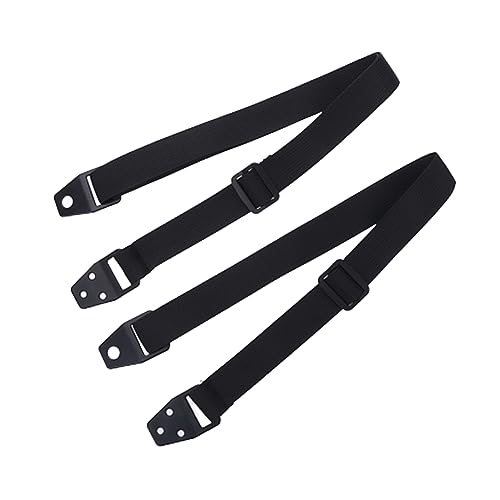
Choose a stud-anchored bookcase safety strap set with screw hardware and a rigid or semi-rigid connector when the main risk is the whole unit tipping. That setup is best for wood bookcases, tall cabinets, and anything with a narrow base. It ties the frame back to structural support instead of depending on the shelf surface alone.
Best for light open shelving and item retention
If the shelf itself is stable but books, decor, or pantry items slide off during shaking, black elastic shock cord is the better fit. It catches movement better than it resists full cabinet tip-over. The product page language for one set says it is good for up to three 36-inch bookshelves and prevents books and items from falling.
Best for renters who need a removable setup
Renters who can use screws into studs should still choose removable hardware over adhesive-only ideas. The least disruptive safe path is a strap with an end connector set, since the connector set includes two end caps with screws and can be removed later. Adhesive-only fixes are not enough for a tall loaded bookcase.
According to sosproducts.com — One bookcase safety strap is listed at $9.99.
Quick picks by shelf type and risk level
- Tall bookcase with heavy books: stud-anchored anti-tip strap or bracket, preferably steel or stiff webbing, with two wall attachment points.
- Wide low shelf with mixed decor: webbing strap or bracket for tip resistance, plus front retention if small items slide forward.
- Open shelf where fall-off is the main risk: elastic shock cord with end connectors to keep items from bouncing off the front edge.
| Need | Best strap style | Hardware | Install method | Price reference |
|---|---|---|---|---|
| Tall wood bookcase, moderate to heavy load | Anti-tip strap or steel bracket system | Stud screws plus wall anchors only if the wall structure requires it | Two wall points, frame-mounted high on the back rail | One bookcase safety strap is listed at $9.99 |
| Open shelving, items sliding off | Black elastic shock cord | End connector set with two end caps and screws | Mount ends across shelf face or front edge | End connector set is listed at $3.89 |
| Bookshelf safety for renters | Removable strap set with screw-in connectors | Stud screws, structural fasteners, or code-appropriate anchors | Remove later and patch screw holes | Use the lower-cost connector set where only item retention is needed |
How do earthquake shelf straps attach to a bookcase?
Earthquake shelf straps attach by fixing one end to the bookcase frame and the other end to a wall stud or other structural support. The safest setup uses screw hardware, not loose loops or adhesive tabs. Placement matters: the anchor point should sit high enough on the cabinet to resist rotation without crushing the back panel.
Where the strap or cord mounts on the furniture
On a bookcase, the strap should attach to solid side rails, the top back rail, or another reinforced frame member. Thin fiberboard backs are weak and can tear under load. Open shelves need the strap positioned so it does not block normal use, while still stopping stored items from shifting forward.
How end connector sets and screw hardware work
An end connector set is a small hardware piece that secures strap ends. The listed connector set includes two end caps with screws, and the connector product is called an internal L bungee connector. That matters because the connector must match the cord or strap diameter. A poor match can slip under shake load.
Studs, drywall anchors, and structural support points
Wall anchoring hardware must match the wall. If studs are available, stud screws are usually the preferred choice for drywall anchoring. Drywall-only anchors are generally less secure and should not be treated the same as a stud attachment. For masonry or other structural walls, use the correct fastener for that material, not a general-purpose drywall kit.
Which strap material is safer: webbing or elastic shock cord?
Webbing is safer when the main goal is anti-tip restraint. Elastic shock cord is better when the shelf is already stable and the job is to keep objects from bouncing or sliding off. Material choice changes the result because a flexible cord absorbs movement, while a rigid strap limits movement more directly.
Webbing for anti-tip restraint
Webbing works better on tall bookcases, narrow bases, and heavy loads. It resists stretch and keeps the cabinet tied back to the wall. That makes it the better match when the failure you are trying to stop is the whole unit rotating forward.
Elastic shock cord for shelf spill control
Elastic shock cord is a good fit for open shelves, lightweight storage, and mixed decor where the shelf itself is not the main tipping concern. It can prevent books and items from falling, which is exactly how one listed product describes its function. It is not the first choice for heavy anti-tip duty.
When material choice changes the result
If the shelf is tall and loaded with dense books, cord alone can stretch too much before the cabinet stops moving. If the shelf is short and the problem is mostly item spill, webbing may be too much. Match the material to the failure mode, not to the package description.
Decision table: choose by height, width, wall type, and load
The safest setup depends on how tall the shelf is, how wide it spans, what the wall is made of, and how much weight the shelf carries. One strap style can cover several small units, but taller and heavier pieces need more restraint points and stronger wall fastening.
| Shelf height and span | Wall type | Load level | Safest strap style | Hardware type | Install method |
|---|---|---|---|---|---|
| Under 36 inches, single section | Stud-backed drywall | Light | Elastic shock cord or light webbing | Screws into studs | One pair of anchors near the top rail |
| 36 to 72 inches, one to two shelf spans | Stud-backed drywall | Medium | Webbing strap or anti-tip bracket | Stud screws, end connector set if corded | Two attachment points, one per upper side or top rail |
| Over 72 inches, multiple shelves | Stud-backed drywall or structural wall | Heavy | Steel bracket system or stiff anti-tip strap | Heavy-duty screws into studs or structural supports | Use two wall tie points minimum, more if the unit is wide |
| Any height | Drywall only, no stud hit | Any load above light | Do not rely on adhesive; change location or use structural support | Rework the plan | Find studs or use a different wall location |
Do you need straps or brackets for a bookshelf in an earthquake zone?
Use straps when you need restraint against movement and the bookcase is structurally sound, but choose brackets when the unit is tall, top-heavy, or sitting on a narrow base. The bracket is the safer call when the whole cabinet could rotate forward faster than a flexible strap can control it.
When a strap is enough
A strap is enough for a solid wood bookcase with a wide footprint, moderate load, and stud access behind the wall. It also works well for open shelving when the goal is to keep items from spilling rather than to stop a full tip-over.
When an anti-tip bracket is the safer call
Use anti-tip brackets for tall furniture, narrow-base cabinets, or shelves packed with books. Earthquake fasteners are often sold in pairs or sets because two points spread force better than one. That matters when the load is high and the unit has little self-support.
Failure cases: weak walls, hollow furniture, overfilled shelves
Weak drywall-only installs fail because the anchor tears out. Hollow furniture fails because screws pull from particleboard or thin backing. Overfilled shelves fail because mass increases the tip force and the stored items become projectiles. In those cases, the safest fix is stronger wall fastening, less load, or a different storage unit.
How many shelf straps do I need for one bookcase?
Single bookcases often need at least one set of straps, while tall or wide units may need two attachment points or more. The right count depends on shelf height, width, and load. A product listed as good for up to three 36-inch bookshelves is fine for lighter spanning use, but not for a heavy tall unit.
Single-shelf units
A short, light unit may be fine with one strap set if it is fastened into studs and the cabinet is not top-heavy. If the shelf only needs item retention, an elastic cord set can cover one span cleanly without much hardware.
Multi-shelf bookcases
Multi-shelf bookcases need more restraint because upper shelves add force at the top. A tall unit should be tied near the top and, on wide cases, again on the other side. Shelf height and span matter because one strap set may not control the entire width under shake load.
Width, height, and load rules of thumb
- Use one set for a short, narrow shelf with light contents.
- Use two attachment points for a tall bookcase or a unit with dense books.
- Add more restraint when width increases or when the shelves are packed near the front edge.
- If the unit is overfilled, reduce load before choosing hardware.
What are the best shelf straps for earthquake safety?
The best shelf straps for earthquake safety are stud-anchored anti-tip straps or steel bracket systems for tall, loaded bookcases, and elastic shock cord for open shelves where the concern is items sliding off. The best choice depends on whether the main failure mode is tipping or spill-off.
How much do shelf safety straps cost?
One bookcase safety strap is listed at $9.99, and an end connector set is listed at $3.89. That gives a low entry cost for a basic setup, but the real cost can rise with stronger wall hardware, additional straps, or bracket systems for taller furniture.
Will elastic shock cord work for shelf safety?
Yes, but only for the right job. Elastic shock cord works well for keeping books and items from falling off open shelves because it flexes and catches motion. It is not the best choice when the whole cabinet needs to be held back from tipping.
What should I use to keep books and items from falling off shelves?
Use an elastic shock cord across the front of the shelf, secured with a matching end connector set, when the goal is item retention rather than full tip control. The listed cord is described as black elastic shock cord and the connector set includes two end caps with screws.
Are shelf straps better than anti-tip brackets for bookshelves?
Neither is always better. Brackets are better for tall, heavy, or narrow-base bookcases because they resist tip motion more directly. Shelf straps are better when you need a lighter, less visible restraint or when the goal is simply to stop contents from sliding or bouncing off shelves.
Products related to this article
Sponsored / affiliate links. As an Amazon Associate I earn from qualifying purchases. I may earn additional commission from eligible campaigns.