4 Best Shipping Supplies for Moving a Sofa (2026): research shows
For many sofas, a budget stack can include a few moving blankets, stretch wrap, corner protectors, a sofa cover, and a couple of ratchet straps; add cardboard and edge guards for freight or leather. I have seen cheap loads fail at the exact weak spot: fabric gets rubbed thin, arms get crushed, the bundle shifts, and the repair bill jumps past the cost of the supplies. This guide breaks down the exact buying order by sofa type and shipping method, plus what each item does against abrasion, crush damage, and load shift.
Quick comparison
| Product | Badge | Best for | Price | ||
|---|---|---|---|---|---|
 |
PONGHEI 2 Moving Blankets 40"x 72" Heavy Duty PackingPONGHEI | Our pick | 2-Pack · 40×72 in · Heavy Duty Quilted | $19.99
Price as of 28 Sep 2026
|
View |
 |
Wowfit 4mil Furniture Cover for Moving, Chair Storage Bag,Wowfit | Also great | 4mil Virgin Plastic · 34Wx42Dx65H | $13.75
Price as of 28 Sep 2026
|
View |
 |
4’ Carry Strap with Handle | 2-Pack | Heavy Duty |Strap-A-Handle | Pair with it | 4ft Heavy Duty Nylon · 75 lb Capacity | $18.97
Price as of 28 Sep 2026
|
View |
 |
MYUEA Furniture Moving Dolly Cart With 4 Wheels 880LBS LoadMYUEA | Upgrade pick | Pack of 2 · 880 lbs Load Capacity | $55.99
Price as of 28 Sep 2026
|
View |
 |
32Pcs Picture Frame Foam Corner Protectors for Moving –OKAHUOCHUANG | Budget pick | 32 Pcs · 3.95×3.95 in Foam Corners | $20.99
Price as of 28 Sep 2026
|
View |
The right stack depends on the sofa’s failure point, not the box size. A fabric couch usually needs abrasion control first; a leather sofa needs more edge and corner protection; a full sofa going by freight needs pallet stability before anything else.
How we chose
We compared the supply stack by what it actually prevents: abrasion, crush damage, frame flex, and load shift. I also favored items that fit a budget shipping workflow, because extra wrap rarely fixes missing padding.
Three checks drove the picks: how well each item protects a sofa type, how much setup it adds, and whether it helps in loose moving, palletized freight, or detached-part shipping. When a tool only helped one step, it stayed in the guide only if it solved a real failure point.
Moving blankets: best for abrasion control
Moving blankets are the core layer for a couch that needs to survive rubbing, dirt, and minor moisture in transit. The PONGHEI 2-pack works best for a loveseat or as an add-on set for a standard sofa when the main goal is scratch control on arms, back, and legs.
Based on the spec sheet and owner feedback, the drawback is simple: two blankets are rarely enough for a full-size sofa if you want full coverage. They also need to be held in place with stretch wrap or tape over the blanket, not placed directly against upholstery with adhesive.
This is the layer that buys margin. Use it on the spots that take the most contact: arm fronts, top rail, lower front edge, and any wood feet that can scuff the truck wall or pallet deck.
Stretch wrap and tape: best for holding the padding in place
Stretch wrap is the binder, not the cushion. The Wowfit cover is useful when a sofa needs a moisture barrier and a quick outer skin, especially for temporary storage or a move where dust and light rain are a concern.
The tradeoff is that plastic film can bite into soft fabric if it is used alone or pulled too tight over an unpadded arm. The included tape strips help close the cover, but they do not replace blankets or corner protection on a full sofa.
Use this layer to keep blankets from sliding and to keep a loose bundle compact enough for loading. Tape should seal padding and cardboard, never sit directly on upholstery if residue matters.
Corner protectors and cardboard: best for arms, legs, and frame edges
Foam or cardboard corner guards solve the spots that wrap misses: sharp arm ends, exposed frame corners, and feet that take point pressure from straps. The OKAHUOCHUANG foam pack is most useful when a sofa has square arms, thin wood legs, or mirrored edges on attached trim.
The weak point is fit. A foam corner protector helps only when it stays seated under wrap or tape, and it may be too small for wide, sculpted sofa arms. For odd shapes, corrugated cardboard works better as a custom face shield or wrap-around edge.
Cardboard matters more than extra film when the danger is crush. If a strap is crossing a corner, add foam or cardboard first, then cinch the strap over the protection layer.
Pallet, ratchet straps, and freight prep: best for full-sofa shipping
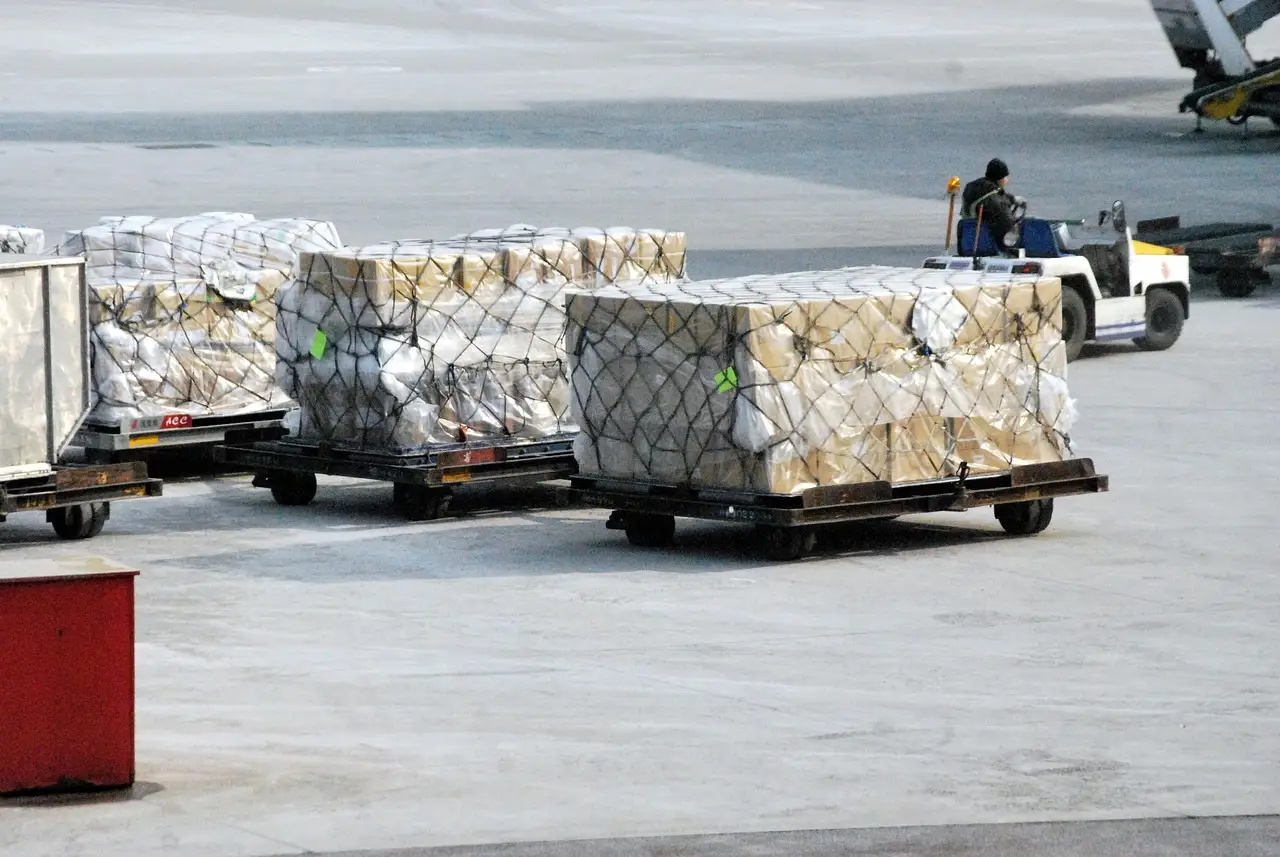
A pallet, ratchet straps, and proper freight prep are the difference between a bundle that stays put and one that shifts under forklift movement. Strap-A-Handle is not a pallet strap replacement, but the tie-down hardware concept is the same: immobilize the load without crushing the frame.
The drawback is that straps can do damage if they are overtightened on the arms or back. They also work poorly without a flat base, which is why full-sofa freight usually needs a pallet sized as close to the sofa footprint as possible.
For a complete freight setup, the ratchet strap belongs over the blanket-and-cardboard shell, not over bare upholstery. The freight carrier expects a load it can move and stage repeatedly without the sofa sliding out of square.
Furniture sliders: best for moving the sofa before loading
Furniture sliders are the pre-load tool, not the shipping tool. The MYUEA dolly cart pack is useful when the sofa has to travel across floors, through a hallway, or down to a dock without scraping wood, tile, or carpet.
The drawback is bulk. A dolly helps with movement, but it adds setup and may be awkward in tight rooms or narrow stairs. It also does nothing for abrasion during transit unless the sofa is packed separately.
Use sliders before wrap, not after. Once the sofa is ready for loading, switch to blankets, corner guards, and straps so the moving aid does not become a snag point.
Which one should you buy?
Start with moving blankets if the sofa is upholstered fabric, then add corner protectors if it has hard arms, wood feet, or exposed edges. Choose stretch wrap only as a binder, not as the main shield. For freight, buy the pallet and strap plan first, then fill in cardboard and extra padding where the frame can crush or shift.
If the job is a local move, the best value is usually blankets plus wrap plus corner guards. If the sofa is going out on freight, cardboard and a pallet matter more than buying extra film. If the piece is partly disassembled, ship the detached parts in boxes and keep the full frame on a pallet only when the shell still needs forklift handling.
One simple rule saves money: add a new layer only when it solves a different problem. More wrap will not stop a crushed arm. More blankets will not stop a pallet corner from tearing into a leg.
Sofa shipping supply checklist by sofa type
| Sofa type | Blankets | Wrap / tape | Corner / cardboard protection | Straps / pallet | Main purpose |
|---|---|---|---|---|---|
| Loveseat | 2 blankets | 1 roll stretch wrap; tape only on padding | 2–4 corner guards | 2 straps for truck freight; pallet if shipped by freight carrier | Stop abrasion on arms and back, keep the bundle from opening |
| Standard sofa | 4 blankets | 1 roll stretch wrap; moving tape for seams | 4–6 corner guards plus cardboard on odd arms | 2 ratchet straps; pallet for freight | Protect the full shell and keep the frame from flexing in transit |
| Sectional | 6+ blankets, depending on sections | Multiple wrap passes to bundle sections | Cardboard on exposed corners and ends | Straps for each section; pallet or palletized stack for freight | Separate the pieces, prevent rub marks, and stop load shift between modules |
| Sleeper sofa | 5–6 blankets | Wrap for outer bundle only | Extra guards on metal or hardwood corners | 2–4 straps; pallet strongly preferred for freight | Protect the heavier frame and keep the mechanism from taking side pressure |
| Sofa with removable legs | 3–4 blankets | Wrap after legs are removed | Cardboard around legs and frame feet | Small parts boxed separately; pallet for the main body if freight shipping | Reduce height, prevent leg breakage, and keep parts from punching through wrap |
This table is the practical starting point. Measure the widest point, including legs and any protrusions, then size the supply stack to the sofa’s actual footprint, not the label description.
What shipping supplies do I need to move a sofa?
The core set is moving blankets, stretch wrap, corner protectors, moving tape, and straps; add cardboard for sharp arms or odd shapes. A furniture dolly or sliders helps before loading, while a pallet becomes important when the move turns into freight shipping instead of a simple truck haul.
How do I wrap a sofa for shipping?
Start by removing loose cushions and any detachable legs, then cover the frame with moving blankets and lock them in place with stretch wrap. After that, add corner guards and cardboard where arms or legs are exposed, and finish with straps only after padding is already in place.
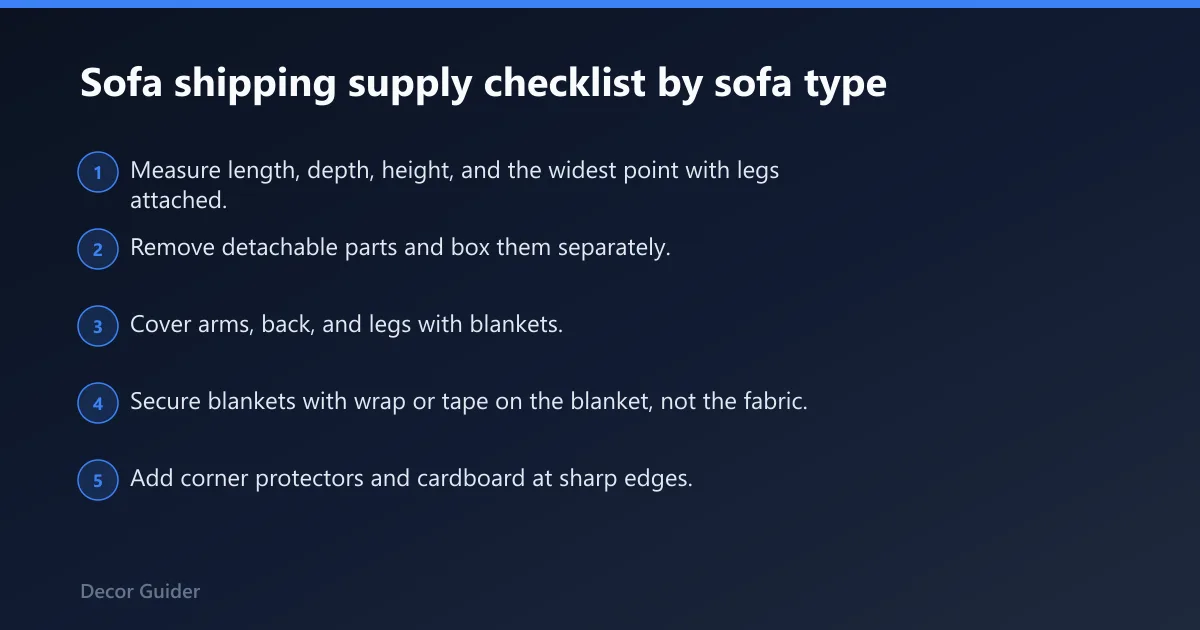
- Measure length, depth, height, and the widest point with legs attached.
- Remove detachable parts and box them separately.
- Cover arms, back, and legs with blankets.
- Secure blankets with wrap or tape on the blanket, not the fabric.
- Add corner protectors and cardboard at sharp edges.
- Load, then strap the sofa so it cannot slide or tip.
How many moving blankets do I need for a sofa?
Most loveseats need 2 blankets, a standard sofa usually needs 4, and sectional or sleeper sofas often need 5–6 or more depending on how many separate pieces are moving. The real target is full contact coverage on the abrasion points, not an exact blanket count.
Should I use stretch wrap or shrink wrap on a sofa?
Stretch wrap is the safer choice for sofa shipping because it binds padding and adds light moisture resistance without heat. Shrink wrap can over-tighten and is harder to control around upholstery, so it is a poor substitute for blankets and corner protection on furniture.
What size box do I need for sofa parts or cushions?
Use a box that fits the detached part with room for padding on all sides, especially for legs, feet, and hardware bags. Cushions can usually be boxed or bagged separately, but they should not be compressed so hard that seams crease or foam bends permanently.
How do I protect a sofa corners during moving?
Put foam or cardboard corner protectors on the arms, feet, and any sharp frame edges before adding wrap. If straps will cross the corner, add a second protection layer so the strap presses on the guard, not on the wood, leather, or upholstery beneath it.
Can I ship a sofa with a freight carrier or parcel carrier?
A full sofa usually belongs with a freight carrier, not a parcel carrier, because the load is bulky, awkward, and needs palletization, straps, and document prep. Parcel shipping makes more sense only for detached sofa parts, cushions, or small hardware boxes that can be packed as standard cartons.
Freight also changes the supply stack. Once the sofa rides on a pallet, the main job is stabilization and crush control, so a pallet, ratchet straps, cardboard, and corner guards matter more than piling on extra wrap.
What is the cheapest way to ship a sofa safely?
The cheapest safe method is usually local transport with reused blankets, cardboard, and a strap set, or freight only when the sofa is too large for a local truck. Buying fewer but better-matched supplies beats buying excessive wrap that does not fix the real damage point.
Do I need a pallet to ship a sofa?
If the sofa is going by freight carrier, a pallet is the practical base because it keeps the load stable and forklift-friendly. For short local moves, a pallet is usually unnecessary, but for a full sofa in freight, skipping the pallet creates handling and tipping problems.
Match the pallet footprint to the sofa as closely as possible. A pallet that is too small leaves edges vulnerable; one that is too large invites sliding and wasted space.
How do I prevent a sofa from getting damaged in transit?
Prevent damage by matching the protection layer to the failure point: blankets for abrasion, corner guards for crush, straps for load shift, and cardboard for odd edges. The order matters too, because padding must go on before wrap, and wrap must go on before the load is tightened or palletized.
Products related to this article
Sponsored / affiliate links. As an Amazon Associate I earn from qualifying purchases. I may earn additional commission from eligible campaigns.
 ASTIMESA 8 Pieces 1.77" Square Furniture Sliders, Heavy Duty Furniture Pads Cups with Carpet Base, Reusable Floor Protectors for Hardwood Vinyl Tile Couch Table Chair Bottom (Brown) (45mm, Square)
 Golden Home Essentials XXXL Heavy Duty Couch Support for Sagging Cushions - 30in x 68in Extra Wide Sofa Cushion Board - 0.4in Saggy Cushion for Seat Support