Best Furniture Sliders for Moving a Sofa: we compared
For moving a sofa, hard plastic sliders are often better for carpet, while felt or PTFE sliders are usually better for hardwood and tile, and cup-style sliders can help with round feet; choose one that’s comfortably rated above the sofa’s weight. Use the wrong pad and you can gouge floors, crush carpet pile, or trap the sofa in a doorway. This guide compares slider types by leg shape and floor surface, then maps the move path that keeps pads under control.
Quick comparison
| Product | Badge | Best for | Price | ||
|---|---|---|---|---|---|
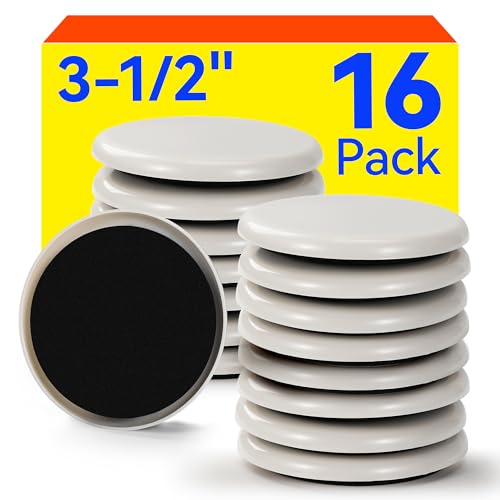 |
Furniture Sliders Plastic Sliders for Carpet and HardwoodShnbxtnd | Budget pick | 16-pack reusable plastic sliders for hard/carpet | $9.99
Price as of 28 Sep 2026
|
View |
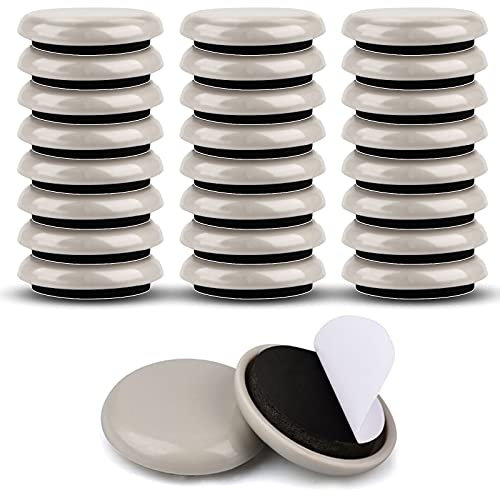 |
1-1/4" Furniture Sliders for Carpet & Hardwood Floors,EASTWONDER | Also great | 24-pack 1.25-inch adhesive foam moving pads | $9.98
Price as of 28 Sep 2026
|
View |
 |
ONEON Heavy Duty Furniture Movers with Wheels & Lifter (8ONEON | Upgrade pick | Heavy-duty wheeled dolly kit with lifters | $49.90
Price as of 28 Sep 2026
|
View |
 |
Non Slip Self Adhesive Silicone Cuttable Furniture Pads,RFORPLY | Pair with it | Cuttable silicone non-slip pads (2-piece) | $6.99
Price as of 28 Sep 2026
|
View |
 |
New Upgrade Furniture Sliders: Multi-Surface 3-in-1Kiss Core | Our pick | 3-in-1 multi-surface lifters and moving sliders | $21.23
Price as of 28 Sep 2026
|
View |
The fastest way to choose is by matching leg shape first, then floor, then load. I start there every time, because a pad that fits a flat wood foot can fail fast under a recessed leg, thick carpet, or a heavy sectional.
For plain sofa moves, wide pads under steady feet give the best control. Keep the path straight, and avoid sharp turns at the threshold.
How we chose
We compared the options by floor compatibility, leg fit, stated load support, and how well each style handles real move problems like thresholds and turns. We also looked at how the pad installs, whether it can be reused after compression or adhesive wear, and whether the shape gives enough contact area under a sofa leg.
Because sofas rarely move on an empty runway, the choices here also account for recessed feet, casters, wide feet, and sectionals with uneven weight distribution.
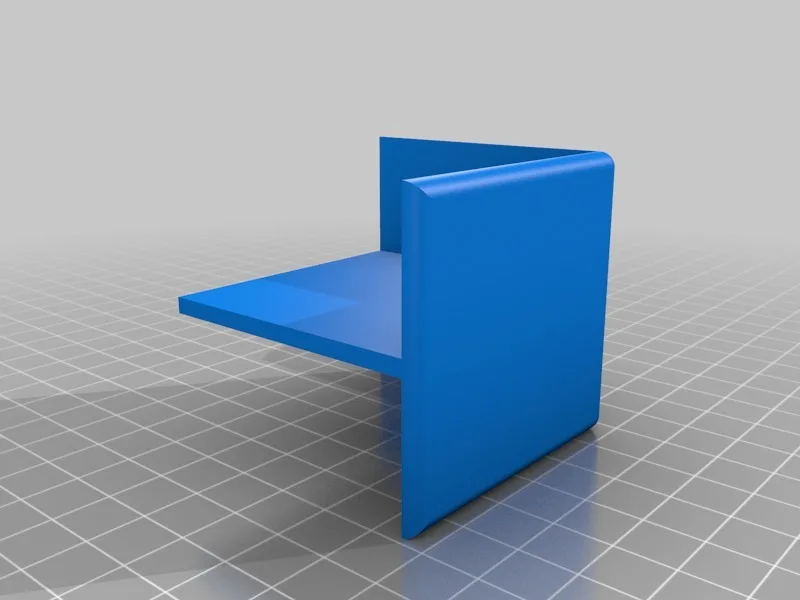
Furniture sliders plastic sliders for carpet and hardwood floors: best for mixed-surface moves
This 16-pack fits homeowners who need one set that can move several furniture pieces, not only a sofa. The adhesive-free EVA foam is the main advantage here: it helps the pad stay seated under a leg without leaving residue, and the larger pack gives extra coverage when a sofa has more than four contact points.
Based on the spec sheet and owner feedback, this style works best on sofas with stable wood legs or wider feet, especially when the move includes both hardwood and carpet sections. The drawback is that a general-purpose pad like this is not the best answer for deep carpet, because the low-friction glide can stall if the pile grabs the edge.
1-1/4-inch furniture sliders for carpet and hardwood floors: best for small legs and repeated use
This 24-pack is a straightforward pick for smaller sofa feet, accent chairs, or other items that need many pads at once. The strong adhesive backing is useful when a leg is too narrow for a loose pad, and the quantity makes sense for rooms with several pieces that need to move on the same day.
The tradeoff is that adhesive-backed pads are less forgiving if you reposition often. Once the adhesive weakens or collects dust, they can shift, and that is a problem under a heavy sofa where one slipping pad can twist the leg and leave marks.
Oneon heavy duty furniture movers with wheels and lifter: best for heavy sectionals and tough layouts
This kit suits heavier sofas, sectionals, and moves that involve thick thresholds or long hallways. The included lifter matters as much as the wheels, because it reduces the need to tip the sofa awkwardly while placing the moving points under the frame. Dual wheels also spread load better than a single hard point.
The drawback is size and setup. A wheeled kit is more cumbersome than simple sliders, and it is often overkill for a compact sofa that only needs to cross a short stretch of hardwood.
Non slip self adhesive silicone cuttable furniture pads: best for round feet and anti-slip control
This two-piece set is better thought of as a position-and-protect option than a classic moving slider. It makes sense for furniture with round feet that need floor protection and a bit of grip control, especially when the sofa will be nudged into place rather than hauled across a whole room.
The downside is that a silicone pad is not the best choice for a long move on carpet or for a sofa that must glide around a corner. Its strength is traction, not easy travel, so it works better as a stabilizer than as a primary mover.
New upgrade furniture sliders multi-surface 3-in-1 furniture movers slider: best for carpet protection and mixed movement
This kit is aimed at people who want a more guided move, not just a flat pad under a leg. The lift tool and grooved slider shape are useful for awkward pieces, and the set is designed to protect carpet fibers while keeping the load steadier during small directional changes.
The limitation is that multi-function kits can be a compromise. They are useful across more situations, but they usually are not as simple or as specialized as a single-purpose felt pad for hardwood or a dedicated hard plastic base for carpet.
Best overall: reusable felt sliders for most hardwood sofas
For most sofas on hardwood, laminate, or vinyl, reusable felt sliders are the safest default when the legs are stable and flat enough to seat the pad fully. They give low-friction glide, lower scratch risk than bare plastic on hard floors, and enough control for a straight push or a sideways shift.
Why this pick fits common sofa legs
Wood legs and wide feet usually accept felt well because they offer a broad, flat contact patch. A round leg can also work if the slider has a cup or a recessed top that keeps the leg centered instead of letting it walk off the edge.
Where felt works well and where it fails
Felt is a strong match for hardwood and laminate. It is less reliable on carpet, where compression and pile friction can stop movement, and it can also struggle under very heavy sectionals if the pad is too small or the felt compresses too much at the edge.
What to check before buying
Look for a pad large enough to fully cover the leg footprint, with enough thickness that the edge will not roll under load. For a sofa with several legs, the pad should support the load without forcing one corner to carry far more than the rest.
Best for carpet: hard plastic sliders with a low-friction base
Hard plastic sliders are often the better choice on low-pile carpet because they tend to move through surface drag more effectively than felt. They are less likely to bind in the pile, and they work well when the move is a straight pull or a careful sideways shift rather than repeated lifting.
Low-pile carpet versus high-pile carpet
Low-pile carpet gives hard plastic a fighting chance because the base can stay on top of the fibers. High-pile carpet is a different story; the pile can swallow the edge and make the slider tilt, which increases strain and may jam the sofa partway through the move.
Why plastic can stall on some carpet
Plastic glides well only when the contact surface stays flat. If a slider is too small, or if the sofa foot is recessed, the pad can dig down and create more friction than expected. That is why pad size matters as much as material on carpet.
Best leg shapes for this style
Wide feet and flat-bottom wood legs are the easiest fit. Casters and narrow metal legs are poor matches unless the slider is cup-like or specifically made to hold the wheel base without slipping sideways.
Best for hardwood and laminate: felt pads with a wide contact area
On hardwood and laminate, felt pads with a wider footprint are often a safer choice because they spread weight better and may reduce edge pressure that can dent or scuff a floor finish. They are especially useful when the sofa needs to pivot in place before it moves through a hall.
Scratch risk and floor finish concerns
Hard surfaces show grit fast. Even a clean felt pad can mark a floor if dust or a small stone gets trapped under the edge, so the floor should be swept first. Laminate also needs a stable pad, because repeated micro-slips can leave wear marks even when no visible scratch appears.
Round versus square pad shapes
Round pads are easy to center under wood feet and often suit smaller legs. Square or rectangular pads give more contact area, which helps under wide feet or slightly recessed bases. The larger shape also helps distribute load across more felt surface.
When adhesive-backed pads make sense
Adhesive-backed pads are useful when the sofa leg is too narrow, too smooth, or too awkward to hold a loose pad in place. They are less suitable if the pad will need to come off frequently, because residue, edge fray, and weak bond are all common wear points.
Best for heavy sectionals and awkward legs: reusable lift-and-place pads
For heavy sectionals, recessed feet, and sofas with wide or uneven legs, reusable lift-and-place pads are usually the safer route. They reduce the chance that one corner carries the whole load, and they make it easier to set all four contact points before the move starts.
Recessed feet and wide feet
Recessed feet can hide under the frame, which makes standard sliders hard to seat correctly. Wide feet need more contact area, otherwise the load concentrates at the edge and the pad can tip or crush. A lift-and-place system helps here because it gives room to place the pad accurately.
Four-leg load sharing
Sofas rarely share weight perfectly, but the goal is to get close. If one leg takes much more load than the others, the pad under that leg wears faster and the sofa may twist during movement. A larger reusable pad helps spread the burden more evenly.
When to choose a dolly instead
If the sectional is too heavy to lift safely, or if the route includes a long threshold, tight turn, or uneven floor, a dolly with straps is safer than any slider set. Sliders are for controlled sliding, not for forcing a piece that should roll.
Which slider should you use for your sofa?
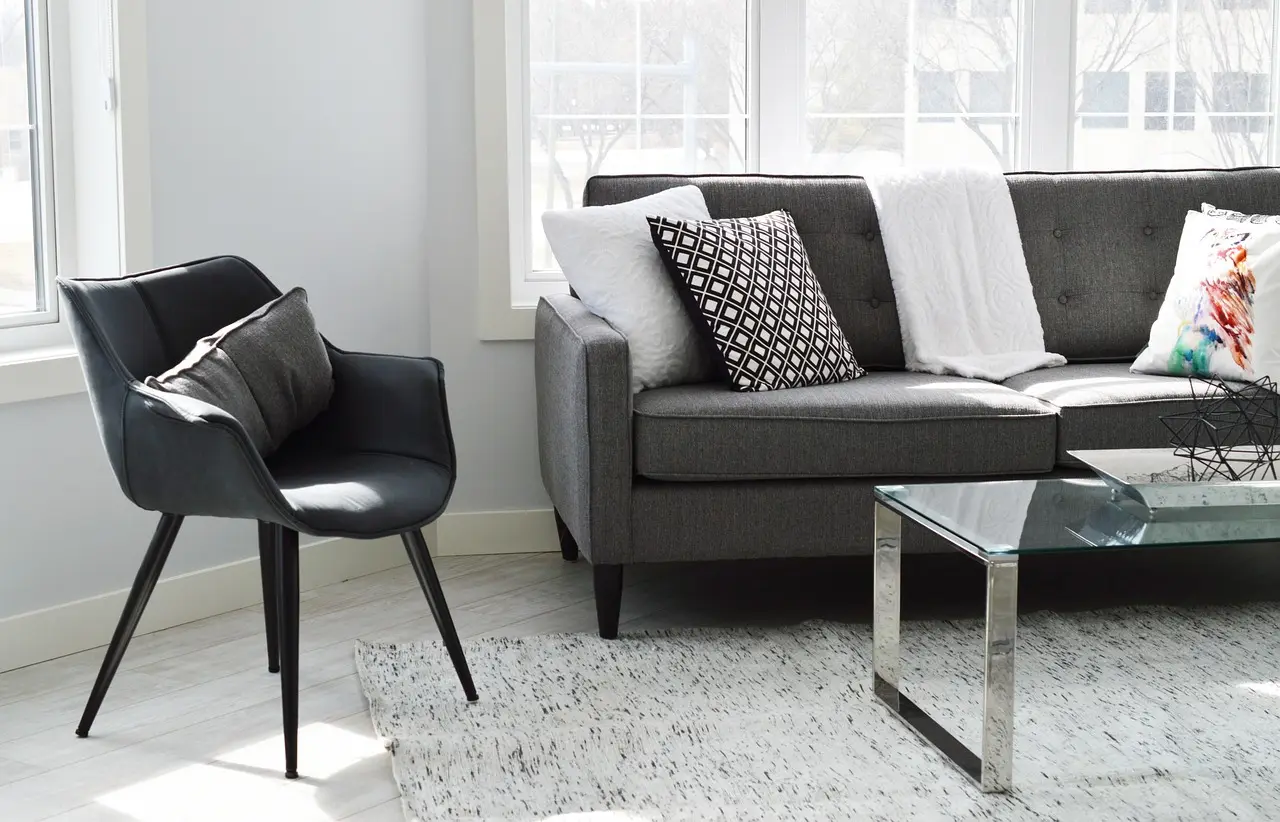
The right slider depends on floor type first, then leg shape, then how much of the move includes corners, thresholds, or carpet. A good match moves cleanly and stays under the sofa; a poor match skates out from under one leg or stalls halfway through the doorway.
By floor type
- Hardwood: felt or PTFE-style sliders with a wide contact area.
- Laminate: felt pads with smooth edges and a stable top surface.
- Tile: felt or cup-style sliders that stay centered and do not catch grout lines.
- Vinyl: soft, low-mark pads with a broad base and controlled glide.
- Low-pile carpet: hard plastic sliders or multi-surface movers with a firm base.
- High-pile carpet: a dolly, lift-and-roll kit, or a slider only if the pad is oversized and the route is short.
By sofa leg type
- Wood legs: felt pads or reusable lift-and-place pads.
- Metal legs: cup-style or high-grip pads that keep the foot centered.
- Casters: wheel-rated cups or a dolly; flat sliders often slip.
- Wide feet: rectangular or square pads with more contact area.
- Recessed feet: lift-and-place or screw-on options that can sit under the frame cleanly.
By load and room layout
For a light sofa in a straight room path, simple felt or hard plastic pads are usually enough. For a heavy sectional, a narrow hall, or a move with a 90-degree turn, a larger pad or a wheeled kit is the safer choice because it keeps the load more stable while the piece pivots.
What size furniture sliders do you need?
Size should match both the leg footprint and the load under that leg. A pad that is too small can sink into carpet or tip under a wide foot, while an oversized pad can get in the way during turns and make doorway clearance harder.
Round, square, or rectangular sizing
Round pads are common for small feet and are easy to center. Square pads are better for broad contact under standard sofa legs, and rectangular pads help when the foot is long, wide, or slightly recessed. The shape matters less than whether the whole support area sits on the pad.
How to estimate per-leg load
Estimate the sofa weight, then divide by the number of legs or contact points. If a sofa weighs 240 pounds and has four legs, the base estimate is 60 pounds per leg before adding a safety margin. Because real sofas are not perfectly balanced, it is smart to choose pads with far more than that minimum.
When larger pads help and when they get in the way
Larger pads help on carpet, on wide feet, and under heavier sectionals because they spread the load. They become a problem when the sofa must turn sharply through a narrow doorway, because extra pad size can catch the jamb or prevent the leg from rotating cleanly.
How much weight can furniture sliders hold?
Furniture sliders hold weight by spreading the load over the pad area and keeping the sofa leg centered, not by magic strength alone. The useful number is per-pad capacity, total sofa load, and a safe margin; the smartest buyers plan for more load than the label minimum.
Per-pad load versus total sofa load
A slider rated for a high total set load may still fail if one leg carries more than the others. For a four-leg sofa, the practical number to watch is the load on each pad, because uneven floors and soft carpet can shift weight to one corner during the move.
Why a safety margin matters
A safety margin helps account for uneven balance, a helper’s push, or a threshold that briefly increases force on one pad. A common rule is to choose sliders rated at least 2 to 3 times the expected per-leg load, especially for sectionals or dense hardwood-frame sofas.
Four-leg distribution basics
If the sofa has four legs, the load is usually close to a quarter each, but not perfectly equal. Recessed legs, a sleeper mechanism, or a chaise section can shift the center of mass, so the heaviest side should get the strongest pad and the widest contact area.
Are felt sliders or hard plastic sliders better for sofas?
Neither is better in every case. Felt is better on hardwood, laminate, and tile when floor protection is the priority, while hard plastic is better on carpet when the priority is getting the sofa to move at all. The wrong choice usually fails at the edge, not in the middle.
Felt sliders
Felt gives low-friction glide on hard floors and tends to be kinder to finishes. It can compress over time, collect grit, and wear at the edges if the sofa is moved often or dragged sideways through turns.
Hard plastic sliders
Hard plastic works well on carpet and some mixed surfaces because it resists sinking into the pile. The risk is floor scuffing on hard surfaces and a harsher slide that can jump if the pad is too small or the sofa is pushed too quickly.
How do I move a sofa across tile without scratching it?
Use a felt or cup-style slider that keeps the leg centered, sweep the tile first, and move slowly enough to keep grout lines from catching the edge. Tile itself is hard, but grit on the surface and a tilted pad are what usually cause scratches or sudden stops.
Scratch risk and grout lines
Tile can handle weight, but grout lines create tiny ledges that can trap a pad. A wider pad reduces that risk, and a helper should keep the sofa moving in a straight path until the legs clear the joints.
Best movement method on tile
A controlled push works better than a pull because it keeps the helper behind the load and improves visibility. If the sofa must turn, use a pivot with small steps rather than a fast swing, which can twist the pad and mark the tile edge.
When to use extra protection
A moving blanket can protect nearby corners, trim, or baseboards. Corner guards help in tight rooms, and a strap can keep two helpers coordinated when the sofa needs to lift slightly over a threshold or plumbing bump.
What is the safest way to slide a sofa through a doorway?
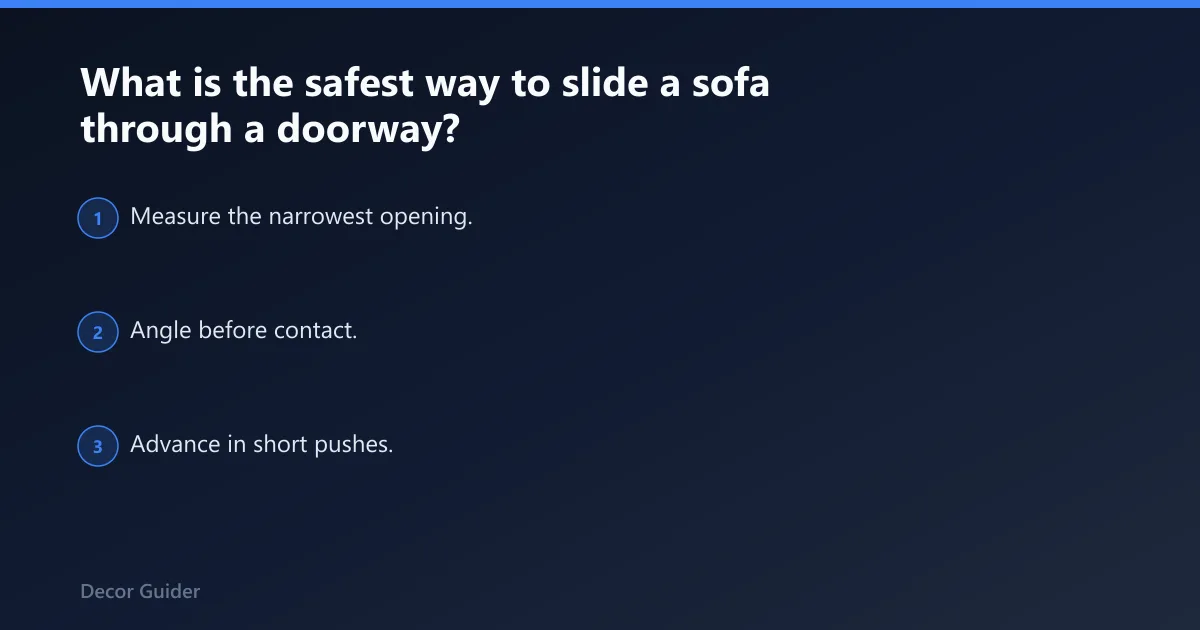
The safest doorway move is to clear the path, protect the frame, and shift the sofa in three controlled stages: line up, angle, then advance. Most jams happen because the sofa is pushed straight at the opening before the feet are aligned with the narrowest point.
Three-step doorway maneuver checklist
- Measure the narrowest opening. Check the sofa depth, diagonal width, and door swing before the first move. Remove the door if needed.
- Angle before contact. Turn the sofa so the leading corner enters first, which shortens the effective width and reduces threshold binding.
- Advance in short pushes. Keep the pads centered, move a few inches at a time, and stop if one leg starts to climb the jamb or lose contact.
Helper count and support tools
Two people are usually enough for a standard sofa, but a sectional or a narrow hall may need a third set of hands. A dolly helps on long flat sections, while a moving blanket and corner guard protect trim where the turn is tight.
Can I reuse furniture sliders after moving a sofa?
Yes, many sliders can be reused after one move, but only if the contact surface stayed intact and the adhesive did not fail. Reuse depends on wear, not the word “reusable” on the package, because felt compression and edge fray can make a pad unreliable on the next move.
Felt compression and edge fray
Felt compresses under load, especially under heavy sectionals or repeated pivots. Once the edges start to flatten, fray, or curl, the pad can snag on carpet or leave more direct pressure on a hard floor.
Adhesive failure and residue
Adhesive-backed pads may leave residue when removed, especially from finished wood or painted feet. If the bond weakens during the move, the pad can slide off-center, and that is one of the fastest ways to scratch a floor or jam a doorway turn.
Replacement timing
Replace a slider when the glide surface is worn flat, the backing will not stay attached, or the edge has split enough to expose hard material. For a heavy sofa, it is better to swap pads early than to risk a floor repair later.
Frequently asked questions
What are the best furniture sliders for moving a sofa on carpet?
Hard plastic sliders are usually best on low-pile carpet because they reduce sink-in and keep the sofa moving. For high-pile carpet, a wheeled dolly or lift-and-roll kit is safer, since even good sliders can stall when the pile grabs the edges and twists the leg.
What are the best furniture sliders for moving a sofa on hardwood floors?
Felt or PTFE-style sliders are usually the best choice on hardwood because they lower friction while protecting the finish. A wide pad is better than a tiny one under a sofa leg, since it spreads the load and reduces the chance of edge scuffs.
Do furniture sliders work better than lifting a sofa?
For short moves on the right floor, sliders are usually easier and safer than repeated lifting because they reduce strain and help keep the load level. Lifting is still needed for placement, thresholds, or turning, but full-carrying a sofa is rarely the better plan.
What size furniture sliders do I need for a sectional sofa?
Choose the largest pad that fits each contact point without sticking out so far that it catches on door trim. Sectionals often have uneven load, so oversized pads help under the heaviest section, especially if there are recessed feet or a chaise that shifts balance.
Products related to this article
Sponsored / affiliate links. As an Amazon Associate I earn from qualifying purchases. I may earn additional commission from eligible campaigns.