IKEA Poang Chair Review / Is It Worth It
The IKEA POÄNG is worth buying if you want a low-cost lounge chair with a relaxed recline and steady back support, but the ottoman earns its place only if you regularly put your feet up. Choose the wrong setup and you can end up with a seat that feels too low, knee height that feels off, or a chair that looks right and still gets ignored. This guide covers comfort, value, body fit, space needs, and when chair-only, chair-plus-ottoman, or a different lounge chair may make more sense.
IKEA POÄNG review: the verdict
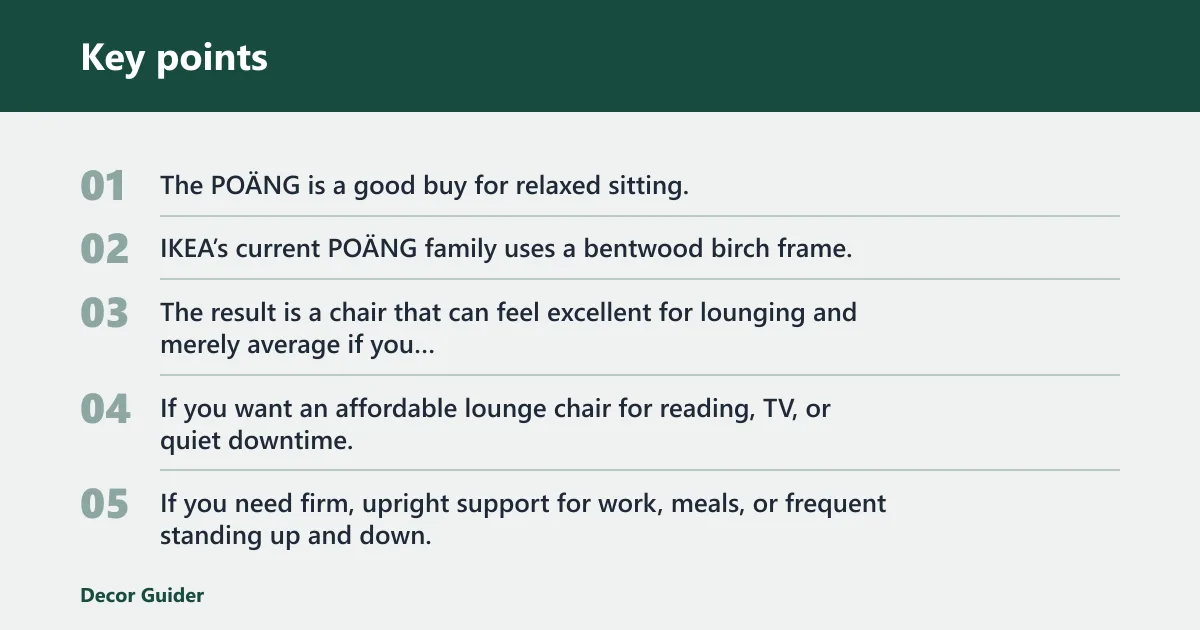

The POÄNG is a good buy for relaxed sitting, but only if you want a reclined lounge chair rather than an upright everyday seat. IKEA’s current POÄNG family uses a bentwood birch frame, and the design has been sold for decades because the frame is reliable while the cushion choice controls most of the comfort. The result is a chair that can feel excellent for lounging and merely average if you choose the wrong cushion or use it for the wrong task.
Bottom line on comfort and value
If you want an affordable lounge chair for reading, TV, or quiet downtime, the POÄNG makes sense. If you need firm, upright support for work, meals, or frequent standing up and down, it is the wrong tool. Value is strongest in a chair-only setup for occasional use, or chair-plus-ottoman if you know you like to put your feet up.
When the chair is worth buying
Buy it if you want a lighter lounge chair that is easy to move, easy to refresh with new covers, and backed by a long frame guarantee. The current POÄNG family includes the armchair, rocking-chair version, ottoman, and a children’s model, so the design can fit more rooms than a single fixed chair. The value is best when the chair matches the way you actually sit.
When to skip it
Skip it if you need a desk chair, dining chair, or high-seat chair. The POÄNG sits low and leans you back. That is the point. It also explains why some buyers find it awkward for quick, repeated sitting and standing, especially if their knees or hips prefer a taller seat or a flatter sitting angle.
POÄNG specs at a glance
This is the fastest way to check whether the chair fits your body and budget. IKEA’s current product pages should always be the final reference because dimensions, cover options, and prices can vary by region and configuration. Where regional variation exists, the numbers below should be treated as U.S.-market guidance, not a universal global spec.
| Spec | POÄNG armchair | Notes |
|---|---|---|
| Seat height | About 16 1/2 in | Low enough to feel lounge-like rather than dining-room upright |
| Seat width | About 20 7/8 in | Comfortable for one adult, but not a wide club-chair seat |
| Seat depth | About 19 5/8 in | Deep enough to recline; shorter users may notice the angle more |
| Frame materials | Layer-glued bent birch veneer | Current IKEA framing is centered on a bentwood birch shell |
| Warranty term | 10 years | Frame warranty; cushions and covers follow their own product terms |
| Official max load | Up to 375 lb | Always verify the exact regional frame page before buying |
| Price range | Chair-only, upgraded cushion, and ottoman vary by market | In the U.S., the full setup can move from budget entry to midrange depending on cushion and ottoman choice |
Pros and cons of the POÄNG
The POÄNG’s strengths are clear: a durable frame, easy movement, swappable covers, and a relaxed sit that suits lounging. Its weak spots are just as clear: cushion compression over time, a low seating position, and comfort that depends heavily on which cushion you choose. The frame lasts; the sitting experience is mostly a cushion story.
What the frame gets right
- Layer-glued birch veneer frame with a long service life.
- Gentle rocking feel that follows body movement.
- 10-year frame guarantee.
- Light enough to move between rooms.
Where the cushion and seating position fall short
- The standard cushion is only about 6 cm of padding, so it can feel thin for long sessions.
- Seat height may feel low if you want easier standing.
- Comfort drops if you need strong thigh support or a more upright posture.
- Cover wear and cushion compression are the main long-term comfort issues, not the frame.
Best and worst use cases
Best: reading, TV, nursing a sleepy evening routine, and light lounging. Worst: computer work, mealtimes, sewing tables, or any task that rewards an upright seat and frequent posture changes. The POÄNG is a lounge chair first. If you expect it to behave like a task chair, the seat angle will fight you every time.
Who is the POÄNG for?
The POÄNG suits people who want a low, reclined chair that supports the back without feeling rigid. It is less suitable for anyone who needs a taller seat, a flat sitting surface, or a chair that keeps the knees and hips in a more open angle for easy standing. Its comfort profile is intentionally relaxed, not neutral.
Best for reading, TV, and light lounging
If your ideal chair lets you lean back with a book or settle in for an hour of TV, the POÄNG fits that brief. The chair’s motion and recline support a relaxed posture better than a straight-backed accent chair. It works best when the goal is rest, not task sitting. That makes it especially good for corners that are meant to invite lingering.
Not a fit for desk or dining use
The POÄNG is not a desk chair substitute. It sits too low and too far back for most tables, and it does not encourage the neutral posture that work tasks need. It is also a poor dining chair because the seat angle and height make repeated meal use feel awkward. If you need upright function, this is the wrong shape.
Body size and seat height fit
Body size changes the comfort equation. IKEA’s official load rating is the most reliable benchmark, while the seat height and depth determine how naturally the chair fits your legs and hips. Bigger users may prefer a firmer cushion and the ottoman, while shorter users may appreciate the recline more than taller users do. Fit matters as much as styling here.
Suppose you are 5’2″ and mostly read for 30 to 45 minutes at a time. The chair may feel inviting because your feet can settle back and the recline feels natural. Suppose you are 6’3″ and want an easy stand-up seat. The low profile may feel less comfortable, especially without the ottoman to balance your legs.
Is the POÄNG comfortable?
Yes, the POÄNG can be comfortable, but the cushion matters more than the frame. The frame gives the chair its signature support and movement, while the cushion determines whether pressure is spread well enough for your body and your sitting time. The standard cushion is serviceable; upgraded versions improve the feel by adding thickness or different fill materials.
Standard cushion versus upgraded cushion
The standard cushion is the budget option, and it is the one most likely to feel thin over time. IKEA’s cushion lineup usually separates into basic polyester-fill styles, plus thicker foam or premium upholstery options such as gunnared fabric or leather versions depending on market. Firmer cushions tend to feel more supportive; softer, plusher cushions feel more sink-in and relaxed.
How support changes by body type
Heavier users often notice cushion compression sooner, especially in the seat pan and under the thighs. Lighter users may be fine with the standard cushion for a longer stretch, though the chair still feels best when used as a lounge piece rather than a primary seat. A softer cushion can help comfort, but it will not change the low seat height or the reclined geometry.
Seat recline, neck support, and leg support
The chair supports the back well for a reclined sit, but neck support depends on the cushion version. Some cushion sets include a higher back profile or headrest-style shape, while low-back versions leave the neck more open. If you like to stretch out, the ottoman changes the whole experience by supporting the legs and reducing pressure on the lower back.
POÄNG decision matrix
Use this table to match the chair to your body type, sitting style, and risk tolerance. The goal is not to buy the most popular version. The goal is to buy the version that solves the sitting problem you actually have, while keeping the total cost in line with how often you will use it.
| Body type or use case | POÄNG configuration to buy | Likely regret risk |
|---|---|---|
| Shorter user, reading and TV only | Armchair with standard cushion; add ottoman only if you like feet-up lounging | Low, unless you need a taller seat |
| Taller user, longer lounging sessions | Armchair with upgraded cushion and ottoman | Low to moderate if you skip the ottoman |
| Heavier user, frequent use | Armchair with upgraded cushion; check the exact frame rating before purchase | Moderate if cushion compression bothers you |
| Desk work, crafting, dining | Different chair | High if you buy the POÄNG |
| Kids room, family reading nook | Children’s POÄNG or standard armchair if size fits the space | Low if the scale fits the room |
| Item | Cost of ownership note | What to watch for over time |
|---|---|---|
| Frame | Usually the best long-life purchase in the set | Finish wear and fastener looseness |
| Standard cushion | Lowest entry cost, but also the fastest to feel tired | Compression and flattened seat support |
| Upgraded cushion | Higher upfront cost, better long-term comfort | Cover fatigue and seam wear |
| Ottoman | Extra purchase, but often the biggest comfort gain | Space usage and whether you actually use it |
| Replacement cover | Useful for cleaning or color changes | Fabric pilling, fading, and zipper wear |
How much does the POÄNG cost to own?
The chair’s cost depends on configuration, because frame, cushion, and ottoman are often priced separately. That makes the entry price look lower than the finished seating setup. A sensible budget is chair-only if you want the lowest outlay, upgraded cushion if you care about daily comfort, or chair plus ottoman if you know you will actually use the footrest.
Frame, cushion, ottoman, and cover costs
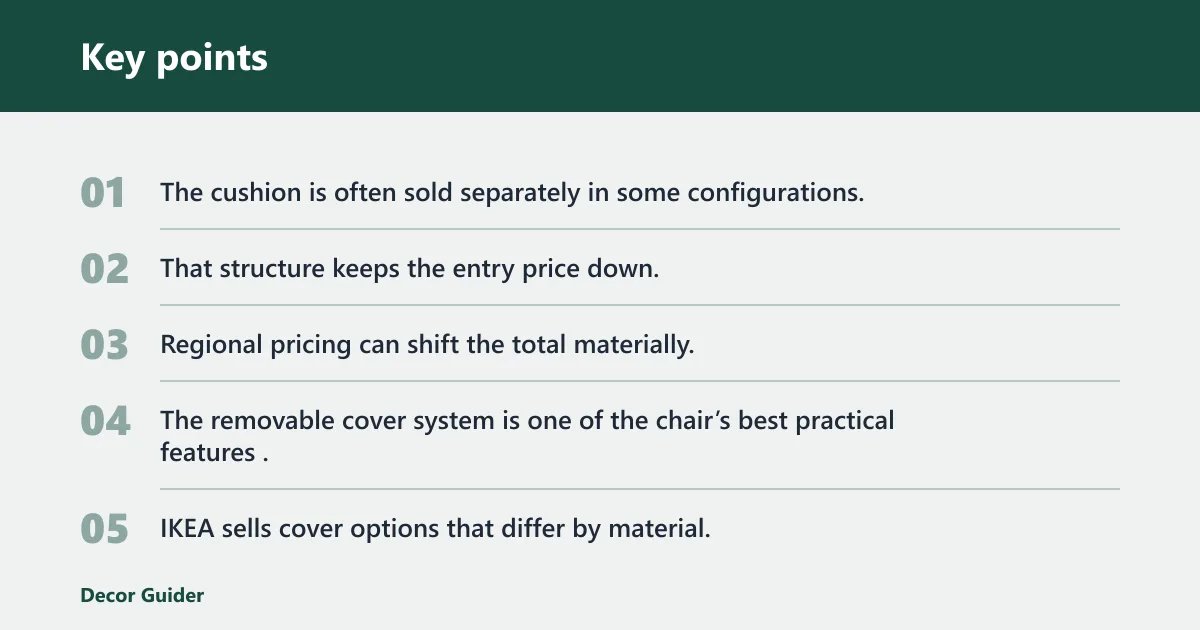
The frame is the base purchase. The cushion is often sold separately in some configurations, and the ottoman is a separate buy as well. That structure keeps the entry price down, but it also means the chair can become a more expensive seat than expected once you add the parts that make it truly comfortable. Regional pricing can shift the total materially.
| Ownership path | Typical setup | Cost logic | Who should avoid it |
|---|---|---|---|
| Chair-only budget | Frame + basic cushion | Lowest upfront cost; best if you need a simple lounge seat and can live without leg support | Anyone expecting “sink-in” comfort or long daily use |
| Upgraded cushion setup | Frame + thicker or premium cushion | Costs more at purchase but usually improves comfort and reduces the urge to replace the chair early | Buyers who mostly want a decorative accent chair, not a lounge seat |
| Chair + ottoman total | Frame + cushion + ottoman | Highest comfort value; usually the best setup for reading and TV if you recline for long periods | Small spaces and buyers who rarely put their feet up |
| Replacement-cover path | Keep frame, swap cushion cover later | Lower-cost refresh versus buying a whole new chair, especially when changing colors or replacing worn fabric | People who expect every cover to be machine-washable regardless of fabric type |
Replacement cover and cushion wear
The removable cover system is one of the chair’s best practical features. IKEA sells cover options that differ by material, and cover care depends on fabric type: many textile covers are removable and machine washable, while leather or coated materials require different care. Aftermarket slipcovers can add colors and protection, but the fit may be looser and the fabric quality more variable than IKEA’s own covers.
How do you assemble an IKEA POÄNG chair?
Assembly is usually straightforward, but the chair is not a no-tool trinket. Expect several parts, a bentwood frame, and a cushion that attaches after the base is built. The work is manageable for most buyers, yet it helps to set aside enough time to align the frame cleanly and tighten everything in order so the rockers or base sit evenly.
- Unpack and sort the frame pieces and hardware.
- Assemble the birch veneer frame in the order shown in the instructions.
- Check that the base sits square before fully tightening fasteners.
- Attach the cushion and secure the cover.
- Test the chair on a flat floor and recheck the hardware after use.
Should you buy the ottoman?
Buy the ottoman if you like to recline, if your legs want support, or if you plan to use the chair for longer reading or TV sessions. Skip it if you mostly sit upright or do not want the extra footprint. The ottoman is the comfort upgrade that changes the POÄNG experience the most, but it is not mandatory for every buyer.
When the ottoman improves comfort
The ottoman helps when your feet need support and your lower back prefers less hanging pressure. It turns the chair from a back-supported lounge seat into a more complete recliner-style perch. That matters most for longer sessions, especially if your legs tend to tire or swell when left unsupported. It also makes the low seat feel more balanced.
When chair-only is enough
Chair-only is enough if you sit for short periods or prefer a more open floor plan. It is also the better call if you want the POÄNG for occasional guests or a small reading corner where the ottoman would block movement. The chair alone gives the core experience; the ottoman simply expands it into a stronger lounging setup.
Rocking chair and kids chair alternatives
The rocking chair version uses the same family logic but a different frame geometry. In some versions, the chair and rocker cushions are interchangeable, which helps if you already own one and are comparing the other. The children’s armchair is the smaller option for a family room or kids’ space, but it has a narrower fit and fewer cover choices.
POÄNG’s product family is useful because it gives you options without changing the design language. The risk is buying the wrong version for the job. A rocker works better if motion is the point. The kids chair works better if scale matters more than maximum lounging comfort.
What are the POÄNG cushion and cover options?
The main cushion lines center on basic polyester-fill cushions, thicker foam-filled upgrades, rocker-compatible versions, leather or coated premium options, and the children’s cushion set. The basic versions usually feel firmer and thinner, while thicker or premium covers feel softer and more enveloping. The right choice depends on whether you want a light lounge feel or deeper sink-in comfort.
Cushion tiers and feel
Standard cushions are the firmer, lower-cost route and are usually the first to flatten if the chair gets daily use. Mid-tier fabric cushions add more loft and a softer surface. Premium leather or coated options tend to feel more structured, with a smoother finish and a more polished look. None of them changes the chair’s low profile; they only change how the body meets the frame.
Are the covers removable and washable?
Most textile POÄNG covers are designed to come off for cleaning, but washability depends on the fabric label. Cotton and polyester-blend covers are often washable, while leather, coated, or structured materials need wipe-clean care instead of machine washing. That matters if you want easy maintenance, because the wrong fabric choice can make upkeep more annoying than expected.
Aftermarket slipcover tradeoffs
Aftermarket slipcovers can be a smart way to change color, protect a well-used chair, or save money on a cosmetic refresh. The tradeoff is consistency: fit can be looser, stitching can vary, and the fabric may not match IKEA’s original texture or wear profile. They are best for style changes and practical protection, not for perfect factory-level fit.
Is the POÄNG chair good for reading or TV?
Yes, the POÄNG is a strong choice for reading and TV because the recline supports a relaxed posture without forcing you flat. It is better for long, calm sitting than for active tasks. If you want a chair that lets you sink in and stay put, this is the use case it handles best. The ottoman is optional, but it improves the TV and reading experience noticeably.
What is the POÄNG chair weight limit?
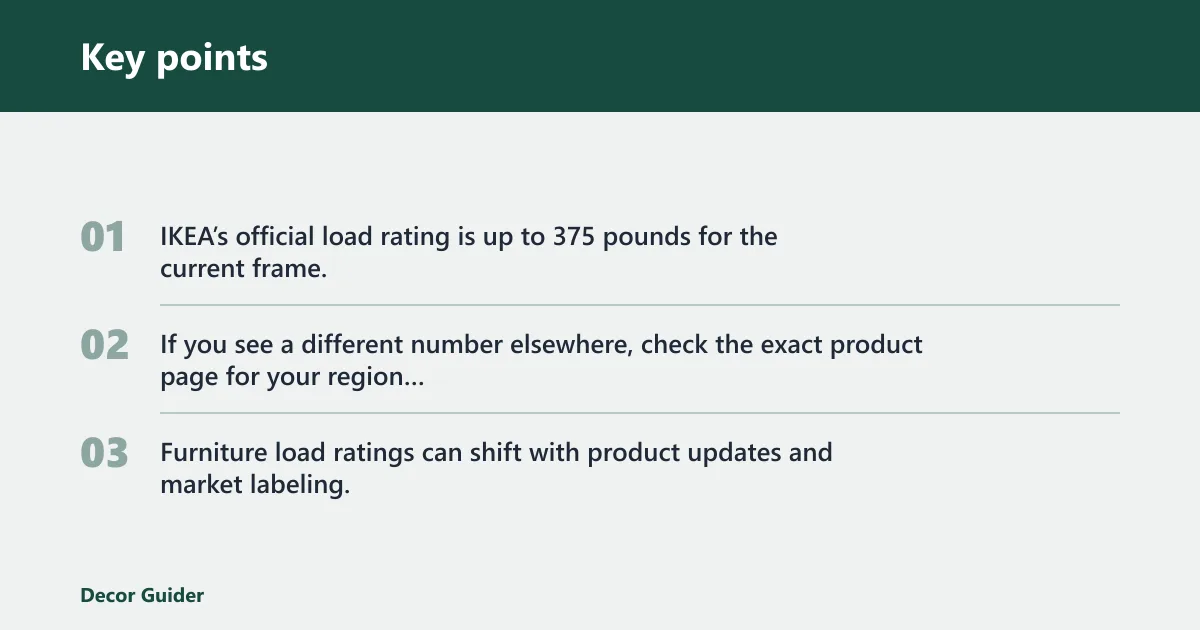
IKEA’s official load rating is up to 375 pounds for the current frame, and that should outrank older or secondary listings when you are deciding whether the chair fits your household. If you see a different number elsewhere, check the exact product page for your region and frame version. Furniture load ratings can shift with product updates and market labeling.
What the build quality says about long-term use
The frame is the part most likely to outlast the cushion. The main wear points are the cushion fill, the cover fabric or leather, and the fasteners that take repeated movement. That is why the chair can feel durable overall while still needing a cushion refresh sooner than you expect. The structure is sturdy; the soft parts do the wearing.
Likely wear points over time
- Cushion compression in the seat and thigh area.
- Cover fatigue at seams, edges, and high-friction zones.
- Minor finish wear on the frame where hands and feet touch most often.
- Hardware looseness if the chair is moved or rocked heavily.
Frequently asked questions
Is the IKEA POÄNG chair comfortable?
It can be, but comfort depends on the cushion and your body size more than the frame itself. The chair works well for relaxed sitting and back support, while the standard cushion may feel thin for long sessions. Upgraded cushions and the ottoman improve the experience the most, especially if you plan to use the chair regularly.
Is the IKEA POÄNG chair worth it?
Yes, if you want a low-cost lounge chair for reading, TV, or light lounging. It is less worth it if you need a tall, upright, or work-friendly seat. The best value is chair-only for occasional use or chair-plus-ottoman if you know you will use the foot support and want the most comfortable version.
How much does the IKEA POÄNG chair cost?
The total cost depends on the frame, cushion, and ottoman mix, and regional pricing can vary. In practice, the chair can start as a budget buy and climb into a midrange lounge-chair total once you choose a premium cushion and add the ottoman. Compare the finished setup, not just the frame price.
Should I buy the POÄNG ottoman with the chair?
Buy the ottoman if you plan to stretch out often, sit for longer periods, or want better leg support. Skip it if space is tight or you mostly sit upright. The ottoman is a comfort upgrade, not a required part of the chair, and it only pays off if you truly use it.
Which POÄNG cushion is the most comfortable?
The upgraded cushions are the safer comfort choice, especially if you plan to sit in the chair often. They give more support than the basic cushion, which is described as only about 6 cm of padding. For long use, the better cushion usually pays off more than the cheapest option, even though firmness preferences vary.
Products related to this article
Sponsored / affiliate links. As an Amazon Associate I earn from qualifying purchases. I may earn additional commission from eligible campaigns.