Bissell Little Green Review / Is It Worth It for Sofa Cleaning
The Bissell Little Green is worth it for sofa cleaning if you mainly handle fresh spills, pet messes, and stain spots. For large or set-in jobs, a pro cleaning or a larger extractor is the better buy. Used badly, it can leave moisture in cushions, spread stains, or over-wet delicate fabrics, causing odor and long drying times. This guide breaks down when Little Green is enough, when it is risky, and when to choose a pro or bigger machine instead.
Verdict for sofa cleaning

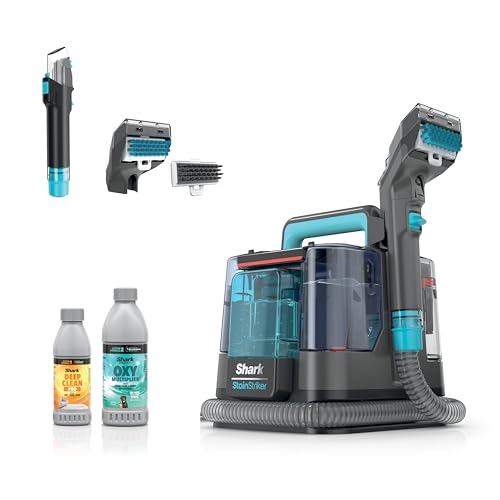
For couch owners who want a spot cleaner, the Little Green makes sense. It is a portable carpet and upholstery cleaner with a 48-ounce tank, a 15-foot cord, a 4-foot hose, and a weight just under 10 pounds when empty. That mix fits quick sofa jobs better than full-room carpet work.
It is especially sensible for fresh spills and smaller pet accidents on upholstery. It is less convincing for old stains, urine odor soaked deep into foam, or whole-couch refresh jobs, where a larger extractor or professional cleaning is usually the better call.
Pros and cons
- Pros: compact footprint, easy to carry, included upholstery tool, and good fit for quick spot cleanup.
- Pros: works on upholstery, rugs, stairs, and auto interiors, so it has uses beyond the couch.
- Cons: limited hose reach for big sectionals, so moving the unit is often part of the job.
- Cons: small-tank spot cleaning can be slow for large or repeated stains, and over-wetting is a real risk on delicate fabric.
Who it
This is a good buy for apartment dwellers, small homes, and pet owners who need a ready tool for one cushion, one armrest, or one spill at a time. It is a weaker fit if you want to clean a whole sectional in one pass, deal with recurring urine accidents, or handle velvet and water-sensitive upholstery with little risk.
📊 The Little Green has a 48-ounce tank for cleaning solution and dirty water storage. Source: Familyhandyman.
What the Little Green
The Bissell Little Green Portable Carpet and Upholstery Cleaner is a portable spot cleaner, not a full-size carpet machine. It sprays solution onto fabric and pulls dirty liquid back into its tank, which is why it works on sofas, rugs, stairs, and car interiors.
The included upholstery tool is the Tough Stain Tool, a 3-inch soft brush tool that snaps into place. Those soft bristles matter because they help loosen surface soil without grinding harshly into fabric pile. The machine also includes a trial bottle of Bissell Spot & Stain with OXY formula, which is built for targeted spot cleaning and stain work.
Core specs that matter on a couch
- 48-ounce tank for cleaning solution and dirty water storage.
- 15-foot power cord for reaching a couch without constant outlet changes.
- 4-foot hose for upholstery cleaning.
- About 10 pounds when empty, so it is easy to carry to stairs or a living room.
- Compact 17-inch by 8-inch footprint for storage in a closet or utility area.
Those numbers point to a machine made for access, not bulk. A sofa owner can carry it from room to room without much effort, but the short hose means the machine may still need to sit close to the work area. That matters on a long sectional or a deep recliner.
What those specs mean on a couch
The Little Green is sized for a cushion, a seat back, or a single spill zone. It is not built for wall-to-wall carpet, and it should not be treated like one. The smaller tank helps keep the unit portable, but it also means more refills if the job spreads across several cushions.
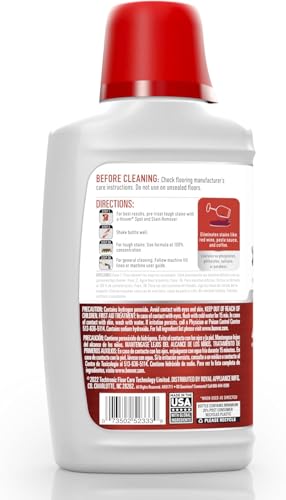
Formula choice matters too. The included OXY formula is aimed at general stain and odor work, while an enzyme-based formula is the better pick for pet messes and urine-related stains. Enzyme cleaners are not included with the base model, so pet owners often need to buy them separately.
Can it clean your sofa?
Yes, for the right kind of sofa mess. The Little Green is well suited to fresh spills, surface stains, and smaller pet accidents on upholstery. It is less reliable for older stains, odor trapped deep in filling, or damage that has already set into the fabric.
Fresh spills on upholstery
Fresh spills are the Little Green’s best case. Coffee, juice, or a recent food mark usually responds better than a stain that has sat for days. The faster you start, the less time the spill has to migrate into the cushion core.
For a fresh spot, use short passes, then pause and blot. The goal is to lift liquid without flooding the seam. A common first-timer mistake is holding the trigger too long and soaking the same patch over and over.
Old stains on couch fabric
Old stains are a maybe, not a promise. The Little Green may lighten them, but it often cannot erase a stain that has already bonded with fibers or padding. On older marks, a second round of cleaning may help, but repeated wetting also raises drying risk.
Suppose a pale sofa has a two-month-old soda mark near the armrest. The cleaner may improve the spot, yet a faint shadow can remain because the stain has settled below the fabric surface. In that case, a professional cleaner or a stronger extractor is often the more realistic choice.
Pet urine and odor
Pet messes are where expectations need to stay strict. The Little Green can help remove liquid and some surface odor, but urine that has reached cushion foam usually needs an enzyme-based cleaning formula and careful extraction. For recurring accidents, the Little Green may be too small a tool for the problem.
Spot Cleaner Lab notes that the original model is not the best choice for pet owners with recurring accidents. That fits the practical limit: one accident on one cushion is one thing; repeated urine in the same seat area is another.
Sofa cleaning decision table
| Situation | Best tool choice | Expected effectiveness | Drying risk | Little Green call |
|---|---|---|---|---|
| Fresh spill | Little Green with OXY formula and the 3-inch brush tool | High for surface spots if you act quickly | Low to moderate if you avoid over-wetting seams | Buy |
| Old stain | Little Green, or a larger extractor if the mark is broad | Moderate at best; fading is more realistic than total removal | Moderate to high if you repeat passes | Maybe |
| Pet urine / odor | Enzyme-based cleaning formula with a spot extractor | Moderate for surface cleanup; weaker for deep odor | Moderate, especially on thick cushions | Maybe |
| Whole-couch refresh | Larger extractor or professional upholstery cleaning | Higher than a small spot cleaner for even coverage | High if you try to do the whole sofa with a compact unit | Skip |
What about delicate upholstery?
Use caution on velvet, dyed fabrics, and any upholstery that reacts badly to moisture. The Little Green can work on some delicate fabrics, but only after a careful test in a hidden area. If the fabric bleeds, darkens, or changes texture, stop before the visible area is affected.
Velvet and pile fabrics
Velvet can be cleaned with a spot extractor in some cases, but the nap can mark, flatten, or dry unevenly. That makes suction technique important. Keep the brush light, avoid scrubbing across the pile, and do not flood the fabric trying to chase one stain.
On pile fabrics, water can leave a visible outline if you overwork one area. That is one reason a hidden test spot matters before you clean a visible cushion face. If the nap mats down or the color shifts, a pro upholstery cleaner is safer.
Water-sensitive or dyed fabrics
Water-sensitive upholstery and unstable dyes are the clearest reasons to stop. A little moisture can still create rings, tide marks, or color transfer. White upholstery is not the issue by itself; the issue is whether the fabric can tolerate water and extraction without changing shape or shade.
Look at seams and piping too. Those areas collect liquid easily, and once moisture sits there, drying takes longer. Over-wetting a seam can leave a darker line long after the rest of the cushion looks dry.
When to stop and test first
- Blot the spill before you clean.
- Test the formula on a hidden section.
- Use the least amount of liquid needed.
- Make one short extraction pass, then inspect the fabric.
- Stop if color transfers, texture changes, or the area stays too wet.
Room humidity also matters. A damp room slows drying, and a thick sofa pile holds more liquid than a tight weave. Better suction technique helps too, because slow extraction removes more solution than fast, choppy passes.
Little Green vs bigger cleaners
The Little Green is the smallest practical choice in this group. The Pet Pro, Max Pet, and HydroSteam Pet are newer, pet-focused versions with specialized tools, stronger pet-oriented features, or steam capability. They can be better for tougher messes, but the price usually climbs with them.
Pet Pro, Max pet, and HydroSteam pet
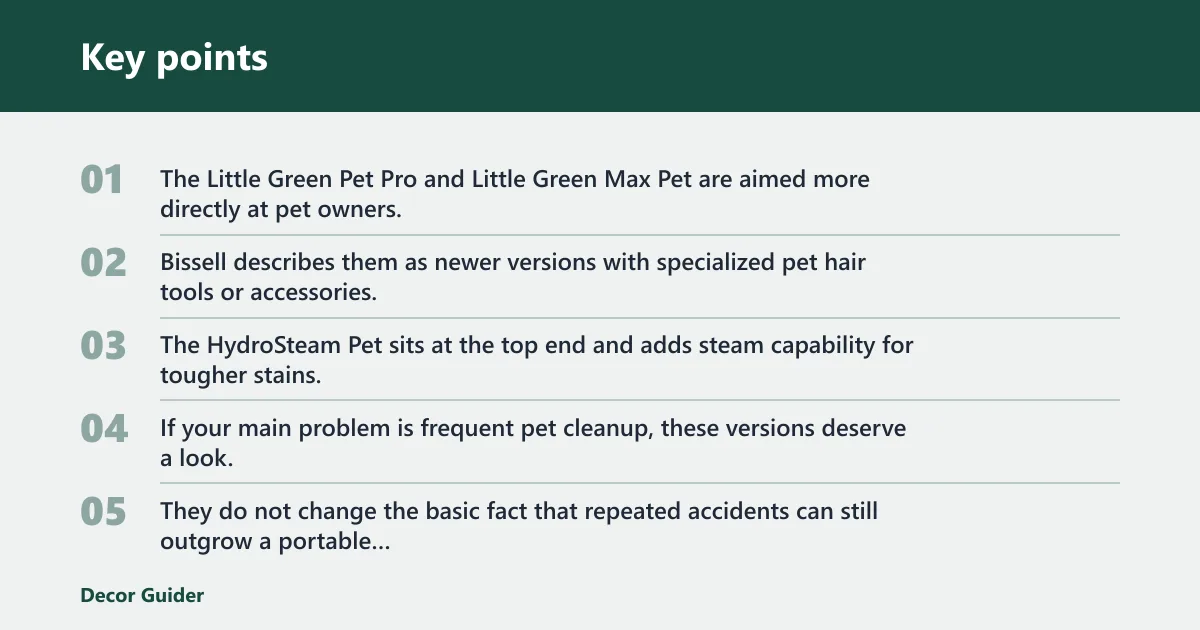
The Little Green Pet Pro and Little Green Max Pet are aimed more directly at pet owners. Bissell describes them as newer versions with specialized pet hair tools or accessories, and the Max Pet is the more recent upgrade with a longer hose. The HydroSteam Pet sits at the top end and adds steam capability for tougher stains.
If your main problem is frequent pet cleanup, these versions deserve a look. They do not change the basic fact that repeated accidents can still outgrow a portable spot cleaner, but they do give you more targeted tools for pet messes.
SpotClean Pro and tank size
The Bissell SpotClean Pro is the larger sibling. It has bigger tanks and is better for bigger jobs, but it is less portable than the Little Green. If you are dealing with more fabric area at once, that extra capacity can matter more than compact storage.
For a single sofa cushion, the Little Green is usually easier to move and store. For several sections of a sectional, the SpotClean Pro starts to make more sense because refill stops are less frequent.
ProHeat upright for larger jobs
The Bissell ProHeat upright carpet cleaner is a different class of machine. It is built for wall-to-wall carpet, not as a portable spot cleaner, so it is not the right answer for a couch-first buyer. If the problem is whole-room carpet, that is where an upright belongs.
For sectional-scale upholstery work, a pro cleaner may still be the better option. A large fabric surface can take more time than a compact extractor can handle cleanly, and the drying burden rises with every extra pass.
Who should buy it?
Buy the Little Green if you want a compact spot cleaner for small, contained sofa messes. It is a sensible match for apartments, dorms, family rooms with a few cushions, and households that need a quick response to spills. It is less suitable for heavy pet accidents, delicate velvet, or full-sofa cleaning.
Best fit uses
It works best when you need to attack one stain, not remodel the whole couch. A coffee drip on an arm, a juice spill on one seat, or a pet paw mark on a cushion are all within its lane. The original Little Green remains a popular, budget-friendly option, and it is often listed under $120 or on sale.
Say your sectional has one fresh milk spill on a seat cushion and a dry room with good airflow. The Little Green is a sensible first tool. The same cleaner becomes a weaker choice if the mess is in a broad, two-seat area, because the smaller tank and short hose turn a quick fix into a longer drying and refilling job.
Who should choose a pro cleaner instead?
Choose a professional upholstery cleaner, or a larger machine, when the stain is old, the odor is deep, or the couch fabric is finicky. That is especially true for white upholstery, dyed fabrics, or homes where pet accidents recur in the same place.
Also skip the Little Green if you want one tool for a whole sectional refresh. The risk of over-wetting and the extra drying time can outweigh the low purchase price when the surface area gets large.
How the hose and tanks should be cleaned
After upholstery cleaning, rinse the dirty-water tank, empty any remaining solution, and flush the hose with clean water if the model instructions allow it. The point is to remove soap residue and debris before it dries inside the machine. That helps prevent odor and keeps the next cleaning pass more consistent.
The visible dirty-water tank is one of the machine’s practical advantages, because you can see what it pulled out of the fabric. Clean that tank promptly, then let the parts dry with the lid open. If the hose held pet mess, an enzyme-safe follow-up rinse is worth considering.
A little care goes a long way here. Stale residue in the hose can create smell the next time you clean, and a damp tank stored closed can do the same. Cleaning the machine after sofa work matters almost as much as the cleaning itself.
Frequently asked questions
Is the Bissell Little Green worth it for sofa cleaning?
Yes, if your sofa problems are mostly fresh spills, small pet accidents, and isolated stain spots. It is a practical buy for quick upholstery cleanup. It is less worth it if you need large-area cleaning, recurring urine cleanup, or a tool for delicate fabrics that react badly to moisture.
Will the Bissell Little Green remove old stains from upholstery?
Sometimes, but not reliably enough to promise full removal. Older stains often lighten rather than disappear, especially if they have soaked into padding or sat long enough to bond with fibers. A larger extractor or professional upholstery service is usually the better choice for deep, aged marks.
How long does sofa fabric take to dry after using the Little Green?
Drying time depends on humidity, fabric pile, suction technique, and how much liquid you used. Light spot cleaning may dry fairly quickly, while thicker cushions or over-wet seams can stay damp longer. A cooler, humid room slows drying, so airflow matters after the job is done.
Can you use the Bissell Little Green on velvet or delicate couches?
Sometimes, but only with caution and a hidden test spot first. Velvet can flatten or mark, and dyed upholstery can bleed or change color when wet. If the fabric reacts badly in the test area, stop. Delicate or water-sensitive upholstery is one of the clearest reasons to skip the machine.
Is the Little Green strong enough for pet stains on a couch?
It is strong enough for many surface pet messes, but not always for recurring accidents or deep urine odor. An enzyme-based cleaning formula is the better choice for urine-related stains, and that formula is not included with the base model. Deep odor often needs more than a compact spot cleaner.
What is the difference between the Little Green and the SpotClean Pro?
The SpotClean Pro is the larger sibling with bigger tanks, so it is better for bigger jobs. The Little Green is more portable and easier to store, which makes it better for quick couch spots. If your sofa cleaning is occasional and small, the Little Green is usually the more practical buy.
Does the Bissell Little Green leave sofas too wet?
It can if you use too much solution, linger on one spot, or work seams too hard. Used carefully, it should not leave a sofa soaked. Drying risk rises on thick cushions, in humid rooms, and when suction is weak or the fabric is repeatedly over-wet during cleaning.
How do you clean the Little Green hose after using it on upholstery?
Flush the hose with clean water after use if the instructions for your model allow it, then empty and rinse the tanks. That helps clear residue and odor before it sets inside the machine. Let the hose and tanks dry open, especially after cleaning pet messes or sticky spills.
Products related to this article
Sponsored / affiliate links. As an Amazon Associate I earn from qualifying purchases. I may earn additional commission from eligible campaigns.