Sofa Cushion Sagging Problems
If a sofa cushion sags, find the cause first: add fill when the cushion compresses evenly, replace foam when it stays flat but feels soft, and repair webbing or springs when the seat underneath drops by more than about 1 inch. Guessing wrong wastes money and can leave the seat lopsided, hard, or sagging again in weeks. This guide shows how to identify the cause and choose the lowest-cost fix that fits your sofa’s construction.
What you’ll need


- Tape measure
- Replacement foam options: high-density foam, reflex foam, or memory foam
- Polyester batting
- Cushion support board or insert
- Basic tools for cover removal, such as a zipper pull tool, screwdriver, or staple remover
- Notebook or phone notes for width, depth, and thickness measurements
Is the sag in the cushion or frame?

The fastest way to avoid the wrong repair is to separate cushion failure from support failure. Remove the cushion, press on the seat deck, and check whether the dip stays in the cushion alone or follows the frame, webbing, or springs underneath.
Check removable seat cushions first
- Unzip or lift off the cushion cover and look for compressed foam, flattened batting, or loose fill.
- Press the cushion on a flat floor and note whether it springs back or stays collapsed.
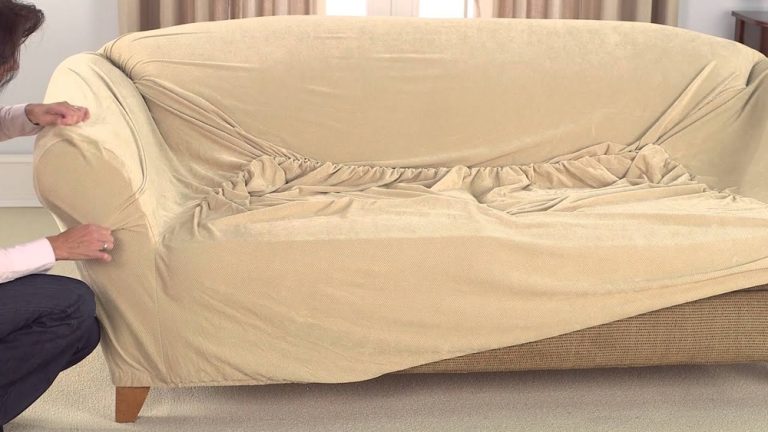
- Look for a cover that is too loose, too tight, or worn thin at the seams.
Say your 24-inch seat cushion looks flat on top but the sofa base feels firm, which often suggests the cushion core or batting rather than the frame. That usually points to the cushion core or batting, not the frame. A foam rebuild or batting wrap is the next logical step.
Inspect attached cushions and seat deck
- Press the middle and front edge of the attached seat area while the cushion is in place.
- Check whether the dip is in one zone or across the whole seating area.
- Lift the seat cover only if the design allows it, then inspect webbing, deck panels, and spring support.
Attached cushions are harder to separate from the structure. If the seat deck sinks while the cushion still feels firm, foam replacement alone will not fix the problem.
Look for frame, spring, or webbing failure
- Press down on the sofa seat without a cushion and listen for squeaks, snaps, or uneven give.
- Check for broken slats, loose webbing, bent springs, or a bowed center rail.
- Stop here if the structure fails, because high-density foam will only hide the symptom for a short time.
Sofa frame and springs need inspection before you buy foam. Broken or weak structure needs repair first, or the new cushion will follow the same sag path.
Sagging sofa cushion fix matrix

This matrix helps you match the symptom to the lowest-cost fix that still makes sense. Replacement sofa cushions can cost less than replacing the whole sofa, but only when the support structure is sound and the cover fit is still usable.
| Symptom | Likely cause | Best fix | Estimated difficulty | When to replace the sofa instead |
|---|---|---|---|---|
| Removable seat cushion feels flat, but the seat deck is firm | Compressed foam or flattened batting | Replace the core with high-density foam and wrap with polyester batting | Moderate | If the cover is too damaged, or the zipper opening cannot accept a proper fit |
| Attached cushion looks saggy across the whole seat | Combined cushion and support wear | Inspect deck and springs first; repair structure before any foam swap | Moderate to hard | If the deck, springs, and frame all fail or the repair cost climbs near replacement |
| One-sided sag on a single seat corner | Uneven foam wear, weak webbing, or frame twist | Check structure, then use a measured foam insert or custom cushion if the frame is sound | Moderate | If the arm, rail, or webbing is split or loose |
| Center sag on a long sofa seat | Weak center support, tired springs, or bowed deck | Add support only after frame repair; then fit new foam to the corrected seat depth | Hard | If the center rail or spring grid cannot be repaired safely |
| Cushion plus frame failure | Flattened foam plus broken structure | Repair the frame or replace the sofa | Hard | Usually replace, especially on older sofas with multiple failed parts |
How do you fix sagging couch cushions?
The best repair is the one that matches the failed part. For removable cushions, a foam rebuild is often enough. For attached cushions, the seat deck and springs decide the repair path, so you need measurements and a structure check before you buy anything.
- Remove the cushion cover and inspect the foam core, batting, and zipper fit.
- Measure width, depth, and thickness, then write down all three numbers.
- Choose high-density foam when the core has permanently compressed, reflex foam when you want a mid-range balance of comfort and price, or memory foam when you want a body-contouring top layer.
- Wrap the foam with polyester batting to smooth the surface and add loft; fibre wrap gives a fuller, rounder look, while polyester batting helps smooth the cushion surface.
- Reassemble the cover, then test the fit before trimming or adding more fill.
A common first-timer mistake is replacing foam without checking thickness against the cover opening. If the insert is too thick, the cushion may look stuffed but feel distorted. If it is too thin, the sag returns right away.
Suppose a fabric sofa seat measures 26 inches by 24 inches by 5 inches, but the old insert has compressed to about 3 inches. A custom replacement cushion sized to width, depth, and thickness is the cleaner choice if the shape is irregular or the old insert no longer fills the cover evenly.
Should you replace foam or add support?
Use support when the frame is sound and the seat drops from below; use foam when the cushion core itself has flattened. If the sofa has removable cushions and the support deck is the weak point, a cushion support board can be the cheapest fix. If the sofa has an odd shape, custom replacement cushions usually fit better than a generic insert.
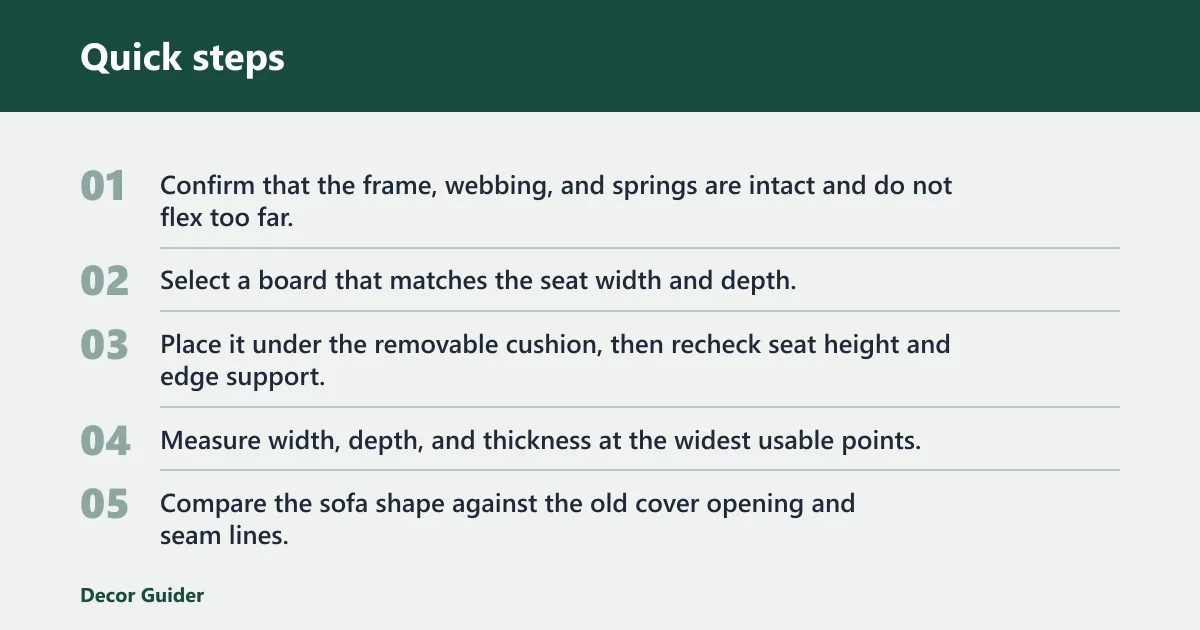
Use a cushion support board when the frame is sound
- Confirm that the frame, webbing, and springs are intact and do not flex too far.
- Select a board that matches the seat width and depth.
- Place it under the removable cushion, then recheck seat height and edge support.
This usually works best for sofas with removable cushions. It is less useful for attached cushions, sleeper sofa seats, or seats with a broken base, because the board only helps when the support structure is otherwise sound.
Use custom replacement cushions for irregular sofas
- Measure width, depth, and thickness at the widest usable points.
- Compare the sofa shape against the old cover opening and seam lines.
- Order a custom replacement cushion when the sofa is sectional, curved, or otherwise nonstandard.
Custom replacement cushions are made to the sofa’s exact measurements. That matters on sectional, leather, or sleeper sofa seats where a generic insert can leave gaps, ridge lines, or cover strain.
Choose foam rebuilds when the core is permanently compressed
- Remove the old insert and keep the cover if the seam layout still fits correctly.
- Choose high-density foam for daily heavy use, since it is the premium cushion replacement choice and holds up to daily heavy use.
- Add a memory foam top layer if you want more contouring, or use reflex foam for a mid-range option.
High-density foam works best when the old foam has permanently compressed. Memory foam is useful in layered constructions, but it should not be the only answer if the seat needs firmer support. Reflex foam is the middle ground when comfort, support, and price all matter.
Prevention is mostly about load and rotation. Rotate removable cushions, shift seating use across the sofa, and avoid leaving one seat under constant heavy use. A good replacement cushion should also match the sofa’s use pattern, or the same sag will return sooner than expected.
Common mistakes
- Buying foam before checking springs or frame: inspect the support system first, or the new insert may fail quickly.
- Ignoring zipper size and cover dimensions: a cover that is too tight can distort the cushion and make it feel firmer than it should.
- Using the wrong thickness or firmness: match the insert to the seat depth and the way the sofa is used.
- Skipping batting when the cover needs loft: polyester batting helps restore cushion shape and smooth the surface.
- Assuming all sofa types behave the same: leather, fabric, sectional, and sleeper sofa seats can fail in different places.
Repair starts with the lowest-cost fix that fits the actual failure. If the cushion is only mildly flat, batting or a support insert may be enough. If the foam is crushed, replace the core. If the frame or springs fail, repair that first or stop and replace the sofa if the damage is widespread.
If that didn’t work, try this next
- Move from batting to foam replacement if the cushion still feels soft after the cover is refitted.
- Move from foam replacement to support repair if the seat still dips by more than about 1 inch after the cushion is rebuilt.
- Move from repair to replacement if the frame, springs, and seat deck all need work.
Frequently asked questions
Should I replace foam or buy cushion support?
Choose cushion support when the seat underneath sags but the frame is still sound. Choose foam when the cushion core stays flat and soft after you remove it. For irregular shapes or sectional seats, custom replacement cushions usually fit better than a generic support insert.
Products related to this article
Sponsored / affiliate links. As an Amazon Associate I earn from qualifying purchases. I may earn additional commission from eligible campaigns.