How to Build a Sofa Frame: Step-by-Step Guide for Beginners
Building your own sofa frame can be a rewarding project. It lets you customize the size, shape, and strength to fit your space and style. Many people think furniture making is only for experts, but with the right tools, clear steps, and a bit of patience, most beginners can build a sturdy sofa frame at home.
In my experience, understanding the process before you start helps you avoid costly mistakes and saves time.
This guide gives you a detailed, step-by-step approach to building a sofa frame from scratch. Whether you want a simple two-seater or a large sectional, the basics are the same. You’ll learn about choosing the right materials, planning your design, assembling the frame, and preparing for upholstery.
Along the way, you’ll also see practical tables comparing wood types, tools, and fasteners, details that can make or break your project. By the end, you’ll feel ready to start building with confidence.
Planning Your Sofa Frame
Before you touch any tools, take time to plan. Good planning prevents wasted materials and frustration later.
Deciding On Size And Shape
Think about your available space and how many people you want the sofa to seat. Measure the room carefully, leaving enough space to walk around the sofa. Standard sofa lengths are 72 to 90 inches, with seat depths around 20-24 inches.
If you have a small room, consider a loveseat or a compact design.
Draw a simple sketch. Mark the overall length, depth, back height, and seat height. Don’t forget to account for the thickness of the seat cushions and back pillows.
Choosing A Sofa Style
There are many styles, such as modern, mid-century, traditional, or sectional. Decide if you want straight arms, sloped arms, or no arms. The style affects not just appearance but also how you build the frame.
Creating Or Finding Plans
If you’re new, look for free or low-cost sofa frame plans online. These often include cut lists and diagrams. Adapting an existing plan is easier than starting from scratch. If you make your own plan, double-check all measurements.
Pro Tip: Always plan for how you’ll get the finished sofa into your room. Large frames may not fit through doorways unless you design them to come apart.
Materials And Tools
The quality of your sofa depends on the materials and tools you use. Choose wisely for strength, comfort, and durability.
Best Woods For Sofa Frames
Not all wood is equal. Hardwoods like oak and maple are popular for their strength, but softwoods like pine are often used because they are cheaper and easier to work with. Each has pros and cons.
Here’s a quick comparison:
| Wood Type | Strength | Cost | Workability | Weight |
|---|---|---|---|---|
| Pine | Medium | Low | Easy | Light |
| Oak | High | High | Medium | Heavy |
| Maple | High | High | Medium | Heavy |
| Plywood (furniture grade) | Medium-High | Medium | Easy | Medium |
For most home projects, pine or furniture-grade plywood works well. Use hardwood for parts that bear the most weight, like the front seat rail and legs.
Other Materials
You’ll need more than just wood:
- Wood glue for stronger joints
- Screws and/or wood dowels for assembly
- Corner braces or metal brackets for extra strength
- Foam and webbing (for the seat, added later)
- Staples or upholstery tacks (if you plan to upholster)
Essential Tools
The right tools make building much easier. Here’s a side-by-side look at manual vs power tools:
| Task | Manual Tool | Power Tool | Recommended For |
|---|---|---|---|
| Cutting wood | Hand saw | Circular saw / Miter saw | Power tool (for straight, quick cuts) |
| Drilling holes | Hand drill | Cordless drill/driver | Power tool (faster, more consistent) |
| Sanding | Sanding block | Orbital sander | Power tool (smoother finish) |
| Assembly | Screwdriver | Impact driver | Power tool (less hand fatigue) |
A full list of tools:
- Measuring tape
- Square
- Pencil
- Saw (circular, miter, or hand)
- Drill and bits
- Sander or sandpaper
- Clamps
- Screwdriver or impact driver
Example: If you only have basic hand tools, you can still build a frame, but it will take longer. Renting or borrowing power tools speeds up the process and gives cleaner results.
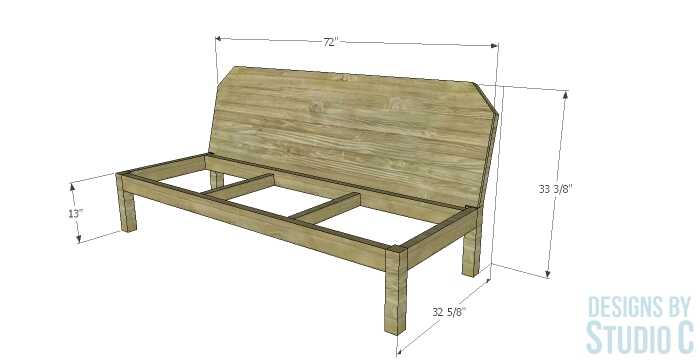
Credit: designsbystudioc.com
Building The Base Frame
The base is the foundation. If it’s not strong and square, your sofa will wobble or sag.
Cutting Wood To Size
Start by cutting all main pieces:
- Front and back rails (the long horizontal pieces)
- Side rails (shorter pieces)
- Legs (if not using pre-made legs)
- Cross supports (for seat support)
Double-check all measurements before cutting. Even a small mistake can throw off the whole frame.
Warning: Always wear safety glasses and follow tool instructions.
Assembling The Main Rectangle
Lay the front and back rails parallel on the floor. Place the side rails at each end, forming a rectangle. Check that all corners are 90 degrees using a square.
Apply wood glue at each joint, then screw or dowel them together. Clamps help hold the frame while you work. For added strength, install metal corner braces inside each corner.
Adding Cross Supports
Install two or more cross supports inside the rectangle. These help hold the weight of people sitting on the sofa. Space them evenly, using wood glue and screws. If your sofa is long, add extra supports to prevent sagging.
Attaching The Legs
Legs can be part of the frame or attached separately. For built-in legs, screw them to the corners before assembling the rails. For separate legs, use strong metal brackets or threaded inserts. Make sure all legs are the same length, so the sofa sits level.
Building The Back And Arms
The back and arms give the sofa its shape and comfort.
Constructing The Back Frame
The back usually consists of two vertical posts and one or more horizontal rails. The height depends on your sofa design, standard is 30-36 inches from the floor.
Attach the posts to the back of the base frame with wood glue and screws. Add horizontal rails at the top and bottom, then additional rails for strength as needed.
Building The Arm Frames
Arms can be simple or complex. For basic box arms:
- Cut two vertical posts for each arm (front and back).
- Connect them with top and bottom rails.
- Attach arm frames to the base, flush with the front and back rails.
For curved or sloped arms, cut the shape from thick plywood, then attach to the frame.
Pro Tip: If you want removable arms (for moving the sofa), use bolts and threaded inserts instead of glue and screws.

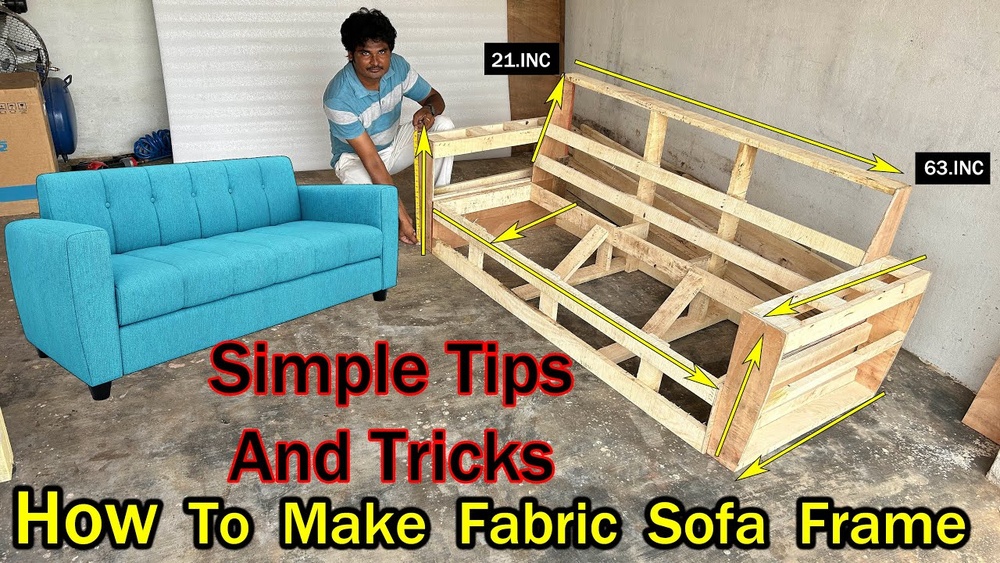
Credit: www.youtube.com
Reinforcing And Supporting The Frame
A sofa frame must handle years of use. Reinforce all joints and add supports where needed.
Adding Corner Blocks
Install triangular corner blocks inside each joint. These small pieces of wood make the frame much stronger and reduce wobble. Glue and screw each block into place.
Seat Support Systems
There are two main ways to support the seat:
- Webbing: Strong fabric or rubber straps stapled across the frame.
- Slats: Wooden strips spaced evenly across the seat area.
Each system has pros and cons:
| Support Type | Comfort | Durability | Installation |
|---|---|---|---|
| Webbing | Softer | Medium | Easy |
| Slats | Firmer | High | Moderate |
For most DIY projects, slats are best. Cut slats to fit across the base, spaced 2-3 inches apart. Attach with screws or nails.
Bracing The Back And Arms
If your sofa back is tall or arms are wide, add diagonal braces or extra rails for stiffness. This stops wobbling, especially if people lean on the arms or back.
Preparing For Upholstery
Before adding foam and fabric, prepare the frame for a smooth, professional finish.
Sanding And Checking For Splinters
Sand all exposed wood until smooth. Pay special attention to corners and edges. Splinters can ruin the fabric and make the sofa uncomfortable.
Filling Holes And Gaps
Use wood filler to cover screw holes or small gaps. Let it dry, then sand smooth.
Prepping For Fabric
Staple a layer of dust cover fabric or thin felt over the seat and back. This creates a barrier between the wood and upholstery materials. If you plan to add foam directly to the frame, use spray adhesive to hold it in place.
Example: On my first sofa, I skipped covering the frame with dust cover fabric. Later, I noticed the foam wore down faster where it touched the wood. Adding this step improved the next project’s durability.
Common Mistakes And How To Avoid Them
Even experienced builders make mistakes. Here are some to watch out for:
- Skipping the square check: If your base isn’t perfectly square, nothing will fit right later. Always use a carpenter’s square.
- Using weak wood: Avoid cheap, knotty wood for the main frame. It can split under pressure.
- Forgetting reinforcements: Without corner blocks and braces, joints will loosen over time.
- Not pre-drilling holes: Screws can split the wood if you don’t pre-drill, especially near the ends.
- Measuring once, cutting twice: Always measure twice before making cuts.
- Over-tightening screws: This can strip wood or break the screw.
Pro Tip: Keep all fasteners and small parts organized in labeled containers. Searching for the right screw wastes time and breaks your focus.
Safety Tips
Building furniture involves sharp tools and heavy materials. Safety should always come first.
- Wear safety glasses when cutting, drilling, or sanding.
- Use hearing protection with power tools.
- Work in a well-ventilated area, especially if using glue or finishes.
- Lift heavy pieces with your legs, not your back.
- Keep your workspace clear of clutter and cords.
If you’re unsure how to use a tool, watch a video or ask for help before starting.

Credit: www.youtube.com
Final Assembly And Finishing Touches
Once the frame is built and prepped, you’re nearly done.
Attaching The Seat And Back
If your frame is in pieces (for easy moving), assemble it in the room where it will stay. Make sure all bolts and screws are tight.
Adding Foam And Upholstery
Cut high-density foam to fit the seat and back. Secure with spray adhesive. Cover with batting for extra softness, then stretch fabric over the frame and staple it underneath.
For professional results, take your time with upholstery. Wrinkles and loose fabric can make the sofa look messy.
Installing The Legs
If you haven’t attached legs yet, screw them into place now. Check that the sofa sits level on all four legs. Adjust as needed.
Testing The Frame
Sit on different parts of the sofa. Listen for creaks or wobbles. Tighten any loose joints. A well-built frame should feel solid and quiet.
Maintenance And Longevity
A homemade sofa can last for many years with proper care.
- Check all screws and bolts every six months.
- If you hear creaking, inspect the frame for loose joints or cracked wood.
- Avoid jumping or standing on the sofa, as this puts stress on the frame.
- Re-tighten upholstery fabric as needed to keep the sofa looking neat.
If you ever need to move the sofa, disassemble large sections if possible. This prevents stress and damage to joints.
Frequently Asked Questions
How Much Does It Cost To Build A Sofa Frame?
The cost depends on the wood type, size, and tools you need. If you use pine or plywood, materials for a basic two-seater frame can range from $80 to $200. Hardwood frames and specialty tools will increase the price. Using tools you already own and sourcing materials locally helps keep costs down.
Can I Build A Sofa Frame Without Power Tools?
Yes, it’s possible, but it’s more challenging and will take longer. Hand saws, screwdrivers, and sanding blocks can do the job, but power tools make it much faster and neater. If you’re new to woodworking, consider borrowing or renting power tools for crucial steps.
What Type Of Foam Should I Use For The Seat?
High-density polyurethane foam is best for sofa seats. It holds its shape and supports weight well. Look for foam with a density of at least 1. 8 lbs/ft³ for durability. Some people add a layer of softer foam or batting on top for extra comfort.
How Can I Make My Sofa Frame Lightweight But Strong?
Use furniture-grade plywood for the main structure. It’s lighter than solid hardwood and still strong. Add cross supports and corner blocks for extra strength without adding much weight. Avoid using thick, heavy boards unless needed for style or durability.
Where Can I Find More Detailed Sofa Frame Plans?
Many woodworking websites and forums share free plans. For more ideas and examples, check Sponsored / affiliate links. As an Amazon Associate I earn from qualifying purchases. I may earn additional commission from eligible campaigns.Products related to this article